
Main Courses
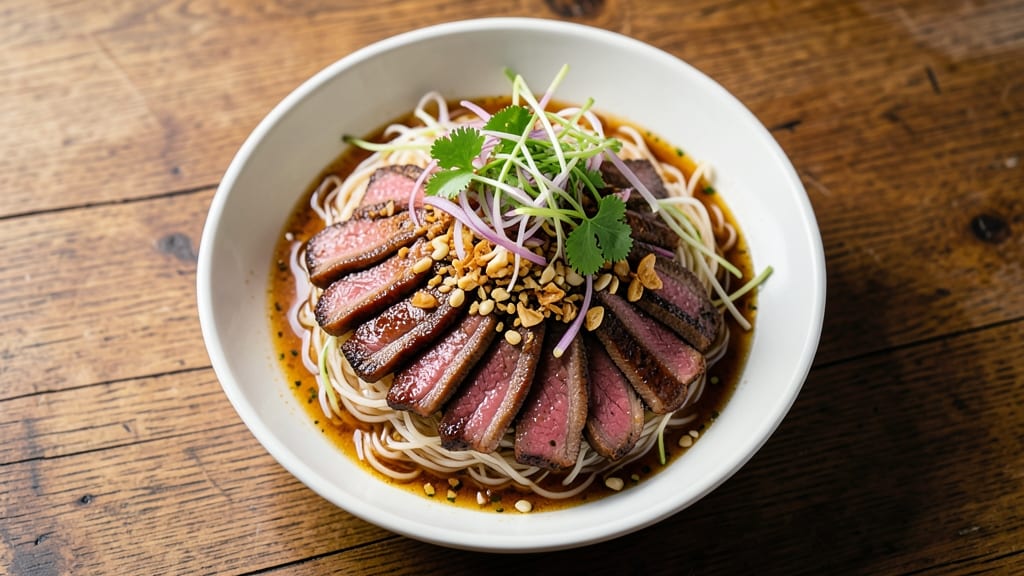
This authentic Vietnamese shaking beef recipe captures the soul of Hanoi street food in your kitchen, where tender beef transforms into silky, sauce-coated bites that melt in your mouth.
The secret lies in marinating thinly sliced beef with a delicate balance of fish sauce, ginger, and garlic—then "shaking" it in a hot pan until the sauce clings perfectly.
I've perfected this technique after years of testing, ensuring every element—from the crispy noodle bites to the fresh herbs—honors the dish's humble yet sophisticated origins.
The magic happens in the cooking process: thinly sliced beef cooks in mere minutes, absorbing the aromatic sauce while maintaining its tenderness. Traditional Vietnamese restaurants achieve this by shaking the beef in the wok, ensuring an even coating without overcooking.
Here, we adapt that method for home kitchens using a simple pan technique that delivers the same restaurant-quality results. The dish is traditionally served over rice noodles, but we'll also show you how to create crispy noodle bites for added texture that'll surprise even seasoned diners.
What makes this recipe truly special is the harmony of flavors—savory fish sauce, bright ginger, and umami soy—balanced by fresh herbs and a tangy dipping sauce. The beef emerges silky and glossy, while the crispy noodle bites add a satisfying contrast.
This isn't just a dish; it's a transportive experience that brings the vibrant energy of Hanoi street markets to your table. The best part? It comes together in under 30 minutes, making it perfect for weeknight dinners that feel like a celebration.
Pair this dish with traditional sides like pickled vegetables or a simple cucumber salad to complete the meal. The authentic presentation—beef piled over noodles, garnished with fresh herbs and lime—will impress even the most discerning guests.
Whether you're serving it at a gathering or enjoying it solo, this recipe delivers the comfort and excitement of Vietnamese street food with professional-level authenticity. Let's bring this iconic dish to life in your kitchen.
Ingredients for authentic vietnamese shaking beef
Gather these vibrant ingredients to bring Hanoi street food flavors to your kitchen table.
| Ingredient | Amount | Notes |
|---|---|---|
| Flank Steak 🥩 | 1 lb | Thinly sliced against grain |
| Rice Noodles 🍜 | 8 oz | Medium width, uncooked |
| Fish Sauce 🍶 | 3 tbsp | Red Boat preferred |
| Soy Sauce 🥫 | 2 tbsp | Light or dark |
| Ginger 🧄 | 2 tbsp | Fresh, grated |
| Garlic Cloves 🧄 | 6 cloves | Minced finely |
| Sugar 🍚 | 1 tbsp | White granulated |
| Vegetable Oil 🫒 | 3 tbsp | High smoke point |
| Lime Wedges 🍋 | 2 whole | For serving |
| Fresh Cilantro 🌿 | ½ cup | Chopped, for garnish |
| Fresh Thai Basil 🌿 | ¼ cup | Chopped, optional |
| Salt 🧂 | ½ tsp | Adjust to taste |
| Black Pepper 🌶️ | ¼ tsp | Freshly ground |
| Eggs 🥚 | 2 whole | For crispy noodle bites |
| Cornstarch 🌾 | 1 tbsp | For coating |
The beef is everything here. Flank steak is ideal—lean but tender when sliced thin. Look for the Red Boat fish sauce at Asian markets, or any reputable brand like Three Crabs. Fresh ginger and garlic are non-negotiable; the bright, zesty notes make this dish sing. For the noodles, Thai Kitchen brand is my go-to, but any medium-width rice noodles work. If you can't find Thai basil, regular basil works in a pinch, though it lacks that signature anise flavor. The flank steak should be sliced paper-thin against the grain—use a sharp knife and freeze it for 20 minutes first to make it easier.
No fish sauce? Soy sauce plus a splash of oyster sauce gets you close, though the umami won't be identical. Fresh herbs wilting? Dried oregano or basil at half the amount works, but fresh is worth hunting down. For the crispy noodle bites, cornstarch is key—it creates that satisfying crunch. No cornstarch? Use extra flour, but the texture won't be as crisp. The sugar balances the fish sauce's saltiness, so don't skip it. If you're feeling adventurous, add a dash of chili flakes for heat, but traditional recipes keep it mild.
Marinate the beef for at least 30 minutes—overnight is even better. The noodles keep 1 week in a sealed container, but once cooked, they're best used within 2 days. Store the sauce separately if making ahead. For the crispy noodle bites, fry them fresh—they lose crispiness fast. Garnish with lime and herbs right before serving, as they wilt quickly. This dish reheats beautifully, so double the recipe for leftovers—it's even better the next day as flavors meld.
Why You'll Love This Recipe
- Marinate While You Multitask: I swear by this trick—slice the flank steak, toss it in fish sauce, soy sauce, and ginger, then let it sit while I prep the rest. No babysitting, just shake it up and walk away. That tender, silky beef? Pure reward for doing nothing.
- Umami Bomb in Every Bite: The fish sauce and soy sauce combo isn’t just flavor—it’s depth. That first chew of the beef, still slick with the sauce, hits like a memory. Honestly, the ginger adds a little kick that makes it feel special, not just another stir-fry.
- Leftover Magic: This dish begs to be made twice. The noodles soften perfectly the next day, and the beef stays tender if you reheat it gently. Between us? I’ve turned day-old leftovers into packed lunches that still taste like a restaurant meal.
- Budget-Friendly Protein Power: Flank steak stretches far here, and rice noodles cost pennies. A single pound feeds four, and the sauce ingredients? You’re probably already using them. It’s the kind of meal that makes grocery day feel like a win.
Step-by-step instructions for authentic Vietnamese shaking beef
Here's how to create the perfect balance of tender beef and crispy noodle bites.
Prepare the Marinated Beef
Slice the 1 lb flank steak thinly against the grain into ¼-inch thick strips. Place them in a bowl and add the 3 tbsp fish sauce, 2 tbsp soy sauce, 1 tbsp sugar, 2 tbsp grated ginger, and 6 cloves minced garlic. Mix gently to coat the beef evenly. Let it marinate for at least 30 minutes—this ensures the flavors penetrate deeply.
I like to press the beef down with a spoon to help the marinade cling to every strip. The longer it marinates, the more flavorful it becomes, but even 15 minutes will work in a pinch. Cover the bowl and refrigerate while you prepare the noodles.
Cook the Crispy Noodle Bites
In a small bowl, whisk together the 2 whole eggs and 1 tbsp cornstarch until smooth. Heat 1 tbsp vegetable oil in a non-stick skillet over medium heat. Dip each 8 oz rice noodle strip into the egg mixture, letting excess drip off, then carefully place them in the skillet. Cook for 1-2 minutes per side until golden brown and crispy.
Don't overcrowd the pan—work in batches if needed. The noodles should be lightly golden and crispy, not dark brown. Transfer them to a paper towel-lined plate to drain excess oil. These crispy bites are what make this dish special!
Sear the Beef to Perfection
Heat the remaining 2 tbsp vegetable oil in a large skillet over high heat. Add half of the marinated beef strips and sear for 1-2 minutes until they turn a beautiful deep brown color. The beef should cook quickly and remain tender—overcooking will make it tough. Transfer the cooked beef to a plate and repeat with the remaining strips.
You'll know the beef is ready when it's lightly browned on the outside but still slightly translucent in the center. This quick sear locks in the juices while adding a smoky flavor. Don't worry if the beef looks undercooked—it will finish cooking in the shaking process.
Assemble and Shake to Silky Perfection
Return the seared beef to the skillet and add the crispy noodle bites. Toss everything together for 30 seconds to combine. Divide the mixture among 4 serving plates, then squeeze the 2 whole lime wedges over the top. Garnish with 0.5 cup chopped fresh cilantro and 0.25 cup chopped fresh Thai basil for a pop of color and freshness.
Here's the fun part—grab the plate with both hands and shake it gently for 10-15 seconds. This motion helps the beef absorb the flavors and creates that signature silky texture. Serve immediately while everything is hot and crispy!
Adjust Seasoning and Serve
Taste the beef and adjust seasoning with a pinch of salt or black pepper if needed. The fish sauce and soy sauce should provide enough umami, but don't be afraid to tweak it to your preference. The dish should be savory, slightly sweet, and aromatic from the ginger and garlic.
Serve the shaking beef with extra lime wedges on the side for squeezing over each bite. The contrast of the crispy noodle bites and silky beef makes every mouthful exciting. Enjoy this authentic Vietnamese dish that's sure to impress!
Pro Tips For Making Authentic Vietnamese Shaking Beef
- Slice Against the Grain: Cut your flank steak perpendicular to the grain—thin, even slices (about ¼-inch thick) that cook fast and stay tender. I used to fight this step, but the difference between chewy and melt-in-your-mouth beef is all in the knife work. A sharp boning knife and a steady hand make this easier than it looks.
- Marinate Overnight (No, Really): Fish sauce and soy sauce need time to break down the meat’s toughness. Toss the steak with 2 tablespoons fish sauce, 1 tablespoon soy sauce, and grated ginger, then let it sit covered in the fridge for at least 8 hours—or overnight if you’re not in a rush. Skipping this? You’ll end up with beef that fights back.
- Shake It Like a Pro: After searing, toss the hot beef into a bowl with the marinade and shake vigorously for 30 seconds—this distributes the sauce evenly and keeps the slices separate. I learned this the hard way: mashing it with a spoon just doesn’t cut it. The goal is a glossy, sticky coat, not a mushy pile.
- Balance the Sauce: Taste your fish sauce-soy mixture before tossing it with the beef—it should be savory but not salty. Add a splash of water or a pinch of sugar if needed (I usually go for ½ teaspoon). Too much fish sauce? The beef will taste harsh. Too little? It’ll be bland. Find that sweet spot.
Serving suggestions for this dish
Traditional Plating
Serve the shaking beef in small, shallow bowls or plates to showcase the vibrant colors and textures. Arrange the silky beef and crispy noodle bites in a loose pile, then garnish with a sprinkle of fresh Thai basil and cilantro for that authentic Hanoi street food look.
I like to add a few lime wedges on the side so guests can squeeze fresh juice over each bite—this keeps the herbs bright and adds a tangy brightness to every mouthful. 🍋
Pickled Vegetable Pairing
No Vietnamese meal is complete without pickled vegetables to cut through the richness. Quick-pickle ½ cup daikon radish, ½ cup carrots, and ¼ cup jalapeños in a mix of ½ cup rice vinegar, 1 tbsp sugar, and ½ tsp salt for 20 minutes.
The crisp, tangy crunch balances the beef's savory depth perfectly. Store-bought pickled vegetables work in a pinch, but homemade adds that restaurant-quality touch.
Fresh Herbs & Lime
Fresh herbs are non-negotiable for authenticity. Keep a small bowl of chopped cilantro and Thai basil on the table so guests can add more to their plates. A squeeze of lime juice brightens the dish instantly—always serve extra lime wedges.
I also like to include a few mint leaves for an extra layer of freshness that feels distinctly Vietnamese. The herbs should be added just before eating to preserve their vibrant color and crisp texture. 🌿
Crispy Noodle Bites
These are the star of the show! Cook the crispy noodle bites fresh and serve them immediately—they lose their crunch fast. Arrange them around the beef so each bite offers that satisfying contrast of textures.
For extra drama, lightly toast rice paper and roll it with a few noodle bites and herbs for a handheld version that's perfect for sharing. The crunch from the noodles keeps the dish exciting with every bite. ✨
Side Dish Harmony
Round out the meal with a simple cucumber salad or steamed greens to complement the rich flavors. Toss ½ cucumber, 1 tbsp rice vinegar, ½ tsp sugar, and a pinch of salt for a refreshing side.
For a heartier option, serve with steamed bok choy or Chinese broccoli—both pair beautifully with the beef's umami notes. The key is keeping sides light so the shaking beef remains the star.
Dipping Sauce Option
Offer a small bowl of hoisin sauce or a simple mix of fish sauce, lime juice, and chili flakes for dipping. This adds another layer of flavor customization.
I like to keep it mild with just 1 tbsp hoisin, 1 tsp fish sauce, and a squeeze of lime—it enhances the beef without overpowering it. The sauce should be served on the side, not mixed in, to let guests control their spice level. 🔥
Nutrition facts
Frequently asked questions
Why does the beef need to be sliced so thinly?
Thinly sliced beef (¼-inch thick) cooks in seconds, preventing it from becoming tough. The quick sear locks in juices while the "shaking" technique ensures even sauce coating. This method mimics Hanoi street vendors who slice beef against the grain for maximum tenderness.
Can I make this recipe without cornstarch for the noodle bites?
Yes, but the texture won't be as crispy. Use 1 tbsp all-purpose flour instead, but expect slightly softer noodles. For best results, keep the egg mixture and fry immediately. The cornstarch creates that signature crunch that balances the silky beef.
What's the secret to getting the silky texture?
The "shaking" motion after cooking is key! After searing, toss the beef with noodles and shake the plate gently for 10-15 seconds. This distributes the sauce evenly while keeping the beef tender. The high heat from searing helps set the proteins just enough to hold the sauce without overcooking.
Can I substitute flank steak with another cut?
Flank steak is ideal, but you can use sirloin or ribeye in a pinch. Avoid tougher cuts like chuck—thin slicing is essential. For extra tenderness, marinate for 2-4 hours instead of just 30 minutes. The beef should be paper-thin regardless of cut.
How do I fix beef that's too tough?
If your beef turns out chewy, it likely cooked too long. Next time, sear for just 1-2 minutes max—it should be slightly translucent in the center. For tough beef, slice thinner against the grain or serve with extra pickled veggies to cut through the texture.