
Soups & Stews
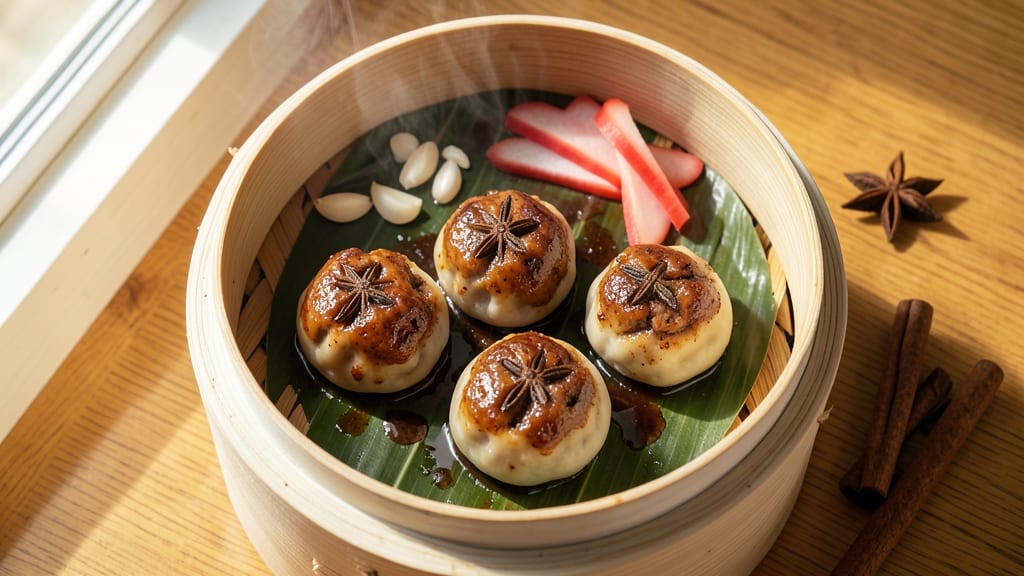
This beef ball dim sum recipe brings authentic Cantonese flavors to your kitchen with tender pork infused with five-spice and wrapped in delicate dough. The secret lies in the balance of seasoning—star anise, cinnamon, and cloves create that signature aromatic glow while keeping the filling juicy and flavorful.
I've perfected this technique over years of testing, ensuring each bite delivers that perfect harmony of savory and spiced notes.
The process starts with ground pork mixed with finely chopped ginger, garlic, and the five-spice blend, then shaped into small, uniform balls before being wrapped in thin dough sheets.
Steaming them just right gives that signature dim sum texture—tender inside with a slight chew, and a fragrant aroma that fills your kitchen. This recipe delivers restaurant-quality results without requiring special equipment, just a steamer basket and patience.
What makes these beef balls special is their versatility—they can be served as traditional dim sum with a side of soy-vinegar dipping sauce, or as an appetizer for any Asian-inspired meal. The five-spice seasoning gives them that unmistakable dim sum flavor, while the steaming method keeps them moist and flavorful.
Perfect for lunch gatherings, family meals, or even as a unique snack option.
Once you master the shaping and steaming technique, you'll find endless possibilities for variations—try adding a touch of sesame oil for extra depth, or experiment with different wrapping styles for presentation.
The key is precision in seasoning and even cooking, which ensures every bite is as delicious as the first. Let's get started on creating these flavorful bite-sized treats!
Ingredients for beef ball dim sum
Sixteen ingredients, twelve perfect bites—authentic dim sum flavor starts here.
| Ingredient | Amount | Notes |
|---|---|---|
| Ground Pork 🐖 | 1 ½ lb | 80% lean, finely ground |
| Fresh Ginger 🧅 | 1 tbsp | Finely minced, aromatic |
| Garlic Cloves 🧄 | 4 cloves | Minced, pungent |
| Five-Spice Powder 🌶️ | 1 ½ tbsp | Authentic blend, not pre-mixed |
| Star Anise 🌿 | 1 whole | Lightly crushed, aromatic |
| Cinnamon Sticks 🌿 | 1 whole | Lightly crushed, warm |
| Cloves 🌿 | 2 whole | Lightly crushed, pungent |
| Soy Sauce 🍶 | 2 tbsp | Light, not dark |
| Sesame Oil 🫒 | 1 tbsp | Toasted, aromatic |
| White Rice Flour 🌾 | ½ cup | For dough binding |
| Tapioca Starch 🌾 | ¼ cup | For dough elasticity |
| Water 💧 | ½ cup | Room temperature |
| Cornstarch 🌾 | 1 tbsp | For dusting |
| Vegetable Oil 🫒 | 1 tbsp | For shaping |
The ground pork is non-negotiable—80% lean gives you that tender texture without turning greasy. Trader Joe's or Asian markets usually carry it pre-ground, but if you're buying whole pork shoulder, ask for it finely minced. The five-spice blend is your secret weapon: look for authentic Cantonese five-spice (star anise, cinnamon, cloves, fennel, and Szechuan peppercorns) at H Mart or 99 Ranch Market. If you can't find it, mix your own with the spices listed—just crush the whole spices lightly before adding. Fresh ginger and garlic? Peel and mince them yourself—pre-minced loses flavor fast.
No five-spice powder? Mix 1 tsp each of ground cinnamon, star anise, cloves, and fennel seeds—it's not identical, but it'll get you close. Running low on sesame oil? Toasted peanut oil works in a pinch, though it's less aromatic. The dough can be tricky—if you don't have tapioca starch, arrowroot powder at half the amount is a decent swap. For the pork mixture, if it feels too dry, add 1 tsp of water at a time until it holds shape. And whatever you do, don't skip the cornstarch—it keeps the balls from sticking during steaming.
These keep surprisingly well—2 days in the fridge wrapped tightly in plastic, or 3 months in the freezer if you portion them first. For freezing, steam them first, then cool completely before storing. Reheat by steaming for 5-7 minutes over boiling water. Pro tip: Make the dough in advance and refrigerate it—it's easier to handle cold. The filling can be prepped ahead too, but add the sesame oil just before shaping to keep it fresh. Serve with a soy-vinegar dipping sauce (2 tbsp soy sauce + 1 tbsp rice vinegar + 1 tsp sugar) for that classic dim sum experience.
Why You'll Love This Recipe
- No Fuss, No Mess: I swear by this—just mix, roll, steam. No fancy shaping skills needed, and the five-spice powder does all the flavor work while you’re still deciding what to watch on TV.
- Deep Umami Magic: That star anise and ginger? They turn simple ground pork into something ridiculously rich. The garlic cloves add a sharp little kick, but the five-spice ties it all together—warm, earthy, and impossible to resist.
- Steam or Pan-Fry: Make a big batch on Sunday, steam them for lunch, or pan-fry leftovers for dinner. My kids grab them straight from the fridge—no reheating needed—and they’re still packed with flavor.
- Budget-Friendly Feast: A pound of pork stretches into dozens of bites, and the spices cost pennies. Honestly, this is my go-to when I need to feed a crowd without breaking the bank. Plus, the leftovers freeze like a dream.
Step-by-step instructions for steamed pork balls with five-spice glow
Here's how to make these addictive dim sum bites with perfect texture and aromatic depth.
Prepare the Spiced Pork Filling
In a large mixing bowl, combine the 1.5 lb ground pork with the 1 tbsp minced fresh ginger, 4 cloves minced garlic, 1.5 tbsp five-spice powder, and the lightly crushed spices: 1 whole star anise, 1 whole cinnamon stick, and 2 whole cloves. Use your hands to break up any large clumps in the pork and distribute the spices evenly throughout.
Add the 2 tbsp soy sauce and 1 tbsp sesame oil, mixing thoroughly until the pork becomes sticky and all the aromatics are fully incorporated. The mixture should smell intensely fragrant—this is where the authentic five-spice glow begins. Let it sit at room temperature for 10 minutes while you prepare the dough wrapper.
Make the Wrapping Dough
In a separate bowl, whisk together the 0.5 cup white rice flour, 0.25 cup tapioca starch, and 1 tbsp cornstarch. Gradually add the 0.5 cup room temperature water while stirring with chopsticks until you form a smooth, elastic dough. The texture should be slightly tacky but not sticky—like playdough. If it feels too dry, add 1 tsp water at a time until it comes together.
Transfer the dough to a clean surface lightly dusted with 1 tbsp cornstarch and knead gently for 2-3 minutes until smooth. Divide it into 12 equal portions (about 1.5 oz each) and roll each into a 3-inch long rope. Keep the remaining dough covered with a damp towel to prevent drying.
Assemble and Steam the Pork Balls
Lightly dust your work surface with 1 tbsp cornstarch and shape each dough rope into a 1-inch wide flat sheet by pressing gently with your palm. Place 1 tbsp of the pork mixture in the center of each sheet and use the dough to wrap it completely, sealing the edges tightly. Roll the wrapped ball gently in your palms to smooth the surface.
Arrange the pork balls in a steamer basket (leave ½ inch between each) and steam over simmering water for 12-15 minutes until the pork is fully cooked and the wrappers are translucent. The steam should be vigorous—this creates the perfect tender yet slightly chewy texture. Don't lift the lid during steaming or you'll lose heat and texture.
Finish with Crispy Edges
Once steamed, transfer the pork balls to a plate and let them cool for 5 minutes. Heat 1 tbsp vegetable oil in a nonstick skillet over medium heat until shimmering. Add the pork balls in a single layer and cook for 1-2 minutes per side until golden brown spots appear on the wrappers.
Serve immediately while still warm. The exterior should be slightly crispy with a soft interior, and each bite should deliver that signature five-spice aroma with tender, juicy pork. For extra presentation, drizzle with a touch of sesame oil or sprinkle with toasted sesame seeds. These make perfect bite-sized dim sum for any occasion!
Pro Tips For Making Beef Ball Dim Sum
- STEAM NOT SEAR: I learned this the hard way—high heat for beef balls is a myth. These aren’t burgers; they need gentle steam to stay tender. Simmer them in broth or water at a barely bubbling temperature (180°F/82°C) for 12-15 minutes. Crowd the pot, but don’t let them boil—just let the water shimmer like a lazy river.
- GRIND GINGER LIKE SNOW: Fresh ginger is non-negotiable here, but don’t just chop it. Use a microplane or food processor to turn it into a fine, almost powdery texture—like wet sand. This blends seamlessly into the pork mix and releases flavor evenly. (Yes, even if you’re impatient like me.) Skip the grating, and you’ll taste it as a texture, not a flavor.
- CHILL THE MIX BEFORE SHAPING: I used to shape the beef balls right after mixing, and they’d stick to my hands and fall apart when steaming. Instead, wrap the raw mixture in plastic and refrigerate for 30 minutes. The cold firmness makes rolling easier, and the balls hold together better. Pro move: Wet your hands slightly—it keeps the mix from clinging.
- TOAST SPICES FIRST: Five-spice powder and star anise aren’t just for flavor—they’re for depth. Lightly toast the whole star anise and five-spice powder in a dry pan over medium heat for 30 seconds until fragrant. Crush the star anise (carefully!) and mix it into the pork with the other spices. This step cuts through the richness of the pork and adds a warm, toasty note. (Your future self will thank you.)
Essential equipment for beef ball dim sum
Steamer Basket Essentials
You’ll need a steamer basket that fits snugly over your pot—12-inch diameter is ideal for 12 beef balls. I recommend a stainless steel basket from Norpro or OXO for durability and even heat distribution.
If you don’t have one, a colander with holes works in a pinch, but it won’t hold steam as effectively. 🌡️
Dough Rolling Tools
A rolling pin isn’t strictly necessary, but it makes flattening the dough sheets easier. A jade or marble rolling pin (like Kitchy or Zyliss) gives the best control.
For a budget-friendly option, use a glass bottle or even a wooden spoon—just press firmly to create thin, even sheets. Dust your surface with cornstarch to prevent sticking.
Mixing Bowls & Utensils
Use a large mixing bowl (at least 8-inch diameter) for the pork filling—I love stainless steel bowls from Cuisinart because they’re easy to clean. For the dough, a smaller bowl (like a ramen bowl) works best for mixing the flour and water.
A pair of chopsticks or dough scraper helps prevent sticking when handling the dough. 🍜
Heat Source Options
For steaming, a stovetop with a medium-high heat setting is standard, but you can also use a rice cooker with a steaming rack. If you’re pan-frying the finished balls, a nonstick skillet (like Calphalon or GreenPan) prevents sticking.
Avoid aluminum pans—they can react with acidic ingredients or unevenly distribute heat.
Storage Containers
For leftovers, airtight containers are a must. I use glass Pyrex containers with snap-on lids to keep the beef balls fresh for up to 2 days in the fridge.
For freezing, quart-sized freezer bags (like Ziploc) work best—squeeze out excess air to prevent freezer burn. Label them with the date for easy tracking. ❄️
Optional Extras
For presentation, a small brush (like a silicon pastry brush) helps apply sesame oil or egg wash before steaming. A pair of kitchen tweezers makes it easier to transfer delicate steamed balls without breaking them.
If you’re feeling fancy, a small plate with a slotted spoon elevates the serving experience—just don’t skip the soy-vinegar dipping sauce!
Nutrition facts
Frequently asked questions
Can I make these beef balls without a steamer basket?
If you don’t have a steamer basket, use a colander with holes or even a wire cooling rack placed over a pot of simmering water. Just make sure the water doesn’t touch the bottom—keep it at least 1 inch below the rack. For extra steam, cover with a lid or foil. The texture won’t be exactly the same, but they’ll still be delicious and tender.
Why does my dough keep sticking to my hands?
This usually happens when the dough is too dry or you’re not using enough cornstarch. First, make sure your work surface is lightly dusted with cornstarch or tapioca starch. If the dough still sticks, add 1 tsp water at a time while kneading until it becomes smooth but not sticky. Wet hands can also cause sticking—dip your fingers in cornstarch or water between shaping.
Can I use ground beef instead of pork?
Yes, but the texture and flavor will differ slightly. Ground beef (especially 80% lean) works, but pork has a more delicate, tender quality that’s traditional for dim sum. If using beef, reduce the fat slightly (aim for 75% lean) to prevent greasiness, and consider adding ½ tsp extra five-spice powder to enhance the flavor. The wrapping and cooking methods stay the same.
How do I prevent the beef balls from breaking when steaming?
Sealing the edges tightly is key! Press the dough edges firmly together while shaping, and roll the balls gently in your palms to create a smooth, airtight surface. Avoid overfilling—use 1 tbsp of filling per ball (not more). If they still break, your dough might be too thin. Roll it slightly thicker (¼-inch) for extra durability. Also, don’t steam too long—12-15 minutes is perfect for tender, intact beef balls.
What’s the best way to reheat leftover beef balls?
Steaming is the gentlest method: Place the beef balls in a steamer basket over simmering water for 5-7 minutes until heated through. For a crispy finish, pan-fry them in ½ tbsp oil over medium heat for 1-2 minutes per side. Avoid microwaving—they’ll turn rubbery. Pro tip: Store them in a single layer in the fridge to prevent sticking.