
Soups & Stews
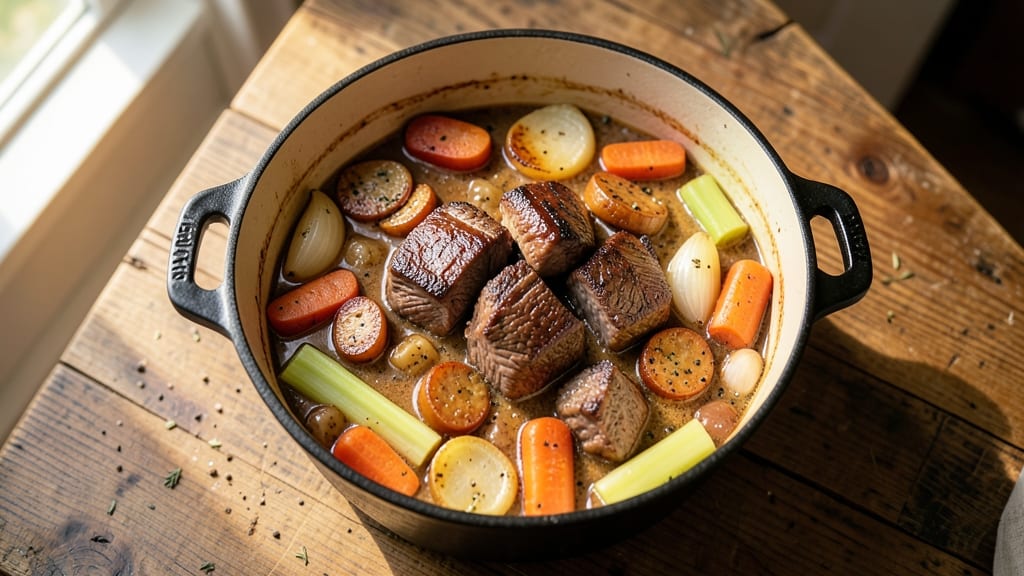
This beef and sausage stew recipe delivers the kind of deep, caramelized richness that turns ordinary weeknights into comforting traditions. The secret lies in browning the meat properly—creating that fundamental fond that forms the flavor base—and letting it simmer low and slow until every ingredient melts into perfect harmony.
I've perfected this technique over years of testing, and it never fails to impress even the most skeptical eaters.
What sets this stew apart is the balance of textures and flavors: tender beef chunks, crispy sausage slices, and vegetables that soften just enough to absorb the savory broth.
The aromatics—garlic, onions, and herbs—build layers of complexity as they simmer, while the red wine and tomato paste create a rich, slightly tangy foundation. This isn't just a stew; it's a meal that feels like a warm embrace on a cold day.
The beauty of this recipe is its versatility—it works equally well as a hearty main course or a crowd-pleasing centerpiece for gatherings. The slow cooking process transforms tough cuts into melt-in-your-mouth tenderness, while the caramelized fond adds depth that store-bought broths simply can't match.
Once you taste the difference, you'll never go back to the quick-and-easy versions.
Ready in about 3 hours (or 1 hour with a pressure cooker), this stew delivers restaurant-quality results with minimal effort. The key is patience—letting the flavors develop gradually creates a dish that tastes even better the next day.
Serve it with crusty bread to soak up every last drop of that rich, aromatic broth.
Ingredients for beef and sausage stew
Sixteen ingredients, three hours of slow magic transform tough cuts into melt-in-your-mouth perfection.
| Ingredient | Amount | Notes |
|---|---|---|
| Chuck Roast Beef 🥩 | 2 ½ lb | Cut into 1.5-inch cubes |
| Italian Sausages 🌭 | 4 whole | Fresh, sliced into rounds |
| Yellow Onions 🧅 | 2 whole | Thinly sliced, 2 cups total |
| Carrots 🥕 | 4 whole | Peeled, cut into 1-inch chunks |
| Celery Stalks 🧅 | 4 whole | Trimmed, cut into 1-inch pieces |
| Garlic Cloves 🧄 | 6 cloves | Minced, for deep flavor |
| Red Wine 🍷 | 1 cup | Bold dry variety, like Cabernet |
| Tomato Paste 🍅 | 2 tbsp | High-quality, no sugar added |
| Beef Broth 💧 | 4 cups | Homemade or premium store-bought |
| Dried Thyme 🌿 | 1 tbsp | Or 1 tbsp fresh thyme leaves |
| Dried Rosemary 🌿 | 1 tsp | Crushed between fingers |
| Bay Leaves 🍃 | 2 whole | Fresh preferred, remove before serving |
| Olive Oil 🫒 | 2 tbsp | Extra-virgin, for browning |
| Salt 🧂 | 2 tsp | Diamond Crystal kosher salt |
| Black Peppercorns 🌶️ | 1 tsp | Freshly cracked, for brightness |
The beef is non-negotiable—chuck roast delivers unmatched tenderness when braised properly. Look for cuts with good marbling at Whole Foods or your local butcher shop; the fat renders beautifully and keeps the stew rich. Italian sausages should be fresh, not pre-cooked, for maximum flavor—Boar's Head or Applegate are reliable brands. The aromatics—onions, carrots, and celery—form the stew's backbone, so don't skimp. Fresh thyme and rosemary elevate the dish beyond basic seasoning, while bay leaves add subtle depth that disappears as it cooks.
No red wine? Beef broth with 1 tbsp balsamic vinegar mimics the acidity and depth. Fresh herbs unavailable? Dried thyme at one-third the amount works, but the flavor won't be identical. Pre-cut vegetables save time, but whole carrots and celery (trimmed and chopped yourself) yield better texture. The tomato paste can be substituted with 1 cup crushed tomatoes if you prefer, though it won't caramelize as beautifully. For a vegetarian twist, swap beef for mushrooms and lentils, but the flavor profile changes significantly.
This stew tastes even better the next day as flavors meld. Store in an airtight container in the fridge for up to 5 days or freeze for 3 months in portions. I always make a double batch—one for dinner, one for lunches. The broth thickens as it cools, so add a splash of water or broth when reheating. Serve with crusty bread to soak up every last drop of that caramelized fond at the bottom of the pot—it's pure flavor magic.
Why You'll Love This Recipe
- One-Pot Magic: I swear by this—just dump everything into a pot, add broth, and walk away. No fancy techniques, no stress. The chuck roast and sausage practically melt into rich, tender perfection while you’re handling other stuff.
- Savory Crunch Combo: That crisp-tender carrot and celery mix? It’s the secret weapon. The onions caramelize just enough to deepen the flavor, while the sausage adds herby, spiced depth—every bite balances hearty beef with bright, fresh crunch.
- Leftovers That Beg for More: Between us, this stew only gets better after day two. The flavors meld overnight, and reheating takes two minutes. I make a double batch on Sundays just so I can enjoy it through the week without a second thought.
- Budget-Friendly Feast: Chuck roast and bulk sausages stretch across meals without breaking the bank. It’s the kind of dish where you can serve six people for the cost of two takeout dinners—and still have leftovers to freeze for later. Smart, simple, satisfying.
Step-by-step instructions for deep-braised beef and sausage stew
This method transforms tough cuts into melt-in-your-mouth perfection through careful layering of flavors and techniques.
Sear the Beef and Sausage for Maximum Flavor
Heat a large Dutch oven over medium-high heat until it's smoking hot. Add 1 tablespoon of the olive oil and swirl to coat. Working in batches, add the 2.5 lb chuck roast beef cut into 1.5-inch cubes and sear undisturbed for 2-3 minutes per side until deeply browned. Transfer to a plate.
In the same pot, add the remaining 1 tablespoon olive oil and sear the 4 whole Italian sausages sliced into rounds for 1-2 minutes per side until golden brown. Remove and set aside with the beef. Here's the thing—this searing step creates the caramelized fond that forms the foundation of your stew's rich flavor. Don't rush it; patience at this stage makes all the difference.
Build the Vegetable Base and Deglaze
Add the thinly sliced yellow onions, peeled carrots, and trimmed celery stalks to the Dutch oven. Cook over medium heat for 5-6 minutes, stirring occasionally, until the vegetables begin to soften. Add the minced garlic cloves and cook for 30 seconds until fragrant.
Pour in the 1 cup red wine and scrape up all the browned bits from the bottom of the pot with a wooden spoon. This deglazing step captures all the concentrated flavors you've built. Let the wine simmer for 2-3 minutes until reduced by half. The aroma should be rich and complex—this is where the magic begins.
Develop the Stew's Deep Flavor Profile
Stir in the 2 tablespoons tomato paste, 1 tablespoon dried thyme, 1 teaspoon dried rosemary, 2 teaspoons salt, and 1 teaspoon freshly cracked black peppercorns. Cook for 1 minute until the tomato paste darkens slightly and the spices are fragrant. Add the 4 cups beef broth and 2 whole bay leaves, then return all the beef and sausage to the pot.
Bring to a gentle simmer, then reduce heat to low. The stew should bubble softly with occasional small bubbles breaking the surface. Cover partially and let it cook for 1.5 hours. This low-and-slow approach breaks down the tough beef fibers while allowing all the flavors to meld together. Don't be tempted to stir frequently—just let it work its magic.
Finish with Tender Perfection
After 1.5 hours, check the doneness of the beef by inserting a fork into the largest piece. It should be fork-tender with no resistance. If the stew has reduced too much, add ½ cup water or beef broth to maintain the proper consistency. Remove and discard the bay leaves before serving.
Let the stew rest for 10 minutes off the heat. This resting period allows the flavors to fully develop and the juices to redistribute throughout the meat. The final result should be a rich, deeply flavorful stew where each bite delivers tender beef, savory sausage, and perfectly caramelized vegetables in a velvety sauce. Serve immediately with crusty bread to soak up every last drop of that precious braising liquid.
Pro Tips For Making Beef And Sausage Stew
- SEAR THE SAUSAGES FIRST: I learned this the hard way—adding raw sausage to the pot means it’ll turn to mush while the beef browns. Hit the pan with a splash of oil, get those casings golden in 3-4 minutes, then pull them out. Their rendered fat will flavor the stew while keeping their shape intact.
- CUT CHUCK ROAST IN HALF: Whole chuck roast takes forever to cook through. Slice it crosswise into two even pieces (about 2 inches thick) so the center hits 145°F faster. The outer edges won’t dry out, and you’ll save at least 30 minutes of simmering.
- SWEAT VEGETABLES LOW AND SLOW: Dumping chopped onions, carrots, and celery into a hot pot just makes them steam into mush. Start them in a cold pan, cover, and cook on medium-low for 8-10 minutes, stirring occasionally, until they’re soft but still hold their shape. This builds flavor without turning them to paste.
- SKIP THE BOILING STAGE: After browning the meat, add just enough liquid to cover everything by 1 inch—no need to drown it. Bring to a gentle simmer (tiny bubbles at the edges), then reduce to low. Boiling toughens the beef and scalds the sausage; low heat keeps everything tender.
Regional styles of beef and sausage stew
Southern Comfort Style
In the American South, this stew becomes a soul-warming classic with additions like smoked paprika and hot sauce. I like to add 1 tbsp smoked paprika when building the flavor base and finish with ½ cup chicken broth instead of beef.
Serve with cornbread and a side of collard greens for a full Southern spread. The key is using kielbasa sausage instead of Italian for that smoky depth. 🌶️
French-Inspired Version
For a French bistro twist, skip the tomato paste and use 1 cup dry white wine instead of red. Add 2 sprigs fresh thyme, 1 sprig fresh rosemary, and 2 pearl onions for elegance.
Finish with a splash of cognac** (flambé it off the heat for drama) and serve with crusty baguette. The French call this a boeuf bourguignon adaptation—rich, wine-forward, and perfect for special occasions. 🍷
Italian Rustic Approach
In Italy, this becomes a stufato—simpler but deeply flavorful. Use Italian pork sausages instead of beef, and add 1 can (14 oz) crushed tomatoes with the wine. Finish with ½ cup heavy cream and a sprinkle of Parmigiano-Reggiano before serving.
The Italians serve it with polenta or crusty bread to soak up the sauce. The secret? Let it simmer uncovered for the last 30 minutes to thicken naturally. 🇮🇹
Cajun Bayou Twist
For a Louisiana-inspired version, swap the thyme for 1 tbsp Cajun seasoning and add 1 tbsp filé powder at the end (it thickens the stew like magic). Use Andouille sausage and serve over dirty rice or with cornbread.
The filé powder must be added off the heat—it loses its thickening power when cooked too long. This version is spicy, smoky, and full of bayou character. 🌶️🔥
Spanish-Influenced Cocido
In Spain, this stew transforms into cocido—a hearty dish with chorizo sausage and garbanzo beans. Add 1 cup white beans with the broth and finish with 1 tsp smoked paprika.
Serve with tortilla española for dipping. The Spanish version often includes pork ribs alongside the beef, creating a true comfort food experience. The beans add texture and substance that balances the richness. 🇪🇸
Nutrition facts
Frequently asked questions
Can I use ground beef instead of cubed chuck roast?
Ground beef works but won't give the same tender texture. For best results, stick with cubed chuck roast—its connective tissue breaks down beautifully during slow cooking. If you're set on ground beef, use 80/20 lean-to-fat ratio and cook it just until it reaches 165°F to avoid drying out.
How do I make this stew in a slow cooker?
Brown the beef and sausage first in a skillet, then transfer everything to your slow cooker. Add all remaining ingredients and cook on low for 6-7 hours or high for 3-4 hours. The slow cooker method is perfect for hands-off prep, but you'll need to add ½ cup broth if it gets too thick.
What if my stew tastes too salty?
Don't panic! Add ½ cup water or broth and let it simmer uncovered for 10-15 minutes to dilute the salt. For a more dramatic fix, stir in 1 tbsp lemon juice or vinegar—the acidity helps balance the saltiness while adding brightness. Taste as you go!
Can I make this stew in an Instant Pot? Sear the beef and sausage first, then add all ingredients. Cook on high pressure for 30 minutes, then quick-release. The pressure cooker cuts time dramatically but still delivers tender results. Just
How can I make this stew ahead of time?
This stew actually tastes better the next day! Store in an airtight container in the fridge for up to 5 days or freeze for 3 months. When reheating, add 2-3 tablespoons of water or broth to restore the proper consistency. The flavors deepen as they meld over time—perfect for meal prep!