
Soups & Stews
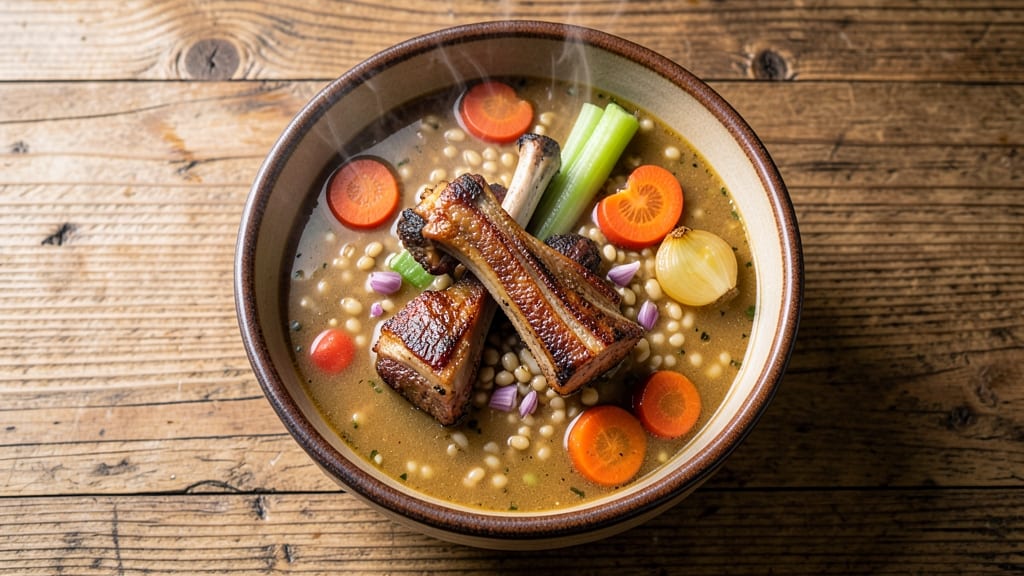
This beef barley soup recipe with prime rib bones transforms tough cuts into a velvety, bone-rich broth that carries deep umami flavor through hours of slow simmering.
The key lies in those marrow-filled bones—roasted first to deepen their caramelized richness—while barley and root vegetables absorb the essence of the broth, creating a hearty meal that tastes like a home-cooked hug.
What starts as a simple pot of ingredients becomes a restaurant-worthy stew with layers of savory depth and comforting texture.
The process begins with rendering the bones until they yield their marrow, then building the broth through a slow simmer that extracts every ounce of flavor without bitterness.
Barley, carrots, and celery round out the dish with subtle sweetness and earthy notes, while herbs like thyme and bay leaf elevate the broth to something extraordinary.
This isn’t just soup—it’s a foolproof way to turn inexpensive cuts into a dish that feels luxurious, with minimal effort after the initial prep.
By the time you ladle this into bowls, you’ll have a soup that’s rich enough to stand alone but balanced enough to pair with crusty bread or a simple green salad.
The barley softens just enough to be tender yet still holds its shape, while the broth remains silky and deeply flavorful. It’s the kind of meal that warms you from the inside out—perfect for chilly evenings or when you crave comfort without compromise.
Whether you’re using a Dutch oven on the stovetop or a pressure cooker for speed, the technique remains the same: patience and attention to detail. The result?
A plated meal that’s as satisfying as it is nourishing, with every spoonful packed with the kind of flavor that makes you want to slow down and savor it. Let’s get started on creating this timeless classic.
Ingredients for beef barley soup recipe with prime rib bones
Gather these hearty ingredients for a soup so rich and comforting it feels like a hug in a bowl.
| Ingredient | Amount | Notes |
|---|---|---|
| Prime Rib Bones 🦴 | 2 ½ lb | Marrow-filled, cut into chunks |
| Yellow Onion 🧅 | 1 whole | Chopped, medium size |
| Carrots 🥕 | 3 medium | Peeled, cut into chunks |
| Celery Stalks 🧄 | 3 whole | Chopped, medium size |
| Pearl Barley 🌾 | 1 cup | Rinsed thoroughly |
| Garlic Cloves 🧄 | 6 cloves | Peeled, smashed |
| Fresh Thyme 🌿 | 2 sprigs | Or 1 tsp dried |
| Bay Leaves 🍃 | 2 whole | Dried, standard size |
| Tomato Paste 🍅 | 2 tbsp | Smooth, no sugar added |
| Red Wine 🍷 | 1 cup | Dry, bold variety |
| Beef Broth 🥄 | 6 cups | Homemade or high-quality |
| Olive Oil 🫒 | 2 tbsp | Extra-virgin preferred |
| Salt 🧂 | 1 ½ tsp | Kosher or sea salt |
| Black Peppercorns 🌶️ | 1 tsp | Freshly cracked |
Prime rib bones are the secret weapon here. Ask your butcher for marrow-rich cuts—they’ll know exactly what you need. If you can’t find them, beef short ribs work too, but they won’t yield as much marrow. Costco and Whole Foods often carry them in the meat section. Look for bones that are plump with marrow—when you crack them open, you’ll see that rich, golden center. The carrots and celery should be fresh, with crisp stems. Trader Joe’s has great pre-chopped veggie mixes if you’re short on time, but nothing beats the flavor of fresh, chopped roots.
No red wine? Substitute with extra beef broth—just add 1/2 cup more. Fresh thyme is ideal, but dried works at one-third the amount. The tomato paste can be skipped if you’re avoiding it, but it adds that deep, savory richness. For the barley, pearl barley is best—it holds its shape better than steel-cut. If you can’t find it, use regular barley and simmer it 10 minutes longer. The broth matters most—homemade is ideal, but store-bought works if it’s low-sodium. Quick tip: Rao’s or Pacific Foods brands are my go-tos for quality.
This soup tastes even better the next day—make a double batch if you can. Store it in the fridge for up to 5 days or freeze portions for 3 months. For freezing, leave out the barley until reheating—it absorbs too much liquid when frozen. The bones can be prepped ahead and roasted a day in advance, then refrigerated until you’re ready to simmer. Portion into containers for easy lunches, or keep it in one big pot for family-style dinners.
Why You'll Love This Recipe
- Minimal Chopping Required: I swear by this—just dice one onion, rough-chop the carrots and celery, and toss them in. No fancy knife work, no peeling endless carrots. The prime rib bones do all the heavy lifting for flavor.
- Rich Without the Effort: That first sip? Pure magic. The marrow from the prime rib bones melts into the broth while you simmer, turning it into something deep and savory—no bouillon cubes or secret blends needed.
- Weeknight Crowd-Pleaser: Between us, this is my go-to when friends drop by unexpectedly. It feeds six easily, and everyone’s too busy slurping up the barley and tender beef to notice if I burned the toast.
- Leftovers That Taste Better: Honestly, the second day is my favorite. The barley softens just right, the broth gets even more concentrated, and I can toss in a handful of spinach or a fried egg when I reheat it. Zero waste, maximum flavor.
Step-by-step instructions for beef barley soup with prime rib bones
Here's how to extract bone-deep flavor from prime rib bones into a rich, hearty barley soup.
Brown the Prime Rib Bones for Maximum Flavor
Preheat your oven to 450°F. Place the 2.5 lb prime rib bones on a baking sheet lined with parchment paper. Roast for 20-25 minutes until they develop a deep golden-brown crust. This step is crucial—it creates the Maillard reaction that builds complex, meaty flavors into your soup.
While the bones roast, heat 2 tablespoons olive oil in a large Dutch oven over medium-high heat. Remove the bones from the oven and place them in the Dutch oven. Let them sear for 2-3 minutes per side until they're deeply browned. The bones will release their rendered fat and juices into the pan, forming a rich base for your soup.
Sauté Vegetables and Build the Flavor Base
Add the chopped yellow onion, carrots, and celery stalks to the Dutch oven. Cook for 8-10 minutes, stirring occasionally, until the vegetables soften and the onions become translucent. You'll notice the vegetables release their moisture, which will eventually evaporate, concentrating their flavors.
Add the 6 smashed garlic cloves, 2 sprigs fresh thyme, and 2 whole bay leaves to the pot. Stir for 30 seconds until fragrant. Then, add the 2 tablespoons tomato paste and cook for another 1-2 minutes, stirring constantly. This creates a rich, slightly sweet base that will deepen the umami flavor of your soup.
Deglaze and Simmer the Bones
Pour in the 1 cup red wine and scrape up any browned bits from the bottom of the pot with a wooden spoon. This deglazing step captures all the flavorful fond that's stuck to the pan. Let the wine simmer for 3-4 minutes until it reduces by half and the alcohol burns off.
Add the 6 cups beef broth and bring the mixture to a boil. Once boiling, reduce the heat to low and cover the pot. Let the bones simmer for 1.5 hours. This long simmering time is essential—it allows the bones to break down and infuse the broth with their rich, gelatinous marrow and collagen, creating a velvety texture.
Strain and Cook the Barley
After 1.5 hours, remove the prime rib bones from the pot using tongs and place them on a plate. Strain the broth through a fine-mesh sieve into a clean pot, pressing on the vegetables to extract as much flavor as possible. Discard the solids.
Return the strained broth to the Dutch oven and add the 1 cup rinsed pearl barley. Bring the mixture to a boil, then reduce the heat to low-medium and let it simmer for 25-30 minutes, or until the barley is tender and the soup has thickened slightly. Stir occasionally to prevent the barley from sticking to the bottom of the pot.
Season and Serve
Add the 1.5 teaspoons salt and 1 teaspoon freshly cracked black peppercorns to the soup. Taste and adjust the seasoning as needed. The soup should be rich and savory, with a deep umami flavor from the prime rib bones and a satisfying chew from the barley.
Serve the soup hot, garnished with a sprinkle of fresh thyme or a drizzle of olive oil. The prime rib bones can be picked clean and served on the side for those who love extra flavor. This soup is even better the next day as the flavors continue to meld and deepen, making it a perfect dish for a cozy meal with family or friends.
Pro Tips For Making Beef Barley Soup Recipe With Prime Rib Bones
- CRACK THE BONES FIRST: Skip the store-bought broth—roast those prime rib bones uncovered at 450°F for 20 minutes before adding liquid. The Maillard reaction on the bone surfaces turns bland broth into rich, caramelized gold. (Yes, it’s extra work, but the difference is night and day.)
- CHOP VEGGIES UNIFORM: Carrots and celery in big chunks? No. Cut them into ½-inch pieces so they cook evenly with the barley. I used to leave them whole, and they’d turn to mush while the barley stayed undercooked—frustrating, but easy to fix.
- SALT THE BONES LIKE THE OCEAN: Generously salt the prime rib bones before roasting—at least 1 tablespoon per pound. This isn’t just for flavor; it prevents the broth from tasting flat later. (I learned this after making a batch that tasted like it needed more salt after hours of simmering.)
- STIR THE BARLEY EARLY: Add the pearl barley to the pot when the broth is still hot, then stir it in like you’re mixing a cake batter. This prevents clumping and ensures every grain gets coated in flavor. (I used to toss it in later, and it’d turn to mush in spots.)
Flavor customization for these flavors
Spice Level Boost
For heat lovers, add ½ teaspoon smoked paprika and ¼ teaspoon cayenne pepper when sautéing the vegetables. This adds a subtle smokiness and a gentle kick that pairs beautifully with the rich umami of the broth.
If you prefer a milder heat, try 1 teaspoon of crushed red pepper flakes instead—it’s more aromatic than spicy. 🌶️
Herb Variations
Swap out the thyme for rosemary or sage to add a piney, earthy depth to the soup. For a brighter profile, mix 1 sprig fresh rosemary with the thyme.
If you love fresh herbs, garnish with chopped parsley or chives before serving—they add a fresh, bright contrast to the hearty soup.
Umami Enhancers
Deepening the umami flavor is key for this soup. Add 1 teaspoon fish sauce or 1 tablespoon soy sauce> when deglazing with the wine. Alternatively, stir in 1 teaspoon miso paste> during the final 10 minutes of simmering for a richer, more complex taste.
These additions are subtle but make a world of difference.
Vegetable Swaps
Customize the veggies based on what you have. Swap carrots for parsnips> (they’re sweeter and add a nutty note) or add sweet potatoes> for extra heartiness. For a lighter touch, include zucchini or mushrooms>—they absorb the broth beautifully and add earthy flavors.
Just be mindful of cooking times; zucchini cooks faster than carrots.
Cheesy Finish
Top individual servings with grated Parmesan cheese> or crumbled feta> for a creamy, tangy contrast. I love adding a sprinkle of Pecorino Romano>—it’s sharper and adds a salty punch that cuts through the richness.
For a dairy-free option, try nutritional yeast>, which gives a cheesy flavor without the dairy.
Acid Balance
Brighten the soup with a splash of lemon juice> or apple cider vinegar> before serving. Start with 1 teaspoon> and adjust to taste—this balances the richness and adds a refreshing lift.
A pinch of citric acid> (found in baking aisles) works too if you want to control the tang more precisely.
Nutrition facts
Frequently asked questions
Can I use beef short ribs instead of prime rib bones?
Yes! Short ribs work beautifully—they'll give you even more meaty flavor since they contain both bone and muscle. Just increase the simmering time to 2-2.5 hours to ensure the meat becomes tender. The marrow yield will be lower, but the extra protein makes the soup heartier. For best results, trim excess fat from the ribs before roasting.
How do I know when the prime rib bones are done roasting?
They're ready when they develop a deep golden-brown crust with some charred spots. The bones should be hot to the touch but not burning. For perfect results, roast them until the marrow inside looks slightly translucent when you crack open one test piece. This usually takes 20-25 minutes at 450°F.
Can I make this soup in a slow cooker?
Brown the bones and vegetables on the stovetop first, then transfer everything to your slow cooker. Add the wine, broth, and remaining ingredients, then cook on low for 8-10 hours or high for 5-6 hours. The long cooking time enhances the flavors beautifully. Just be sure to strain the broth before adding the barley to prevent a mushy texture.
What if my barley gets mushy?
This usually happens from overcooking or using the wrong type of barley. For perfect texture, use pearl barley (not steel-cut) and simmer for exactly 25-30 minutes after adding it to the broth. If you're concerned, check the barley at 20 minutes—it should be tender but still hold its shape. Drain any excess liquid if needed before serving.
How can I make this soup ahead of time?
This soup actually tastes better the next day! Prepare it completely (including the barley) and refrigerate in an airtight container for up to 5 days. For freezing, cool the soup completely, portion it into containers, and freeze for up to 3 months. When reheating, warm it gently on the stove over low heat—never microwave directly from frozen.