
Soups & Stews
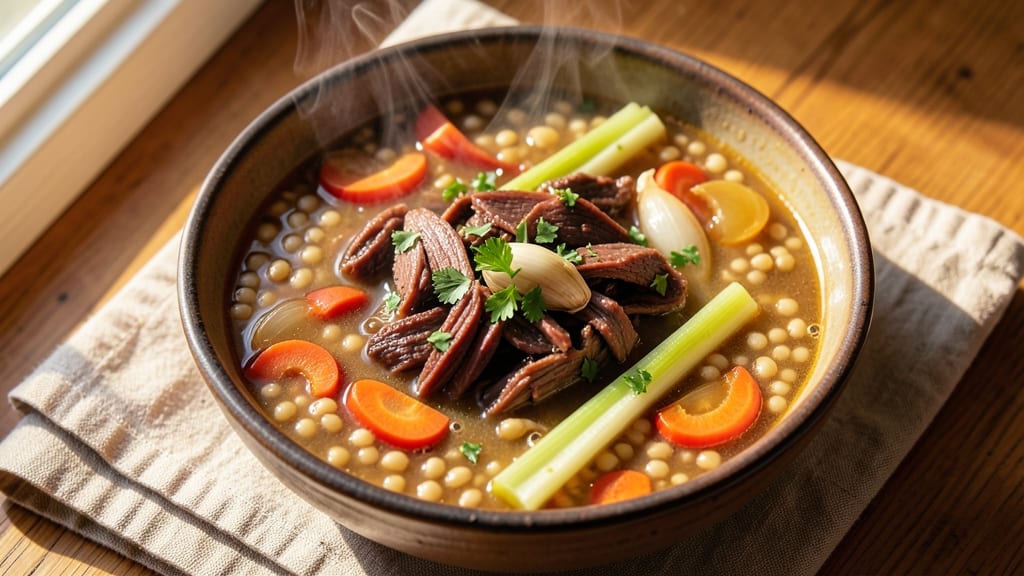
Transforming leftover prime rib into a beef barley soup recipe with leftover prime rib is the ultimate way to elevate dinner without extra effort. The rich, savory meat dissolves into a hearty broth while barley absorbs all the deep flavors—no waste, just pure comfort.
I developed this recipe after realizing how much flavor lingers in those leftovers, and it became my go-to for turning Sunday roasts into Monday masterpieces.
Here's the secret: deglaze that roasting pan with broth to capture every last bit of caramelized fond, then build the soup with tender carrots, celery, and onions for classic depth. The barley softens just enough to soak up all that meaty goodness while staying firm enough to hold its shape.
It's the kind of soup that tastes even better the next day, when flavors have time to meld completely.
What you'll end up with is a rich, aromatic broth filled with tender beef, chewy barley, and perfectly seasoned vegetables—every spoonful packed with savory satisfaction. The texture is just right: hearty enough to fill you up but light enough to eat all week.
This isn't just soup; it's a flavor rescue mission that turns scraps into something spectacular.
Perfect for busy weeknights when you need dinner on the table fast, or as a way to stretch a special cut of meat into multiple meals. The technique is simple but the results are restaurant-quality—proof that great food doesn't always require starting from scratch. Let's get cooking!
Ingredients for beef barley soup recipe with leftover prime rib
Leftover prime rib transforms into restaurant-quality soup with these 14 simple ingredients.
| Ingredient | Amount | Notes |
|---|---|---|
| Leftover Prime Rib 🥩 | 1 ½ lb | Shredded or chopped into bite-sized pieces |
| Yellow Onion 🧅 | 1 whole | Diced, about 1.5 cups |
| Carrots 🥕 | 4 medium | Peeled and sliced into 1/4-inch rounds |
| Celery Stalks 🧄 | 3 whole | Diced, including leaves for extra flavor |
| Garlic Cloves 🧄 | 4 cloves | Minced or finely chopped |
| Barley 🌾 | 1 cup | Pearl barley, rinsed before use |
| Beef Broth 💧 | 6 cups | Low-sodium preferred, homemade if possible |
| Tomato Paste 🍅 | 2 tbsp | Smooth, not chunky |
| Red Wine 🍷 | ½ cup | Dry, like Cabernet Sauvignon |
| Bay Leaves 🌿 | 2 whole | Fresh if available, dried otherwise |
| Fresh Thyme 🌿 | 2 tbsp | Leaves only, chopped |
| Salt 🧂 | 1 ½ tsp | Kosher or sea salt, adjust to taste |
| Black Pepper 🌶️ | ½ tsp | Freshly ground preferred |
| Olive Oil 🫒 | 2 tbsp | Extra-virgin for richness |
The prime rib is the star here, so don't skimp on quality. Any leftover roast works, but if you've got a choice, pick the most flavorful piece. The roasting pan fond is non-negotiable—it's packed with caramelized flavor. If you don't have it, just use a heavy-bottomed pot. For the barley, Bob's Red Mill or Quaker are reliable brands. The beef broth should be rich—homemade or high-quality store-bought makes all the difference. I always grab the low-sodium version at Whole Foods or Trader Joe's to control the seasoning better.
No red wine? Substitute with extra beef broth plus a splash of balsamic vinegar—it adds depth without alcohol. Fresh thyme is ideal, but dried works at half the amount. The tomato paste can be skipped if you're sensitive to acidity, but it adds a nice umami punch. For the vegetables, baby carrots or pre-cut celery save time. If you're using dried thyme, make sure it's not ground into dust—look for leafy bits. The bay leaves can be removed before serving, but I leave them in for extra flavor during cooking.
This soup tastes even better the next day—reheats beautifully in under 10 minutes. Store leftovers in the fridge for up to 5 days or freeze for 3 months. I always double the batch because it's perfect for meal prep. The barley keeps its texture well when reheated, and the flavors deepen overnight. For serving, a sprinkle of fresh parsley or a drizzle of high-quality olive oil takes it to the next level.
Why You'll Love This Recipe
- Here’s what sold me: it’s the soup that works for everyone. Bring it to a game-day gathering, pack it for work, or serve it to picky eaters (my kid devours the carrots but pretends not to like barley—shhh). The hearty texture and bold taste make it a hit, no matter the occasion.
- I’ll be real: prime rib is a splurge, but this recipe stretches it into three meals. First as the main, then as soup, then shredded into tacos. That’s three meals from one cut—no food waste, just smart cooking. Plus, the veggies and barley are cheap staples, so you’re basically getting gourmet leftovers on a budget.
Step-by-step instructions for beef barley soup with leftover prime rib
Transform your leftover prime rib into a hearty, flavorful soup that feels like a restaurant meal.
Sauté the Vegetables and Prime Rib
Heat the 2 tablespoons olive oil in a large pot over medium-high heat. Add the 1 whole yellow onion, 4 medium carrots, and 3 whole celery stalks, stirring occasionally for 5-6 minutes until the vegetables soften and begin to caramelize slightly at the edges. You'll notice the onions turn translucent and the carrots release their sweet aroma.
Add the 1.5 pounds leftover prime rib, breaking it into bite-sized pieces if needed. Cook for another 3-4 minutes, stirring occasionally, until the meat begins to brown and release its rich beefy fragrance. This step builds the foundation of your soup's deep, savory flavor. If the meat sticks, add a splash of beef broth to deglaze and scrape up those delicious browned bits from the bottom of the pot.
Add Aromatics and Cook the Barley
Stir in the 4 cloves minced garlic and cook for 30 seconds until fragrant—you'll smell that wonderful garlic aroma that signals it's ready. Add the 1 cup rinsed barley, 2 tablespoons tomato paste, and 2 whole bay leaves, stirring to combine. Pour in the 6 cups beef broth and bring the mixture to a gentle boil.
Once boiling, reduce heat to medium-low and let it simmer uncovered for 20 minutes. This allows the barley to begin absorbing the broth while the prime rib reabsorbs moisture and softens. Stir occasionally to prevent sticking. The soup should smell rich and inviting, with the barley releasing its nutty aroma.
Incorporate Wine and Seasonings
Add the 0.5 cup red wine and 2 tablespoons chopped fresh thyme, stirring well. Let the soup simmer for another 10 minutes to allow the wine to mellow and its flavors to meld with the other ingredients. The alcohol will cook off, leaving behind just the fruity notes of the wine.
Season with 1.5 teaspoons salt and 0.5 teaspoon black pepper, adjusting to taste. Remember, the prime rib already contains some salt, so taste before adding all the seasoning. The soup should be well-seasoned but not overwhelmingly salty. Stir gently and let it continue simmering uncovered for 15-20 minutes more, until the barley is tender and the prime rib is fork-tender. You'll know it's ready when the barley has softened and the soup has thickened slightly.
Finish and Rest the Soup
Remove the 2 whole bay leaves and adjust the seasoning if needed. Let the soup rest off the heat for 5-10 minutes—this allows the flavors to meld and the barley to finish absorbing the broth. The resting period also helps the soup thicken slightly, creating a more satisfying texture.
Ladle the soup into bowls and serve immediately. The prime rib should be tender enough to pull apart with a fork, and the barley should be plump and creamy. Each spoonful should deliver a perfect balance of rich beef flavor, nutty barley, and aromatic vegetables. Pair with crusty bread to soak up every last drop of this comforting, flavorful soup.
Pro Tips For Making Beef Barley Soup Recipe With Leftover Prime Rib
- CHOP THE PRIME RIB SMALL: Cut those leftover prime rib slices into ½-inch cubes—no bigger, no smaller. I used to leave them uneven, and some pieces stayed tough while others turned to mush. Uniform size means even cooking, every bite.
- SWEAT THE VEGETABLES LOW AND SLOW: Turn the heat down to medium-low when cooking onions, carrots, and celery—this isn’t a stir-fry. After 5 minutes, they should be soft but not browned. I learned the hard way: rushing this step burns the flavor right out of them.
- SAVE THE JUICES: Don’t drain the prime rib before adding it to the soup. Those juices are liquid gold—packed with flavor. Just pat the meat dry with a paper towel first, then add it straight to the pot. Your broth will taste richer, and you’ll waste less.
- ADD BARLEY LATE: Stir in the barley only after the soup has simmered for 20 minutes—when the meat is tender and the broth is flavorful. I used to add it at the start, and it always ended up mushy. This way, it absorbs the broth perfectly without turning to paste.
Troubleshooting this dish
Meat Too Tough?
If your leftover prime rib feels tough after shredding, it’s likely overcooked from the original roast. To fix this, simmer the soup longer—about 30-45 minutes—until the meat becomes fork-tender. For extra tenderness, add 1 cup warm water halfway through cooking to help break down the fibers.
I’ve found that slow-cooking on low heat works wonders for transforming chewy meat into melt-in-your-mouth bites. 💪
Barley Too Mushy?
Overcooked barley turns to mush, ruining the soup’s texture. To prevent this, start checking for doneness after 30 minutes of simmering. If it’s still firm, reduce the heat to low and continue cooking for another 10 minutes.
For a quicker fix, stir in 1-2 tablespoons cold water to halt further cooking. I always use pearl barley because it holds its shape better than steel-cut varieties.
Broth Too Thin?
If your soup looks watery, it’s likely because the barley absorbed too much liquid. To thicken it, remove the pot from heat and stir in 1-2 tablespoons cornstarch mixed with 2 tablespoons cold water. Simmer for 2-3 minutes until the soup reaches your desired consistency.
Alternatively, let it cool slightly and refrigerate for 1 hour—the fat will solidify on top, making it easy to skim off for a richer, thicker broth.
Flavor Too Mild?
If your soup lacks depth, boost the umami by adding 1 teaspoon Worcestershire sauce or ½ teaspoon fish sauce at the end of cooking. For extra richness, stir in 1 tablespoon tomato paste or a splash of balsamic vinegar to balance the flavors.
I also recommend toasting the barley in the pot for 1-2 minutes before adding broth to enhance its nutty flavor. 🌟
Vegetables Overcooked?
To keep carrots and celery crisp, add them to the pot only 5-10 minutes before the soup is done. If they’re already too soft, blend a portion of the soup and strain it back in—this creates a silky texture while keeping the veggies intact.
For extra freshness, garnish with chopped parsley or green onions right before serving.
Wine Overpowering?
If the red wine flavor dominates, reduce the amount to ¼ cup next time or substitute with extra beef broth. To balance the taste, add ½ teaspoon sugar or a pinch of salt**> to round out the flavors.
If the soup is already cooked, stir in 1 teaspoon lemon juice to brighten the palate. I’ve found that a Cabernet Sauvignon adds the best depth without overpowering the beef.
Nutrition facts
Frequently asked questions
Can I use other cuts of beef instead of prime rib?
This recipe works beautifully with chuck roast, brisket, or even stew meat. The key is using meat that's already cooked through but still tender enough to shred. If you're using a tougher cut like chuck, simmer the soup for an extra 15-20 minutes to ensure the meat breaks down completely. The flavor profile will be slightly different but just as satisfying.
How do I store and reheat this soup?
Store leftovers in an airtight container in the fridge for up to 5 days or freeze for 3 months. To reheat, warm on the stove over medium-low heat for 5-7 minutes, stirring occasionally. Add 1-2 tablespoons water or broth if it thickens too much. The flavors actually improve after resting overnight—perfect for busy weeknights!
What if I don't have red wine?
No problem! Substitute with ½ cup beef broth plus 1 teaspoon balsamic vinegar for depth, or use ½ cup apple cider for a sweeter note. The wine adds complexity, but these alternatives still create a rich, flavorful soup. If you're avoiding alcohol completely, the broth-and-vinegar combo works perfectly without any alcohol content.
Can I make this soup in a slow cooker?
Yes! Sauté the vegetables and meat first, then transfer everything to the slow cooker with all ingredients. Cook on low for 6-7 hours or high for 3-4 hours. The slow cooking enhances the tenderness of both the meat and barley. Just check the barley after 3 hours to prevent mushiness—it cooks faster in a slow cooker than on the stove.
Why does the barley need rinsing?
Rinsing removes excess starch that can make the barley gummy and gluey. Unrinsed barley releases too much starch into the broth, creating a thin, watery soup. Simply rinse under cold water in a fine-mesh strainer before adding to the pot. This small step makes a huge difference in texture—your soup will have perfectly chewy, separate barley grains instead of a mushy consistency.