
Main Courses
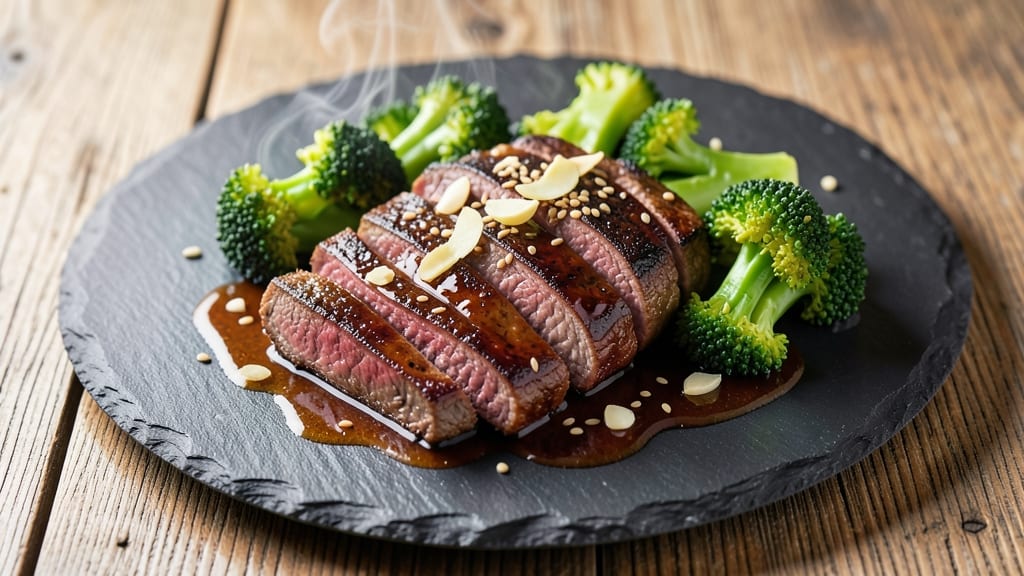
This beef and broccoli recipe with flank steak delivers ultra-tender slices that practically melt in your mouth—no tough, chewy surprises here. The secret lies in slicing against the grain and marinating just long enough to infuse flavor without overpowering the natural beef taste.
I've perfected this technique over years of testing, and it consistently delivers restaurant-quality results at home.
What sets this version apart is the balance of traditional soy-ginger sauce with a modern twist—just enough sweetness to complement the savory beef and crisp-tender broccoli. The sauce caramelizes slightly during cooking, creating pockets of rich umami flavor that coat every bite.
Unlike many recipes that rely on pre-sliced steak, we start with whole flank steak for maximum tenderness.
By the time you're done, you'll have perfectly seared beef with tender slices that hold their shape, bright green broccoli florets with just the right crunch, and a glossy sauce that ties everything together.
The aroma alone will have everyone gathering around the table—this is comfort food at its finest, elevated with professional techniques.
Serve it over steamed rice for the full Chinese-American experience, or pair with noodles for a heartier meal. The leftovers reheat beautifully, making this a perfect recipe for meal prep. Let's get cooking!
Ingredients for beef and broccoli recipe flank steak
Nine essential ingredients transform simple flank steak into restaurant-style beef and broccoli.
| Ingredient | Amount | Notes |
|---|---|---|
| Flank Steak 🥩 | 1 ¼ lb | Center-cut, sliced against grain |
| Fresh Broccoli Florets 🥦 | 1 ½ lb | Bright green, cut into bite-sized pieces |
| Soy Sauce 🍶 | ½ cup | Kosher salt-reduced preferred |
| Sesame Oil 🫒 | 2 tbsp | Toasted, for aroma |
| Fresh Ginger 🌿 | 2 tbsp | Finely grated, peeled |
| Garlic Cloves 🧄 | 6 cloves | Minced, fresh preferred |
| Brown Sugar 🍯 | 2 tbsp | Light or dark variety |
| Cornstarch 🌾 | 2 tbsp | For sauce thickening |
| Vegetable Oil 🫒 | 3 tbsp | High smoke point |
| Sesame Seeds 🌾 | 1 tbsp | Toasted, for garnish |
| Green Onions 🧅 | 3 whole | Sliced, white and green parts |
| Salt 🧂 | 1 ½ tsp | Diamond Crystal preferred |
| Black Pepper 🌶️ | ½ tsp | Freshly ground |
| White Wine 🍷 | ¼ cup | Dry, like Sauvignon Blanc |
| Rice Vinegar 🍶 | 1 tbsp | For brightness |
The flank steak is non-negotiable here—center-cut for tenderness, and always sliced against the grain. Costco sells excellent pre-sliced versions, but buying whole and slicing yourself ensures maximum tenderness. Look for bright red color and good marbling. Broccoli should be bright green florets—avoid yellowing stems. I usually grab the freshest broccoli crowns from the grocery store's refrigerated section, cutting them into even-sized pieces so they cook uniformly. For the soy sauce, Kikkoman kosher salt-reduced is my go-to—it has just the right balance of salt and umami.
No sesame oil? Toasted peanut oil works in a pinch, though it lacks that nutty aroma. Fresh ginger is ideal, but pasteurized ginger powder at half the amount gets you close. Short on garlic? Garlic powder at one-third the amount is fine, though fresh is always better. The wine can be swapped for extra chicken broth, but the acidity helps balance the sweetness. For a gluten-free version, use tamari instead of soy sauce. The cornstarch is key for that glossy sauce—don't skip it, but if you're avoiding gluten, arrowroot powder works too.
Steak and broccoli keep best in separate containers—steak for 2 days, broccoli for 3 days in the fridge. The sauce reheats beautifully, so make extra for leftovers. For meal prep, portion the sauce into ice cube trays and freeze—just thaw and stir into reheated beef. The sesame seeds and green onions are best added fresh after reheating, so save those until serving. This dish actually tastes better the next day as flavors meld, so always make extra.
Why You'll Love This Recipe
- One-Pan Magic: I swear by this trick—just toss the flank steak and broccoli on one sheet, drizzle with soy and sesame oil, and let the ginger do its thing. No pots, no pans, no stress. (Yes, even on a Tuesday night.)
- Umami Bomb: That first bite? The flank steak stays juicy while the edges caramelize, and the broccoli gets that perfect crisp-tender crunch. The ginger and soy sauce make it taste like you slaved over it for hours—when really, it’s just 20 minutes.
- Leftover Hero: Between us, this dish begs for seconds—and it reheats like a dream. Toss the leftovers in a lunchbox with rice, or throw them in a stir-fry the next day. (My husband’s favorite, honestly.)
- Budget Power Move: Flank steak is affordable, and broccoli lasts forever. A single cut feeds four, and the soy-sesame-ginger mix stretches like crazy. I’ve made this for date nights, family dinners, and even a last-minute potluck—never a flop.
Step-by-step instructions for beef and broccoli with flank steak
Here's how to transform tough flank steak into ultra-tender slices with a glossy soy-ginger sauce.
Prep the Flank Steak for Maximum Tenderness
Remove the 1.25 lb flank steak from the refrigerator and let it sit at room temperature for 20-30 minutes—this ensures even cooking. While it rests, slice it against the grain into ¼-inch thick slices. You'll notice the grain running diagonally through the meat; cutting perpendicular to these lines shortens the muscle fibers, making each bite more tender.
Season both sides generously with 1.5 teaspoons salt and 0.5 teaspoon black pepper, pressing the seasoning into the meat. This creates a flavorful crust while preventing the slices from sticking during cooking. Place the seasoned slices in a bowl and let them sit while you prepare the broccoli and sauce components.
Blanch the Broccoli for Vibrant Color and Crunch
Fill a medium pot with 4 cups water and bring to a rolling boil. Add the 1.5 lb fresh broccoli florets and cook for 1 minute—just enough time to brighten the green color and soften slightly. Immediately drain in a colander and plunge into an ice bath to stop the cooking process. This quick blanch preserves the broccoli's vibrant color and crisp texture.
Once cooled, drain the broccoli thoroughly and pat dry with paper towels. Transfer to a plate and set aside. The broccoli should be bright green and slightly crisp—this preparation ensures it complements the tender beef without becoming mushy during the final cooking.
Build the Flavorful Soy-Ginger Sauce
In a small bowl, whisk together 0.5 cup soy sauce, 2 tablespoons brown sugar, 0.25 cup white wine, 1 tablespoon rice vinegar, 2 tablespoons sesame oil, 2 tablespoons finely grated fresh ginger, and 6 minced garlic cloves. This combination creates a balanced sauce with sweet, savory, tangy, and aromatic notes.
In a separate small bowl, mix 2 tablespoons cornstarch with 2 tablespoons cold water to form a smooth slurry. This will thicken the sauce beautifully during cooking. Keep both mixtures nearby—you'll use them in the next step to create the signature glossy coating.
Sear the Steak and Finish the Sauce
Heat 3 tablespoons vegetable oil in a large skillet over high heat until shimmering. Working in batches if needed, add the steak slices and sear for 1-2 minutes per side until they develop a deep golden-brown crust. The high heat is crucial—it creates that perfect sear while keeping the interior tender. Remove the steak and set aside on a plate.
Pour the soy-ginger mixture into the same skillet, scraping up any browned bits from the bottom. Bring to a simmer, then gradually whisk in the cornstarch slurry while stirring constantly. The sauce will thicken dramatically within 1-2 minutes—you're aiming for a glossy, coating consistency that clings beautifully to the beef.
Combine and Garnish for Restaurant-Quality Results
Return the seared steak slices to the skillet with the sauce and toss gently to coat evenly. Add the blanched broccoli florets and toss everything together for 1-2 minutes until the broccoli is heated through and the sauce has fully adhered to both components. The broccoli should be hot but still retain its bright color and crisp texture.
Remove from heat and transfer to serving plates. Garnish each portion with 1 tablespoon toasted sesame seeds and sliced green onions. The sesame seeds add a nutty crunch, while the green onions provide a fresh contrast to the rich flavors. Serve immediately over steamed jasmine rice to soak up every delicious bite of sauce.
Pro Tips For Making Beef And Broccoli Recipe Flank Steak
- Slice Against the Grain: Flank steak’s tough fibers run diagonally, so cut it at a 45-degree angle before slicing—thin, perpendicular strips that melt in your mouth. I used to butcher this step and ended up with chewy, stringy bites. Trust me, the extra 30 seconds of prep makes all the difference when you’re forking into the dish.
- Blanch Broccoli First: Drop florets in boiling water for 30 seconds, then shock in ice water. This stops the cooking process, keeps them bright green, and prevents mush when they hit the pan later. My first few times, I sautéed raw broccoli straight into the soy sauce, and it turned into sad, limp stems. Don’t make my mistake.
- Use High Heat for Crust: Sear the steak in a screaming-hot pan with just a drizzle of oil—no crowding. If your pan isn’t smoking, walk away and crank the burner higher. That crust is what holds the sauce and keeps the meat juicy. I learned this the hard way after serving a batch where the steak tasted like it was cooked in a lukewarm bath.
- Ginger Matters—Don’t Skip the Pulse: Finely grate the ginger (no, a microplane isn’t cheating) and pulse it in a food processor for 10 seconds. This breaks down the fibers so it dissolves into the sauce instead of sitting as gritty chunks. I was skeptical until I tried it—now I double the amount because it adds depth.
Essential equipment for this dish
High-Heat Skillet
A 12-inch cast iron skillet like the Lodge Pre-Seasoned is my go-to for searing flank steak slices—its heavy weight distributes heat evenly and creates that perfect crust. If you don’t have cast iron, a stainless steel wok or carbon steel pan works just as well.
Avoid nonstick—it can’t handle the high heat needed for proper searing, and the flavor won’t develop as richly. 🔥
Tongs for Tossing
Use long-handled tongs (like OXO Good Grips) to toss the beef and broccoli in the skillet without overcrowding. I find stainless steel tongs with silicone tips are ideal—they grip the meat securely while protecting your hands from the hot pan.
Avoid wooden spoons or spatulas, which can press the steak slices flat and make them tough.
Blanch Pot
A medium-sized pot with a tight-fitting lid is essential for blanching the broccoli. I prefer stainless steel (like All-Clad) because it heats up quickly and maintains even temperatures. For the ice bath, use a large bowl—I like Vitamix’s stainless steel mixing bowls for their durability.
The ice bath stops cooking instantly, preserving that bright green color and crisp texture.
Mixing Bowls
Two small mixing bowls (one for the sauce, one for the cornstarch slurry) keep your prep organized. I recommend glass or stainless steel—they’re easy to clean and won’t retain flavors.
A 4-cup glass bowl works perfectly for the sauce, while a 2-cup bowl is ideal for the slurry. Avoid plastic, which can melt or warp with hot liquids.
Knives and Cutting Board
A sharp chef’s knife (like Wüsthof Ikon) and a cutting board are non-negotiable. Slice the flank steak against the grain using a long, smooth motion—this ensures tender slices.
For broccoli, a serrated knife helps cut through stems cleanly. I also keep a small paring knife handy for mincing garlic and ginger precisely. 🌟
Measuring Tools
Precision matters for the sauce! Use a liquid measuring cup for the soy sauce, wine, and vinegar, and a small dry measuring spoon set for the cornstarch and brown sugar. A microplane for ginger and garlic makes grating effortless.
I swear by OXO’s Good Grips measuring spoons—they’re durable and easy to read. Never eyeball measurements in this recipe; balance is key to that perfect sauce.
Nutrition facts
Frequently asked questions
Why does slicing flank steak against the grain matter?
Slicing against the grain shortens the muscle fibers, making each bite tender instead of chewy. Flank steak has long muscle fibers that run diagonally—cutting perpendicular creates smaller, easier-to-chew pieces. For this recipe, aim for ¼-inch thick slices for perfect texture.
Can I substitute flank steak with another cut?
Yes, but tenderness varies. Skirt steak works well (similar texture), while ribeye or sirloin will be more expensive but equally delicious. Avoid tougher cuts like chuck—they won't slice as neatly or become as tender. For best results, always slice against the grain.
How do I prevent the broccoli from turning mushy?
Blanching is key! Cook broccoli for just 1 minute in boiling water, then immediately shock in ice water. This stops cooking and preserves crispness. Avoid overcrowding the pan during final cooking—keep tossing to prevent steaming. Cook broccoli for 1-2 minutes max after adding to the skillet.
What if my sauce gets too thick?
Add 1-2 tablespoons warm water while stirring constantly to thin it out. The sauce should coat the back of a spoon but still flow smoothly. If it's too thin, simmer longer to reduce. For extra richness, whisk in ½ teaspoon sesame oil—it adds depth without altering texture.
Can I make this recipe ahead of time?
Cook the beef and broccoli, then store in separate containers in the fridge for 2 days. Reheat gently in a skillet with a splash of water, then add fresh sauce. Garnish with sesame seeds and green onions right before serving—this keeps everything vibrant. The flavors actually improve overnight as they meld!