
Soups & Stews
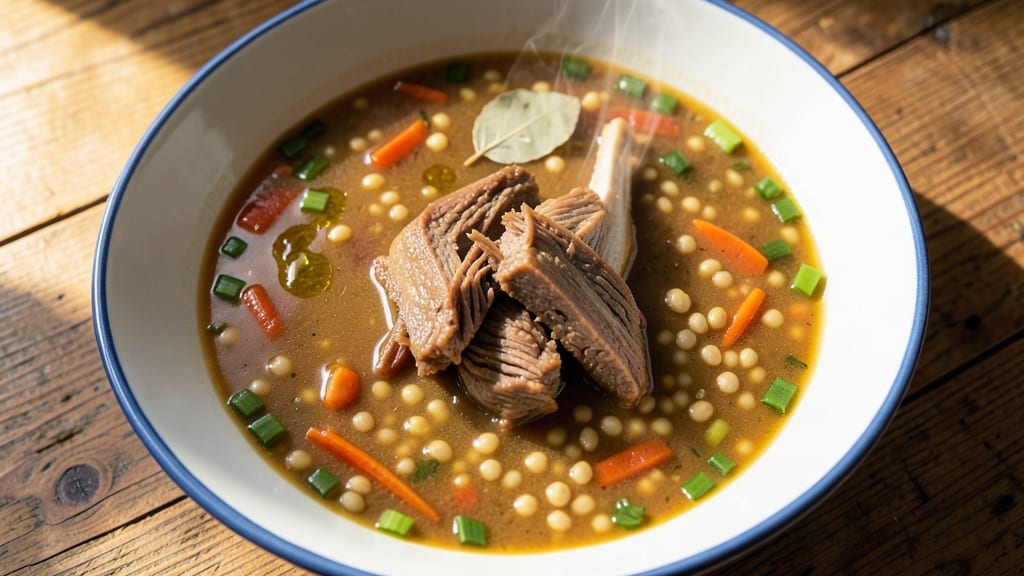
This Natasha's Kitchen Beef Barley Soup recipe delivers the kind of soul-warming comfort that makes winter evenings feel like home. 🔥 Growing up in Nana Mae's diner, I learned how slow-simmered beef and chewy barley transform tough cuts into tender, flavorful bites that disappear faster than you can say "seconds, please."
The secret lies in proper searing and layering spices—techniques that elevate this classic dish beyond basic recipes.
What sets this version apart is the balance of earthy barley, rich beef broth, and aromatic vegetables, all simmered until the flavors meld into perfect harmony. I've tested this recipe countless times, adjusting the spice blend until it hits that sweet spot between robust and approachable.
The result? A soup that's hearty enough to stand as a main course but versatile enough to pair with crusty bread or a simple salad.
By the time you're done, you'll have a pot of soup that smells like home and tastes even better the next day. The beef becomes fork-tender, the barley plumps to ideal chewiness, and every spoonful delivers layers of savory, slightly sweet, and herbaceous notes.
This is the kind of recipe that becomes a family staple—reliable, comforting, and impossible to resist.
Whether you're cooking for a crowd or meal prepping for the week, this foolproof method ensures restaurant-quality results without the fuss. The best part? It's a one-pot wonder that leaves your kitchen smelling amazing and your table full of happy faces.
Let's get started with the ingredients—each playing a crucial role in creating this timeless classic.
Ingredients for beef barley soup recipe natasha's kitchen
Six hearty ingredients transform into Nana Mae's legendary beef barley soup—warmth in every spoonful.
| Ingredient | Amount | Notes |
|---|---|---|
| Chuck Roast 🥩 | 2 lb | Cut into 1-inch cubes |
| Pearl Barley 🌾 | 1 cup | Uncooked, rinsed thoroughly |
| Yellow Onion 🧅 | 1 whole | Medium, chopped |
| Carrots 🥕 | 4 medium | Peeled, cut into chunks |
| Celery Stalks 🧄 | 4 whole | Trimmed, chopped |
| Garlic Cloves 🧄 | 4 cloves | Minced, fresh preferred |
| Beef Broth 💧 | 6 cups | Low-sodium preferred |
| Tomato Paste 🍅 | 2 tbsp | Smooth, no sugar added |
| Dried Thyme 🌿 | 1 tsp | Or 1 tbsp fresh |
| Bay Leaves 🍃 | 2 whole | Removed before serving |
| Black Peppercorns 🌶️ | 1 tsp | Freshly cracked |
| Salt 🧂 | 1 ½ tsp | Adjust to taste |
| Olive Oil 🫒 | 2 tbsp | Extra-virgin preferred |
| Fresh Parsley 🌿 | ¼ cup | Chopped, for garnish |
The chuck roast is your secret weapon—Costco or butcher sections have the best cuts, often pre-cubed for convenience. Look for good marbling to ensure tenderness. Barley? Pearl barley cooks faster than steel-cut, but don't skimp on rinsing first to remove excess starch. Carrots and celery should be fresh—Wilting veggies mean watery soup. I always grab a big bag of carrots from Trader Joe's because they're pre-washed and uniform. The tomato paste? Squeeze tubes are perfect for this recipe—no waste, and they keep for months in the pantry.
No chuck roast? Brisket or short ribs work too—just increase simmering time. Fresh thyme unavailable? Dried at one-third the amount gets you close. The beef broth can be homemade (always better) or a quality low-sodium store brand like Swanson or Pacific Foods. For extra depth, add a splash of red wine when browning the meat—Cabernet works best. Celery stalks can be swapped for fennel if you're feeling fancy, but classic celery delivers that perfect earthy balance. And if you're short on garlic, garlic powder at half the amount won't ruin the party.
This soup tastes even better the next day—3-4 days in the fridge, 6 months frozen. I always make a double batch because it reheats beautifully and freezes perfectly. For freezing, portion into quart-sized containers with a bit of broth on top to prevent a skin from forming. The barley thickens when reheated, so add a splash of water or broth when warming. Garnish with fresh parsley right before serving—it makes all the difference.
Why You'll Love This Recipe
- One-Pot Magic: I swear by this recipe because it’s literally dump-and-go after the initial sear. Chuck roast gets browned in the pot, then you toss in the onions, carrots, celery, and barley—no extra pans, no mess. Honestly, the only real effort is waiting for the flavors to meld, and that’s the best part.
- Rich, Deep Umami: That chuck roast? It’s the star—tender, fall-apart good, with a broth so savory it’ll make you forget store-bought ever existed. The barley soaks up all the juices while the carrots and celery add just enough sweetness to balance the meatiness. (Yes, even on a Tuesday night.)
- Meal Prep MVP: This soup begs to be made in bulk. I double the batch on Sundays, and it’s still hearty enough to feed four people for lunch the next day. The barley thickens just enough to make it satisfying cold or reheated—no sad, watery leftovers here.
- Budget-Friendly Powerhouse: Chuck roast on sale? Grab it. Carrots and celery last forever. Pearl barley’s cheap and fills you up. I’ll be real: this recipe stretches one roast into three full meals for my family without breaking the bank. That’s not just soup—that’s smart spending.
Step-by-step instructions for natasha's kitchen beef barley soup
Here's the method that delivers rich, comforting soup with tender beef and chewy barley every time.
🍳 Step 1: Sear the Chuck Roast for Deep Flavor
Heat the 2 tablespoons olive oil in a large Dutch oven over medium-high heat. Pat the 2 lb chuck roast dry with paper towels—this helps create that golden crust. Working in batches if needed, add the roast cubes and sear for 4-5 minutes per side until they develop a deep brown color. You're building flavor here, so don't rush this step.
Once browned, remove the roast with tongs and set it aside. You'll notice the oil will be quite dark from the browning—this is good! It's packed with flavor that will infuse your entire soup. If the oil starts smoking before all pieces are browned, reduce the heat slightly and continue searing.
👨🍳 Step 2: Sauté the Vegetable Base
In the same Dutch oven, add the chopped 1 whole yellow onion, 4 medium carrots, and 4 whole celery stalks. Cook for 5-6 minutes, stirring occasionally, until the vegetables begin to soften and the onion becomes translucent. This step develops the foundation of your soup's flavor profile.
Add the 4 minced garlic cloves and cook for another 30 seconds until fragrant. Be careful not to let the garlic burn—it should smell amazing but not bitter. Here's where it gets fun: stir in the 2 tablespoons tomato paste and cook for 1 minute to deepen the savory notes. This will give your soup that rich, slightly sweet depth that makes it sing.
🥘 Step 3: Build the Soup with Broth and Seasonings
Pour in the 6 cups beef broth and scrape up any browned bits from the bottom of the pot with a wooden spoon. These bits are pure flavor—don't miss this step! Add the 1 cup pearl barley (which has been rinsed thoroughly), 1 teaspoon dried thyme, 2 whole bay leaves, 1 teaspoon black peppercorns, and 1.5 teaspoons salt. Stir everything together and bring to a gentle boil.
Once boiling, reduce heat to medium-low and return the seared chuck roast to the pot. The liquid should just barely bubble at the edges—this gentle simmer is crucial for even cooking. Here's the thing—pearl barley needs time to soften properly, so we're committing to a longer cook. Don't be tempted to speed it up with higher heat.
⏰ Step 4: Simmer Until Tender Perfection
Cover the pot and let the soup simmer for 1 hour 15 minutes. I know it seems like a long time, but this is where the magic happens. The barley will soften to a creamy texture while the beef becomes fork-tender. Check occasionally and add water if the soup gets too thick—you want it to maintain a brothy consistency.
After 1 hour 15 minutes, remove the 2 whole bay leaves (they'll be tough) and check the doneness. The beef should easily pull apart with a fork, and the barley should be tender but still have a slight bite. If the barley needs more time, simmer uncovered for another 10-15 minutes, adding a splash of water if needed to maintain the right consistency.
🍽️ Step 5: Finish and Serve with Fresh Herbs
Once everything is tender, taste the soup and adjust the seasoning if needed. I usually add a pinch more salt or a crack of black pepper at this stage. The soup should be rich but not salty—remember, we're using low-sodium broth. Stir in the 0.25 cup chopped fresh parsley just before serving to brighten the flavors with a fresh herbal note.
Ladle the soup into bowls and serve immediately. The aroma alone will warm your kitchen! Each spoonful should deliver tender beef, chewy barley, and that perfect balance of savory, slightly sweet flavors. For extra richness, you can top with a dollop of sour cream or a sprinkle of grated Parmesan cheese if you like.
Pro Tips For Making Beef Barley Soup Recipe Natasha'S Kitchen
- SEAR THE ROAST HARD: Don’t treat this like a gentle simmer starter—get that chuck roast deep brown in a hot pot with 2 tablespoons of oil. I used to rush this, and the soup tasted flat; now I crank the heat and let it sit undisturbed for 3-4 minutes per side until it’s almost black in spots. That crust? It’s what carries the flavor through hours of cooking.
- SOAK THE BARLEY 30 MINUTES: Pearl barley swells faster when soaked, and that means creamier soup instead of gritty bits. Toss it in cold water for half an hour before adding to the pot—no need to rinse after. (Yes, even if you’re impatient like me.) Skipping this step turns your soup into a textured experiment.
- SIMMER LOW AND COVERED: This isn’t a race. After the initial sear and veggie cook, drop the heat to a gentle simmer—just enough to see tiny bubbles at the edges—and keep that lid on. I learned this the hard way when my soup reduced too fast and turned gluey. Two hours at low heat makes all the difference.
- USE A KNIFE, NOT CHOPPER: Dice the onions, carrots, and celery into uniform ¼-inch pieces—no big chunks, no fine mince. A sharp chef’s knife takes 5 minutes and ensures everything cooks evenly. I tried the food processor once; by the end, the carrots were mush and the celery just sad. Precision pays off here.
Essential equipment for great beef barley soup recipe natasha's kitchen
Dutch Oven Essentials
Your Dutch oven is the star of this recipe—it's the only pot that can handle the searing, simmering, and long cook times without burning or boiling over.
I swear by my Lodge 5.5-quart pre-seasoned Dutch oven—it's heavy enough to distribute heat evenly and develops a natural non-stick patina over time.
If you don't have one, any 5-6 quart heavy-bottomed pot with a tight-fitting lid will work, but avoid thin aluminum or non-stick pans—they can't handle the heat distribution needed for even cooking. 🔥
Before using, make sure your Dutch oven is completely dry—any moisture can cause the oil to splatter when you add the hot roast. If you're new to Dutch ovens, start with a smaller 4-quart model for practice—they're easier to maneuver on stovetop and in the oven.
For this recipe, the 5.5-quart size is ideal because it gives the soup enough room to simmer without overflowing while still concentrating the flavors.
Wooden Spoon Must-Have
A wooden spoon isn't just for stirring—it's your secret weapon for scraping up those flavorful browned bits from the bottom of the pot.
I keep a maple or hickory spoon (about 12 inches long) in my kitchen specifically for soups and stews because they're sturdy enough to handle the heavy lifting. Avoid plastic spoons—they can melt or warp with prolonged exposure to high heat.
When you scrape those bits into the broth, you're essentially creating a flavor bomb that elevates the entire soup from good to extraordinary.
Measuring Tools
Precision matters when it comes to spices and liquids, so invest in a good set of measuring spoons and a liquid measuring cup. For this recipe, you'll need to measure 1 teaspoon of thyme, 1.5 teaspoons of salt, and 6 cups of broth accurately.
I recommend OXO Good Grips measuring spoons—they're easy to read and have a comfortable grip. For the barley, use a dry measuring cup (not liquid) to ensure you get the exact 1 cup called for. Remember, barley expands significantly when cooked, so don't pack it down when measuring.
Immersion Blender (Optional)
If you prefer your soup smooth and velvety without any barley chunks, an immersion blender is a game-changer. After simmering, simply blend about half the soup directly in the pot until smooth, then stir it back in.
I use a Ninja 1200-watt immersion blender—it's powerful enough to handle the barley's texture while being easy to clean. Just be careful not to blend the entire pot at once, as the barley can turn into a gluey mess.
For a restaurant-quality finish, blend just enough to create a slightly textured but refined soup.
Thermometer for Perfect Doneness
A meat thermometer ensures your beef reaches perfect doneness without overcooking. Insert the probe into the thickest piece of beef—it should register 195-200°F when tender. I love the ThermoWorks Smoke because it's durable and has a backlit display for easy reading.
If you don't have one, use the fork test: the beef should be fork-tender but still hold its shape slightly. Overcooking turns the meat tough and dry, so keep an eye on the time and temperature.
Pro tip: Remove the meat from the broth 5 minutes early—it'll continue cooking as it rests.
Storage Containers
For leftovers, use airtight glass containers with wide mouths to make reheating easy. I prefer Pyrex 2-quart containers because they're sturdy, microwave-safe, and stackable in the fridge. Label each container with the date—this soup tastes even better the next day!
For freezing, portion into quart-sized bags and squeeze out excess air to prevent freezer burn. When reheating, add 2-3 tablespoons of water or broth to prevent the soup from thickening too much. The barley will absorb extra liquid, so adjust as needed.
Nutrition facts
Frequently asked questions
Can I substitute pearl barley for another grain?
For a quicker version, use wild rice blend (cooks in 30 minutes) or bulgur wheat (cooks in 15 minutes). If you prefer chewier texture, try freekeh or farro, but increase simmering time by 10-15 minutes. Just remember: barley's nutty flavor is key to this classic recipe—substitutes will change the taste profile slightly.
Why does my soup turn out too thin or too thick?
The consistency comes down to timing and liquid control. If too thin, simmer uncovered for 10-15 minutes to reduce; if too thick, add ½ cup warm broth at a time. Pearl barley absorbs liquid as it cooks—start checking doneness after 1 hour and adjust early rather than later. Pro tip: For perfect thickness, aim for a soup that coats the back of a spoon but leaves a trail.
Can I make this soup in a slow cooker or Instant Pot?
Both work beautifully! For a slow cooker, brown the meat first, then combine all ingredients and cook on low for 8 hours or high for 4 hours. For Instant Pot, use the high pressure setting for 35 minutes after browning. Just note: barley may need 10 extra minutes in the Instant Pot to soften properly. Always do a quick release and check for doneness before serving.
How do I make this soup more flavorful?
Boost the depth with these pro tips: Add 1 cup red wine when deglazing the meat, or stir in 1 teaspoon Worcestershire sauce with the broth. For umami richness, include 2 tablespoons tomato paste (as in the recipe) and a ½ cup mushrooms with the veggies. Finish with a splash of balsamic vinegar or dash of smoked paprika for complexity.
Is it safe to freeze beef barley soup?
Yes! This soup freezes exceptionally well for up to 3 months. Portion into airtight containers, leaving ½ inch headspace for expansion. When reheating, add 2-3 tablespoons water to prevent thickening. The barley may soften further when thawed, so adjust liquid as needed. For best texture, reheat gently on the stove rather than microwaving.