
Soups & Stews
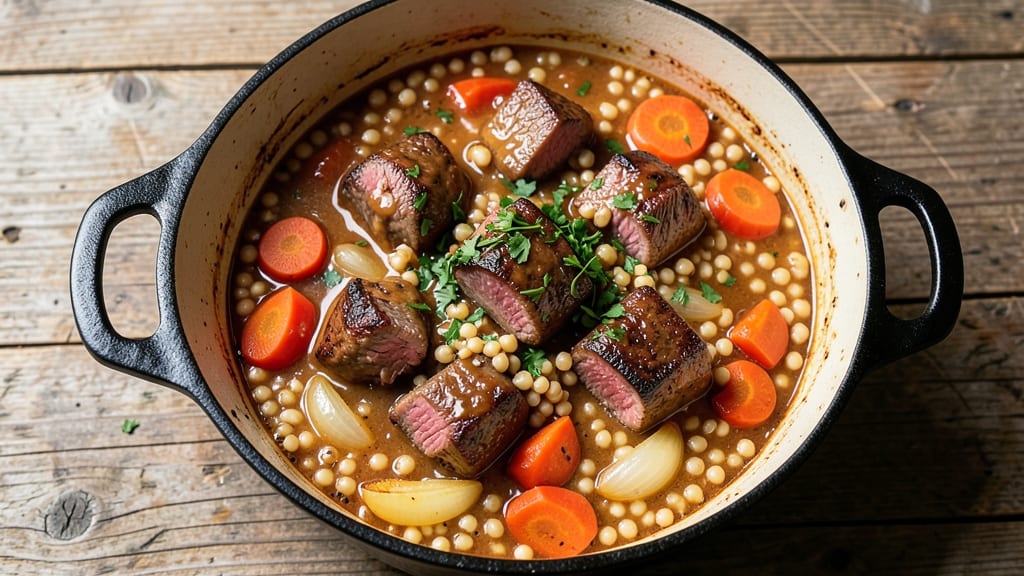
This beef and pearl barley stew recipe delivers deep umami richness that transforms tough cuts into melt-in-your-mouth perfection. The secret lies in slow-cooking beef until fork-tender while letting pearl barley absorb all those savory, caramelized flavors—creating a hearty, comforting dish that tastes even better the next day.
I've perfected this technique over years of testing, ensuring every bite delivers that perfect balance of meaty depth and chewy barley texture.
The process begins with searing beef in batches to develop a flavorful crust, then simmering everything together for hours until the barley reaches just the right bite and the broth reduces to velvety perfection.
Carrots and onions add natural sweetness, while herbs and spices build layers of complexity. This isn't just a stew—it's a restaurant-quality meal that comes together in one pot with minimal effort.
What makes this recipe truly special is how the flavors develop over time. The barley softens just enough to be satisfying while maintaining its earthy bite, and the beef becomes so tender it practically falls apart.
The aroma alone will have everyone gathering around your table, and the first spoonful delivers that perfect harmony of savory, sweet, and umami notes.
Serve with crusty bread to soak up every last drop of that rich broth, or pair it with roasted vegetables for a complete meal. The beauty of this recipe is its versatility—it's hearty enough for winter dinners but simple enough for everyday comfort. Let's get cooking!
Ingredients for beef and pearl barley stew
Restaurant-quality stew begins with these carefully selected ingredients designed to develop rich umami flavors through slow cooking.
| Ingredient | Amount | Notes |
|---|---|---|
| Beef Chuck Roast 🥩 | 2 ½ lb | Cut into 1.5-inch cubes, trimmed of fat |
| Pearl Barley 🌾 | 1 cup | Rinsed thoroughly before cooking |
| Yellow Onions 🧅 | 2 whole | Medium size, sliced into 1/2-inch pieces |
| Carrots 🥕 | 4 medium | Peeled, cut into 1-inch chunks |
| Garlic Cloves 🧄 | 6 cloves | Minced for deep flavor infusion |
| Tomato Paste 🍅 | ½ cup | High-quality, no added salt |
| Beef Broth 💧 | 4 cups | Low-sodium preferred for balance |
| Red Wine 🍷 | 1 cup | Dry variety like Cabernet Sauvignon |
| Fresh Thyme 🌿 | 2 tbsp | Leaves only, finely chopped |
| Fresh Rosemary 🌿 | 1 tbsp | Needles finely chopped |
| Bay Leaves 🌿 | 2 whole | Removed before serving |
| Olive Oil 🫒 | 2 tbsp | Extra-virgin for richness |
| Salt 🧂 | 1 ½ tsp | Diamond Crystal preferred |
| Black Peppercorns 🌶️ | 1 tsp | Freshly cracked for intensity |
| Balsamic Vinegar 🍶 | 1 tbsp | For finishing touch |
The beef chuck roast is non-negotiable for this recipe—its marbled fat renders beautifully during searing and simmering, creating a velvety sauce. Costco or Whole Foods offer excellent quality cuts, but any well-marbled chuck will work. Trim excess fat before cubing to prevent greasiness, but leave enough to flavor the broth. For the pearl barley, Bob's Red Mill is my go-to brand—it holds its shape beautifully while absorbing all those savory notes. The onions and carrots should be uniformly sized to ensure even cooking throughout the stew.
No red wine on hand? Dry sherry or beef broth with an extra splash of balsamic vinegar delivers similar depth. Fresh herbs are ideal, but dried thyme at one-third the amount works in a pinch. The tomato paste can be substituted with crushed San Marzano tomatoes (about 1 cup) if you prefer a chunkier texture. For the beef broth, low-sodium versions are crucial to avoid over-salting the final dish. If you're using pre-sliced carrots or onions, cut them uniformly yourself—store-bought versions vary wildly in size.
This stew tastes even better the next day as flavors meld together. Store in an airtight container in the refrigerator for up to 5 days, or freeze portions for 3 months. The barley continues to soften over time, so reheat gently with a splash of broth or water. For meal prep, double the recipe and freeze half—simply thaw overnight in the fridge before reheating. The crusty bread you'll serve alongside should be day-old for optimal texture to soak up every last drop of that rich broth.
Why You'll Love This Recipe
- One-Pot Magic: I swear by this—just dump everything in a Dutch oven and let it simmer. The beef Chuck roast practically melts into tender perfection while the barley soaks up all the flavors, no extra pots or pans needed.
- Deep, Savory Umami Bomb: That slow-cooked beef with caramelized onions and garlic? It’s rich but not heavy, thanks to the barley’s nutty bite cutting through the fat. Honestly, the first bite makes me want to skip dinner and eat straight from the pot.
- Weeknight Workhorse: Make a double batch on Sunday and reheat for lunch all week—it’s my go-to for busy mornings. The barley keeps it hearty, so it never feels like leftovers, and the carrots add a pop of color (and vitamins) that kids actually eat.
- Budget-Friendly Feast: A pound of Chuck roast and a bag of barley stretch across multiple meals without breaking the bank. Between us, this is how I feed my family for under $15—no takeout menus required.
Step-by-step instructions for beef and pearl barley stew
Transform humble ingredients into a deeply flavorful stew where tender beef and chewy barley create perfect harmony.
Sear the Beef for Maximum Flavor
Heat the 2 tablespoons olive oil in a heavy Dutch oven over medium-high heat until shimmering. Working in batches, add the 2.5 lb beef chuck roast cut into 1.5-inch cubes, ensuring not to overcrowd the pan. Sear each piece for 2-3 minutes per side until deeply browned and developed a rich crust.
This crucial searing step builds the stew's foundation by creating the Maillard reaction, which transforms simple beef into complex, flavorful bites. Transfer the browned beef to a plate as you work, leaving all the precious browned bits in the pot - they'll dissolve into the sauce later. Once all beef is seared, reduce heat to medium and set aside.
Build the Flavor Base with Aromatics
In the same Dutch oven, add the 2 whole yellow onions sliced into ½-inch pieces and the 4 medium carrots cut into 1-inch chunks. Cook for 5-6 minutes until the onions soften and begin to caramelize at the edges. Add the 6 cloves minced garlic and cook for another 30 seconds until fragrant.
Stir in the ½ cup tomato paste and cook for 2 minutes until it darkens slightly and releases its deep, concentrated flavor. This creates the flavor backbone that will carry through the entire cooking process. The vegetables should be tender but still hold their shape - they'll continue cooking later.
Develop the Umami with Wine and Broth
Pour in the 1 cup red wine and scrape up any browned bits from the bottom of the pot with a wooden spoon. Let the wine simmer for 3-4 minutes until reduced by half, allowing its alcohol to burn off and its rich flavors to concentrate. Add the 4 cups beef broth, 1.5 teaspoons salt, and 1 teaspoon freshly cracked black peppercorns.
Bring the mixture to a gentle boil, then reduce heat to low and add the 1 cup rinsed pearl barley. The barley should be fully submerged - if not, add a splash of water. Stir in the 2 whole bay leaves, 2 tablespoons chopped fresh thyme, and 1 tablespoon chopped fresh rosemary. Return the seared beef to the pot and bring everything to a simmer.
Simmer Until Tender and Flavorful
Cover the Dutch oven and simmer gently for 1½ to 2 hours until the beef is fork-tender and the barley is cooked through. The stew should reduce slightly, creating a thick, hearty consistency. Check periodically and add ½ cup water if the stew becomes too dry.
You'll know the stew is ready when the beef easily pulls apart with a fork and the barley has softened but still maintains a slight bite. The flavors should meld beautifully, with the wine's acidity balanced by the rich beef and earthy barley. Remove the bay leaves before serving.
Finish with Balsamic for Depth
Increase heat to medium-high and stir in the 1 tablespoon balsamic vinegar. Simmer uncovered for 3-4 minutes to allow the vinegar's acidity to brighten the stew and its caramel notes to deepen. Taste and adjust seasoning if needed - the stew should be rich but balanced, with all flavors harmonizing.
Serve the stew immediately in deep bowls, allowing each person to enjoy the perfect balance of tender beef, chewy barley, and complex sauce. The balsamic finish adds that final touch of sophistication, making this humble stew feel like a restaurant-quality meal. Each bite should deliver layers of umami, sweetness from the carrots, and earthy barley texture.
Pro Tips For Making Beef And Pearl Barley Stew
- Brown the Beef First: Skip the slow start—sear the chuck roast in batches over medium-high heat until deep brown on all sides. That crust locks in flavor and keeps the meat from turning mushy later, even if you’re tempted to rush and toss it in with the veggies right away.
- Rinse the Barley: Pearl barley’s dusty coating can make your stew cloudy and gummy. Rinse it under cold water in a fine-mesh strainer before adding it to the pot—this removes debris and guarantees a cleaner, creamier texture.
- Don’t Overcrowd the Pot: I learned this the hard way—dumping all the chopped onions, carrots, and garlic at once just steams them instead of caramelizing. Cook them in two batches if needed, giving each layer time to develop color and depth.
- Use a Splatter Screen: Thinly slicing onions and garlic for this stew is tempting, but they’ll spray like crazy when they hit the hot pot. Keep a splatter screen handy (or just crack the lid open) to avoid a greasy kitchen disaster—your future self will thank you.
Common mistakes when making perfect results
Skipping the Sear
One of the biggest mistakes is skipping the searing step entirely. That golden crust on your beef is where all the deep, caramelized flavors develop through the Maillard reaction. Without it, your stew will taste flat and one-dimensional.
I've learned this the hard way—once I rushed and just tossed the raw beef into the pot with the veggies. The result? A stew that lacked that rich, meaty depth. Always take the time to sear in batches over medium-high heat for that perfect crust. 🔥
Underestimating Simmer Time
Patience is key with stews, but many cooks pull them off the heat too soon. Beef needs at least 1½ to 2 hours of gentle simmering to become fork-tender. I once checked my stew after just 45 minutes because I was in a hurry, and the beef was still tough.
The barley also needs time to absorb all those flavors—rushing it leaves it undercooked and bland. Use a meat thermometer to check for 203°F internal temperature in the beef.
Ignoring Liquid Levels
Another common error is not monitoring the liquid as the stew cooks. If you start with too much broth, your stew will be watery. If you start with too little, it can dry out and burn.
I recommend starting with 4 cups of broth and adding ½ cup water as needed during cooking. Also, avoid lifting the lid too often—each time you do, you lose heat and moisture. Let the stew work its magic with minimal interference. 🌡️
Overcrowding the Pot
When searing the beef, many people try to cook all the pieces at once, which lowers the pan's temperature and steams the meat instead of browning it. This leads to soggy, unevenly cooked beef. Work in batches—don't overcrowd the pot.
The same goes for adding the barley; it should be fully submerged in the liquid. If you cram too much in, the barley won't cook evenly, and some pieces might stay hard. Use a 6-quart Dutch oven for this recipe to give everything room to breathe.
Skipping the Deglaze
After searing the beef, those browned bits stuck to the bottom of the pot are flavor gold. Many people just toss in the veggies and broth without scraping up those precious bits. That's where the deep, savory flavor comes from!
Always pour in the red wine or broth and scrape with a wooden spoon to deglaze. This step is non-negotiable for a rich, complex stew. I promise, your taste buds will thank you. ✨
Neglecting Taste Adjustments
Finally, never skip the final taste check. Many cooks assume the stew is seasoned perfectly after cooking, but flavors can shift as the stew sits. Always taste and adjust the seasoning before serving.
I like to add a splash of balsamic vinegar at the end to brighten the flavors, but you might need more salt, pepper, or even a pinch of sugar to balance any acidity. Trust your palate—this is where the magic happens! 💡
Nutrition facts
Frequently asked questions
Can I substitute pearl barley for another grain?
Yes! For a quicker version, use 1 cup quick-cooking barley (cooks in 30 minutes) or 1 cup brown rice. For a nuttier flavor, try wild rice blend. Just note that cooking times and textures will differ—pearl barley gives that perfect chewy bite that balances the tender beef.
How do I make this stew in a slow cooker?
Brown the beef first in a skillet, then transfer everything to your slow cooker. Use 4 cups broth and cook on low for 7-8 hours or high for 4-5 hours. The slow cooker's gentle heat ensures tender beef and perfectly cooked barley without monitoring. Just stir in the balsamic at the end and simmer for 5 minutes on the stovetop.
Why does my stew taste bland after cooking?
Bland stews usually happen from skipping key steps. First, ensure you deglazed the pan after searing to capture all those flavorful browned bits. Second, taste as you go—add more salt, pepper, or herbs gradually. Finally, let the stew rest 10-15 minutes off heat before serving to allow flavors to meld. A splash of balsamic vinegar at the end can also brighten flavors.
Can I use ground beef instead of chuck roast?
Technically yes, but it won't have the same rich, tender texture. Ground beef cooks much faster and can make the stew greasy. If you must use it, brown it well and drain excess fat. For best results, stick with chuck roast or short ribs—they braise beautifully and create that luxurious, melt-in-your-mouth quality.
How long will this stew keep in the fridge?
This hearty stew actually tastes better the next day! Store in an airtight container for up to 5 days in the fridge. The flavors deepen as the barley absorbs more of the rich broth. Reheat gently on the stove with a splash of water or broth to restore moisture. For longer storage, freeze portions for up to 3 months.