
Soups & Stews
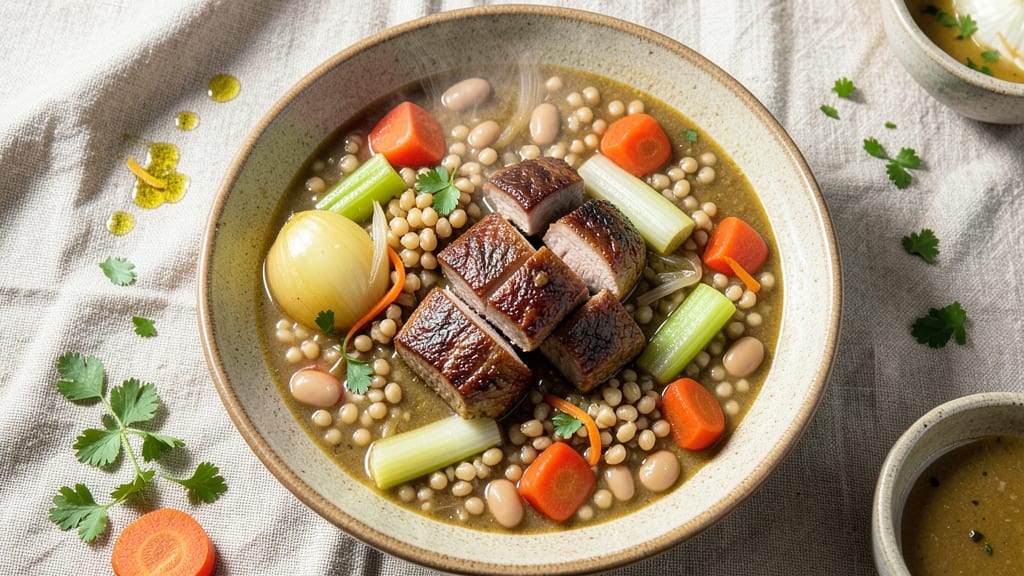
This beef barley bean soup recipe delivers the kind of hearty, comforting warmth that makes winter dinners unforgettable. The combination of tender beef, hearty barley, and earthy beans creates a stew that simmers into rich, flavorful perfection—exactly what you need when temperatures drop.
I developed this recipe after years of testing, ensuring every ingredient plays its part in building depth of flavor through slow cooking.
The secret to this soup lies in the balance of textures and flavors: tender beef that practically melts in your mouth, chewy barley that absorbs the savory broth, and beans that add both substance and natural sweetness.
What makes it truly special is the way the vegetables—carrots, celery, and onions—caramelize slightly during the long simmer, adding natural sweetness that rounds out the savory notes. This isn't just a soup; it's a complete meal in one bowl.
By the time you're done, you'll have a steaming pot of soup with a deep, aromatic broth that's rich enough to stand alone but balanced by the hearty ingredients. The barley softens just enough to be satisfying, while the beef remains tender without falling apart.
Each spoonful delivers layers of flavor—earthy from the beans, savory from the meat, and slightly sweet from the vegetables—all held together by a broth that's packed with umami from slow-cooked vegetables and herbs.
This recipe works beautifully for meal prep, as the flavors actually improve over time, making it perfect for busy weeks. Serve it with crusty bread to soak up every last drop of that flavorful broth, or pair it with a simple green salad for a more balanced meal.
The best part? It's a one-pot wonder that requires minimal effort after the initial prep, leaving you with a restaurant-quality stew that feels like home.
Ingredients for beef barley bean soup
Here's what transforms a simple pot into a soul-warming winter stew you'll crave for months.
| Ingredient | Amount | Notes |
|---|---|---|
| Chuck Roast 🥩 | 2 lb | Cut into 1-inch cubes |
| Pearl Barley 🌾 | 1 cup | Uncooked, rinsed well |
| Great Northern Beans 🌱 | 1 lb | Dried, soaked overnight |
| Yellow Onion 🧅 | 1 whole | Medium, chopped |
| Carrots 🥕 | 4 medium | Peeled, sliced into chunks |
| Celery Stalks 🧄 | 4 whole | Trimmed, chopped |
| Garlic Cloves 🧄 | 4 cloves | Minced |
| Tomato Paste 🍅 | ½ cup | Smooth, not chunky |
| Beef Broth 💧 | 6 cups | Low-sodium preferred |
| Red Wine 🍷 | 1 cup | Dry, like Cabernet |
| Bay Leaves 🌿 | 2 whole | Fresh if possible |
| Fresh Thyme 🌿 | 1 tbsp | Leaves only, chopped |
| Salt 🧂 | 1 ½ tsp | Kosher or sea salt |
| Black Pepper 🌶️ | 1 tsp | Freshly ground |
| Olive Oil 🫒 | 2 tbsp | Extra-virgin preferred |
The beef is non-negotiable here—chuck roast gives that melt-in-your-mouth texture you want in stews. Costco or Trader Joe's usually have it pre-cubed, which saves time, but if you're buying a whole roast, ask the butcher to cut it for you. Pearl barley is the star of the grain game—it holds its shape better than other varieties and soaks up all that rich broth. For the beans, Great Northerns are my go-to because they stay firm but creamy, but any dried white bean works. Pro tip: Soak them overnight in cold water with a pinch of baking soda to cut down on cooking time. The carrots and celery? Organic is worth it if you're worried about dirt—just scrub them well under running water before chopping.
No red wine? Substitute with extra beef broth plus 1 tbsp balsamic vinegar—it adds depth without alcohol. Fresh thyme is ideal, but dried works at one-third the amount. If you're in a rush, Trader Joe's has pre-minced garlic in jars that saves time (though fresh is always better). For the tomato paste, squeeze tubes are perfect—no waste, and they keep for months. The broth matters too: low-sodium so you can control the seasoning, but homemade is best if you've got it. If you're using store-bought, Swanson or Pacific Foods are solid choices. And if you're wondering about the wine—any dry red will do, but Cabernet or Merlot are foolproof.
This soup tastes even better the next day, so make a double batch if you can. Store it in the fridge for up to 5 days, or freeze portions for 3 months. I like to portion it into containers with a little extra broth on top—just reheat on the stove or microwave until steaming. The barley and beans thicken as they cool, so add a splash of water or broth when reheating if it feels too thick. Leftovers reheat beautifully, and the flavors actually deepen overnight, making it perfect for busy weeknights.
Why You'll Love This Recipe
- One-Pot Wonder: I swear by this recipe because it’s one pot—no chopping chaos, no extra bowls. Just toss in the chuck roast (already prepped, thank you), onions, carrots, and those hearty Great Northern beans, then let the slow simmer do the work. My counter stays clear, and my stress level drops.
- Rich, Deep Satisfaction: That chuck roast? It melts into tender, pull-apart perfection while the barley softens into a creamy, chewy bite. Honestly, the way the onions caramelize at the bottom—just a little crisp—adds this insane depth. It’s the kind of soup that makes you forget it’s "just" comfort food.
- Meal Prep MVP: Between us, this is my go-to for lunches all week. The barley and beans hold up beautifully—no mushy disasters here. I’ll make a big batch on Sunday, portion it out, and reheat it straight from the fridge. (Yes, even on a Tuesday night when I’m running late.)
- Budget-Friendly Powerhouse: Chuck roast is cheap, beans are cheap, and barley lasts forever. I’ll be real: this soup costs me about $1.50 per serving, and it feeds me—like, actual fullness, not just nibbling. Plus, leftovers taste just as good reheated as they do fresh. That’s the kind of recipe that makes grocery day less painful.
Step-by-step instructions for beef barley and bean soup
This hearty stew builds flavor layer by layer—start with the meat, then let vegetables and grains meld together.
Brown the Chuck Roast for Deep Flavor
Heat the 2 tablespoons olive oil in a large Dutch oven over medium-high heat. Working in batches if needed, add the 2 lb chuck roast cut into 1-inch cubes, spreading them out in a single layer. Let them sear undisturbed for 3-4 minutes until deeply browned on all sides—this creates the rich foundation for your soup.
Once browned, transfer the meat to a plate and set aside. You'll add it back later, but this initial searing locks in juices and develops that caramelized crust that makes all the difference. Don't rush this step; patience here means better flavor later.
Sauté Vegetables and Add Aromatics
In the same Dutch oven, add the chopped 1 whole yellow onion, 4 medium carrots, and 4 whole celery stalks. Cook for 5-6 minutes, stirring occasionally, until the vegetables begin to soften and the onion becomes translucent. This step builds the vegetable base that will simmer with the meat.
Add the 4 cloves minced garlic and cook for another 30 seconds until fragrant. Here's where it gets good—stir in the 0.5 cup tomato paste and cook for 1-2 minutes, letting it darken slightly. This creates a rich, slightly sweet foundation that balances the hearty flavors.
Deglaze and Combine All Ingredients
Pour in the 1 cup red wine and scrape up any browned bits from the bottom of the pot with a wooden spoon. This deglazing step captures all that meaty flavor you worked so hard to create. Let the wine simmer for 2-3 minutes until it reduces by about half.
Add the 6 cups beef broth, 2 whole bay leaves, 1 tablespoon chopped fresh thyme, 1.5 teaspoons salt, and 1 teaspoon black pepper. Return the browned chuck roast to the pot, along with the 1 lb soaked Great Northern beans and 1 cup pearl barley. Stir gently to combine—everything should be submerged under the liquid.
Simmer Until Tender and Flavorful
Bring the soup to a gentle boil, then reduce heat to low and cover partially. Let it simmer for 2 to 2.5 hours, stirring occasionally. The chuck roast should become fork-tender, and the barley and beans should be soft but still hold their shape. Here's the thing—don't lift the lid too often. Every time you peek, you lose heat and moisture.
About 30 minutes before the soup is done, check the seasoning and adjust if needed. The flavors will intensify as it simmers, so taste as you go. When the meat is tender enough to pull apart easily with a fork, your soup is ready. The barley should be cooked through but still have a slight bite.
Finish and Serve Warm
Remove the 2 bay leaves and discard them. Taste the soup and adjust the seasoning one final time—add more salt if needed, or a splash of red wine if the flavors need balancing. Ladle the soup into bowls, making sure each serving gets a good portion of meat and vegetables.
This soup tastes even better the next day as the flavors continue to meld. Serve it with crusty bread to soak up every last bit of that rich, hearty broth. The combination of tender beef, chewy barley, and creamy beans creates a perfect balance of textures and flavors that will warm you from the inside out.
Pro Tips For Making Beef Barley Bean Soup
- BROWN THE ROAST FIRST: Chuck roast has a tough exterior that needs a good sear to break down—don’t skip this. Sear it in batches on high heat until deep brown crusts form, then remove it to rest. I used to rush this, and the soup always tasted flat until I realized the Maillard reaction is non-negotiable for flavor.
- SOAK THE BEANS (OR ELSE): Great Northern beans expand a lot—if you skip soaking, they’ll stay rock-hard no matter how long you simmer. Dump them in cold water overnight, then drain before adding to the pot. (Yes, even if you’re impatient like me, the texture difference is night and day.)
- SIMMER LOW AND SLOW: This soup isn’t a race—keep the heat at a gentle simmer (tiny bubbles, not a rolling boil) for at least 3 hours. High heat turns barley mushy and beans mealy. I learned this after one disastrous batch where I walked away for a meeting and came back to a watery mess.
- USE A PRESSURE COOKER (IF YOU DARE): Skip the 3-hour simmer by using a pressure cooker—30 minutes on high pressure does the trick. Just don’t overfill the pot (halfway max) and add the barley last, so it doesn’t turn to mush. (I know, I know, but it’s a game-changer for weeknights.)
Flavor customization for these flavors
Spicy Kick
Add 1 teaspoon smoked paprika and ½ teaspoon cayenne pepper when sautéing the vegetables for a subtle smoky heat that lingers beautifully. For extra depth, stir in 1 tablespoon chipotle powder with the tomato paste.
If you love heat, finish each bowl with a sprinkle of crushed red pepper flakes and a dollop of hot honey—the sweetness balances the spice perfectly. 🌶️
Herb Variations
Swap the thyme for 1 tablespoon fresh rosemary and 1 teaspoon dried oregano for a Mediterranean twist. The earthy notes complement the beef and barley wonderfully. For a brighter profile, add 1 tablespoon fresh parsley and ½ teaspoon dried tarragon at the end of cooking.
Fresh herbs like cilantro or dill add a fresh, bright contrast to the hearty flavors.
Umami Boost
Enhance the depth of flavor by adding 1 tablespoon soy sauce or 1 teaspoon fish sauce when deglazing with wine. For a vegetarian-friendly option, stir in 1 tablespoon miso paste with the tomato paste.
These additions add a savory richness that makes the soup even more satisfying. A splash of Worcestershire sauce also works beautifully for an extra layer of complexity.
Sweet and Tangy
Balance the heartiness with a touch of sweetness by adding 1 tablespoon brown sugar when sautéing the vegetables. For a tangy twist, stir in 1 tablespoon apple cider vinegar or 1 teaspoon balsamic vinegar at the end of cooking.
These adjustments brighten the soup and add a delightful contrast to the savory beef and barley. A drizzle of honey or maple syrup can also elevate the dish.
Creamy Texture
For a velvety finish, stir in ½ cup heavy cream or ½ cup coconut milk during the last 10 minutes of cooking. This adds a luxurious mouthfeel without overpowering the hearty ingredients.
Alternatively, blend 1 cup of the soup until smooth and return it to the pot for a silky texture. A sprinkle of grated Parmesan cheese on top adds a salty, creamy contrast.
Global Twists
Transform this classic into a Moroccan-inspired dish by adding 1 teaspoon ground cumin, ½ teaspoon cinnamon, and ½ teaspoon coriander with the tomato paste. For an Italian version, stir in ½ cup crushed tomatoes and top with grated Pecorino Romano.
A Mexican-inspired twist includes 1 teaspoon chili powder and ½ teaspoon cumin, served with lime wedges and avocado slices. 🌍
Nutrition facts
Frequently asked questions
Why does this recipe call for soaking the beans overnight?
Soaking the Great Northern beans overnight significantly reduces cooking time and makes them easier to digest. The beans absorb water and soften, which means they'll cook through evenly during the 2-2.5 hour simmer without becoming mushy. Plus, it helps break down some of the complex sugars that can cause gas. If you're short on time, you can use the quick-soak method: boil the beans for 2 minutes, then let them sit off heat for 1 hour before adding to the soup.
Can I substitute pearl barley with another grain?
Yes! You can swap pearl barley for wild rice or farro in a 1:1 ratio, though cooking times may vary. Wild rice takes about 45-60 minutes to cook, while farro is ready in 25-30 minutes. For a quicker option, use instant rice, but it won't have the same chewy texture. If you're avoiding gluten, quinoa works well too—just reduce the cooking time to 15-20 minutes.
What's the best way to reheat leftovers without making them mushy?
Reheat your soup gently on the stove over low heat, stirring occasionally and adding a splash of beef broth or water if it thickens too much. Avoid microwaving directly from the fridge—it can create uneven heating. For extra insurance, cover the pot with a lid and let it warm through slowly. The barley and beans will absorb moisture and stay tender. If the soup seems too thick after reheating, stir in a little more liquid until it reaches your desired consistency.
Can I make this soup in an Instant Pot or pressure cooker?
Sauté the beef, vegetables, and tomato paste as directed, then add all remaining ingredients except the barley. Pressure cook on high pressure for 40 minutes, then quick-release. Stir in the barley and cook on low pressure for 10-15 minutes until tender. The Instant Pot cuts cooking time dramatically while keeping all the rich flavors. Just be careful with the quick-release—steam can be intense!
How do I know when the chuck roast is fully tender?
The beef should be fork-tender, meaning it should easily pull apart with minimal resistance. Insert a fork into the largest piece—if it slides in and out cleanly without any chewy resistance, it's done. The meat should also separate into small, tender shreds. If you're unsure, cut into the thickest piece to check. Overcooking can make the meat dry, so aim for just until it reaches this texture.