
Soups & Stews
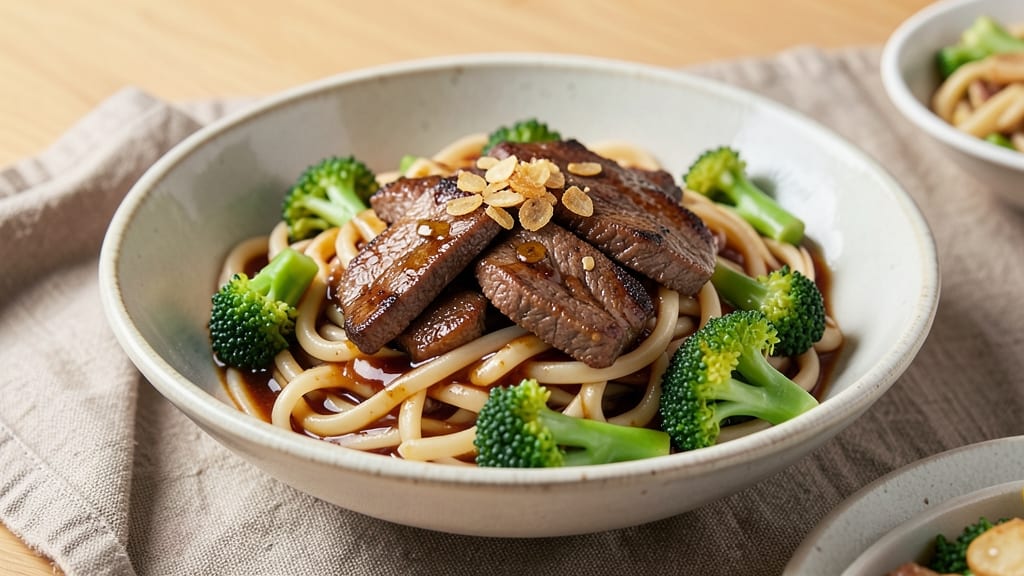
This beef and broccoli udon noodles recipe delivers restaurant-quality wok searing and a silky soy-ginger sauce that transforms simple ingredients into a dish worthy of your favorite Asian bistro.
The secret lies in high-heat searing of the beef, which creates that signature crispy crust while keeping the interior tender, paired with vibrant broccoli that stays crisp-tender. I've perfected this technique over years of home cooking, ensuring every bite delivers perfect texture contrast and bold, balanced flavors.
The dish begins with thinly sliced beef marinated in a simple soy-ginger mixture, then quickly seared in a hot wok until golden. Fresh broccoli florets are stir-fried separately to maintain their crisp texture, while thick udon noodles are cooked just until tender.
The sauce—rich with soy, ginger, garlic, and a touch of honey—ties everything together with its glossy, umami-packed finish. This method ensures no ingredient is overcooked, preserving the natural flavors of each component.
What makes this recipe stand out is the perfect balance of textures: crispy beef, tender broccoli, and silky noodles all coated in that glossy sauce. The aroma alone will have everyone gathering around the table, and the first bite delivers that satisfying combination of savory, slightly sweet, and fresh flavors.
This dish is hearty enough to be a main course but light enough for a weeknight dinner that feels special. The best part? It comes together in under 30 minutes with minimal cleanup.
For an extra touch of sophistication, finish with toasted sesame seeds and sliced scallions that add both color and freshness. The sauce can be adjusted to your preference—more ginger for heat, a splash of rice vinegar for brightness, or a drizzle of chili oil for spice.
Serve immediately while the noodles are still warm and the sauce remains glossy. This is comfort food elevated to restaurant-quality, and it's about to become your new weeknight staple.
Ingredients for beef and broccoli udon noodles
Restaurant-quality wok sear and silky sauce—just 14 simple ingredients transform into this weeknight favorite.
| Ingredient | Amount | Notes |
|---|---|---|
| Udon Noodles 🍜 | 8 oz | Fresh or dried, thick variety |
| Flank Steak 🥩 | 1 lb | Thinly sliced against grain |
| Broccoli Florets 🥦 | 4 cups | Fresh, cut into bite-sized pieces |
| Sesame Oil 🫒 | 1 tbsp | For aroma, not cooking |
| Soy Sauce 🥢 | ½ cup | Light or all-purpose |
| Ginger Root 🌿 | 1 tbsp | Freshly grated |
| Garlic Cloves 🧄 | 4 cloves | Minced, fresh preferred |
| Honey 🍯 | 1 tbsp | For sauce balance |
| Rice Vinegar 🍶 | 1 tbsp | For brightness |
| Vegetable Oil 🫒 | 2 tbsp | High smoke point |
| Toasted Sesame Seeds 🌰 | 1 tbsp | For garnish |
| Scallions 🧅 | 3 whole | Thinly sliced, for garnish |
| Salt 🧂 | 1 tsp | Kosher or sea salt |
| Black Pepper 🌶️ | ½ tsp | Freshly ground |
The flank steak is non-negotiable—it slices thinly against the grain for that signature crispy texture. Grab the thinnest cut you can find at Whole Foods or your local Asian market (they often have pre-sliced versions). Fresh ginger and garlic are worth the extra minute to prep—Trader Joe's sells pre-grated ginger if you're short on time. For the udon, I always opt for the fresh variety (found in the refrigerated section) because it cooks faster and holds up better to stir-frying. If you must use dried, soak it for 10-12 minutes—no longer or it gets mushy.
No sesame oil? Toasted sesame seeds plus a splash of neutral oil works in a pinch. Short on rice vinegar? Lime juice at half the amount adds brightness. The honey in the sauce is key—it balances the soy's saltiness, but if you're avoiding it, maple syrup does the trick. For extra depth, add a dash of chili oil or a pinch of red pepper flakes. The broccoli? Baby broccoli florets stay crisp-tender longer than full heads—cut them into even-sized pieces so they cook uniformly. And trust me on the high-heat sear—this isn't the time to baby the beef.
Prep everything before you start cooking—this dish moves fast. The sauce can be made ahead and reheated (just add a splash of water to loosen it). Store leftovers in the fridge for 3-4 days—the flavors actually improve as the sauce melds. For freezing, portion the sauce separately and toss the noodles and veggies in it when reheating. Garnish with sesame seeds and scallions right before serving—they add color and freshness that gets lost when reheated. Double the sauce if you're feeding a crowd—it's the star of this dish.
Why You'll Love This Recipe
- 20-Minute Prep: I swear by this recipe when I’m staring at the clock at 7:30. Flank steak slices in 5 minutes, broccoli florets take less time than boiling water, and udon noodles cook in the same pot. Honestly, the only real effort is slicing the beef thin—but that’s worth it for the payoff.
- Umami Bomb: That combo of sesame oil and soy sauce? It’s like a flavor shortcut I didn’t know I needed. The beef gets this perfect chewy bite, the broccoli stays crisp-tender, and the noodles soak up every last drop of that savory sauce. (Yes, even on a Tuesday night.)
- Lunchbox Hero: Between us, this is my go-to for meal prep. Toss leftover udon with a little extra soy sauce, pack it in a container, and boom—crunchy, satisfying lunch for the next day. The broccoli holds up better than you’d think, and the beef stays tender. My kids actually eat their veggies this way.
- Budget Win: Flank steak stretches further than you’d imagine when sliced thin, and udon noodles cost a fraction of what fancy ramen does. I’ve made this for date nights, family dinners, and solo Sundays—no fancy ingredients, just big flavor. (Not the prettiest, but the taste makes up for it.)
Step-by-step instructions for beef and broccoli udon noodles
Here's how to create restaurant-quality beef and broccoli udon with perfect wok-seared beef and silky sauce.
Prepare the Udon Noodles
Bring a large pot of water to a rolling boil and add the 8 oz udon noodles. Cook according to package instructions—usually about 4-5 minutes for fresh or 6-8 minutes for dried until they float to the surface and are tender. They should be al dente but still slightly chewy.
Drain the noodles immediately and rinse under cold water for 10 seconds to stop the cooking process. Toss them with 1 tablespoon sesame oil to prevent sticking and keep them coated with that nutty aroma. Set aside in a warm bowl while you prepare the beef and sauce—don't let them sit too long or they'll get mushy.
Sear the Flank Steak to Perfection
Heat a wok or large skillet over high heat with 2 tablespoons vegetable oil until it's shimmering hot. Add the 1 lb flank steak in a single layer and sear undisturbed for 2-3 minutes until deep golden brown crust forms. This initial sear locks in juices and creates that irresistible wok-hei flavor.
Push the beef to one side of the wok and add 4 cloves minced garlic and 1 tablespoon grated ginger root. Stir for 10 seconds until fragrant—don't let them burn. Add ½ cup soy sauce and 1 tablespoon rice vinegar, scraping up any browned bits from the bottom. Return the beef to coat in the sauce and cook for another 1-2 minutes. Remove the beef and set aside on a plate.
Stir-Fry the Broccoli
In the same wok, add the 4 cups broccoli florets in batches, stirring constantly for 2-3 minutes until they're bright green and just tender-crisp. Overcooking turns broccoli into mush—you want it to still have a slight bite. Season with 1 teaspoon salt and ½ teaspoon black pepper while it cooks.
Return the beef to the wok and stir everything together. Add 1 tablespoon honey and toss for 30 seconds to let the honey caramelize slightly and balance the soy sauce's saltiness. The sauce should coat everything evenly—if it's too thick, add 1-2 tablespoons water to loosen it.
Combine and Finish
Add the cooked udon noodles to the wok and toss everything together for 1-2 minutes until the noodles are well-coated with the sauce. The residual heat will finish cooking the noodles perfectly. Taste and adjust seasoning—you might need a bit more soy sauce or a splash of rice vinegar for brightness.
Transfer to serving bowls and garnish with 1 tablespoon toasted sesame seeds and 3 whole sliced scallions. The contrast of crispy seeds and fresh scallions adds texture and freshness. Serve immediately while everything is hot and the noodles are still al dente.
Pro Tips For Making Beef And Broccoli Udon Noodles
- SLICE THIN, SEAR FAST: I learned this the hard way—flank steak for stir-fry needs to be paper-thin, or you’ll end up with chewy chunks. Freeze the meat for 30 minutes first, then slice against the grain at a 45-degree angle. High heat for 30 seconds per side guarantees a proper sear without overcooking.
- BLANCH BROCCOLI FIRST: Broccoli florets straight from the fridge into the pan will steam instead of caramelize. Give them a quick 1-minute blanch in boiling water, then shock in ice water—this crisps them up and cuts cooking time later. Trust me, your stir-fry will look (and taste) like it came from a restaurant.
- SAVE THE SOY SAUCE: Don’t dump all the soy sauce at once—reserve half until the very end. Adding it early will turn your dish watery as the noodles absorb it. Toss the cooked udon in just a splash of sesame oil first, then finish with the reserved soy for that glossy, balanced flavor.
- UPGRADE WITH GARLIC: Skip the pre-minced jarred stuff—smash 3 fresh garlic cloves with a knife handle or rolling pin until paste-like. Stir-fry them in the hot oil for 10 seconds until fragrant but not browned. It’s the difference between "meh" and "worth repeating." (Yes, even if you’re impatient like me.)
Health benefits of this dish
Lean Protein Power
This dish delivers high-quality lean protein from the 1 lb flank steak, providing about 40 grams per serving—perfect for muscle repair and satiety. Flank steak is particularly rich in iron and zinc, essential minerals that support energy levels and immune function.
The quick searing method locks in these nutrients while creating that signature crispy texture. 💪
Fiber-Rich Broccoli
The 4 cups broccoli florets bring 5 grams of fiber per serving, supporting digestion and keeping you full longer. Broccoli is also packed with vitamin C (about 80% of your daily needs) and vitamin K, which aids in blood clotting and bone health.
The high-heat stir-fry preserves these nutrients better than steaming would. I always aim to keep the florets bright green—that's your sign they're still packed with goodness.
Complex Carbs from Udon
The 8 oz udon noodles provide 45 grams of complex carbohydrates per serving, offering sustained energy without the blood sugar spikes of refined white noodles.
Udon contains some protein (about 10 grams per serving) and B vitamins, particularly thiamine and riboflavin, which help convert food into energy. The chewy texture also aids digestion compared to softer noodles.
Umami Boost Benefits
The sauce ingredients—soy sauce, ginger, garlic, and honey—create a powerful umami profile that enhances flavor while providing health benefits. Soy sauce contains isoflavones, plant compounds linked to heart health.
Ginger and garlic are natural anti-inflammatory powerhouses, while honey adds antioxidants that combat oxidative stress. The combination makes this dish both delicious and nutrient-dense. 🌿
Balanced Flavor Nutrition
The rice vinegar adds acetic acid, which may help regulate blood sugar levels, while the sesame seeds provide calcium, magnesium, and healthy fats. The black pepper contains piperine, a compound that boosts nutrient absorption—especially for the fat-soluble vitamins in the beef.
Together, these ingredients create a flavor profile that's not just satisfying but also supports overall wellness.
Meal Prep Advantage
This dish is perfect for meal prepping because the sauce can be made ahead and reheated while keeping its nutritional benefits intact. The high-protein, high-fiber combination makes it ideal for weight management and muscle recovery, especially after workouts.
Plus, the low saturated fat content (thanks to the lean beef and vegetable focus) aligns with heart-healthy eating patterns. 💡
Nutrition facts
Frequently asked questions
Can I substitute flank steak with another cut of beef?
For best results, use thinly sliced sirloin or ribeye—both sear beautifully. Avoid tougher cuts like chuck or brisket, as they won't develop that signature crispy texture. If using pre-sliced beef from an Asian market, check for thinly sliced beef for stir-fry—it's already perfect for this recipe.
How do I keep my udon noodles from getting mushy?
Cook the udon just until al dente (about 4-5 minutes for fresh), then rinse immediately with cold water for 10 seconds to stop cooking. Toss with 1 tablespoon sesame oil right after draining to create a protective barrier. Never let them sit in water—they'll absorb too much and turn soggy. Work quickly when combining with other ingredients!
Can I make this dish ahead of time?
Yes, but with some adjustments. Cook the udon and beef separately, then refrigerate in airtight containers for up to 2 days. Reheat the sauce separately and toss with the noodles and beef when serving. The sauce can be made 3 days ahead—just add a splash of water when reheating. For best texture, avoid freezing the noodles as they'll absorb moisture.
What if I don't have a wok?
A heavy-bottomed skillet or cast-iron pan works perfectly! The key is high heat—preheat your pan until it's smoking hot before adding oil. Use a 12-inch pan for best results, and don't overcrowd the beef. If your pan isn't wide enough, cook the beef in batches to maintain that crispy texture. A non-stick pan can help too, but watch for sticking.
How can I make this dish spicier?
Add 1 teaspoon chili oil or ½ teaspoon red pepper flakes to the sauce for immediate heat. For deeper spice, stir in 1 tablespoon gochujang (Korean chili paste) with the soy sauce. If you prefer fresh heat, toss in 2 sliced Thai chilies when stir-frying the broccoli.