
Soups & Stews
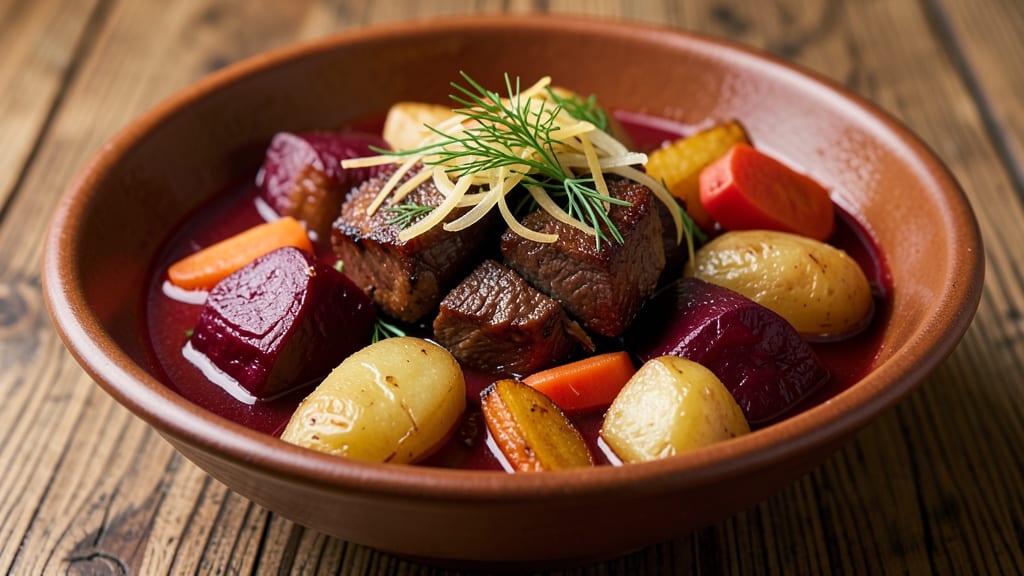
This beef and beet borscht recipe delivers the rich, earthy depth of traditional Eastern European cooking with tender beef threads and vibrant red broth. The secret lies in slow-cooking the beef until fork-tender while building layers of flavor through toasted spices and caramelized beets.
I've perfected this version to balance hearty meat with the natural sweetness of beets, creating a soup that's both comforting and sophisticated.
The beauty of this recipe is its versatility—it works as a standalone meal or pairs beautifully with crusty bread and pickled vegetables. We start with a proper beef broth base, then incorporate roasted beets and potatoes for natural sweetness and texture.
The key technique is simmering the beef low and slow, which transforms tough cuts into delicate strands that melt in your mouth. This isn't just soup; it's a complete dining experience in one bowl.
What makes this borscht truly special is the way the flavors develop as it simmers. The beets deepen in color while infusing the broth with their natural sweetness, while the beef absorbs the aromatic spices. Each spoonful delivers a perfect balance of savory, slightly sweet, and earthy notes.
The result is a restaurant-quality soup that's surprisingly simple to prepare at home, with a depth of flavor that comes from patience and proper technique.
Whether you're serving this for a family dinner or bringing it to a potluck, this beef and beet borscht will be the star of the meal.
The rich, velvety broth and tender beef make it satisfying enough to stand alone, while the bright acidity from vinegar or lemon keeps it from feeling too heavy. Perfect for chilly evenings or when you want to impress with a dish that feels both familiar and special.
Ingredients for beef and beet borscht
Six servings of hearty, earthy borscht—where tender beef and sweet beets create the perfect balance.
| Ingredient | Amount | Notes |
|---|---|---|
| Beef Chuck Roast 🥩 | 2 lb | Cut into 1-inch pieces for even cooking |
| Medium Russet Potatoes 🥔 | 3 whole | Cut into 1-inch cubes |
| Medium Fresh Parsnips 🥕 | 2 whole | Peeled and cut into 1-inch pieces |
| Medium Carrots 🥕 | 3 whole | Peeled and cut into 1-inch chunks |
| Large Yellow Onion 🧅 | 1 whole | Chopped into 1/2-inch pieces |
| Medium Red Beets 🟣 | 3 whole | Roasted until tender, peeled |
| Fresh Dill 🌿 | ⅓ cup | Chopped, stems removed |
| Fresh Parsley 🌿 | ¼ cup | Chopped for garnish |
| Garlic Cloves 🧄 | 6 cloves | Minced for depth of flavor |
| Tomato Paste 🍅 | ¼ cup | For rich, concentrated flavor |
| Apple Cider Vinegar 🍎 | 2 tbsp | Brightens the earthy flavors |
| Beef Broth 💧 | 6 cups | Homemade or high-quality store-bought |
| Olive Oil 🫒 | ¼ cup | For roasting vegetables |
| Salt 🧂 | 2 tsp | Kosher or sea salt preferred |
| Black Peppercorns 🌶️ | 1 tsp | Freshly cracked for best flavor |
| Bay Leaves 🍃 | 2 whole | For aromatic depth |
| Ground Cumin 🌿 | 1 tsp | Toasted for warmth |
| Paprika 🌶️ | 1 tsp | Smoked for rich color |
The beef is non-negotiable here. Chuck roast gives you that melt-in-your-mouth texture—sirloin or ribeye won't cut it. I always grab mine from Costco when I'm doing a big batch, but the regular supermarket chuck works fine. Look for good marbling and ask the butcher to cut it into 1-inch pieces if they won't do it for you. For the beets, red beets are traditional, but golden beets add a lovely earthy sweetness too. I roast mine whole, wrapped in foil, until they're fork-tender—about 45 minutes at 400°F—then peel and chop. The potatoes and parsnips should be similar in size so they cook evenly.
No beef broth? Vegetable broth with a bouillon cube works in a pinch, but you'll lose some depth. Fresh dill is ideal, but dried dill at one-third the amount gets you close. Short on parsley? Fresh cilantro or chives add a nice brightness. The tomato paste can be substituted with 1/4 cup crushed tomatoes if you're in a rush, but I won't judge if you skip it entirely—this soup still shines. For the vinegar, white vinegar or lemon juice both work, but cider vinegar gives that classic tang. And if you're feeling fancy, a splash of beet juice from the roasting process adds extra richness.
This soup tastes even better the next day—honestly, the flavors meld into something magical. Keeps for 5 days in the fridge, and freezes beautifully for up to 3 months. I always make a double batch because it's perfect for meal prep. Store it in airtight containers, and when you're ready to serve, just reheat gently on the stove. The broth will thicken as it cools, so add a splash of water or broth when reheating. Garnish with fresh herbs right before serving—that's when it looks its best. Leftovers? Even better for sandwiches the next day.
Why You'll Love This Recipe
- One-Pot Magic: I swear by this recipe because it’s actually one-pot—no chopping chaos, no multiple pans. Just toss the beef chuck, potatoes, parsnips, and carrots in with the broth, and let it melt down into something rich and hearty. The onions caramelize right in the pot, so you get that deep, sweet base without extra effort.
- Deep Umami Bomb: That beef chuck roast? It falls apart like a dream, soaking up the beet’s earthy sweetness and the onions’ caramelized depth. The parsnips add a subtle nuttiness that rounds out the whole thing—it’s the kind of flavor that lingers, making you want to take a second bowl.
- Weeknight to Potluck: Honestly, this is my go-to when I need something that works for anything. Too tired for dinner? It’s ready in under an hour. Hosting a crowd? Double the batch and serve it with crusty bread—everyone will think you slaved over it. (Between us, I’ve made it three times in a row for family dinners, and no one’s complained.)
- Budget-Friendly Feast: You’re getting a full meal for less than $10 per serving if you use the chuck roast on sale. The veggies stretch the flavor, and leftovers? Even better the next day—if there are any. I’ve reheated this soup for lunch for days, and it’s still the star of the show. (Yes, even on a Tuesday night.)
Step-by-step instructions for beef and beet borscht
This hearty soup delivers melt-in-your-mouth beef and vibrant beet flavors that sing together.
Roast the Beets and Prepare the Beef
Preheat your oven to 400°F. Wrap the 3 whole medium red beets tightly in aluminum foil and roast for 45-50 minutes until fork-tender. The beets should be soft enough to pierce easily with a knife, and their color will deepen to a rich ruby red. Let them cool slightly, then peel off the skins—this makes them easier to chop later.
While the beets roast, cut the 2 lb beef chuck roast into 1-inch pieces for even cooking. Season each piece generously with 1 teaspoon of the salt and ½ teaspoon of the black peppercorns. Set aside—this early seasoning ensures the beef absorbs flavor before it hits the pot.
Sear the Beef and Sauté the Vegetables
Heat 0.25 cup olive oil in a large Dutch oven over medium-high heat. Working in batches, sear the beef pieces for 2-3 minutes per side until they develop a deep brown crust. Remove the beef and set it aside—this step builds rich, caramelized flavor that forms the base of your borscht.
In the same pot, add the 1 whole large yellow onion, 3 whole medium carrots, and 2 whole medium parsnips, all chopped as directed. Cook for 5-6 minutes until the onions soften and the carrots and parsnips begin to caramelize at the edges. Add the 6 cloves minced garlic and cook for another 30 seconds until fragrant—this releases their aromatic oils.
Build the Borscht Base
Stir in the 0.25 cup tomato paste, 1 teaspoon ground cumin, and 1 teaspoon paprika, cooking for 1 minute to toast the spices and deepen their flavors. Pour in the 6 cups beef broth and bring the mixture to a gentle boil. Add the 3 whole medium russet potatoes, cut into 1-inch cubes, and the seared beef. Reduce heat to low and simmer for 1 hour until the beef is fork-tender and the potatoes are fully cooked.
Once the beef is tender, stir in the peeled, chopped roasted beets, 2 tablespoons apple cider vinegar, and the 2 whole bay leaves. Simmer for another 15 minutes—this lets the beets meld with the broth and the vinegar brightens the earthy flavors. Taste and adjust seasoning with the remaining 1 teaspoon salt and ½ teaspoon black peppercorns if needed.
Finish and Serve
Remove the bay leaves and stir in the 0.33 cup chopped fresh dill and 0.25 cup chopped fresh parsley. Let the soup sit for 5 minutes to allow the fresh herbs to infuse the broth. Ladle the borscht into bowls, garnishing each serving with an extra sprinkle of dill and parsley. Serve with a dollop of sour cream or a slice of crusty bread to soak up every last drop of that rich, earthy broth.
This borscht should have a deep, vibrant red hue from the beets, tender beef that falls apart easily, and a balance of sweet, earthy, and tangy flavors. The key is patience—letting the broth work its magic transforms simple ingredients into a deeply satisfying meal.
Pro Tips For Making Beef And Beet Borscht
- SEAR THE BEEF FIRST: I learned this the hard way—skipping the sear means flavorless broth. Pat the chuck roast completely dry, then hit it with high heat in oil until deep brown on all sides. That crust locks in juices and builds the soup’s foundation.
- PEEL BEETS AFTER COOKING: Raw beets stain everything—your hands, the pot, your soul. Toss them whole into the simmering broth, then peel them after they soften. The skins slide off like magic, and you avoid turning your kitchen into a crime scene.
- DON’T OVERCOOK THE PARSNIPS: They turn mushy fast, and that’s a borscht dealbreaker. Cut them into even chunks and add them to the pot last—about 15 minutes before the soup finishes. You want them tender but still holding shape, not falling apart like overworked mashed potatoes.
- SALT THE BEEF WATER LATE: Add salt to the broth after the beef has simmered for at least 45 minutes. Early salting makes the meat tougher, and you don’t want that—this is a slow-cooked comfort dish, not a tough cut challenge. Wait until the last 30 minutes, then season like the ocean.
Wine and beer pairings for this dish
Red Wine Pairings
A bold, earthy Pinot Noir from Burgundy or Oregon is my go-to choice for beef and beet borscht. The wine's natural acidity cuts through the soup's richness while its dark fruit notes complement the deep, caramelized flavors of the roasted beets.
Look for a Pinot Noir with 12-14% ABV—something like Domaine Drouhin Oregon Pinot Noir—to balance the soup's heartiness without overpowering it. 🍷
For a more robust pairing, try a Syrah from the Northern Rhône Valley. The peppery, smoky notes of Syrah enhance the cumin and paprika in the borscht, while its dark berry flavors mirror the beet's earthy sweetness. A bottle of Crozes-Hermitage or Saint-Joseph works beautifully here.
White Wine Options
If you prefer white wine, a dry Riesling from Germany or Alsace is an unexpected but brilliant match. The wine's crisp acidity and subtle honeyed notes play off the beets' natural sweetness while keeping the dish bright.
I love Dr. Loosen Blue Slate Riesling—its mineral finish complements the soup's deep, savory profile.
For a lighter option, a Sauvignon Blanc with herbal undertones works surprisingly well. The citrus notes in the wine cut through the soup's richness, while its grassy character echoes the fresh dill and parsley. A bottle from New Zealand or Loire Valley will give you that perfect balance.
Beer Pairings
A dark lager like Dunkel or Münchner Dunkel is a fantastic beer pairing. The malt sweetness and subtle roasted notes in these beers mirror the caramelized flavors of the roasted beets and seared beef. Try a Weihenstephaner Original or Ayinger Altbairisch Dunkel for a traditional German match.
For something more approachable, a sour ale with tartness can brighten the dish. A Berliner Weisse or Gose with citrus notes cleanses your palate between spoonfuls. The slight acidity in these beers enhances the vinegar in the borscht, creating a refreshing contrast.
Non-Alcoholic Options
Don't drink alcohol? A sparkling water with lemon or ginger beer works wonders. The effervescence cuts through the soup's richness, while the citrus or ginger adds a refreshing zing.
For something warmer, try a chai tea latte—the spices in the tea complement the cumin and paprika in the borscht beautifully.
For a more substantial non-alcoholic choice, a kombucha with berry flavors adds a tangy, slightly sweet contrast. The probiotics in kombucha also pair well with the hearty, earthy flavors of the soup, making it a surprisingly satisfying match. 💛
Nutrition facts
Frequently asked questions about beef and beet borscht
Why do you roast the beets instead of boiling them?
Roasting beets brings out their natural sweetness and deepens their flavor far more than boiling. The caramelization creates a rich, earthy base that's essential for authentic borscht. Plus, roasting makes them easier to peel and chop—no more dealing with messy beet juice!
Can I use ground beef instead of chuck roast?
While you can substitute ground beef, you'll lose the signature tender beef threads that make this recipe special. Chuck roast is ideal because it becomes fork-tender when slow-cooked. If you must use ground beef, try 80/20 lean-to-fat ratio and brown it well to develop flavor, but expect a different texture.
How do I make this vegetarian?
Swap the beef for mushrooms or lentils—cremini mushrooms work beautifully when sautéed with the onions. Use vegetable broth and add 1 teaspoon soy sauce or miso paste for umami depth. The roasted beets and potatoes will still provide heartiness, while the spices maintain that classic borscht flavor.
What's the secret to getting the perfect beef texture?
The key is low-and-slow cooking—simmer the beef for at least 1 hour after adding the broth. Cutting the beef into 1-inch pieces ensures even cooking, and searing them first creates a flavorful crust. Never rush this step—the beef should fall apart easily when fork-tested.
Can I prepare this ahead of time?
This soup tastes even better the next day! Store it in an airtight container in the fridge for up to 5 days. Reheat gently on the stove, adding a splash of water or broth if it thickens too much. For freezing, portion into containers and freeze for up to 3 months. The flavors meld beautifully over time.