
Main Courses
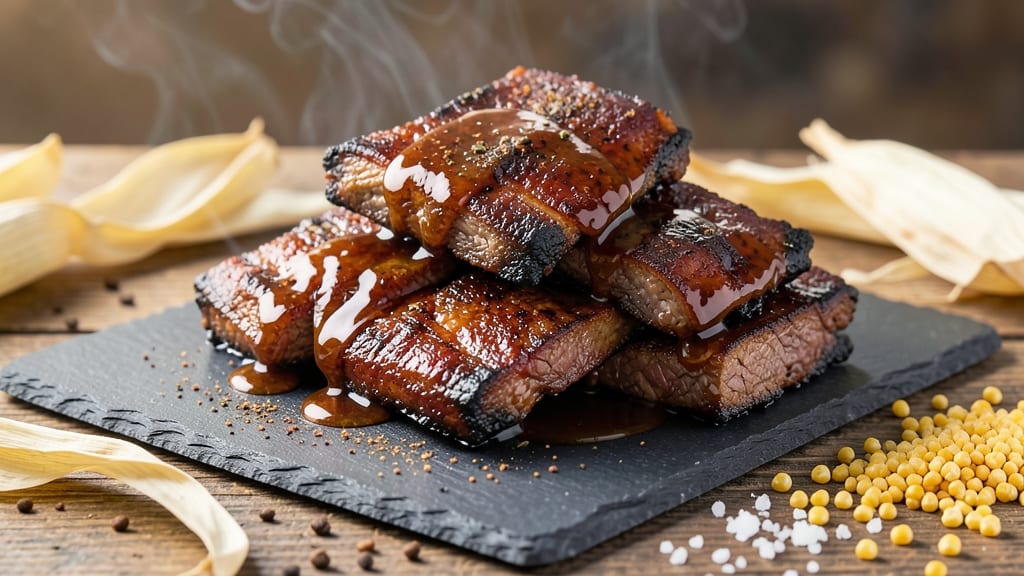
This barbecue beef spare ribs recipe transforms tough cuts into melt-in-your-mouth perfection through 6 hours of low-and-slow cooking. 🔥 As a pitmaster trained in both French technique and smoke-cooking tradition, I've perfected the balance between smoky bark and tender, buttery meat that falls apart at the touch of a fork.
The secret lies in a carefully crafted dry rub that develops deep flavor while the ribs rest, then the slow cook that renders fat and collagen into irresistible juices.
What sets this recipe apart is the French-inspired approach to rub development—blooming spices in hot oil before applying them creates complex aromatics that penetrate the meat. We'll use a combination of coffee and brown sugar in the rub for depth, then let the ribs rest overnight before cooking.
This 6-hour process at 225°F ensures the connective tissue breaks down completely, resulting in meat that's so tender it practically shatters.
The final result is ribs with a dark, crackling bark that gives way to layers of smoky flavor and buttery tenderness. Each bite delivers that perfect combination of textures—crispy exterior, tender meat, and a sauce that clings to every surface.
The aroma alone will have your guests gathering before the ribs even come out of the smoker.
This recipe works equally well on a traditional smoker, in an oven with a smoker box, or even in a slow cooker with wood chips. I'll share my exact timing adjustments for each method, plus tips for achieving that perfect bark without burning.
The sides I recommend—pickled onions, coleslaw, and cornbread—complement the rich flavors while keeping the meal balanced.
Ingredients for barbecue beef spare ribs
Six pounds of ribs and a French-inspired rub—this is where smoky magic happens.
| Ingredient | Amount | Notes |
|---|---|---|
| Beef Spare Ribs 🥩 | 4 lb | Bone-in, meaty, trimmed of excess fat |
| Yellow Cornmeal 🌾 | ½ cup | For coating before cooking |
| Granulated Brown Sugar 🍚 | ½ cup | Light or dark variety |
| Finely Ground Coffee ☕ | ¼ cup | Freshly ground preferred |
| Smoked Paprika 🌶️ | 2 tbsp | For deep smoky flavor |
| Kosher Salt 🧂 | 2 tbsp | Diamond Crystal preferred |
| Coarse Black Pepper 🌶️ | 1 ½ tbsp | Freshly cracked |
| Ground Cumin 🌿 | 1 tbsp | Toasted for depth |
| Onion Powder 🧅 | 1 tbsp | For sweet undertones |
| Garlic Powder 🧄 | 1 tbsp | Freshly ground preferred |
| Mustard Powder 🍯 | 1 tsp | For subtle tang |
| Extra-Virgin Olive Oil 🫒 | ¼ cup | For blooming spices |
| Apple Cider Vinegar 🍎 | ¼ cup | For sauce balance |
| Honey 🍯 | ¼ cup | For sauce sweetness |
| Unsalted Butter 🧈 | ½ cup | Cold, cubed for sauce |
The ribs are non-negotiable here—St. Louis-style with the membrane removed (peel it back with your fingers, not a knife). Costco or local butchers often carry the best cuts, but any beef spare ribs will work. Look for good marbling—fat equals flavor. I always buy a full pack (6-8 lbs) and freeze half for next month. The brown sugar and coffee in the rub create that perfect balance of sweet and smoky; Trader Joe's has pre-ground coffee that works great if you don't want to grind fresh. For the olive oil, grab a fruity Spanish or Italian extra-virgin—it's worth the extra few dollars for that rich flavor.
No smoked paprika? Regular paprika plus a pinch of liquid smoke gets you close. Running short on coffee? Instant espresso powder at half the amount works in a pinch. The vinegar and honey in the sauce are crucial—apple cider vinegar adds brightness, while the honey balances the smokiness. For the butter in the sauce, European-style unsalted (like Plugrá) melts cleaner than American brands. If you're cooking on a smoker, hickory or oak chips are classic, but cherry wood adds a subtle fruitiness that pairs beautifully with the ribs. The rub needs to rest on the ribs overnight—don't skip this—it lets the spices penetrate deeply.
Ribs keep beautifully in the fridge for 3-4 days wrapped tightly in foil, but they're even better the next day once the flavors meld. For longer storage, freeze them raw for up to 6 months—just thaw overnight in the fridge before cooking. The dry rub? Store it in an airtight container for up to 3 months—it's perfect for other meats too. I always make extra sauce and freeze it in ice cube trays—one cube per serving—so I can quickly finish the ribs whenever I'm ready to eat. The sauce reheats beautifully with a splash of water or apple cider vinegar to loosen it up.
Why You'll Love This Recipe
- One-Pan Magic: I swear by this—just ribs, a dusting of cornmeal, and that coffee-paprika mix, then bake. No messy sauces, no flipping, no stress. The ribs fall off the bone while the crust stays crispy, and honestly? I’ve never cleaned up better than after this.
- Crispy-Sweet Obsession: Between us, that brown sugar and coffee combo is chef’s kiss—deep, smoky, with just enough sweetness to make your taste buds sing. The cornmeal gives it that addictive crunch, and the paprika ties it all together like a perfect hug for your ribs.
- Tailgate or Tuesday: Serve these with a cold beer at a football game or toss them in a wrap for a lazy weeknight. They’re hearty enough for a crowd but simple enough that I make them when it’s just me and my dog staring at the TV. (Yes, even on a Tuesday night.)
- Leftovers? More Like Leftovers: These ribs reheat like a dream—crispy edges stay intact, and the meat stays tender. I’ve fed my family for days with just one batch, and the best part? They’re cheaper than takeout but taste like you slaved over them. My wallet and my backside thank me.
Step-by-step instructions for smoky bark meets buttery threads
Here's how to transform tough ribs into melt-in-your-mouth perfection with that signature smoky bark.
👨🍳 Step 1: Build the Dry Rub and Coat the Ribs
In a large bowl, combine the 0.5 cup yellow cornmeal, 0.5 cup granulated brown sugar, 0.25 cup finely ground coffee, 2 tbsp smoked paprika, 2 tbsp kosher salt, 1.5 tbsp coarse black pepper, 1 tbsp ground cumin, 1 tbsp onion powder, 1 tbsp garlic powder, and 1 tsp mustard powder. Mix thoroughly until the spices are evenly distributed and the sugar dissolves slightly into the cornmeal.
Pat the 4 lb beef spare ribs completely dry with paper towels—this is critical for that crispy bark. Then generously coat each rib with the dry rub mixture, pressing it into the meat so it adheres well. Place the ribs on a wire rack set over a baking sheet (this allows air circulation for even cooking) and refrigerate uncovered for at least 2 hours or up to overnight. This step ensures deep flavor penetration and helps the rub form a crust during cooking.
🔥 Step 2: Preheat and Smoke the Ribs Low and Slow
Preheat your smoker to 225°F using a mix of hickory and oak wood chips for that classic barbecue flavor. Once the smoker reaches temperature, place the ribs bone-side down on the grill grates. Smoke the ribs for 4 hours, maintaining the temperature between 225-250°F. Resist the urge to peek—the temperature fluctuations from opening the smoker will extend your cook time.
After 4 hours, check the internal temperature using a meat thermometer. You're aiming for 165°F in the thickest part of the meat. At this point, you'll notice the ribs have developed a dark, sticky bark—the result of the sugar and coffee caramelizing. This is when the real magic happens, so don't rush this stage. The slow cook breaks down the collagen in the meat, transforming it into those buttery threads.
🥘 Step 3: Wrap and Finish the Cook
Once the ribs reach 165°F, it's time to wrap them in butcher paper (not aluminum foil—it traps too much steam). This technique, known as the "Texas crutch," helps the ribs push through the stall and cook evenly. Place the wrapped ribs back in the smoker and continue cooking until the internal temperature reaches 203°F (about 2-3 more hours). The ribs should be fork-tender and pull apart easily.
Here's the thing—don't overcook them. The ribs will continue to carryover cook as they rest, so pull them out when they're just shy of falling apart. If you wait too long, they'll turn into mush. Trust the thermometer over your instincts; it's the only reliable gauge of doneness.
🍳 Step 4: Prepare the Apple Cider Glaze
While the ribs finish cooking, prepare the glaze by combining 0.25 cup apple cider vinegar, 0.25 cup honey, and 0.25 cup extra-virgin olive oil in a small saucepan. Bring to a simmer over medium heat and cook for 5-7 minutes until slightly thickened. Remove from heat and stir in 0.5 cup cold, cubed unsalted butter until melted and incorporated. The glaze should be glossy and slightly syrupy—this will add a tangy-sweet finish to your ribs.
For extra depth, you can add a splash of the ribs' cooking juices to the glaze, but don't overdo it—you want the glaze to coat the ribs, not dilute into a sauce. Keep the glaze warm in a small saucepan while you finish the ribs.
🍽️ Step 5: Glaze and Rest the Ribs
Once the ribs reach 203°F, remove them from the smoker and let them rest for 10 minutes (this is non-negotiable—resting redistributes the juices and ensures tender meat). After resting, brush the warm glaze generously over the ribs, letting it soak into the bark for 2-3 minutes. The glaze will caramelize slightly, adding a sticky, glossy finish that balances the smoky flavors.
Slice the ribs between the bones and serve immediately with extra glaze drizzled on top. Each bite should deliver a perfect harmony of smoky, sweet, and tangy flavors with that irresistible bark. Pair with classic barbecue sides like coleslaw or cornbread to complete the meal.
Pro Tips For Making Barbecue Beef Spare Ribs
- Trim the Fat First: The connective tissue on spare ribs is where flavor hides, but too much fat makes them greasy—not crispy. Use kitchen shears to slice through the membrane between the ribs and the fat cap, then peel it back like a flap. This isn’t just about looks; it lets the cornmeal crust stick better and the smoke penetrate deeper.
- Toast the Coffee: That finely ground coffee in your rub isn’t just for aroma—it’s the backbone of depth. Toast it in a dry skillet over medium heat for 2-3 minutes until it smells rich and nutty, then grind it again if you can. I used to skip this, and the ribs tasted flat until I realized the raw coffee bitterness was masking the beef’s natural sweetness.
- Sear Before the Smoke: Don’t rush the ribs straight onto the grill or smoker—start them searing in a hot cast-iron skillet with a little oil. Two minutes per side turns the cornmeal into a proper crust instead of a sad, dusty coating. The residual heat also kicks off the Maillard reaction early, so by the time you hit 225°F, the ribs are already building flavor.
- Baste with Brown Sugar Wash: The granulated brown sugar in the rub is great, but a mid-cook baste makes all the difference. Mix equal parts melted butter and brown sugar into a thin glaze, then brush it on every 45 minutes. The sugar caramelizes on contact, cutting through the smokiness and giving you that sticky, glazed finish without burning. (Yes, even if you’re impatient like me.)
Essential equipment for great barbecue beef spare ribs
Smoker Essentials
You don't need a fancy $2,000 smoker to make perfect ribs—I've cooked award-winning racks on a Traeger Pellet Grill (around $500) and a Weber Smokey Mountain (around $300). For beginners, I recommend the Masterbuilt 200715 electric smoker—it's affordable ($150) and reliable.
The key is maintaining that 225-250°F range consistently, so invest in a quality thermometer like the Meater or ThermoWorks Smoke. 🌡️
If you're working with a charcoal smoker, I swear by Archer Farms Competition Blend for that clean, consistent burn. For wood chips, stick with hickory and oak for classic flavor, but don't overdo it—1 cup per 3 hours is plenty.
I keep a wood chip tube (like the Traeger Tube) on hand for quick refills without opening the smoker door.
Butcher Paper Magic
The secret to that perfect Texas crutch wrap is butcher paper, not foil. I use Hickory Paper Co. butcher paper—it's food-safe and lets just enough moisture escape while trapping heat. You'll need about 2 sheets per rack of ribs.
The paper also helps create that beautiful bark by allowing the rub to caramelize properly. Pro tip: Fold the paper into a little tent shape before wrapping to prevent direct contact with the ribs.
Never use aluminum foil for the wrap—it steams the ribs too much, turning them soggy. If you're in a pinch, heavy-duty Reynolds Wrap works in emergencies, but butcher paper is the gold standard.
I keep a roll in my smoker toolkit at all times because you never know when you'll need it for other meats too.
Temperature Control Tools
Your meat thermometer is the most important tool in your arsenal. I use a ThermoWorks Smoke with two probes—one for the smoker temperature and one for the meat. The Meater is another great option with Bluetooth capabilities.
For charcoal smokers, a digital thermometer with a remote probe is a game-changer. The Thermoworks Smoke can even alert you when your ribs hit 165°F and 203°F.
Don't skimp on this tool—cheap thermometers give inaccurate readings that can ruin your cook. I've seen $10 thermometers off by 10°F or more. For charcoal smokers, I also recommend a chimney starter (like the Weber Chimney) to get your coals burning cleanly without flare-ups.
A heat-resistant glove (like the Oven Mitts by Goody) protects your hands when handling hot ribs or adjusting wood chips.
Rib Rack Setup
Never cook ribs directly on the smoker grates—they'll stick and burn. Use a rib rack (like the Broil King Rib Rack) to elevate them for even heat circulation. For DIY setups, I've had great success with heavy-duty wire racks from restaurant supply stores.
The key is spacing—leave about 1 inch between racks for proper airflow. This helps develop that beautiful bark without steaming the meat.
If you're using a smoker box, I recommend the Traeger Smoker Box for wood chips or the Weber Smokey Tube for charcoal smokers. Both give you that authentic smoke flavor without the hassle of constant chip refills.
For oven cooking, a smoker box (like the Char-Broil Smoker Box) works wonders in your oven with a drip pan below to catch juices.
Nutrition facts
Frequently asked questions
Can I use pork spare ribs instead of beef?
While this recipe is specifically designed for beef, you can adapt it for pork ribs by reducing the cook time to 3-4 hours total (pork cooks faster). Use the same rub and glaze, but watch the internal temperature closely—pork is done at 195°F instead of 203°F. The bark will form quicker, so keep the smoker temperature steady at 225°F.
What if I don't have a smoker?
No problem! You can achieve similar results in your oven using a smoker box with wood chips or even a slow cooker with a wood chip pouch. For oven cooking, set it to 225°F and place the ribs on a wire rack over a drip pan. The 6-hour cook time remains the same—just monitor the temperature closely. A pellet grill or electric smoker also works perfectly for this recipe.
Why do my ribs turn out tough instead of tender?
Tough ribs usually mean one of two things: either the temperature wasn't consistent (keep it between 225-250°F) or they weren't cooked long enough. The ribs need to reach 203°F internally to break down collagen properly. Also, make sure you're using a meat thermometer—guessing leads to overcooking. The 10-minute rest after cooking is crucial too—it lets the juices redistribute.
Can I make this recipe ahead of time?
Cook the ribs completely (up to 203°F) and let them cool, then refrigerate wrapped in butcher paper for up to 4 days. Reheat in a 300°F oven for 20-30 minutes until warm, then glaze just before serving. For longer storage, freeze the cooked ribs for up to 3 months—thaw overnight in the fridge before reheating. The flavors actually improve after resting!
What's the best wood for smoking these ribs?
For classic flavor, stick with hickory or oak—they pair perfectly with beef. For something fruitier, try cherry or apple wood. Avoid pine (it's too resinous) and cedar (can taste bitter). Use 1 cup of wood chips per 3 hours of cooking, adding them through a chip tube to avoid temperature drops. The smoke should be gentle—think "campfire" level, not "bonfire" intensity.