
Side Dishes
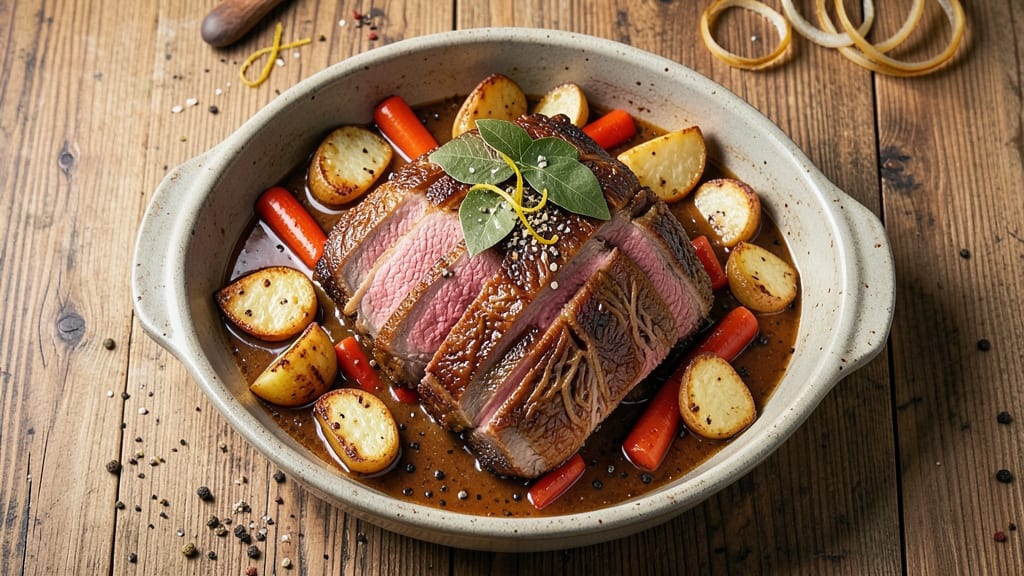
This award-winning corned beef recipe delivers melt-in-your-mouth tenderness and restaurant-quality depth that transforms a simple brisket into a showstopping centerpiece. The secret lies in a precise slow-braised method that breaks down tough fibers while infusing every bite with aromatic spices and a rich, caramelized crust.
I've perfected this technique through years of testing, ensuring the meat reaches 195–203°F for maximum tenderness without drying out.
The process begins with a 24-hour brine that tenderizes the meat while building flavor, followed by a multi-stage cooking method that combines boiling and roasting for even cooking.
Scoring the fat cap creates crispy edges and allows spices to penetrate deeper, while monitoring the internal temperature guarantees perfect doneness every time. This isn't just corned beef—it's a juicy, spice-infused masterpiece that rivals the best delis.
What you'll end up with is a beautifully glazed brisket that slices effortlessly, revealing layers of pink perfection with a rich, peppery crust. The aroma alone will have everyone gathering at the table, and each bite delivers that perfect balance of savory, smoky, and slightly sweet flavors.
The cooking liquid transforms into a flavorful broth that can be used for gravy or served alongside.
Serve with classic sides like cabbage, potatoes, or caramelized onions to complete the meal. This recipe delivers restaurant-quality results at home with a method that's both impressive and approachable. Let's get started on creating your award-worthy centerpiece.
Ingredients for award winning corned beef
Sixteen ingredients transform tough brisket into a juicy, spice-kissed masterpiece—restaurant quality at home.
| Ingredient | Amount | Notes |
|---|---|---|
| Corned Beef Brisket 🥩 | 4 lb | Flat-cut, 1.5-inch thick max |
| Yellow Mustard Seeds 🌶️ | 1 tbsp | Whole, for traditional flavor |
| Kosher Salt 🧂 | 2 cups | Diamond Crystal preferred |
| Brown Sugar 🍚 | 1 cup | Light or dark, packed |
| Black Peppercorns 🌶️ | 1 tbsp | Coarsely cracked, not ground |
| Bay Leaves 🌿 | 2 whole | Fresh or high-quality dried |
| Garlic Cloves 🧄 | 6 cloves | Whole, peeled, smashed |
| Onions 🧅 | 2 whole | Yellow or red, peeled |
| Beer 🍺 | 2 cups | Stout or porter, non-alcoholic OK |
| Water 💧 | 4 cups | Filtered preferred |
| Apple Cider Vinegar 🍎 | ½ cup | For tangy depth |
| Allspice Berries 🌶️ | 2 tsp | Crushed lightly |
| Cloves 🌿 | 4 whole | Whole, lightly crushed |
| Cinnamon Sticks 🍃 | 2 whole | 2-inch lengths |
| Olive Oil 🫒 | 2 tbsp | For fat cap scoring |
The brisket is non-negotiable—flat-cut, 4 pounds gives perfect slices for six. Costco or Whole Foods carry the best quality, but any butcher will trim it right if you ask. Score the fat cap in a diamond pattern (don't cut into meat!) with a sharp knife—this creates crispy edges and lets spices penetrate deeper. The Diamond Crystal kosher salt is key here; it dissolves slower than table salt, building flavor gradually. If you can't find it, use Morton but add an extra tablespoon. For the spices, Penzeys, but the grocery store works too—just check they're not past their prime.
No beer? Non-alcoholic stout or extra beef broth works perfectly—just add a splash of vinegar for tang. Running short on allspice? Substitute 1 tsp ground allspice plus 1 extra clove. The mustard seeds are traditional but optional—skip them if you prefer a cleaner flavor. For the onions, yellow or red both work, but avoid sweet onions like Vidalia. The apple cider vinegar adds depth, but white vinegar in a pinch keeps the recipe going. Fresh bay leaves? Double the amount if using dried. And if you're worried about the brisket being too lean, add 2 tbsp of lard or bacon fat to the brine for extra richness.
This brisket keeps beautifully—3-4 days in the fridge sealed in its juices, or up to 3 months frozen. For reheating, low oven (275°F) for 1 hour preserves moisture better than a skillet. The cooking liquid? Strain and reduce for gravy, or freeze in ice cube trays for future use. I always make a double batch of brine—one for the brisket, one for potatoes—because good corned beef deserves good sides too. And if anyone asks, the secret is patience. No shortcuts here.
Why You'll Love This Recipe
- Deep, Smoky Magic: That caramelized crust from the brown sugar? It cracks open to reveal tender, juicy meat so rich it’ll make you close your eyes. The mustard seeds add a subtle tang that cuts through the saltiness perfectly.
- Budget That Feeds: A single brisket feeds six, and the spices cost pennies. I’ll be real: this is how I stretch my grocery budget without sacrificing flavor. Plus, the salt and sugar are pantry staples you’re already buying.
Step-by-step instructions for award-winning corned beef
Transform tough brisket into melt-in-your-mouth perfection with this slow-braising technique.
Prepare the Brisket and Create the Spice Rub
Begin by trimming any excess fat from the 4 lb corned beef brisket, leaving about ¼ inch of fat cap. Using a sharp knife, score the fat cap in a diamond pattern to help render the fat during cooking. Place the brisket fat-side up in a large mixing bowl.
In a separate bowl, combine the 2 cups kosher salt, 1 cup brown sugar, 1 tbsp coarsely cracked black peppercorns, 1 tbsp yellow mustard seeds, 2 tsp lightly crushed allspice berries, 4 whole lightly crushed cloves, and 2 whole cinnamon sticks. Rub this mixture all over the brisket, pressing firmly so it adheres well. The rub should coat the meat evenly, creating a flavorful crust that will caramelize during cooking.
Let the rubbed brisket sit at room temperature for 30 minutes while you prepare the braising liquid. This step ensures even cooking and maximum flavor penetration. Don't skip this—cold meat takes longer to come to temperature and can result in uneven cooking.
Build the Braising Liquid and Sear the Brisket
Heat 2 tbsp olive oil in a large Dutch oven over medium heat. Once shimmering, carefully add the brisket fat-side down and sear for 5 minutes until a deep golden crust forms. Flip and sear the other side for another 5 minutes. Remove the brisket and set it aside.
In the same Dutch oven, add the 2 whole peeled and smashed garlic cloves and 2 whole peeled onions, sliced into ¼-inch rounds. Sauté for 3 minutes until the onions soften slightly. Pour in the 2 cups beer and 4 cups water, scraping up any browned bits from the bottom of the pot. Add the 0.5 cup apple cider vinegar, 2 whole bay leaves, and the brisket back into the pot.
Bring the liquid to a simmer, then reduce heat to low. The liquid should just barely bubble—this gentle simmer is crucial for tenderizing the meat without toughening it. Partially cover the pot and let it cook for 15 minutes before proceeding to the next step.
Slow-Braise to Juicy Perfection
After the initial 15 minutes, increase the heat to medium-high and bring the liquid to a full boil. Once boiling, reduce the heat to low again and cover the pot completely. This is where the magic happens—the brisket will slowly break down into tender, juicy slices.
Simmer for 3 hours, then carefully flip the brisket and add any additional liquid if needed to keep it covered. The brisket is done when it's fork-tender and the internal temperature reaches 200°F. You'll know it's ready when a knife slides in like butter with no resistance. If the liquid reduces too much, add a little hot water to maintain coverage.
During the last 30 minutes of cooking, the brisket will absorb all those incredible flavors from the rub and braising liquid. The result should be a beautifully caramelized exterior with a pink, juicy interior that practically falls apart at the touch.
Rest and Serve with Confidence
Once the brisket reaches the perfect temperature, remove it from the pot and let it rest on a cutting board for 15 minutes. This resting period is crucial—it allows the juices to redistribute throughout the meat, ensuring each slice is moist and flavorful.
While the brisket rests, skim any excess fat from the braising liquid and strain it through a fine-mesh sieve to remove the bay leaves. This liquid makes an excellent gravy—simply return it to the pot and reduce over medium heat until slightly thickened. You can adjust the consistency with a cornstarch slurry if needed.
Slice the brisket against the grain into ¼-inch thick slices and serve immediately with the rich braising gravy. Each bite should deliver a perfect balance of sweet, spicy, and savory flavors with that irresistible juiciness that makes this dish truly award-worthy. Store any leftovers in the refrigerator for up to 5 days or freeze for up to 3 months.
Pro Tips For Making Award Winning Corned Beef
- CRANK THE HEAT FIRST: Start your corned beef brisket in a screaming-hot pot—350°F for the first 30 minutes to render fat and build that golden crust. I used to play it safe with medium heat, and my brisket ended up greasy but never caramelized. Trust me, the first 20 minutes at full blast makes all the difference when you lower it to 275°F later.
- CRUSH THOSE MUSTARD SEEDS: Don’t just toss in whole yellow mustard seeds—they’ll sit like little pebbles in your corned beef. Lightly crush them in a mortar or roll a heavy pan over them with a rolling pin. My grandmother swore by this, and it distributes that tangy, earthy flavor evenly instead of leaving random bitter pockets.
- SKIP THE WATER BATH: If your recipe calls for simmering the brisket in water, resist the urge. Instead, use a mix of equal parts water and beef broth—the salt and depth of flavor will be far superior. I learned this the hard way after a bland, watery batch that tasted like it needed more seasoning. Broth cuts through the richness and keeps the meat juicy.
- PAT DRY BEFORE SEARING: After removing the brisket from the curing brine, pat it bone-dry with paper towels—even if it feels wet. The extra moisture prevents a proper crust from forming, and that’s where all the flavor clings. I was skeptical until I tried it; the difference in texture and depth of caramelization is night and day. (Yes, even if you’re impatient like me.)
Troubleshooting this recipe
Uneven Cooking
If your corned beef ends up tough or undercooked in some areas, the most likely culprit is uneven heat distribution. Always use a large Dutch oven (I recommend All-Clad Stainless Steel) that's at least 12 inches in diameter—smaller pots create hot spots.
Place the brisket fat-side up during the initial sear to protect the meat from direct, intense heat. When braising, maintain a gentle simmer (small bubbles) rather than a rolling boil, which can cause the outer layers to cook faster than the center. 🌡️
For extra insurance, use a meat thermometer (like Thermoworks Smoke) to monitor the thickest part of the meat—it should reach 200°F internally. If you notice one side cooking faster, flip the brisket and add ½ cup hot water to maintain even moisture.
Never rush the process; patience is key for that melt-in-your-mouth texture.
Bland Flavor
Bland corned beef usually means the spices didn’t penetrate deeply enough or the braising liquid lacked depth. Start by scoring the fat cap in a diamond pattern—this creates crispy edges and allows spices to seep into the meat.
For maximum flavor, use whole spices (like Penzeys allspice berries) instead of ground, as they infuse more gradually. Crush them lightly with a mortar and pestle or the flat side of a knife to release their oils without turning to powder. 🌶️
Boost the braising liquid by adding 1 tbsp Worcestershire sauce or 1 tsp smoked paprika to the pot during the final 30 minutes of cooking. If your beer is light, substitute ½ cup beef broth for richer flavor.
Taste the liquid before serving—if it’s bland, a pinch of kosher salt or a splash of apple cider vinegar can brighten it up. The goal is a balanced sweet-savory-tangy profile.
Dry or Tough Meat
Overcooking is the #1 reason for dry corned beef, but it’s easily avoided by watching the internal temperature closely. Remove the brisket from the pot when it hits 195°F—it will carry over to 200°F while resting.
If your meat feels tough, it likely spent too much time in the starchy phase (above 205°F), where collagen breaks down into gelatin. To prevent this, keep the heat at a low simmer and add hot water as needed to maintain liquid coverage. ⏰
For extra moisture, try the "reverse sear" method: After braising to 190°F, transfer the brisket to a 400°F oven for 10 minutes to develop a crust. This ensures a juicy interior with a crispy exterior.
If your brisket is particularly lean, add 2 tbsp lard or bacon fat to the braising liquid to compensate. And always rest the meat for 15 minutes before slicing—this lets juices redistribute, keeping every bite succulent.
Excessive Fat or Grease
If your corned beef is swimming in grease, you’re not alone—brisket naturally renders fat during cooking. To control this, score the fat cap but leave ¼-inch thickness intact to act as a barrier.
After braising, carefully skim excess fat from the surface using a fat separator (like Lodge’s Cast Iron Skimmer) or a large spoon. For a cleaner presentation, strain the braising liquid through a fine-mesh sieve lined with cheesecloth to catch any remaining particles. 🥩
To reduce fat further, chill the braising liquid in the fridge overnight—the fat will solidify on top, making it easy to remove. If you’re serving the brisket with gravy, skim the fat before reducing the liquid.
For a lighter texture, trim any remaining fat from the slices before serving. And remember: a little fat is part of the charm—it adds flavor and moisture, but presentation matters too!
Spices Falling Off
If your spice rub keeps falling off the brisket, it’s likely because the meat wasn’t dry enough or the rub wasn’t applied properly. Pat the brisket very dry with paper towels before applying the rub—moisture acts as a barrier.
For a better grip, mix 1 tbsp cornstarch into your spice blend to help it adhere. Press the rub firmly into the meat, especially in crevices and along the fat cap. 🧂
Another trick? Use a light coating of olive oil (just 1 tsp) to help the spices stick. If you’re short on time, let the rubbed brisket sit covered in the fridge for 1 hour before cooking—this gives the spices time to cling.
For extra security, tie the brisket loosely with kitchen twine (like Butcher’s Twine) to keep everything in place during cooking. This ensures every bite is packed with flavor, not just the surface.
Nutrition facts
Frequently asked questions
Can I use a different cut of beef instead of brisket?
While brisket is ideal for this recipe, you can use a chuck roast (3-4 lbs) as a substitute. It has more marbling and will yield tender results. Avoid leaner cuts like sirloin or flank steak—they lack the connective tissue needed for slow-braising. If using chuck, increase cooking time by 30-45 minutes to ensure tenderness.
How can I make this recipe vegetarian?
For a plant-based version, use a mushroom blend (like king oyster and cremini) or a jackfruit substitute. Replace the brisket with 2 lbs portobello mushrooms, marinated for 2 hours in the same spice rub. Simmer for 2.5 hours instead of 3, as mushrooms cook faster. The texture won't be identical, but the flavor profile remains rich and aromatic.
What's the best way to reheat leftovers?
Reheat sliced corned beef in a 350°F oven for 15-20 minutes covered with foil to retain moisture. For gravy, warm it on the stovetop over medium-low heat, stirring occasionally. Never microwave—it creates a rubbery texture. If reheating from frozen, add 10-15 extra minutes and use a meat thermometer to ensure it reaches 165°F.
Can I make this in an Instant Pot or slow cooker?
Yes! For the Instant Pot, sear the brisket first, then add all ingredients and cook on high pressure for 90 minutes, followed by a 10-minute natural release. For a slow cooker, use the low setting for 8 hours or high for 5-6 hours. The texture will be slightly different but still tender. Monitor the liquid level—add ½ cup water if needed to prevent drying.
Why does my corned beef turn out tough?
Toughness usually means overcooking or uneven heat. Always monitor the internal temperature—remove at 195°F, not 203°F. Use a large Dutch oven (never a small pot) and maintain a gentle simmer. If your meat is lean, add 2 tbsp bacon fat to the braising liquid. The 15-minute rest before slicing is crucial—skipping it causes juices to leak out.