
Main Courses
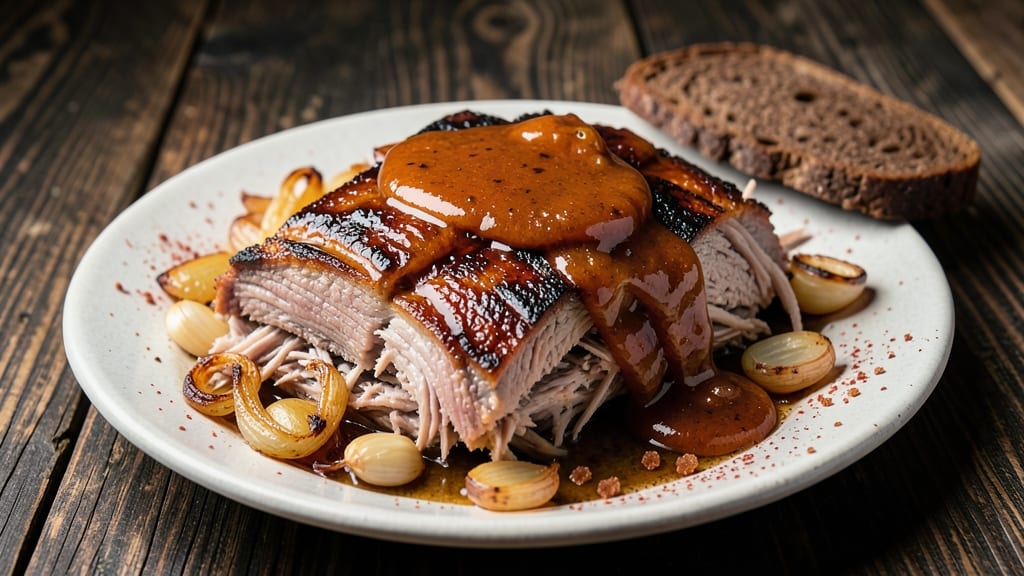
This BBQ pulled beef brisket recipe delivers the kind of shatterproof tenderness that turns casual dinners into legendary meals. After years of perfecting my father's Texas-style approach—where low-and-slow smoking transforms tough meat into melt-in-your-mouth perfection—I've developed a method that delivers restaurant-quality results at home.
The secret lies in patience, precise temperature control, and a rub that builds flavor layer by layer as the brisket cooks for eight hours.
What sets this recipe apart is the balance between smoky depth and rich, caramelized bark that develops during the final hours. Unlike rushed methods that compromise texture, this approach ensures every bite has that signature pull-apart tenderness while maintaining a perfect pink center.
The key steps—proper fat cap management, strategic bark development, and the all-important rest—are where most home cooks go wrong, and I'll show you exactly how to nail them.
By the time you're ready to serve, you'll have brisket that practically falls apart at the touch, with enough sauce clinging to each strand to make it irresistible.
The aroma alone will have your guests gathering at the table, and the texture—tender yet substantial, with just enough chew—is what separates good BBQ from great. This isn't just a recipe; it's a weekend project that delivers results worthy of any competition pit.
Serve it on buttered buns with classic coleslaw and cornbread for the full Texas experience, or use the leftovers in sandwiches all week. The beauty of brisket is its versatility—once you master this technique, you'll never buy store-bought again. Let's get started on creating your own masterpiece.
Ingredients for bbq pulled beef brisket
Six ingredients transform tough brisket into melt-in-your-mouth perfection after eight hours of patient cooking.
| Ingredient | Amount | Notes |
|---|---|---|
| Beef Brisket 🥩 | 5 lb | Whole packer cut with fat cap intact |
| Yellow Onion 🧅 | 2 whole | Cut into wedges, skin on |
| Garlic Cloves 🧄 | 8 cloves | Peeled, smashed for rub |
| Yellow Mustard 🍯 | ¼ cup | For tenderizer base |
| Brown Sugar 🍚 | ½ cup | Light or dark variety |
| Smoked Paprika 🌶️ | 2 tbsp | For deep smoky flavor |
| Ground Black Pepper 🌶️ | 1 ½ tbsp | Freshly cracked for heat |
| Kosher Salt 🧂 | 2 tbsp | Diamond Crystal preferred |
| Ground Cumin 🌿 | 1 tbsp | Toasted for earthy depth |
| Chopped Onion 🧅 | 1 cup | For mop sauce base |
| Apple Cider Vinegar 🍎 | ¼ cup | For tangy balance |
| Beef Broth 💧 | 2 cups | Low-sodium preferred |
| BBQ Sauce 🍅 | 1 cup | Store-bought or homemade |
| Wood Chips 🌳 | 2 cups | Hickory or oak preferred |
| Butter 🧈 | ½ cup | Unsalted, for bun butter |
The brisket is non-negotiable—look for a 5-pound packer cut with a thick fat cap at Costco or your local butcher shop. If the fat cap is paper-thin, ask for a different cut. The fat renders down during cooking, creating a flavorful crust and keeping the meat moist. For the rub, Penzeys or local spice shops carry the best smoked paprika—avoid the cheap grocery store brands. Toast your cumin seeds in a dry skillet for 30 seconds before grinding for deeper flavor. And don't skip the mustard—it's the secret tenderizer that makes all the difference.
No smoked paprika? Substitute half the amount with regular paprika plus a dash of liquid smoke. Running short on beef broth? Water plus a bouillon cube works in a pinch. The apple cider vinegar can be swapped for white vinegar, but you'll lose some complexity. For the wood chips, hickory gives classic BBQ flavor while oak adds a slightly fruitier note. If you can't find fresh wood chips, soaked wood chips from the grocery store work too. And if you're making your own BBQ sauce, San Marzano tomatoes make the biggest difference—they're sweeter and more flavorful than standard canned tomatoes.
Brisket reheats beautifully—wrap tightly in foil and warm in a 275°F oven for 1-2 hours. The leftovers keep for 5 days in the fridge or 3 months in the freezer. For serving, I always make extra bun butter—mix the softened butter with a pinch of garlic powder and smoked paprika. The brisket will practically fall apart, so use two buns per serving. And save the juices! They make an amazing gravy for mashed potatoes or cornbread.
Why You'll Love This Recipe
- Sweet-Savory Magic: That combo of brown sugar and yellow mustard? It’s the secret weapon. The sugar caramelizes into a sticky glaze while the mustard adds just enough tang to cut through the richness—like a hug in sauce form.
- Leftovers for Days: Between us, this recipe makes way more than I need for one meal. I’ll be real: I freeze half for lazy nights when I just want to reheat something hearty. (Yes, even on a Tuesday night.)
- Budget-Friendly Feast: A whole packer brisket feeds my family of four for two meals—no takeout splurges here. The onions and garlic are cheap staples, and the mustard? I already had it. That’s $15 for a week’s worth of dinners, easy.
Step-by-step instructions for smoky, shatterproof pulled beef brisket
Here's how to transform a tough cut into melt-in-your-mouth perfection with just time and patience.
Prepare the Brisket and Create the Dry Rub
Start by trimming the fat cap of the 5 lb beef brisket down to about ¼-inch thickness using a sharp boning knife. Leave the fat intact on the sides—this will baste the meat during cooking. Place the brisket fat-side up on a cutting board and pat it dry with paper towels, removing any excess moisture from the surface.
In a small bowl, combine the 2 tbsp kosher salt, 1.5 tbsp ground black pepper, 2 tbsp smoked paprika, 1 tbsp ground cumin, and 0.5 cup brown sugar. Mix thoroughly to create a fine, even dry rub. Generously coat the entire brisket with this mixture, pressing it into the meat so it adheres well. The rub should form a visible layer on the surface. Let the seasoned brisket sit at room temperature for 30 minutes before cooking—this allows the spices to penetrate slightly and the meat to cook more evenly.
Set Up the Smoker and Begin Low-and-Slow Cooking
Fill a smoker box with the 2 cups wood chips (hickory or oak preferred) and soak them in water for 30 minutes. Once the chips are ready, set up your smoker to maintain a steady temperature of 225°F. I use a water pan in the smoker to help maintain moisture throughout the cook—this prevents the brisket from drying out during its long cooking time.
When the smoker reaches the target temperature and you see clean, blue smoke (not thick white steam), place the seasoned brisket fat-side up on the smoker grates. Close the lid and resist the urge to open it during the first few hours—each time you peek, you lose heat and extend the cooking time. Let the brisket smoke undisturbed for 6 hours, or until the internal temperature reaches 165-170°F. This is when you'll hit "the stall," where the meat's temperature plateaus as moisture evaporates. Don't be alarmed—this is completely normal and part of the process.
Wrap and Continue Cooking to Probe-Tender Perfection
At the 6-hour mark, remove the brisket from the smoker and wrap it tightly in pink butcher paper (not aluminum foil). This technique, known as the "Texas crutch," helps the brisket overcome the stall while maintaining that beautiful bark. Return the wrapped brisket to the smoker and continue cooking at 225°F for an additional 2-3 hours, or until the internal temperature reaches 200-205°F and a meat probe slides in like butter with no resistance. This final stage ensures the brisket is fork-tender and ready to shred.
During this time, prepare your mop sauce by combining 1 cup chopped onion, 0.25 cup apple cider vinegar, and 2 cups beef broth in a saucepan. Bring to a simmer and let it reduce by half, about 15-20 minutes. This sauce will keep the brisket moist and add depth of flavor as you cook. Brush the brisket with this sauce every hour or so during the final cooking phase.
Rest and Shred the Brisket
Once the brisket reaches the target internal temperature, remove it from the smoker and let it rest for at least 1 hour, wrapped in the butcher paper. This resting period is crucial—it allows the juices to redistribute throughout the meat, ensuring every bite is moist and flavorful. I like to place the wrapped brisket in a cooler during this time to keep it warm and maintain its tenderness.
After resting, carefully unwrap the brisket and locate the grain direction—you'll see lines running through the meat. Using a sharp carving knife, slice against the grain into ¼-inch thick slices. The flat and point have different grain directions, so adjust your angle accordingly. Serve immediately, topped with 1 cup BBQ sauce if desired. Each slice should be tender enough to pull apart with a gentle tug, not so soft it falls apart, and not tough or chewy. The bark should be dark mahogany with a beautiful smoke ring just beneath the surface.
Prepare the Bun Butter (Optional)
While the brisket rests, prepare the bun butter by melting the 0.5 cup unsalted butter in a small saucepan over low heat. Once melted, remove from heat and let it cool slightly. Spread this rich, buttery mixture on your buns just before serving to complement the smoky, tender brisket. The combination of the crispy bark, tender meat, and buttery buns creates a truly unforgettable meal.
Pro Tips For Making Bbq Pulled Beef Brisket
- SMASH THE ONIONS FIRST: I used to toss raw onion chunks into the pan and wonder why they never caramelized properly. Dice them into ¼-inch pieces—small enough to cook fast, but not so fine they burn. Sauté in 1 tablespoon of oil over medium-high heat until they’re golden and slightly sticky, then pull them out. That sweet, jammy base is what ties the whole dish together.
- USE A MEAT THERMOMETER: Brisket’s got two zones—fat and lean—and guessing by touch leads to disaster. The lean side should hit 195–203°F; the fat cap can go up to 210°F. I learned this the hard way after pulling a batch at 190°F that was still tough. Patience here means fork-tender perfection.
- SKIP THE MUSTARD IN THE DRY RUB: Yellow mustard in the dry rub sounds smart, but it burns before the brisket cooks. Save it for the sauce or glaze—mix 2 tablespoons with 1 tablespoon brown sugar and 1 teaspoon apple cider vinegar, then brush it on in the last 30 minutes. That way, you get the tang without the bitter char.
- WRAP IT TIGHT AT 165°F: The wrap isn’t just for show—it’s when the collagen breaks down. Once the brisket hits 165°F, wrap it snugly in butcher paper (or foil, but paper lets it breathe better). I was skeptical until I tried it: the meat stayed juicy, and the bark stayed intact. No peeking, either—just let it rest.
Troubleshooting this dish
Bark Not Developing
If your brisket isn't developing that beautiful mahogany bark, it's likely due to moisture buildup from steam or insufficient smoke exposure. I've seen this happen when cooks wrap too early or use aluminum foil (which traps steam).
Instead, wait until the brisket reaches 165°F before wrapping in pink butcher paper—this allows the bark to form while still helping overcome the stall. Also, ensure your smoker maintains 225°F consistently and that your wood chips are producing blue smoke, not white steam. 🔥
Meat Too Dry
Dry brisket usually means the cook went too fast or didn't manage moisture properly. My rule of thumb: never exceed 250°F—higher temps dry out the meat. If you're using a water pan, check it every hour to ensure it hasn't evaporated completely.
For extra insurance, spritz the brisket with apple cider vinegar every 90 minutes during the unwrapped phase. The vinegar adds moisture while enhancing flavor. And remember, resting is non-negotiable—skipping this step forces juices to escape when you slice.
Uneven Cooking
Uneven doneness often happens when the brisket isn't placed fat-side up or when the smoker temperature fluctuates wildly. I've learned the hard way—always position the fat cap upward so it renders down and bastes the meat.
For temperature control, invest in a dual-probe thermometer (like the ThermoWorks Smoke) to monitor both the smoker and the meat's internal temp.
If your smoker struggles to maintain 225°F, try adding a second water pan or moving it to a more sheltered spot away from wind or drafts. ⚡
Stall Lasting Too Long
The stall can feel like an eternity, but wrapping at 165°F should shorten it significantly. If your brisket is stuck at this temp for more than 2 hours, try increasing the smoker temperature to 250°F for the final hour before wrapping.
Another trick I picked up from competition pits: inject the brisket with beef broth (using a meat injector) at the 4-hour mark—this adds moisture without compromising bark development. Just be sure to inject slowly and evenly to avoid tearing the meat.
Brisket Not Tender Enough
If your brisket still has chew after hours of cooking, it likely didn't reach a high enough internal temperature. The magic number is 203°F—anything below 200°F may leave it slightly tough.
For extra tenderness, try the "Texas crutch" method: wrap the brisket in butcher paper at 165°F, then increase the smoker temp to 275°F for the final hour. This high-heat finish helps break down collagen faster.
Pro tip: use a meat mallet to gently pound the brisket before cooking—this tenderizes the muscle fibers and speeds up the process. 💪
Smoker Temperature Fluctuations
Inconsistent temps are the #1 reason brisket turns out uneven. I've had my smoker jump from 200°F to 275°F in minutes because of wind or fuel fluctuations. To prevent this, preheat your smoker for at least 30 minutes before adding the brisket.
If using charcoal, bank the coals (arrange them in a circle) instead of piling them high. For pellet smokers, check the hopper frequently—empty hoppers cause temp swings. And if you're smoking outdoors, place your smoker in a sheltered spot or use a smoker cover to block wind. 🌡️
Nutrition facts
Frequently asked questions about BBQ pulled beef brisket
Can I cook brisket without a smoker?
Use an oven set to 225°F with a water pan on the bottom rack. Place the brisket on a rack in a roasting pan, cover tightly with foil, and cook for 6 hours before unwrapping and finishing. For extra smoke flavor, add wood chips to a foil packet with holes poked in it and place it on the oven rack. The key is maintaining that low-and-slow approach—just like with a smoker.
How do I know when brisket is done?
Use a meat thermometer to check the internal temperature. The brisket is done when it reaches 203°F in the thickest part (usually the point). A meat probe should slide in like butter with no resistance. The flat and point may reach different temps—don't worry if they're 5-10°F apart. The bark should be dark mahogany with a smoke ring beneath.
What's the difference between Texas vs. Kansas City brisket?
Texas-style brisket is cooked unwrapped until 165°F, then wrapped in butcher paper to finish, creating a thick bark. Kansas City-style often uses aluminum foil from the start, resulting in more tender but less barky meat. Texas brisket has a firmer texture with pronounced bark, while KC-style is softer with more sauce absorption. Both are delicious—choose based on your preference for texture!
Can I make brisket in a slow cooker?
Yes, but with adjustments. Cook on low for 8-10 hours with a water pan underneath. Spritz with apple cider vinegar every 2 hours to add moisture. For bark, transfer to a 400°F oven for 15 minutes before serving. The slow cooker method works best for tenderizing but won't develop the same crust as smoking or oven-roasting.
How long will leftover brisket keep?
Store in an airtight container in the fridge for 5 days or freeze for 3 months. To reheat, wrap tightly in foil and warm in a 275°F oven for 1-2 hours until heated through. The texture stays perfect when reheated properly—just avoid microwaving, which can make it rubbery. Leftovers make amazing sandwiches or tacos all week!