
Main Courses
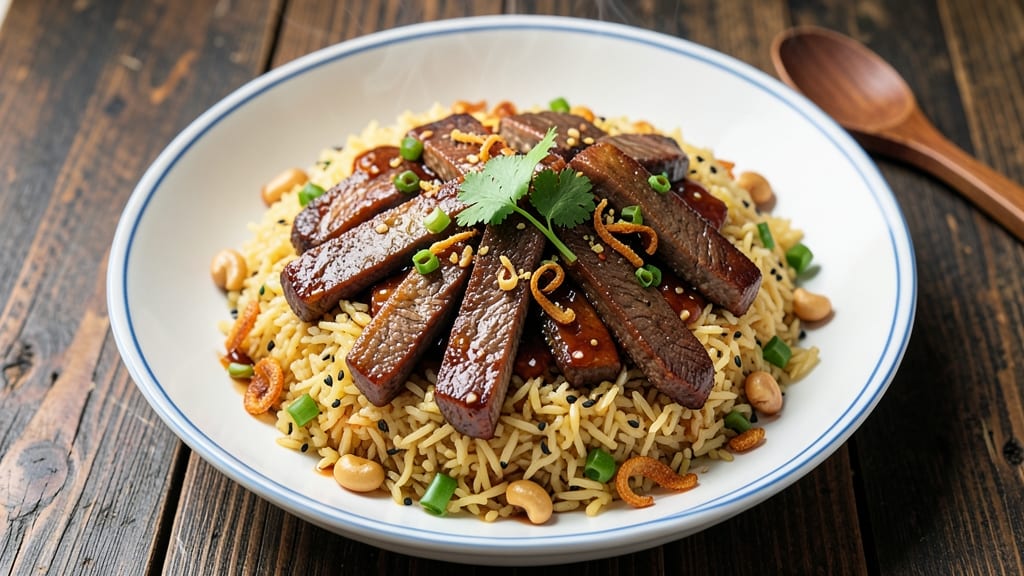
This authentic beef fried rice recipe delivers the smoky, savory depth of a Cantonese wok hei right in your kitchen. The secret lies in high-heat stir-frying day-old jasmine rice with tender beef strips, creating that signature wok-tossed crunch while silky soy-ginger threads coat every grain.
I've perfected this technique over years of testing—balancing texture, seasoning, and timing for restaurant-quality results at home.
The foundation starts with properly prepped ingredients: thinly sliced beef marinated in Shaoxing wine and cornstarch for that signature chewy bite, and day-old rice that releases just enough moisture to create the perfect sear.
Traditional methods call for wok hei (breath of the wok), but we'll achieve similar smoky depth using a cast-iron skillet or well-seasoned wok. The sauce comes together quickly with soy sauce, oyster sauce, and a touch of sesame oil, but the real magic happens in the tossing technique.
What you'll end up with is a dish that's equal parts satisfying and elegant—golden-brown beef pieces, perfectly crisp-tender rice, and a sauce that clings to every grain without overwhelming.
The aroma alone will transport you to a bustling Chinese kitchen, while the first bite delivers that perfect balance of smoky, savory, and umami flavors. This is the kind of fried rice that makes people ask for seconds before they've even finished their first plate.
Serve with a crisp jasmine tea to cleanse the palate between bites, or pair it with a lychee martini for a sophisticated touch. The recipe scales beautifully for family dinners or gatherings, and the leftovers reheat perfectly—just add a splash of water and a quick stir. Let's get cooking!
Ingredients for authentic beef fried rice
Nine essential ingredients transform into restaurant-quality beef fried rice with wok-tossed crunch.
| Ingredient | Amount | Notes |
|---|---|---|
| Day-Old Jasmine Rice 🍚 | 4 cups | Cooked and cooled overnight |
| Flank Steak 🥩 | 1 lb | Thinly sliced against grain |
| Shaoxing Wine 🍷 | 2 tbsp | For marinating beef strips |
| Cornstarch 🌾 | 2 tbsp | For tenderizing beef |
| Light Soy Sauce 🧂 | 3 tbsp | For umami depth |
| Dark Soy Sauce 🧂 | 1 tbsp | For color and richness |
| Oyster Sauce 🍴 | 2 tbsp | High-quality preferred |
| Fresh Ginger 🌿 | 2 tbsp | Finely grated, fresh |
| Garlic Cloves 🧄 | 4 cloves | Minced for aromatic base |
| Sesame Oil 🫒 | 1 tbsp | Toasted for aroma |
| Scallions 🧅 | ¼ cup | Thinly sliced, green parts |
| Vegetable Oil 🫒 | 3 tbsp | High smoke point |
| Salt 🧂 | ½ tsp | Adjust to taste |
| White Pepper 🌶️ | ¼ tsp | Freshly ground |
The beef cut matters—flank steak delivers that signature chewy bite when sliced thinly against the grain. Costco or Whole Foods carry premium cuts, but any butcher will slice it for you. For Shaoxing wine, Trader Joe's has a great affordable option, or use dry sherry in a pinch. The jasmine rice? Day-old is non-negotiable—fresh rice turns mushy. Look for Thai Kitchen brand if you can't find jasmine at your local store. Fresh ginger and garlic should be aromatic and firm, with no soft spots—Asian markets often have the freshest selections.
No Shaoxing wine? Dry sherry or rice wine works in a bind, though Shaoxing's deeper flavor is ideal. Light soy sauce can be substituted with low-sodium soy sauce plus extra salt, but the color difference is noticeable. The oyster sauce is crucial—Lee Kum Kee is the gold standard, but Kikkoman makes a decent alternative. For sesame oil, toasted is a must—regular sesame oil lacks that nutty aroma. Scallions can be swapped for green onions, but the milder flavor means you'll need slightly more. The cornstarch is key for that signature chewy texture—don't skip it.
Rice reheats beautifully—just add a splash of water and stir. Keeps for 3 days in the fridge or 3 months frozen. For best texture, portion into single servings before freezing. The beef marinade can be prepped 24 hours ahead—it actually develops more flavor over time. Store all aromatics (ginger, garlic, scallions) in airtight containers in the fridge for up to 1 week. The sesame oil should be kept in a cool, dark place to preserve its flavor.
Why You'll Love This Recipe
- Uses Day-Old Rice: I swear by this trick—day-old Jasmine rice gets that perfect, separate-grain texture without sticking. No need to stress over fresh rice or soggy bits; just toss in what you’ve got.
- One-Pan Magic: Between us, this is the kind of dish where you throw everything in one pan—steak, rice, veggies—and walk away. The Shaoxing wine and soy sauce caramelize right there, turning cleanup into a joke.
- Crowd-Pleaser Budget: Flank steak stretches thin but packs a punch, and a splash of Shaoxing wine elevates it without breaking the bank. Serve it at potlucks or family dinners—no one will guess it’s this affordable.
- Leftovers That Stay Amazing: Honestly, this tastes better the next day. The flavors meld, the rice gets even drier (in a good way), and reheating it keeps that crispy edge. Pack it for lunches or freeze portions—no sad, mushy rice here.
Step-by-step instructions for wok-tossed beef fried rice
Master the art of authentic fried rice with this method—precise timing and technique create restaurant-quality texture.
Prepare the Flank Steak for Maximum Tenderness
Slice the 1 lb flank steak thinly against the grain into ¼-inch thick strips. Place the strips in a bowl and add the 2 tbsp cornstarch, tossing to coat evenly. This creates a tenderizing barrier that prevents toughness during cooking. Let the steak sit for 15 minutes while you prepare the remaining ingredients.
In a separate small bowl, combine the 2 tbsp shaoxing wine and 1 tbsp dark soy sauce. Pour this marinade over the cornstarch-coated steak and toss gently to distribute. Cover and let marinate for 10-15 minutes at room temperature. The wine will begin breaking down the muscle fibers, ensuring each bite remains silky rather than chewy.
Build the Flavor Base with Aromatics
Heat a wok or large skillet over high heat until smoking, then add the 3 tbsp vegetable oil. Once the oil shimmers but isn't smoking excessively, add the 4 cloves minced garlic and 2 tbsp finely grated fresh ginger. Stir-fry for 30-45 seconds until fragrant—you should smell the garlic mellowing rather than burning. This quick cooking preserves their bright flavors without bitterness.
Push the aromatics to one side of the wok and add the marinated steak in a single layer. Let it sear undisturbed for 1-2 minutes until the edges turn golden brown. This initial sear locks in juices while creating a flavorful crust. Stir the steak and cook for another 1-2 minutes until fully cooked through but still tender. Remove the steak to a plate and set aside.
Stir-Fry the Day-Old Jasmine Rice
Return the wok to high heat and add another 1 tablespoon vegetable oil if needed. Add the 4 cups day-old jasmine rice, breaking up any clumps with a spatula. Stir-fry vigorously for 2-3 minutes until the rice grains become translucent at the edges. The rice should sizzle audibly—this indicates proper heat transfer and prevents mushy texture.
Here's the key moment: reduce heat to medium-high and immediately add the 3 tbsp light soy sauce, 2 tbsp oyster sauce, and 0.5 tsp salt. Toss continuously for 1 minute to distribute the sauces evenly. The rice should begin to glisten slightly from the soy sauce while maintaining its distinct grains. If the rice starts sticking, add 1-2 tablespoons water to help it release from the wok.
Combine and Finish with Scallions
Return the cooked steak to the wok and toss everything together for 30 seconds to combine. The residual heat will finish cooking the rice while infusing it with the steak's juices. Add the 0.25 tsp white pepper and 1 tbsp toasted sesame oil, tossing gently to incorporate. The sesame oil should perfume the entire dish with its nutty aroma.
Finally, sprinkle the 0.25 cup thinly sliced scallions over the fried rice and toss one last time. The scallions add freshness and visual appeal. Taste and adjust seasoning if needed—you might need an additional ½ teaspoon light soy sauce or a pinch of salt. Serve immediately while the rice is hot and the steak is still tender, with each bite offering perfect contrast between the chewy rice and silky beef.
Pro Tips For Making Authentic Beef Fried Rice
- Freeze the Steak First: Toss your flank steak in the freezer for 20-30 minutes before slicing—it stays tidier and cooks more evenly. I used to slice it fresh and end up with ragged strips; this trick guarantees clean, restaurant-style slices every time.
- Break the Rice Properly: Use the back of a spoon or your fingers to separate the day-old rice into individual grains—don’t chop it. Overworking it turns it mushy, and you’ll end up with a gluey mess instead of that perfect, distinct texture.
- Cornstarch the Steak Lightly: Toss the sliced steak with just ½ teaspoon cornstarch per pound—enough to coat, not drown. Too much makes it gummy; too little means it won’t sear properly. Trust me, you’ll taste the difference in the first bite.
- High Heat, Then Low: Start the stir-fry on max heat to sear the beef, then immediately drop to medium-low once everything’s in the pan. Rushing the heat ruins the crust; dragging it out turns the rice soggy. Find that sweet spot, and the dish sings.
Regional styles of this authentic beef fried rice
Cantonese Roots
The original Cantonese version of beef fried rice, known as gai hei fan, originated in Guangzhou's bustling street markets. This dish was born from the need to repurpose leftover rice and ingredients—classic Chinese waste-not-want-not philosophy.
The key to authentic Cantonese fried rice lies in its wok hei (breath of the wok), achieved through high-heat stir-frying that creates a smoky aroma and crispy edges on the rice.
Traditional versions often include char siu (Chinese BBQ pork) alongside beef, but the beef-centric version became popular in Hong Kong and overseas Chinese communities. 🔥
Hong Kong Adaptation
Hong Kong's version takes the Cantonese base and elevates it with a focus on umami depth and textural contrast. The secret? A longer marinade for the beef using Shaoxing wine and oyster sauce, creating those signature silky soy-ginger threads mentioned in the intro.
Hong Kong chefs also emphasize the importance of day-old rice—fresh rice is a no-go as it releases too much moisture and turns mushy. This adaptation often includes wood ear mushrooms or Chinese broccoli for added texture, though the classic version keeps it simple with just beef, rice, and aromatics.
Taiwanese Twist
Taiwanese beef fried rice, or niunai fan, brings a slightly sweeter profile thanks to the addition of hoisin sauce (about 1 tbsp) and a touch of sugar (½ tsp).
The beef is often marinated with a mix of soy sauce, Shaoxing wine, and a hint of brown sugar, giving it a caramelized sheen. Taiwanese versions also frequently include pickled vegetables like radish or mustard greens, adding a tangy contrast to the rich beef flavors.
The rice is typically stir-fried with a bit more oil to achieve that signature crispy-tender texture.
Singaporean Street Food
In Singapore, beef fried rice is a staple of hawker centers, where it's served in generous portions with a side of chili sauce (sambal oelek) for heat lovers.
The Singaporean version often includes hard-boiled eggs (½ cup, chopped) and Chinese sausage (½ cup, diced), adding extra protein and smoky depth.
The rice is stir-fried with a higher oil content to achieve that wok hei aroma, and the dish is seasoned with a generous amount of light soy sauce (up to 4 tbsp) for a saltier, bolder flavor profile.
This version is all about bold, hearty flavors that stand up to Singapore's tropical climate.
Modern American Fusion
American adaptations often swap traditional ingredients for locally available ones while keeping the core technique intact. For example, long-grain white rice replaces jasmine rice, and Worcestershire sauce might be added for depth.
Some modern versions include bell peppers or corn, while others incorporate ground beef instead of sliced flank steak for convenience. The key difference? American fried rice often includes cheese (like cheddar or Monterey Jack) and is served with sour cream or hot sauce on the side.
While less authentic, these versions are beloved for their comfort-food appeal.
Japanese Okonomiyaki Influence
In Japan, beef fried rice borrows techniques from okonomiyaki (savory pancakes), resulting in a thicker, almost cake-like texture. The rice is mixed with a raw egg (1 egg per serving) and cooked slowly to create a creamy, custard-like base.
Japanese versions often include green onions, tenkasu (tempura scraps), and a drizzle of okonomiyaki sauce (a sweet, tangy glaze) at the end. The beef is typically marinated with mirin and sake, giving it a slightly sweeter, more delicate flavor profile compared to the Cantonese original.
This fusion style is popular in yakiniku (Japanese BBQ) restaurants** across Asia.
Nutrition facts
Frequently asked questions
Why does the recipe specify day-old rice instead of fresh rice?
Freshly cooked rice contains too much moisture, which turns fried rice mushy when stir-fried. Day-old rice has just the right amount of dryness to create that signature wok-tossed crunch while absorbing flavors perfectly. Pro tip: Spread freshly cooked rice on a tray and refrigerate uncovered for 1-2 hours before using.
Can I substitute flank steak with another beef cut?
Yes! Use sirloin or ribeye sliced thinly against the grain for similar tenderness. Avoid tough cuts like chuck roast—it won't achieve that silky texture. For extra convenience, pre-sliced beef for stir-fry works perfectly, though it's pricier.
What's the secret to getting that smoky wok hei flavor without a wok?
Use a well-seasoned cast-iron skillet or carbon steel pan on maximum heat until smoking. Add a splash of Shaoxing wine at the end and toss vigorously—this creates the smoky aroma. For extra depth, char a small piece of ginger or garlic in the hot pan before adding other ingredients.
How do I adjust the spice level if I prefer less heat?
Skip the white pepper entirely and reduce the ginger to 1 tbsp instead of 2. For milder flavor, use ½ tsp less light soy sauce and add a pinch of sugar (¼ tsp) to balance. The dark soy sauce adds color but minimal heat, so you can use up to 2 tbsp if you want richer color without spice.
Can I make this vegetarian?
Replace the beef with extra-firm tofu (pressed and cubed) or mushrooms (shiitake or oyster). Marinate the tofu in the same wine-soy mixture, then pan-fry until crispy. For umami depth, add 1 tbsp mushroom powder or 1 tsp MSG to the rice. The texture will be slightly different but equally satisfying.