
Main Courses
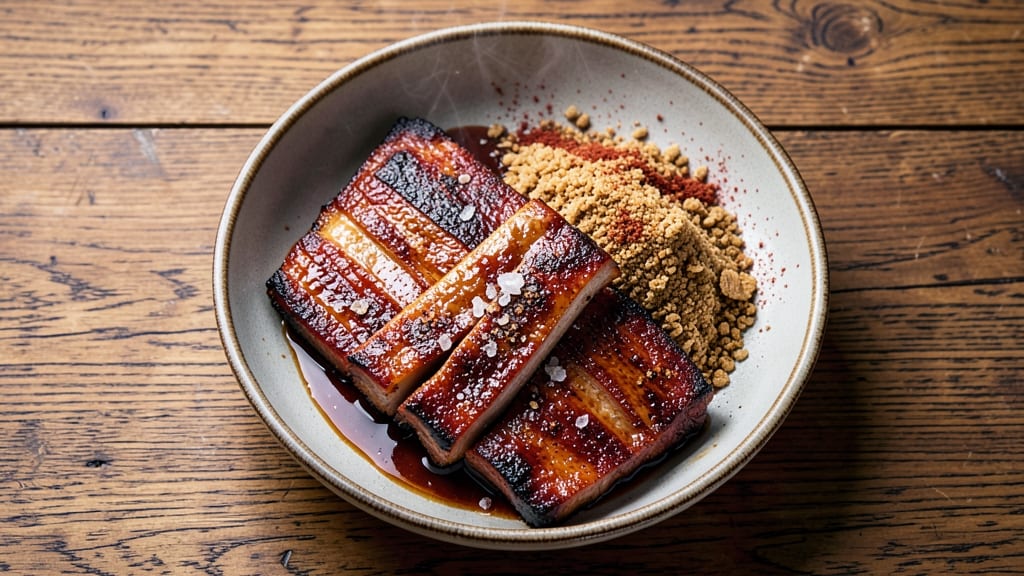
Angus beef back ribs transform a simple meal into a showstopper with their smoky bark and melt-in-your-mouth tenderness. This recipe delivers restaurant-quality results at home using a precise balance of dry rub, low-and-slow cooking, and a final sear for that coveted crispy exterior. The secret lies in patience—letting the meat work its magic over hours to achieve that perfect fall-off-the-bone texture.
What sets these ribs apart is the deep, complex flavor profile created by a blend of coffee, brown sugar, and smoked paprika, which develops a rich, caramelized bark while keeping the meat tender.
The process begins with a dry rub applied generously, followed by a slow cook in the oven or smoker at 225°F for 4-5 hours, ensuring every bite is juicy and flavorful. The final step—a quick broil—locks in moisture while creating that irresistible crust.
By the time you're done, you'll have ribs that are fall-apart tender with a glossy, smoky bark that's impossible to resist.
The aroma alone will have everyone gathering around the table, and the rich, beefy flavor makes this a standout for any occasion—whether it's a weekend BBQ or a special dinner. Serve with classic sides like coleslaw or cornbread to complete the meal.
This method is designed to be foolproof, with clear temperature and timing guidelines to ensure success every time. Whether you're using a smoker, oven, or even a slow cooker, the principles remain the same: low heat, patience, and attention to detail.
Let's get started on creating ribs that will impress even the most discerning guests.
Ingredients for angus beef back ribs
Four pounds of Angus beef back ribs plus a handful of pantry staples. That's all you need for ribs that'll have your guests begging for seconds.
| Ingredient | Amount | Notes |
|---|---|---|
| Angus Beef Back Ribs 🥩 | 4 lb | Bone-in, meaty sections preferred |
| Instant Coffee Granules ☕ | 2 tbsp | High-quality for deep flavor |
| Light Brown Sugar 🍯 | ½ cup | Packed, not granulated |
| Smoked Paprika 🌶️ | 2 tbsp | For authentic smoky flavor |
| Kosher Salt 🧂 | 1 ½ tbsp | Diamond Crystal preferred |
| Black Pepper 🌶️ | 1 tbsp | Freshly ground for best flavor |
| Garlic Powder 🧄 | 1 tbsp | Not garlic salt |
| Onion Powder 🧅 | 1 tbsp | For depth of flavor |
| Mustard Powder 🌶️ | 1 tsp | Adds tangy complexity |
| Yellow Mustard 🍯 | 2 tbsp | For glaze, any brand |
| Apple Cider Vinegar 🍎 | 1 tbsp | For tangy balance |
| Honey 🍯 | 1 tbsp | For glaze sweetness |
| Unsalted Butter 🧈 | 4 tbsp | For basting, room temp |
The ribs are the star here—Angus beef back ribs with good marbling are non-negotiable. Costco or local butcher shops usually have the best cuts. Look for meaty sections with plenty of fat—it's what gives you that buttery tenderness. If you can't find back ribs, spare ribs work too, but they'll need more time. The coffee granules might seem odd, but they add a deep, rich flavor that cuts through the sweetness. Starbucks or Folgers instant coffee works perfectly here—just don't use the fancy flavored stuff.
No instant coffee? Strong brewed coffee cooled works in a pinch, but you'll need to dry it out first. Running low on brown sugar? White sugar plus 1 tsp molasses gets you close. The mustard powder is key for that tangy depth—skip it and your ribs might taste flat. For the glaze, I usually grab whatever yellow mustard is on sale, but Dijon works too if you want more complexity. The apple cider vinegar adds brightness, so don't skip it—it balances all that sweetness. And trust me on the butter—room temperature bastes better than melted.
The dry rub keeps for 2 weeks in an airtight container, so make extra. Store the ribs uncovered in the fridge for 1-2 days before cooking—they'll dry out if wrapped. The glaze ingredients? Mix them ahead and store in the fridge for up to 1 week. Leftovers? Wrap tightly and freeze for 3 months. Reheat slowly in the oven—300°F for 20 minutes—to keep them tender.
Why You'll Love This Recipe
- Foolproof Prep: I swear by this method—just a quick rub of brown sugar, smoked paprika, and a sprinkle of instant coffee (yes, really) before the oven. No brining, no marinating overnight, just 15 minutes of hands-on time that actually feels like work for the reward you get.
- Umami Bomb: That coffee isn’t just a trick—it deepens the flavor in ways I didn’t expect, like a slow-simmered richness without the effort. The salt and sugar caramelize into a sticky crust that cracks when you pull them out, and honestly? It’s the kind of bite that makes people ask, “What’s in this?”
- Weeknight Crowd-Pleaser: These ribs are my go-to for game day, family dinners, or even a lazy Sunday when I don’t want to fuss. They’re hearty enough to feed six but scale back easily for two—just halve the time. (Yes, even on a Tuesday night when you’re exhausted.)
- Leftovers That Don’t Suck: The coffee-sugar crust stays intact when reheated, and the meat stays tender, not dry. I’ll be real: I make these for a crowd, then eat the leftovers for lunch the next day because they’re that good. No sad, rubbery ribs here—just pure, smoky satisfaction.
Step-by-step instructions for smoky Angus beef back ribs
Here's how to turn tough ribs into melt-in-your-mouth perfection with a smoky bark and buttery finish.
Prepare the Dry Rub for Maximum Flavor
In a medium bowl, combine the 2 tbsp instant coffee granules, 0.5 cup light brown sugar, 2 tbsp smoked paprika, 1.5 tbsp kosher salt, 1 tbsp black pepper, 1 tbsp garlic powder, 1 tbsp onion powder, and 1 tsp mustard powder. Mix thoroughly with your hands or a whisk until the sugar is evenly distributed and the spices look uniformly coated.
This blend creates the perfect balance of sweet, smoky, and savory flavors that penetrate the meat. The coffee granules add depth while the mustard powder gives a subtle tang. I like to press the rub firmly into the ribs so it sticks—this ensures every bite gets that flavorful crust. Let the rub sit at room temperature for 10 minutes before applying to help it adhere better.
Season and Rest the Ribs
Pat the 4 lb angus beef back ribs completely dry with paper towels—this is crucial for developing that perfect bark. The drier the surface, the better the rub will stick and the crispier the exterior will become. Working in batches if needed, generously coat both sides of the ribs with the dry rub mixture, pressing it into the meat so it penetrates the crevices.
Place the seasoned ribs on a wire rack set over a baking sheet (this allows air to circulate evenly) and let them rest at room temperature for 30 minutes. This step ensures even cooking and helps the rub create that coveted crust. Don't skip this—cold meat can lead to uneven cooking and a less flavorful result.
Build the Glaze and Baste the Ribs
In a small bowl, whisk together the 2 tbsp yellow mustard, 1 tbsp apple cider vinegar, and 1 tbsp honey until smooth. This tangy-sweet glaze will caramelize beautifully during cooking, adding another layer of flavor. Set this mixture aside while you preheat your oven to 250°F.
Once the oven reaches temperature, place the seasoned ribs on a large piece of heavy-duty aluminum foil. In a small saucepan, melt the 4 tbsp unsalted butter over low heat until it's just melted but not browned. Using a pastry brush, generously coat the ribs with the melted butter, then drizzle the mustard-honey glaze evenly over the top. Fold the foil into a loose packet, sealing it tightly but leaving a small opening to allow steam to escape.
Slow Cook to Tender Perfection
Place the foil-wrapped ribs on the middle rack of your oven and cook for 3 hours. This low-and-slow approach breaks down the connective tissue, transforming tough meat into something that practically falls apart. After 3 hours, carefully open the foil and brush the ribs again with the remaining butter and glaze mixture.
Return the ribs to the oven and cook uncovered for another 30-45 minutes until the internal temperature reaches 203°F (use a meat thermometer to check the thickest part of the meat). You'll know they're done when the bark is deep mahogany brown and the meat is fork-tender. The ribs should have a beautiful glossy sheen from the caramelized glaze.
Rest and Serve with Confidence
Remove the ribs from the oven and let them rest on a cutting board for 15-20 minutes before serving. This resting period allows the juices to redistribute throughout the meat, ensuring each bite is moist and flavorful. I like to tent them loosely with foil to keep them warm while they rest.
Slice the ribs between the bones into individual servings. The meat should be so tender it practically falls off the bone, with a perfect balance of smoky, sweet, and savory flavors. Serve with extra glaze drizzled on top and a side of your favorite vegetables or a fresh salad to cut through the richness.
Pro Tips For Making Angus Beef Back Ribs
- Trim the Fat First: DESCRIPTION:
- Dissolve the Coffee: DESCRIPTION:
- Start Hot, Then Chill: DESCRIPTION:
- Wrap Tight at 170°F: DESCRIPTION:
Troubleshooting this recipe
Uneven Cooking
If your ribs cook unevenly—some parts dry or tough while others are tender—it’s usually due to improper heat distribution or insufficient resting time. First, ensure your oven maintains a consistent 250°F temperature. I recommend placing a reliable oven thermometer near the ribs to verify accuracy.
Also, avoid overcrowding the baking sheet, which can trap steam and slow cooking. If using foil, leave a small opening to allow steam to escape. Always let the ribs rest at room temperature for 30 minutes before cooking, and never start with cold meat straight from the fridge.
This helps the rub adhere evenly and the meat cook uniformly. 🌡️
Bark Not Forming
A lack of bark—those coveted crispy, caramelized edges—typically means the ribs weren’t dry enough or the oven temperature fluctuated. Pat the ribs thoroughly with paper towels before applying the dry rub; moisture is the enemy of bark formation.
For extra crispiness, broil the ribs for 2-3 minutes at the end of cooking, watching closely to avoid burning. If your oven runs hot, reduce the temperature to 225°F and cook for an additional 30-45 minutes to compensate.
I also find that using a wire rack instead of a baking sheet promotes better air circulation, which helps develop that perfect crust. 🔥
Ribs Too Dry
Dry ribs usually result from cooking at too high a temperature or for too long. The ideal internal temperature for back ribs is 203°F, but if they reach this and still feel dry, you likely cooked them uncovered for too long.
To prevent this, wrap the ribs in foil after the initial 3-hour cook and return them to the oven for 15-20 minutes to steam gently. This traps moisture while keeping the meat tender. Another trick?
Baste the ribs with melted butter and glaze every 45 minutes during cooking—this adds moisture and enhances flavor. If your oven isn’t well-calibrated, consider using a slow cooker on low for 6-8 hours for more consistent results. ❄️
Glaze Too Sweet
The glaze might taste overwhelmingly sweet if the balance of honey, vinegar, and mustard isn’t right. To fix this, adjust the ratio to 1 tbsp honey, 1 tbsp vinegar, and 2 tbsp mustard for a more balanced tang.
If the glaze is already made, thin it with 1 tsp water and add a pinch of smoked paprika to deepen the flavor without extra sweetness. For a smokier profile, brush the ribs with a little extra dry rub before applying the glaze.
I also recommend tasting the glaze before applying it—this helps you gauge the sweetness level and make adjustments early. 🌶️
Ribs Sticking to Foil
If your ribs stick to the foil during cooking, it’s likely because the foil wasn’t properly prepared or the ribs weren’t coated with enough butter or glaze. Before wrapping, lightly grease the foil with a thin layer of butter or cooking spray to create a barrier.
Additionally, ensure the ribs are well-basted with butter before sealing them in the foil. If they still stick, try using a different type of foil—heavy-duty aluminum foil works best—or place parchment paper between the foil and the ribs for easier removal.
Always fold the foil tightly but leave a small opening to allow steam to escape, which also helps prevent sticking. 💡
Nutrition facts
Frequently asked questions about Angus beef back ribs
Can I substitute back ribs with spare ribs?
Yes, but you'll need to adjust the cooking time! Spare ribs have less meat and more bone, so they typically require 1-2 extra hours at 225°F. The internal temperature should still reach 203°F for perfect tenderness. The dry rub and glaze work the same way, but spare ribs benefit from an extra 30-45 minutes wrapped in foil during cooking.
How do I know when the ribs are fully cooked?
Use a meat thermometer to check the thickest part of the meat—it should read 203°F. The ribs will also pull away from the bone slightly, and the bark should be deep mahogany brown. If you don't have a thermometer, the "bend test" works: gently press a bone—if it bends, the ribs are done. Never rely on time alone, as ovens vary!
Can I make these ribs in a slow cooker?
Season the ribs with the dry rub, then place them in the slow cooker on low for 6-8 hours (or high for 4-5 hours). Add 1 cup beef broth to the bottom to create steam. During the last 30 minutes, broil for 2-3 minutes to develop bark. The slow cooker keeps the meat tender while the rub creates flavor.
Why does the recipe call for instant coffee?
The coffee granules add a deep, rich flavor that enhances the sweetness and smokiness of the rub. It's not about caffeine—it's about the roasted, earthy notes that cut through the sugar and paprika. If you're avoiding coffee, try 1 tbsp cocoa powder or 1 tsp liquid smoke for a similar effect. Just don't skip it—they're the secret to that complex flavor!
How far ahead can I prepare the ribs?
You can prep the dry rub 2 weeks ahead and store it in an airtight container. For the ribs themselves, season them 1-2 days ahead and refrigerate uncovered (this helps dry the surface for better bark). Cook them straight from the fridge, adding 30-45 minutes to the total time. The glaze can be made 1 week ahead and stored in the fridge.