
Main Courses
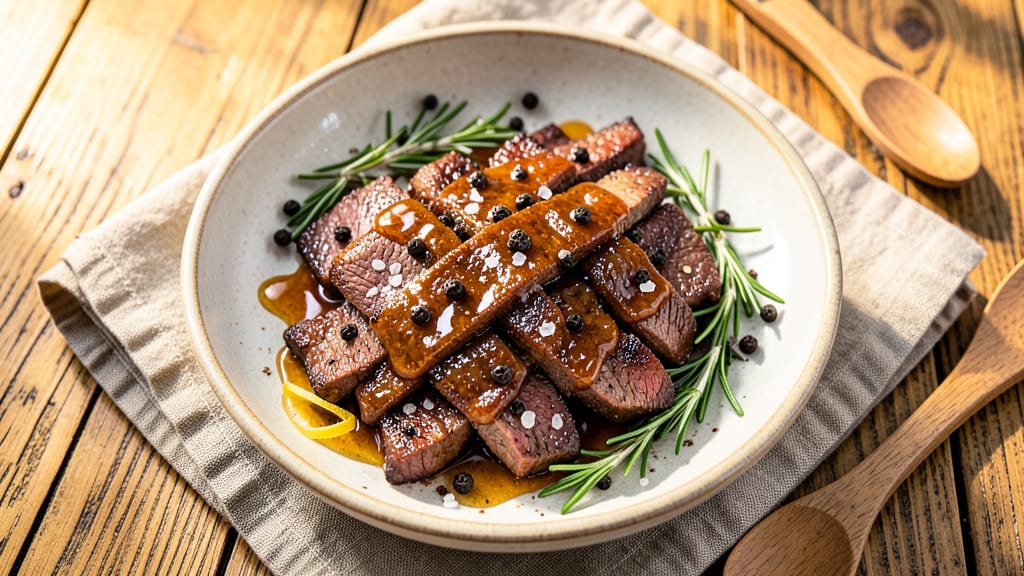
Transforming tough beef into tender, tangy jerky using apple cider vinegar is a game-changer that delivers restaurant-quality results at home. This method tenderizes the meat while preserving it naturally, creating bites that are both flavorful and shelf-stable.
The key lies in precise curing and drying techniques that ensure perfect texture every time.
The beauty of this recipe is its simplicity—just a few basic ingredients and 24 hours of hands-off time transform lean beef into chewy, flavorful jerky.
Apple cider vinegar plays a dual role: it tenderizes the meat and acts as a natural preservative, while salt and spices enhance the depth of flavor. No fancy equipment is needed beyond a dehydrator or oven, making this accessible for home cooks.
What you’ll end up with is jerky that’s crisp on the outside and tender on the inside, with a tangy-sweet flavor profile that’s irresistibly addictive. The vinegar’s acidity cuts through the richness of the beef, balancing the savory notes perfectly.
Whether you’re meal prepping or craving a snack, this jerky is a versatile protein that keeps well for weeks.
Ready to master the art of jerky-making? This foolproof method ensures you’ll achieve professional results without the guesswork. Let’s get started with the step-by-step process that guarantees success every time.
Ingredients for apple cider vinegar beef jerky
Nine essential ingredients transform tough beef into restaurant-quality jerky in 24 hours.
| Ingredient | Amount | Notes |
|---|---|---|
| Lean Beef Top Round Roast 🥩 | 2 lb | Thinly sliced against grain (1/4-inch thick) |
| Apple Cider Vinegar 🍎 | 1 cup | Raw, unfiltered preferred (Bragg brand recommended) |
| Kosher Salt 🧂 | 2 tbsp | Diamond Crystal preferred (use non-iodized) |
| Black Peppercorns 🌶️ | 1 tbsp | Freshly cracked for maximum flavor |
| Garlic Powder 🧄 | 1 tbsp | Freshly ground preferred |
| Onion Powder 🧅 | 1 tbsp | For balanced savory depth |
| Smoked Paprika 🌶️ | 1 tbsp | For authentic smoky flavor |
| Brown Sugar 🍚 | 2 tbsp | Lightly packed for sweetness |
| Ground Cayenne Pepper 🔥 | ½ tsp | Adjust for heat preference |
| Extra-Virgin Olive Oil 🫒 | 1 tbsp | For coating and moisture retention |
| Cornstarch 🌽 | 1 tbsp | For crisp texture (optional) |
The beef selection is critical—top round roast delivers the perfect lean-to-fat ratio for jerky. Costco or butcher shops typically carry pre-sliced versions, but if cutting yourself, slice against the grain for tenderness. Look for cuts with visible marbling, as this prevents excessive dryness. The apple cider vinegar should be raw and unfiltered (Bragg is the gold standard)—pasteurized versions lack the depth of flavor and preservative power. For salt, Diamond Crystal dissolves more slowly, enhancing flavor penetration during the cure.
No Bragg vinegar? White vinegar or apple juice vinegar work in a pinch, though flavor will differ. Substituting brown sugar? Coconut sugar or maple syrup at half the amount provides similar caramelization. For heat, swap cayenne with red pepper flakes at double the amount. The cornstarch is optional but creates that coveted crisp exterior—skip it if you prefer softer jerky. When prepping the beef, pat slices dry** with paper towels to ensure even drying and maximum crispness during dehydration.
Store cured beef slices in an airtight container in the refrigerator for up to 48 hours before drying. Once dehydrated, keep in a cool, dark place for up to 4 weeks or freeze for 6 months. For meal prep, portion into resealable bags with parchment paper between layers to prevent sticking. The vinegar's acidity preserves the jerky naturally, eliminating the need for additional preservatives—just ensure proper drying to prevent spoilage.
Why You'll Love This Recipe
- No-Fuss Marinade Magic: I swear by this trick—just toss the beef in apple cider vinegar, garlic powder, and a pinch of salt. No fancy prep, no measuring cups, and the vinegar does all the tenderizing work while you sip your coffee.
- Sweet-Savory Crunch: That tangy vinegar bite with the deep, caramelized crust? It’s like a grown-up version of beef jerky—chewy, rich, and just a little sweet. My kids actually ask for seconds, and I’ll take it.
- Lunchbox Legend: Between us, this is my secret weapon for school lunches or hikes. It stays fresh for days, fits in any container, and those peppery garlic notes make even plain crackers feel gourmet.
- Budget Bulk Winner: A single roast feeds my family for a week—no waste, no last-minute grocery runs. The vinegar cuts costs too, stretching the beef further than any dry rub ever could. (Yes, even on a Tuesday night.)
Step-by-step instructions for apple cider vinegar beef jerky
Transform lean beef into tender, tangy jerky using precise technique and 24-hour curing.
Prepare the Marinade with Precision
In a medium bowl, combine the 1 cup apple cider vinegar, 2 tablespoons kosher salt, 1 tablespoon freshly cracked black peppercorns, 1 tablespoon garlic powder, 1 tablespoon onion powder, 1 tablespoon smoked paprika, 2 tablespoons brown sugar, and 0.5 teaspoon ground cayenne pepper. Whisk vigorously until the brown sugar fully dissolves and the mixture becomes uniform in color.
The vinegar should be at room temperature before mixing to ensure even distribution of the spices. I like to let it sit for 5 minutes after whisking—this allows the flavors to meld slightly before contacting the beef. The marinade should have a deep amber hue with visible spice flecks suspended throughout.
Slice the Beef Against the Grain
Using a sharp boning knife, slice the 2 lb lean beef top round roast into strips ¼-inch thick against the grain. The grain direction will be visible as parallel lines in the meat. Cut each strip to about 2-3 inches in length for even drying.
I press down firmly with the knife during each slice to maintain consistent thickness—this prevents some strips from drying too quickly while others remain undercooked. Arrange the sliced beef on a plate and refrigerate for 15 minutes before marinating. This brief chill helps the meat relax and absorb the marinade more effectively.
Marinate for Optimal Flavor Penetration
Transfer the sliced beef to a non-reactive glass or ceramic dish and pour the marinade over the top, ensuring each piece is fully submerged. Cover the dish with plastic wrap and refrigerate for 12-18 hours, turning the beef every 4 hours to ensure even exposure to the marinade.
Here's the thing—this marinating time is non-negotiable for tender jerky. The acid in the vinegar breaks down the muscle fibers, but you need enough time for the spices to penetrate deeply. After 12 hours, the beef will begin to firm up slightly, which is a good sign the marinade is working. If you're short on time, you can reduce this to 8 hours, but the texture won't be as tender.
Coat and Prepare for Dehydration
Remove the beef from the marinade and place it on a clean kitchen towel to drain excess liquid. In a small bowl, mix the 1 tablespoon extra-virgin olive oil with the 1 tablespoon cornstarch until fully combined. This creates a light coating that promotes even drying and adds subtle crispness.
Toss the beef strips in the oil-cornstarch mixture until evenly coated. Arrange them on a wire rack set over a baking sheet lined with parchment paper, ensuring the strips aren't touching. This spacing is crucial—it allows air to circulate around each piece for uniform dehydration. I like to leave about ½-inch between each strip.
Dehydrate for Perfect Texture
Preheat your dehydrator to 160°F and place the prepared beef inside. Dehydrate for 12-16 hours, checking periodically after 8 hours. The jerky is done when it's pliable but no longer sticky to the touch and has a firm, leathery texture.
If using an oven, prop the door open with a wooden spoon and bake at 175°F for 4-6 hours, checking frequently. The key is to achieve a balance—jerky should bend slightly but not snap when folded in half. Over-dehydrated jerky becomes brittle and loses moisture, while under-dehydrated jerky remains chewy and potentially unsafe. Let the jerky cool completely before storing in an airtight container for up to 2 weeks.
Pro Tips For Making Apple Cider Vinegar Beef Jerky
- Slice Thin, Not Perfect: I used to obsess over even slices, but jerky needs surface area more than symmetry—aim for ¼-inch thickness (about 6mm) with a sharp knife. Uneven slices? No problem; just flip them often so they all dry evenly. (Yes, it’ll look messy, but that’s how you get consistent chews.)
- Marinate Overnight, Not Rush: Apple cider vinegar works best when given time to tenderize and penetrate. Skip the 30-minute soak—24 hours minimum in the fridge is where the magic happens. Pro move: Toss the beef in the marinade twice (once at start, once before drying) for deeper flavor.
- Skip the Boil, Use Cold Water: I learned this the hard way—hot water cooks the edges before they even hit the dehydrator. Rinse slices in ice water after marinating to stop any premature cooking, then pat very dry with paper towels. Wet jerky = sad jerky.
- Dehydrate at 160°F, Not Higher: Cranking the heat to 180°F+ might speed things up, but you’ll end up with leather instead of jerky. 160°F is the sweet spot—low enough to preserve texture, high enough to kill bacteria in 6–8 hours. Check slices after 4 hours; they should be pliable but not sticky. (Your dehydrator’s max? Use a baking sheet in the oven with the door cracked.)
Flavor customization for this apple cider vinegar beef jerky
Sweet-Tangy Balance
Adjust the brown sugar to apple cider vinegar ratio to control sweetness. For a more pronounced tang, reduce sugar to 1 tablespoon—this enhances the vinegar’s sharpness while keeping the jerky flavorful.
If you prefer a sweeter profile, increase sugar to 3 tablespoons and add ½ teaspoon cinnamon for warmth. I find 1.5 tablespoons sugar strikes the perfect balance for a well-rounded flavor. 🍎
Spice Level Control
For mild heat, reduce the ground cayenne to ¼ teaspoon or swap it for ½ teaspoon smoked paprika—this adds depth without spiciness. If you love heat, increase cayenne to 1 teaspoon and add ½ teaspoon chipotle powder for a smoky kick.
Always taste the marinade before applying it to the beef to gauge intensity. 🌶️
Herb Variations
Swap garlic powder and onion powder for fresh herbs like 1 tablespoon chopped rosemary and 1 tablespoon chopped thyme for an earthy twist. For a Mediterranean flair, add 1 teaspoon dried oregano and ½ teaspoon lemon zest to the marinade.
Fresh herbs need to be finely minced to distribute evenly—blend them in a food processor first for best results. 🌿
Umami Boosters
Enhance depth with 1 tablespoon soy sauce or 1 tablespoon Worcestershire sauce in the marinade—these add umami richness without overpowering. For a savory kick, add ½ teaspoon fish sauce (trust me, it blends seamlessly). These additions work especially well with leaner cuts that need extra flavor complexity. 🍜
Citrus Zing
Brighten the flavor with 1 tablespoon freshly squeezed lemon juice or orange juice added to the marinade. The acidity complements the apple cider vinegar beautifully. For a tropical twist, add ½ teaspoon grated ginger and ½ teaspoon lime zest—this pairs wonderfully with the smoky paprika. 🍋
Smoky Depth
For a campfire-inspired flavor, increase smoked paprika to 2 tablespoons and add ½ teaspoon liquid smoke (just a few drops). If you have access to a smoker, lightly smoke the jerky for 10-15 minutes after dehydration for an authentic barbecue taste.
This works especially well with dehydrated jerky that’s already crisp. 🔥
Nutrition facts
Frequently asked questions
Why does apple cider vinegar make beef jerky tender?
The acidity in apple cider vinegar breaks down tough muscle fibers in the beef, creating tiny tears that allow moisture and flavor to penetrate deeply. This tenderizing process is more effective than salt alone and helps create that signature chewy-yet-tender texture. The vinegar also acts as a natural preservative, extending shelf life while maintaining moisture.
Can I use a different vinegar if I don't have apple cider vinegar?
Yes, but expect different flavor results. White vinegar works in a pinch (1:1 ratio) for preservation, though it lacks the sweet-tangy depth of apple cider. For better flavor, try balsamic vinegar (½ cup) or red wine vinegar (½ cup) mixed with ½ cup water to mimic the acidity. The sugar content in apple cider vinegar is key for that caramelized flavor during drying.
How do I know when the jerky is fully dehydrated?
Jerky is done when it's pliable but no longer sticky to the touch, with a firm leathery texture. It should bend slightly when folded but not snap. For precise testing: press a piece between your fingers—if it springs back slowly (not rubbery) and feels dry throughout, it's ready. Over-drying creates brittle jerky, while under-drying risks spoilage. Check after 8 hours of dehydration.
Can I make this jerky without a dehydrator?
Use an oven set to 175°F with the door propped open slightly for airflow. Arrange strips on a wire rack over a baking sheet and dehydrate for 4-6 hours, checking frequently. For even drying, rotate the tray halfway through. An oven thermometer ensures accurate temperature control—fluctuations can cause uneven results.
What's the best way to store homemade beef jerky?
Store in an airtight container in a cool, dark place for up to 4 weeks. For longer storage, vacuum-seal or freeze for 6 months. Keep away from moisture to prevent mold. Portion into snack-sized bags with parchment paper between layers to maintain crispness. The vinegar's acidity helps preserve freshness naturally.