
Soups & Stews
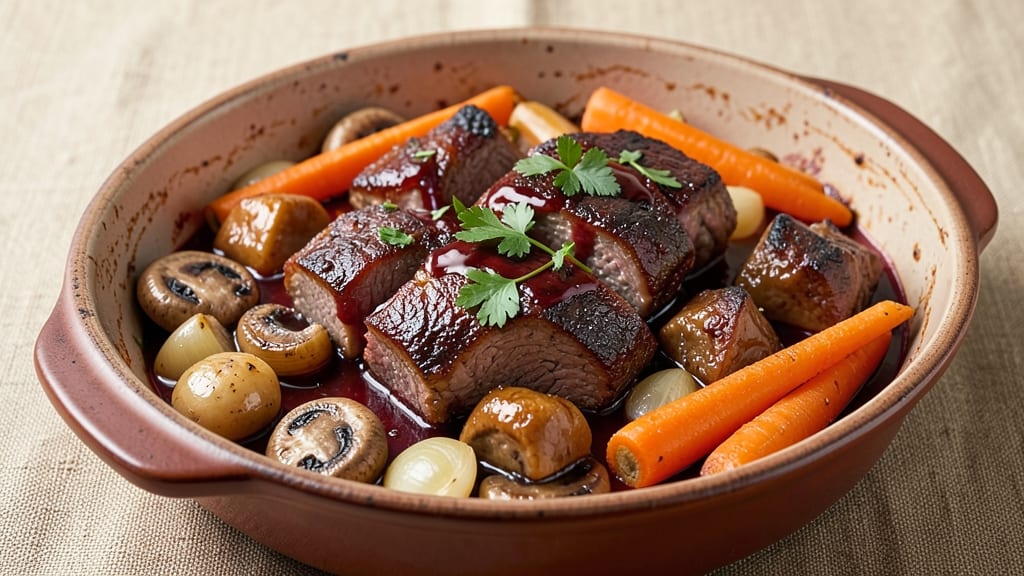
This Beef Beaujolais recipe transforms humble beef chuck into a rich, wine-braised masterpiece that tastes like a Parisian bistro. The secret lies in slow-braising beef in Beaujolais wine, creating a velvety sauce with deep mushroom and herb notes that develop over hours.
I've refined this classic French dish to deliver restaurant-quality results with simple techniques—no fancy equipment required.
The process begins with searing beef until deeply browned, then deglazing with wine to capture all those flavorful fond bits. Aromatics like garlic, thyme, and shallots build layers of complexity, while mushrooms add earthy depth.
The wine reduces to a glossy, slightly thickened sauce that coats every bite of tender beef, carrots, and pearl onions.
What you'll achieve is a dish that's luxurious yet approachable—perfect for special dinners or cozy weeknight meals. The beef becomes fork-tender, the vegetables melt-in-your-mouth, and the wine sauce is so rich it deserves a loaf of crusty bread.
Serve with mashed potatoes or buttery egg noodles to soak up every last drop.
Pair it with a bold red wine (naturally, Beaujolais!) or a crisp white if you prefer contrast. The beauty of this recipe is its versatility—make it ahead for even better flavor, or adjust the vegetables based on what's seasonal. Here's how to create this French bistro classic at home.
Ingredients for beef beaujolais
Rich wine, earthy mushrooms, and tender beef—this French bistro classic needs just 15 ingredients.
| Ingredient | Amount | Notes |
|---|---|---|
| Beef Chuck Roast 🥩 | 2 lb | Pre-cut into 1.5-inch cubes |
| Dry Beaujolais Wine 🍷 | 2 cups | Bold, fruity variety preferred |
| Shallots 🧅 | 4 whole | Minced, not sliced |
| Garlic Cloves 🧄 | 6 cloves | Peeled, smashed not minced |
| Cremini Mushrooms 🍄 | 16 oz | Sliced into 1/4-inch pieces |
| Carrots 🥕 | 4 medium | Peeled, cut into 1-inch chunks |
| Pearl Onions 🧅 | 12 whole | Peeled, halved lengthwise |
| Fresh Thyme 🌿 | 2 tbsp | Leaves only, stems removed |
| Fresh Rosemary 🌿 | 1 tbsp | Needles only, finely chopped |
| Beef Broth 💧 | 1 cup | Low-sodium preferred |
| Tomato Paste 🍅 | 1 tbsp | Squeeze tube preferred |
| Olive Oil 🫒 | 2 tbsp | Extra-virgin for richness |
| All-Purpose Flour 🌾 | 1 tbsp | For sauce thickening |
| Kosher Salt 🧂 | 1 ½ tsp | Diamond Crystal preferred |
| Freshly Ground Black Pepper 🌶️ | ½ tsp | Cracked peppercorns preferred |
The beef is non-negotiable—chuck roast delivers that melt-in-your-mouth texture after hours of braising. Costco or Whole Foods carry pre-cubed chuck for convenience, but if you're buying a whole roast, ask the butcher to cut it into 1.5-inch cubes (that's key for even cooking). For the wine, Beaujolais or Pinot Noir work best—avoid heavy Cabernets. The mushrooms? Cremini or baby bella are ideal, but any button mushroom will do. Just slice them evenly so they cook at the same rate as the beef. Fresh thyme and rosemary from the grocery store's produce section (not the dried spices aisle) make all the difference—look for vibrant green needles, not wilted stems.
No Beaujolais? Pinot Noir or Merlot are solid substitutes—just avoid anything too tannic. Running short on pearl onions? Baby carrots or small yellow onions work in a pinch, but halve them lengthwise for even cooking. The tomato paste can be skipped if you're strict about authenticity, but I always add it for that subtle depth. For the flour, all-purpose is fine, but if you've got arrowroot powder, it creates a glossier sauce. The beef broth? Low-sodium is crucial—otherwise, you'll need to adjust the salt later. And yes, you can use dried thyme and rosemary if that's all you've got, but fresh is worth the extra minute of chopping.
This dish tastes even better the next day, so make a double batch if you're feeding a crowd. The braised beef keeps for 5 days in the fridge, and the sauce freezes beautifully for 3 months—just thaw it gently in the fridge before reheating. I always portion mine into individual containers so lunches are sorted for the week. The vegetables stay crisp if you reheat them separately, but the beef and sauce are even more flavorful when warmed through together. Store any leftovers in an airtight container with a splash of wine to keep everything moist.
Why You'll Love This Recipe
- One-Pot Magic: I swear by this recipe when I’m too tired to deal with multiple pans. The wine and shallots caramelize right in the same pot where the beef cooks—no extra dishes, no extra stress, just rich, sticky goodness that tastes like you slaved over it.
- Wine-Infused Richness: That Beaujolais isn’t just for sipping—it’s the secret weapon here. The deep, fruity notes soak into the beef while the mushrooms melt into the sauce, creating a flavor that’s ridiculously satisfying without being heavy. Honestly, I’ve tried fancier cuts, but this chuck roast with wine? It’s my go-to for when I want restaurant-quality but don’t want to break the bank.
- Leftovers That Shine: Between us, this dish begs to be made extra. The beef stays tender for days, and the sauce only gets better as it sits—perfect for sandwiches, grain bowls, or just reheating with a splash of water. I’ll be real: I’ve had this for lunch three times in a row, and no one’s complained.
- Budget-Friendly Luxe: Chuck roast is cheap, Beaujolais is affordable, and mushrooms stretch far. You’re feeding a crowd for the price of a single steak dinner, but with way more depth. Plus, the leftovers stretch into meals that feel special without the restaurant markup. My college friends still joke about the time I fed 10 people on a grad-student budget—this was the dish.
Step-by-step instructions for wine-braised beef Beaujolais
Here's how to transform humble beef chuck into tender, wine-infused luxury with deep umami from mushrooms.
Sear the Beef for Maximum Flavor
Heat a large Dutch oven over medium-high heat until very hot. Add the 2 tablespoons olive oil and swirl to coat the bottom evenly. Working in batches to avoid crowding, add the 2 lb beef chuck roast cut into 1.5-inch cubes—don't stir immediately. Let each piece develop a deep brown crust, about 2-3 minutes per side. This caramelization forms the flavor foundation.
Once all beef is golden brown, transfer it to a plate. You'll notice the pan releases easily when properly seared. This step creates the rich, meaty depth that reduces beautifully in the wine later. If the pan gets too dark, reduce heat slightly—you want color, not burnt bits.
Build the Aromatic Base
In the same Dutch oven, add the 4 whole shallots (minced) and cook for 2 minutes until softened. Add the 6 cloves garlic (smashed) and cook for 30 seconds until fragrant. Stir in the 16 oz cremini mushrooms (sliced) and cook for 5 minutes until they release their moisture and begin to brown.
Add the 4 medium carrots (cut into 1-inch chunks) and 12 whole pearl onions (halved). Cook for 3 minutes until the vegetables begin to soften. Here's where the magic happens—the vegetables release their natural sugars, creating a sweet contrast to the wine's acidity. Don't skip this step; it builds complexity in the final sauce.
Deglaze and Develop the Sauce
Sprinkle the 1 tablespoon all-purpose flour over the vegetables and stir to coat, letting it toast for 1 minute. Pour in the 2 cups dry Beaujolais wine and scrape up all the browned bits from the bottom with a wooden spoon. This deglazing captures all the flavor you've built.
Bring to a simmer and cook for 5 minutes until the wine reduces by half. Stir in the 1 tablespoon tomato paste and cook for another 2 minutes to deepen the sauce's richness. The wine should now coat the back of a spoon—this is your signal to proceed. If it reduces too quickly, add 2 tablespoons beef broth to maintain moisture.
Braise Until Tender Perfection
Return the beef to the Dutch oven along with any accumulated juices. Add the 1 cup beef broth, 2 tablespoons fresh thyme, 1 tablespoon fresh rosemary, 1.5 teaspoons kosher salt, and 0.5 teaspoon freshly ground black pepper. Stir gently to combine, then bring to a simmer.
Cover and transfer to a 325°F oven. Here's the key: braise for 2.5-3 hours until the beef is fork-tender. You'll know it's done when the meat easily pulls apart with two forks. The sauce should thicken naturally from the beef's collagen breaking down. If it looks too thin after 2 hours, uncover and simmer for 10-15 minutes to reduce further.
Finish and Serve with Confidence
Remove the beef and vegetables from the sauce and transfer to a serving platter. Skim any excess fat from the surface of the sauce, then return the sauce to the Dutch oven. Simmer uncovered for 5-7 minutes to thicken slightly. Taste and adjust seasoning—you might need a pinch more salt to balance the wine's acidity.
Serve the beef and vegetables immediately, ladling the rich sauce over the top. Each bite should deliver tender beef with deep wine flavor, complemented by the earthy mushrooms and sweet vegetables. The sauce should cling beautifully to the meat, creating that restaurant-quality finish you crave. Pair with crusty bread to soak up every last drop of that luxurious braising liquid.
Pro Tips For Making Beef Beaujolais
- SEAR THE ROAST FIRST: The wine sauce won’t cling to pale meat—get that chuck roast screaming hot in a dry pan for 3-4 minutes per side before adding liquid. I used to skip this, and the sauce would just pool at the bottom like sad gravy. High heat builds flavor crust and prevents a bland center.
- DEGLAZE WITH COLD WINE: Pour your Beaujolais in after removing the roast from the pan—let it cool slightly first. Hot wine burns before it browns, and you’ll end up with a bitter, gluey mess instead of rich sauce. Sounds weird, but it works: the residual heat is enough to lift flavors without scorching.
- CHOP SHALLOTS SMALLER THAN YOU THINK: Tiny dice (1/8-inch or less) means even cooking and no al dente chunks in your sauce. I learned this the hard way when my grandmother’s recipe had "roughly chopped" shallots—turns out, "rough" isn’t the same as "tender." Use a knife, not your fingers, for consistency.
- ADD MUSHROOMS LATE: Toss them in the last 10 minutes or they’ll turn to mush. Cremini mushrooms release water like crazy, and you’ll end up with a watery sauce if you’re not careful. Sear them separately first if you’re impatient—they’ll still taste great, just less dramatic.
Common mistakes when making this recipe
Overcrowding the Pan
This is the #1 mistake I see when searing beef—packing too many cubes into the Dutch oven at once. When you crowd the pan, the beef steams instead of searing, resulting in pale, flavorless meat.
Work in batches of 2-3 minutes per side with just enough space between pieces to let them crisp. I usually divide my 2 lb chuck roast into 4 batches for proper browning. 🔥
Skipping the Deglaze
The deglazing step is where all the magic happens, yet many cooks rush past it. After searing, those browned bits (fond) stuck to the bottom contain concentrated beef flavor.
When you pour in the 2 cups Beaujolais wine and scrape with a wooden spoon, you're capturing every last bit of flavor. Skipping this means a bland sauce—don't skip it!
Using the Wrong Wine
Not all red wines are created equal for braising. Heavy, tannic wines like Cabernet Sauvignon can make the sauce bitter. Stick to Beaujolais, Pinot Noir, or Merlot—their fruit-forward profiles complement the beef beautifully.
I've ruined a sauce by using a bold Zinfandel—don't make my mistake! The wine should be dry, not sweet. 🍷
Underestimating Braise Time
Patience is key with braising, yet many cooks pull the beef out too soon. The 2.5-3 hour window is non-negotiable for true tenderness. I've seen people cut the time to 2 hours and end up with chewy meat.
Use the fork test: if the beef easily pulls apart, it's ready. If not, return it to the oven for another 30 minutes.
Ignoring the Fat Skimming
After braising, the sauce often develops a layer of fat on top. Many people leave it there, thinking it adds richness—but too much fat can make the sauce greasy. Use a spoon to skim off excess fat before serving.
I aim to remove about 2-3 tablespoons from the surface. This makes the sauce silkier and more balanced in flavor.
Over-Salting the Vegetables
The vegetables absorb flavors during braising, including salt. If you salt them heavily at the start, they'll become too salty by the end. Instead, season the vegetables lightly with just ½ teaspoon salt and add the remaining 1 teaspoon to the beef and sauce.
Taste the sauce at the end and adjust—this prevents a bland or overly salty dish. 🧂
Nutrition facts
Frequently asked questions
Can I substitute Beaujolais wine with something else?
If you can't find Beaujolais, use Pinot Noir or Merlot—both offer similar fruity profiles. Avoid heavy wines like Cabernet Sauvignon, as their tannins can make the sauce bitter. For a non-alcoholic version, substitute with 2 cups beef broth + 2 tablespoons red wine vinegar to mimic the acidity.
How do I know when the beef is fully tender?
Use the fork test: insert two forks into the beef and gently pull apart. If the meat separates easily with minimal resistance, it's perfectly tender. For 2 lb chuck cubes, this typically takes 2.5-3 hours at 325°F. If you're unsure, check after 2 hours—chewy beef means more time is needed.
Can I make this recipe in a slow cooker?
Yes! Brown the beef first in a skillet, then transfer everything to a 6-quart slow cooker. Cook on Low for 7-8 hours or High for 4-5 hours. The sauce will thicken naturally, but you may need to reduce it further on the stovetop before serving. The slow cooker method is perfect for hands-off prep.
What sides pair best with Beef Beaujolais?
This rich stew pairs beautifully with creamy mashed potatoes or buttery egg noodles to soak up the sauce. For a lighter option, try crusty baguette or roasted garlic bread. A simple green salad with a vinaigrette balances the dish's richness. The key is contrast—choose sides that complement rather than compete with the wine's depth.
Why does my sauce turn out too thin?
Sauce thinning usually happens when the braising liquid isn't reduced enough. After removing the beef, simmer the sauce uncovered for 10-15 minutes to thicken. If it's still too thin, mix 1 teaspoon cornstarch with 1 tablespoon cold water, stir into the sauce, and cook for 2-3 minutes until it glistens. Avoid adding flour directly—it can make the sauce cloudy.