
Main Courses
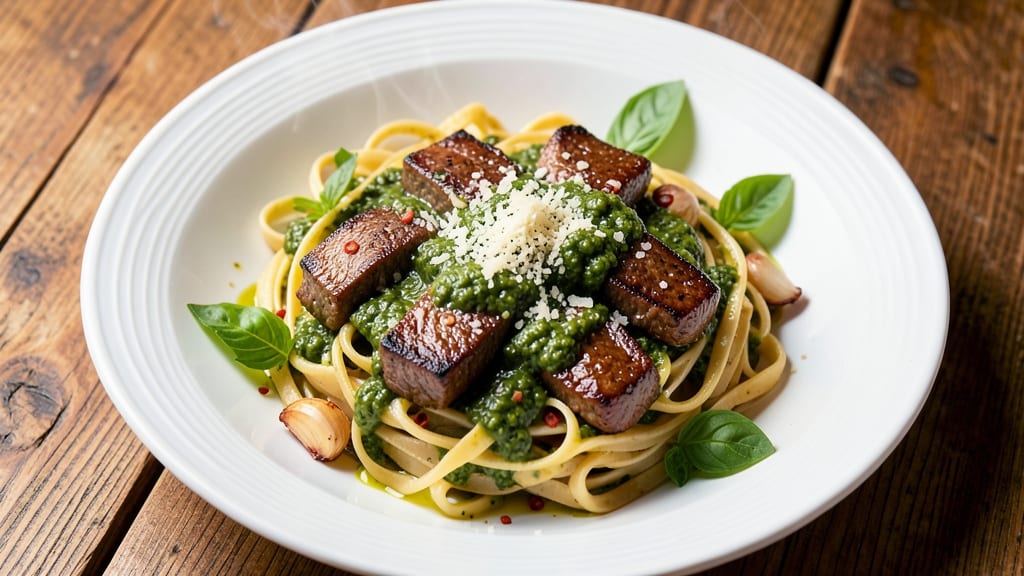
This beef basil pesto pasta recipe delivers restaurant-quality richness with tender beef threads perfectly coated in vibrant herb sauce. The secret lies in searing thin strips of beef until just done—keeping them tender while building deep flavor—and combining them with fresh basil pesto that transforms ordinary pasta into something extraordinary.
Every bite balances herby brightness with savory beef and creamy Parmesan, creating a dish that's both elegant and satisfying.
The foundation starts with high-quality fettuccine cooked to perfect al dente, then tossed with a homemade basil pesto that's lighter than traditional versions but packed with flavor.
While the pasta cooks, the beef sears in batches to maintain its tenderness, then gets finished with a splash of white wine for brightness. The assembly is simple: combine everything in one pan, letting the residual heat meld the flavors together while keeping the pasta from becoming mushy.
What makes this recipe truly special is how the components work together—juicy beef strips, vibrant green pesto, and al dente pasta create a harmonious balance of textures and flavors.
The dish serves beautifully as a weeknight dinner or an impressive meal for guests, with optional additions like toasted pine nuts or fresh arugula to elevate it further.
Pair with a crisp white wine like Pinot Grigio or a bold red like Chianti to complement the herbaceous notes and rich beef. The leftovers reheat well, making this an excellent meal prep option for busy schedules.
Here's how to create this restaurant-worthy pasta at home with simple techniques and fresh ingredients.
Ingredients for beef basil pesto pasta
High-quality ingredients transform ordinary pasta into restaurant-worthy beef basil pesto perfection.
| Ingredient | Amount | Notes |
|---|---|---|
| Fettuccine Pasta 🍝 | 12 oz | High-quality, dried preferred |
| Flank Steak 🥩 | 1 lb | Thinly sliced against grain |
| Fresh Basil Leaves 🌿 | 2 cups | Packed, stems removed |
| Parmesan Cheese 🧀 | ½ cup | Freshly grated from block |
| Garlic Cloves 🧄 | 4 cloves | Peeled, roughly chopped |
| Extra-Virgin Olive Oil 🫒 | ½ cup | High-quality, fruity |
| White Wine 🍷 | ¼ cup | Dry, like Pinot Grigio |
| Lemon Juice 🍋 | 1 tbsp | Freshly squeezed |
| Salt 🧂 | 1 ½ tsp | Kosher or sea salt |
| Black Pepper 🌶️ | ½ tsp | Freshly ground preferred |
| Pine Nuts 🥜 | ¼ cup | Toasted, optional garnish |
| Arugula 🌱 | ½ cup | Fresh, optional garnish |
The flank steak is non-negotiable here—look for a well-marbled cut at your local butcher or Whole Foods for the best texture. Thinly slicing it against the grain ensures tender threads. Fresh basil is a must; the vibrant color and flavor make all the difference. For the Parmesan, invest in a block and grate it yourself—pre-grated cheese lacks the same depth of flavor. Costco often carries high-quality blocks at a reasonable price, or check the deli section at Trader Joe's for pre-grated options if you're short on time.
No white wine? Dry chicken broth works in a pinch, but the acidity from wine brightens the dish. Fresh basil wilt fast—store it in a jar of water like flowers to keep it crisp. Pine nuts are pricey, but walnuts toasted lightly offer a budget-friendly alternative. The arugula adds a peppery kick, but skip it if you want to keep prep minimal. For extra richness, stir in a splash of heavy cream at the end, though the original recipe keeps it light. Always taste the pesto before tossing—adjust salt or lemon as needed.
This dish reheats beautifully, though the pasta may soften slightly. Store leftovers in an airtight container for up to 3 days in the fridge. For longer storage, freeze the pesto sauce separately and toss with fresh pasta when ready. The beef can be seared ahead and stored in the fridge for 2 days, then reheated gently before combining. Garnish with toasted pine nuts or arugula just before serving to keep everything vibrant.
Why You'll Love This Recipe
- No-Fuss Weeknight Win: I swear by this when I’m too tired to think. Sear the flank steak in one pan, toss the fettuccine in the same water, then blend the basil, garlic, and Parmesan—no separate pots, no stress. The only real work is slicing the steak thin, and honestly, that’s satisfying in a weird way.
- Herby, Meat-Loaded Magic: That first bite? Crispy steak against al dente pasta, all smothered in bright basil pesto and sharp Parmesan. The garlic lingers just enough to wake up your taste buds, but the basil keeps it fresh—no heavy cream or weird aftertaste. It’s the kind of dish that makes you pause mid-bite.
- Potluck or Date Night: Between us, this recipe works everywhere. Bring it to a picnic (the pesto stays fresh in a jar), serve it at a dinner party (it looks fancy but isn’t), or make it for two (leftovers reheat like a dream). The steak’s rich flavor holds up, and the pesto adds that “I actually cooked” vibe without the fuss.
- Budget Meal That Feeds: Flank steak stretches farther than you’d think when sliced thin, and Parmesan rind shavings (not just the grated kind) cut costs. Plus, the pesto makes two batches—freeze half for next week’s lunch. I’ve fed four people for under $20 with this, and no one ever complains. That’s reliability.
Step-by-step instructions for beef basil pesto pasta
Perfectly tender beef and vibrant basil pesto come together in this rich, herb-infused pasta dish.
Prepare the Flank Steak for Cooking
Begin by slicing the 1 lb Flank Steak thinly against the grain into ¼-inch strips. This ensures each bite delivers maximum tenderness. Pat the slices dry with paper towels to remove any excess moisture—this helps achieve a perfect sear later. In a small bowl, combine 1.5 tsp Salt and 0.5 tsp Black Pepper, then season each steak strip generously on both sides. Let the seasoned strips rest for 10 minutes at room temperature while you prepare the pasta.
I recommend using a sharp boning knife for this step—it gives you better control and cleaner cuts. If the strips feel too thick after slicing, you can pound them lightly with a meat mallet to ensure even cooking. The goal is to create tender, bite-sized pieces that will cook quickly in the pesto sauce.
Cook the Fettuccine to Al Dente Perfection
Bring a large pot of water to a rolling boil and add 12 oz Fettuccine Pasta. Stir immediately to prevent sticking. Cook the pasta for 1 minute less than the package instructions specify—this ensures it finishes cooking in the sauce and maintains a perfect al dente texture. Reserve 1 cup of pasta water before draining, as it contains starch that helps create a silky sauce later.
While the pasta cooks, keep an eye on the water level and add more boiling water as needed to maintain a steady boil. The pasta is ready when it floats to the surface and a taste test reveals a slight firmness in the center. Drain the pasta immediately and return it to the pot, tossing with a splash of the reserved pasta water to prevent sticking.
Create the Herb-Infused Pesto Sauce
In a food processor, combine the 2 cups Fresh Basil Leaves, 4 cloves Garlic Cloves, 0.5 cup Parmesan Cheese, and 0.25 cup Pine Nuts. Pulse until the pine nuts are finely chopped but the basil still retains some texture. With the processor running, slowly drizzle in the 0.5 cup Extra-Virgin Olive Oil until the mixture forms a thick, vibrant green pesto. Taste and adjust seasoning with additional salt or black pepper if needed.
For the best flavor, I recommend using freshly grated Parmesan and high-quality olive oil. The pesto should be thick enough to coat the back of a spoon but still flow smoothly. If it's too thick, add 1-2 tablespoons of the reserved pasta water to achieve the perfect consistency. This sauce is the heart of the dish, so take your time to get it just right.
Sear the Steak and Combine with Pasta
Heat a large skillet over medium-high heat and add the seasoned steak strips in a single layer. Cook undisturbed for 1-2 minutes until the strips develop a golden-brown crust. Stir occasionally to ensure even cooking, but avoid overcrowding the pan—this prevents proper searing. Once the steak is cooked to your liking (it should be tender but still slightly pink in the center), remove it from the pan and set aside.
In the same skillet, pour in the 0.25 cup White Wine and scrape up any browned bits from the bottom. Let the wine reduce by half, then add the cooked pasta and pesto sauce. Toss everything together over medium heat for 2-3 minutes until the pasta is fully coated and heated through. If the sauce seems too thick, add more of the reserved pasta water 1 tablespoon at a time until it reaches your desired consistency.
Finish and Serve with Fresh Garnishes
Return the seared steak strips to the skillet with the pasta and toss gently to combine. Stir in 1 tbsp Lemon Juice and taste for seasoning. The dish should be rich, herby, and perfectly balanced. For an extra touch of freshness, divide the pasta among plates and top each serving with 0.5 cup Arugula. The peppery arugula adds a bright contrast to the rich flavors of the pesto and beef.
Serve immediately while the pasta is hot and the steak is still tender. The combination of tender beef, vibrant basil pesto, and al dente pasta creates a dish that's both hearty and elegant. Pair it with a crisp white wine or a simple green salad to complete the meal.
Pro Tips For Making Beef Basil Pesto Pasta
- CRANK THE HEAT FOR STEAK: Flank steak needs high heat to stay tender, not a slow sear. Get your pan screaming hot first—cast iron or stainless steel—and walk away if it’s not smoking when the steak hits. I learned this the hard way after serving dry slices because I rushed the initial sear.
- SALT THE PASTA WATER LIKE THE OCEAN: Taste the pasta water before draining—it should be salty enough to sting your lips. Too little salt means bland pasta; too much ruins the dish. Use at least 1½ tablespoons per 4 quarts of water, and add it after the water boils. (Yes, even if you’re impatient like me.)
- STACK THE BASIL TO SAVE TIME: Instead of chopping basil leaves one by one, stack them, roll tightly, and slice through the center with a sharp knife. It’s faster, less messy, and keeps the leaves intact for that fresh pesto punch. Skip the food processor—it bruises the basil and makes the pesto watery.
- REST THE STEAK BEFORE SLICING: Give that flank steak a solid 5-10 minutes under foil after cooking. It might feel like you’re wasting time, but slicing against the grain becomes effortless, and the juices redistribute so every bite stays moist. I was skeptical until I tried it—now I never skip it.
Flavor customization for beef basil pesto pasta
Herb Intensity Boost
For a more vibrant pesto, swap 1 cup fresh basil for ½ cup basil + ½ cup arugula or spinach. The peppery arugula adds depth while keeping the bright green color.
I also love adding 1 tbsp fresh mint for a refreshing twist—just pulse it with the basil for a modern take. 🌿
Cheese Variations
Trade Parmesan for Pecorino Romano (grated) for a sharper, saltier flavor that stands up to the beef. For a creamy option, mix in ¼ cup ricotta or mascarpone when tossing with pasta. I sometimes add 1 oz shaved Parmigiano-Reggiano on top for a restaurant-worthy finish.
Protein Swaps
Replace flank steak with sirloin strips for a milder flavor or shredded chicken for a lighter version. If you prefer seafood, swap beef for shrimp (cook separately) or seared scallops. For vegetarian, use grilled halloumi or crispy tofu instead. 🍤
Nutty Alternatives
Skip pine nuts (expensive!) and use walnuts (toasted) or pecans (chopped) for a budget-friendly crunch. For a smoky note, add ½ tsp smoked paprika to the pesto. I also like toasted pumpkin seeds for a nutty, earthy flavor that pairs beautifully with the basil.
Heat Level Adjustments
Add ½ tsp red pepper flakes to the pesto for a subtle kick or 1 tsp hot honey when serving. For a smoky heat, stir in ½ tsp chipotle powder with the garlic. If you love spice, finish with fresh chili oil (drizzled over each serving). 🌶️
Seasonal Twists
In summer, add diced ripe tomatoes (½ cup) to the pesto for a Caprese-inspired twist. For fall, stir in roasted butternut squash purée (¼ cup) for sweetness.
Winter calls for sautéed mushrooms (½ cup) in the pesto—earthy and rich. Spring? Toss with edible flowers for a pop of color and delicate flavor.
Nutrition facts
Frequently asked questions
Can I use store-bought pesto instead of homemade?
Yes! Store-bought pesto works in a pinch, but homemade makes a world of difference. For best results, choose a high-quality pesto with fresh basil listed as the first ingredient. If using store-bought, add 1 extra tablespoon of olive oil to the sauce to help it cling to the pasta better. Taste and adjust seasoning—store-bought versions can vary in saltiness.
What's the best way to keep the beef tender?
Slicing the beef thinly against the grain is key—this shortens the muscle fibers for maximum tenderness. Use a sharp knife and pound thicker strips lightly with a meat mallet if needed. Cook the strips quickly over medium-high heat (just 1-2 minutes) until they're browned but still slightly pink inside. Overcooking turns beef tough, so remove it from heat as soon as it reaches your preferred doneness.
How do I prevent the pasta from getting mushy when combining?
Cook the pasta 1 minute less than package instructions and finish it in the sauce. Reserve 1 cup pasta water—this starchy liquid helps create a silky sauce. When tossing, use just enough to coat the pasta without soaking it. Keep heat at medium-low while combining to prevent overcooking. If the sauce seems too thick, add pasta water 1 tablespoon at a time until creamy.
Can I make this recipe ahead of time?
Prep the pesto and cook the beef 1 day ahead, storing them separately in airtight containers. Reheat the beef gently in a skillet (just until warm) and cook the pasta fresh. For make-ahead assembly, toss the cooked pasta with a little olive oil to prevent sticking, then refrigerate. When ready to serve, reheat the pasta with the pesto and beef together over medium heat for 2-3 minutes. The flavors will meld beautifully!
What's the best wine pairing for this dish?
A crisp Pinot Grigio or Sauvignon Blanc complements the herby pesto and tender beef perfectly. For red wine lovers, a medium-bodied Chianti or Sangiovese enhances the dish's richness without overpowering it. Avoid heavy reds like Cabernet—they can clash with the basil's brightness. Non-alcoholic? Sparkling water with lemon or a light iced tea works wonderfully too!