
Soups & Stews
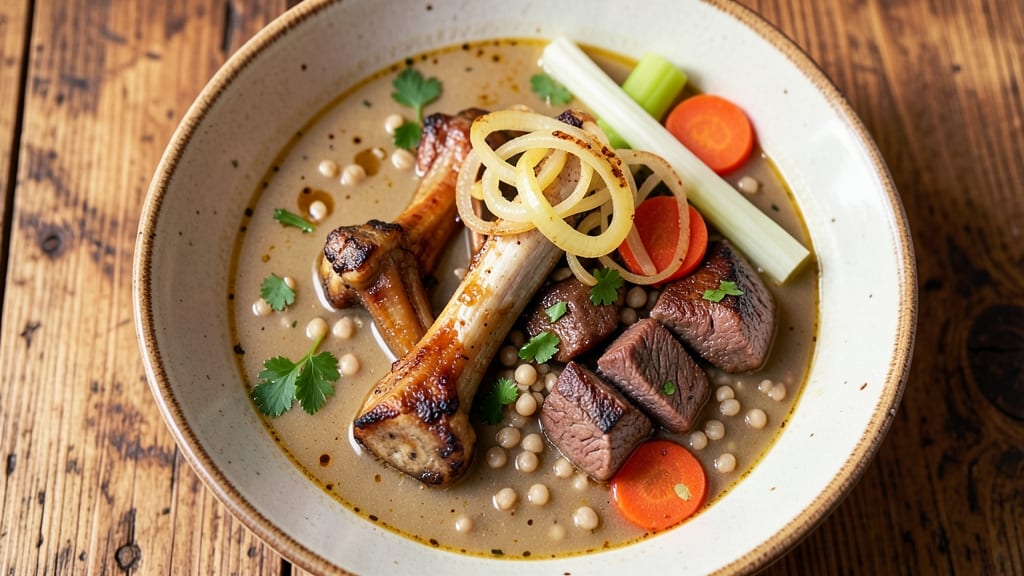
This beef barley soup recipe with soup bones transforms tough cuts and marrow-rich bones into a deeply flavorful broth that forms the heart of every spoonful.
The secret lies in slow extraction—rendering marrow from bones and simmering beef until it falls apart, creating a rich base that barley soaks up beautifully. What starts as humble ingredients becomes a comforting, restaurant-quality bowl that warms you from the inside out.
The process begins with a 3-hour simmer where bones and beef release their natural collagen, transforming into a velvety broth. Barley adds a satisfying chew and earthy depth, while carrots and celery provide sweetness and balance.
The result is a soup that’s both nourishing and deeply satisfying—perfect for chilly evenings or when you crave something hearty that feels like home.
What makes this recipe special is the bone broth foundation—no shortcuts, no instant packets. The marrow from the bones melts into the broth, adding richness without extra fat.
By the time you serve it, each bowl will be packed with tender beef, plump barley, and a broth so flavorful it deserves a spoonful on its own.
Serve with a sprinkle of fresh parsley and a slice of crusty bread for dipping. The contrast of crisp bread against the warm, hearty soup makes every bite even more satisfying.
This is the kind of meal that gets better with leftovers—flavors deepen overnight, making it even more comforting the next day.
Ingredients for beef barley soup recipe with soup bones
Six hearty ingredients transform humble bones and barley into restaurant-quality soup.
| Ingredient | Amount | Notes |
|---|---|---|
| Beef Soup Bones 🦴 | 3 lb | Marrow-rich, knuckle or neck bones preferred |
| Chuck Roast 🥩 | 2 lb | Cut into 1.5-inch chunks for even cooking |
| Pearl Barley 🌾 | 1 cup | Uncooked, rinsed well before adding |
| Carrots 🥕 | 4 medium | Peeled, cut into 1-inch chunks |
| Celery Stalks 🧅 | 4 whole | Cut into 1-inch pieces, leaves reserved for garnish |
| Yellow Onion 🧅 | 1 whole | Peeled, cut into 8 wedges |
| Garlic Cloves 🧄 | 6 cloves | Peeled, smashed slightly |
| Tomato Paste 🍅 | 2 tbsp | High-quality, no sugar added |
| Fresh Thyme 🌿 | 2 tbsp | Leaves only, stems removed |
| Fresh Parsley 🌿 | ¼ cup | Chopped, for garnish |
| Bay Leaves 🍃 | 2 whole | Dried, removed before serving |
| Salt 🧂 | 1 ½ tsp | Kosher or sea salt, adjust to taste |
| Black Peppercorns 🌶️ | 1 tsp | Freshly cracked |
| Olive Oil 🫒 | 2 tbsp | Extra-virgin for richness |
The bones are non-negotiable here. Look for marrow-rich knuckle or neck bones at your local butcher—they're worth hunting down. Costco and Whole Foods often carry them, but call ahead. If you can't find them, beef shin bones are a good second choice. The chuck roast should have good marbling—press a finger into it, and it should spring back slightly. Avoid anything with a grayish tint or off smells. For the barley, pearl barley gives the best texture, but pot barley works too if that's what you've got. Rinse it well before adding to remove any dust or debris.
No fresh thyme? Dried works at half the amount, but fresh is ideal for that bright aroma. The tomato paste can be skipped if you're avoiding it, but it adds a nice depth—just use 1 tbsp of crushed tomatoes instead. Running short on carrots? Sweet potatoes or parsnips add a different but lovely sweetness. For the celery, the leaves are optional but add nice color and flavor—just chop them finely and stir in at the end. If you're using pre-chopped celery from a bag, give it a quick rinse to remove any excess moisture. The garlic can be roasted for a sweeter flavor—just toss the whole cloves with olive oil and roast at 400°F for 10 minutes before peeling.
This soup tastes even better the next day, so make a big batch. Store in the fridge for up to 5 days or freeze for 3 months. For freezing, portion into containers and leave a little headspace—the broth expands as it cools. Reheat gently on the stove, adding a splash of water if it's too thick. The barley will soften further when reheated, so it's perfect for lunches. If you're meal prepping, keep the parsley separate until serving—it stays vibrant longer that way.
Why You'll Love This Recipe
- Soup Bones Shortcut: The bones do all the work—just toss them in cold water, bring to a boil, and walk away. No pre-soaking, no fancy prep; the collagen melts into rich broth while you chop veggies or answer emails.
- Deep Umami Magic: That first sip? Pure satisfaction. The chuck roast and soup bones infuse the broth with a slow-simmered depth—salty, savory, and impossible to resist—while the barley soaks up every last drop like a sponge.
- Leftovers That Shine: This soup only gets better the next day. The barley thickens just enough to make it heartier, and the flavors meld into something even more comforting. Pack it for lunch or freeze portions—no one will guess it’s reheated.
- Budget-Friendly Feast: You’re feeding a crowd for pennies. Chuck roast and soup bones stretch into gallons of broth, while barley turns cheap ingredients into a meal that feels like a restaurant dish. My wallet thanks me every time.
Step-by-step instructions for hearty beef barley soup
This method delivers deep, flavorful broth with perfectly tender meat and chewy barley.
Sear the Meat and Bones for Maximum Flavor
Heat a large Dutch oven over medium-high heat until hot. Add the 2 tablespoons olive oil and swirl to coat the bottom. Working in batches to avoid crowding, add the 3 lb beef soup bones and 2 lb chuck roast cut into chunks. Sear for 5-6 minutes per side until deeply browned.
This browning creates the Maillard reaction, which builds rich, complex flavors in your broth. Don't skip this step—it's what transforms ordinary soup into something extraordinary. Once all meat is browned, remove it from the pot and set aside.
Build the Flavor Base with Aromatics
In the same Dutch oven, add the 1 whole yellow onion cut into wedges, 4 whole celery stalks chopped, and 4 medium carrots cut into chunks. Cook for 5 minutes, stirring occasionally, until the vegetables begin to soften and release their aromas.
Add the 6 cloves garlic smashed slightly, 2 tablespoons tomato paste, 2 whole bay leaves, 1.5 teaspoons salt, and 1 teaspoon black peppercorns. Stir well to combine. The tomato paste will deepen the soup's color and add umami richness.
Simmer the Broth with Vegetables and Meat
Pour in 12 cups cold water (enough to cover everything by about 2 inches). Bring to a boil over high heat, then immediately reduce to a gentle simmer. Return the seared meat and bones to the pot. Skim off any foam that rises to the surface during the first 10 minutes of simmering.
Add the 2 tablespoons fresh thyme leaves and 1 cup pearl barley that has been rinsed well. The barley should be fully submerged. Cover and simmer at a barely perceptible bubble for 2 hours. This low-and-slow approach extracts maximum flavor from the bones and meat.
Finish with Fresh Herbs and Adjust Seasoning
After 2 hours, remove the meat and bones from the broth using tongs. Strain the broth through a fine-mesh sieve into a clean pot, pressing on the vegetables to extract their flavors. Discard the solids or compost them.
Return the broth to the heat and stir in the ¼ cup chopped fresh parsley. Taste and adjust the seasoning with additional salt or pepper if needed. The soup should be rich and flavorful, with a deep beefy taste from the bones and a satisfying chew from the barley.
Serve with Garnish and Enjoy Immediately
Shred the meat from the bones using two forks, discarding any remaining bone fragments. Return the meat to the broth and stir to combine. Ladle the soup into bowls, garnishing each serving with additional chopped parsley and a sprinkle of cracked black pepper.
Serve immediately while hot. The soup will continue to develop deeper flavors as it sits, but it's best enjoyed fresh from the pot. The combination of tender beef, chewy barley, and rich bone broth creates a comforting, hearty meal perfect for any season.
Pro Tips For Making Beef Barley Soup Recipe With Soup Bones
- Blanch the Bones First: I learned this the hard way—skipping the blanch means scraping burnt bits off your bones later. Drop the soup bones in boiling water for 3-5 minutes, then rinse. This removes surface grime and speeds up flavor extraction when you start your soup.
- Cut Chuck Roast in Chunks: Don’t slice the chuck roast thin—aim for 1.5-inch cubes. Smaller pieces cook faster, but they’ll turn to mush if you go too small. Big chunks stay tender and add hearty texture to the barley.
- Toast the Barley: Sounds weird, but it works: dry-toast the pearl barley in a separate pan for 5 minutes before adding it to the soup. This removes excess starch and prevents the barley from turning gummy as it cooks.
- Simmer, Don’t Boil: Once everything’s in the pot, keep the heat low enough that you barely see bubbles. A rolling boil breaks down collagen too fast—you want that rich, gelatinous broth, not a watery mess. Adjust heat as needed.
Common mistakes when making this dish
Skipping the Sear
One of the biggest mistakes is skipping the sear on your bones and beef. That golden-brown crust is where the Maillard reaction happens, creating deep, complex flavors that transform your broth from good to extraordinary.
I’ve made this soup both ways, and the difference is night and day. If you’re short on time, at least sear your beef chunks—it makes a noticeable difference. 🔥
Rushing the Simmer
Patience is key with beef barley soup. Skimming the broth too quickly or simmering at too high a heat can prevent the collagen from breaking down properly, leaving your soup weak and watery.
Aim for a gentle simmer—just a few bubbles breaking the surface—and let it cook for the full 2 hours. The longer you simmer, the richer the broth becomes. Trust the process!
Not Skimming the Foam
Those first 10 minutes of simmering produce a layer of foam on top, which contains impurities and blood from the meat. Skipping this step means your broth will taste bitter and off.
Use a fine-mesh skimmer or a spoon to remove it. I like to do this right after bringing the broth to a boil—it’s a quick step that makes a huge difference. 💫
Overcrowding the Pot
If your pot is too small, the meat and bones won’t brown properly, and the broth won’t develop enough flavor. Work in batches if needed, and make sure there’s enough space between pieces for the Maillard reaction to happen.
A Dutch oven is ideal for this recipe—it’s deep enough to hold all the ingredients without overcrowding. If you’re using a smaller pot, consider cooking the meat in stages.
Adding Barley Too Late
Barley needs time to soften and absorb the broth’s flavors. Adding it too late (like in the last 30 minutes) will leave it undercooked and crunchy. Stir it in right after the initial simmer begins, and let it cook for the full 2 hours.
If you’re worried about it overcooking, you can add a little more water later, but the barley should be fully submerged from the start. 🌾
Ignoring the Bone Marrow
The marrow inside soup bones is pure flavor gold. If you’re using marrow-rich bones like knuckle or neck bones, crack them open with a mallet or heavy knife after simmering and let the marrow melt into the broth. It adds a rich, velvety depth that store-bought broths can’t match.
Pro tip: Use a spoon to scoop out the marrow and stir it into the broth in the last 10 minutes of cooking. It’s worth the extra effort! 💡
Nutrition facts
Frequently asked questions
Can I substitute beef soup bones with chicken or pork bones?
While you can use chicken or pork bones, the flavor profile will change significantly. Beef bones provide a deeper, richer umami taste that pairs perfectly with barley. If you must substitute, use beef marrow bones (like knuckle bones) for the closest flavor, or add a beef bouillon cube to compensate. Chicken bones work better for lighter broths like consommé.
How do I know when the barley is cooked properly?
Pearl barley should be tender but still hold its shape—it shouldn't turn mushy. Test it by tasting a grain after 1.5 hours of simmering. If it's still firm, continue cooking for another 30 minutes. Overcooked barley becomes pasty, while perfectly cooked barley has a pleasant chew. If it's too firm, add ½ cup hot water and simmer 15 more minutes.
Can I make this soup in a slow cooker or Instant Pot?
For a slow cooker, sear the meat first, then add everything (including 12 cups water) and cook on low for 8 hours or high for 4 hours. For an Instant Pot, use the high pressure setting for 45 minutes after searing, then release pressure naturally. The Instant Pot version cooks faster, but the slow cooker method develops richer flavors over time.
What if my broth tastes too bland after simmering?
Don't rush to add salt! First, check for proper seasoning by tasting the broth before adding barley. If it's bland, try adding a 1 teaspoon beef bouillon powder or a splash of red wine vinegar (1 tbsp) to brighten flavors. For extra depth, stir in 1 tablespoon soy sauce or a pinch of MSG (if you use it). Simmer for another 15 minutes to let flavors meld.
How long can I store leftovers, and how do I reheat them?
Store leftovers in an airtight container in the fridge for up to 5 days or freeze for 3 months. To reheat, warm on the stove over medium-low heat until bubbling, stirring occasionally. Add 2-3 tablespoons water if the soup thickens too much. For microwave reheating, cover and heat for 2 minutes, then stir and heat another 30 seconds if needed.