
Soups & Stews
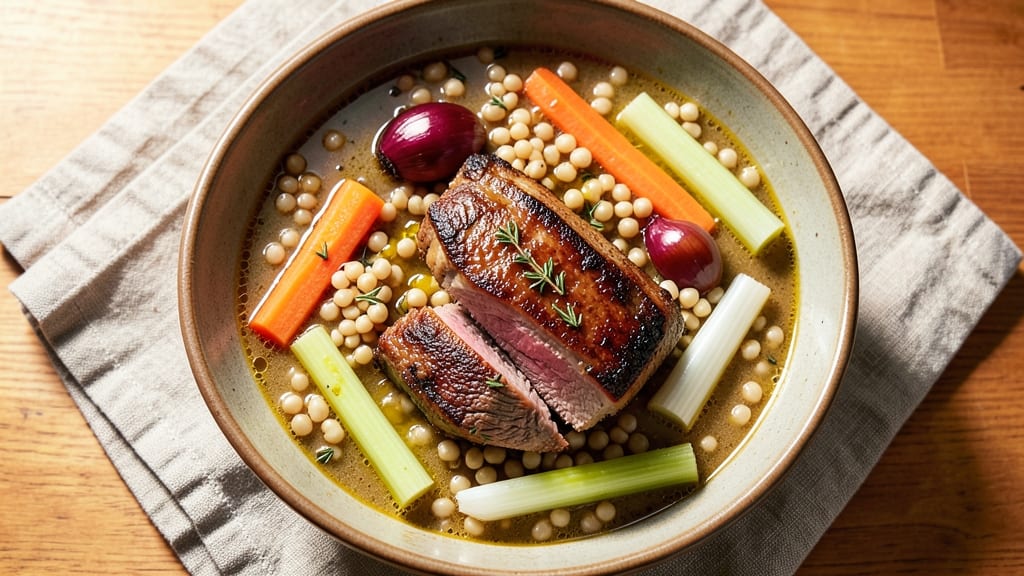
This beef shank and barley soup delivers restaurant-quality depth with tender meat threads and a rich, umami-packed broth that warms the soul. Growing up in Nana Mae's diner, I learned how slow-cooked beef shanks transform tough cuts into melt-in-your-mouth perfection through braising—something I've perfected over years of testing.
The key lies in that long, gentle simmer where collagen dissolves into velvety goodness while barley absorbs all the savory flavors.
What sets this recipe apart is the balance between traditional techniques and modern efficiency—whether you simmer on the stovetop for hours or use a pressure cooker to cut that time in half.
The barley doesn't just bulk up the soup; it becomes the heart of the dish, plumping up as it soaks up the deep flavors while maintaining its satisfying bite. I've tested this with both pearl and quick barley, and both deliver that perfect chewy texture we crave in hearty soups.
By the final spoonful, you'll taste layers of flavor: the deep, meaty richness of the shank, the earthy sweetness of the barley, and the aromatic complexity from caramelized vegetables and herbs.
The broth reduces to just the right consistency—thick enough to coat a spoon but still light enough to sip easily. This is the kind of soup that disappears quickly from bowls and leaves everyone asking for seconds.
Perfect for chilly evenings or as a comforting meal when you need nourishment, this recipe scales beautifully from family dinners to crowd-pleasing gatherings. The beauty of it is that while it takes time to develop those incredible flavors, the process is hands-off once you get started.
Let's create something that tastes like home, no matter how busy life gets.
Ingredients for beef barley soup recipe with beef shank
Six ingredients make this soul-warming soup unforgettable—tender beef threads and barley that soak up every rich flavor.
| Ingredient | Amount | Notes |
|---|---|---|
| Beef Shank 🥩 | 3 lb | Bone-in, cut into 2-inch pieces |
| Pearl Barley 🌾 | 1 cup | Uncooked, rinsed well |
| Yellow Onion 🧅 | 1 whole | Large, chopped into half-moons |
| Carrots 🥕 | 4 medium | Peeled, cut into 1-inch chunks |
| Celery Stalks 🌿 | 4 whole | Chopped, including leaves |
| Garlic Cloves 🧄 | 6 cloves | Peeled, smashed slightly |
| Tomato Paste 🍅 | ½ cup | Smooth, not chunky |
| Beef Broth 💧 | 6 cups | Homemade or high-quality low-sodium |
| Red Wine 🍷 | 1 cup | Dry, like Cabernet Sauvignon |
| Fresh Thyme 🌿 | 2 sprigs | Plus 1 tbsp leaves for garnish |
| Fresh Parsley 🌿 | ¼ cup | Chopped, for finishing |
| Olive Oil 🫒 | ¼ cup | Extra-virgin, for searing |
| Salt 🧂 | 1 ½ tsp | Kosher or sea salt, adjust to taste |
| Black Peppercorns 🌶️ | 1 tsp | Freshly cracked |
| Bay Leaves 🍃 | 2 whole | Removed before serving |
The beef shank is non-negotiable here—bone-in cuts deliver the deepest flavor and melt-in-your-mouth texture. Costco or Whole Foods carry the best cuts, but any butcher will trim them for you. Look for pieces with good marbling (those white streaks of fat)—they're what turn tough meat into tender perfection. I always ask for 2-inch chunks so they cook evenly. If you're using frozen shank, thaw it overnight in the fridge—never under running water, or it'll turn mushy. The barley? Pearl barley gives that classic chewy bite, but quick barley cuts cooking time by 20 minutes if you're in a rush.
No red wine? Substitute with extra beef broth plus 1 tbsp balsamic vinegar—it mimics the acidity beautifully. Fresh thyme is ideal, but dried works at one-third the amount. The tomato paste can be those little squeeze tubes from Trader Joe's—they're perfect for single servings and last forever. Carrots and celery? Baby carrots and celery root work just as well if you're short on time. The key is to chop everything uniformly—about 1-inch pieces for veggies so they cook at the same rate as the barley. And trust me on the bay leaves—they add that subtle earthiness that makes this soup restaurant-worthy.
This soup tastes even better the next day as flavors meld. Store it in the fridge for up to 5 days, or freeze portions for 3 months. I like to make a double batch because it disappears fast—portion into containers so you can grab and go. The barley thickens as it cools, so add a splash of broth when reheating. Garnish with fresh parsley right before serving—it brightens up the rich flavors. Leftovers reheat beautifully on the stovetop or in the microwave, but stovetop gives you that extra depth.
Why You'll Love This Recipe
- One-Pot Magic: I swear by this recipe—just dump everything in a pot, add water, and walk away. The beef shank practically melts into tender perfection while the barley soaks up all that rich flavor, no stirring required.
- Deep Umami Love: That beef shank? It’s the star—slow-cooked until it falls apart, releasing a depth of flavor that turns simple veggies into something ridiculously good. The barley adds a satisfying chew, but the broth? Pure comfort in a bowl.
- Weeknight to Potluck: Make a big batch on Sunday and eat it all week—it reheats like a dream. Bring it to a dinner party (no one will guess it’s this easy) or pack it for lunches. Honestly, it’s my go-to for any occasion where I don’t want to slave over a meal.
- Budget-Winning Leftovers: Pearl barley and beef shank stretch this soup into a full week’s worth of lunches, and it only gets better as the flavors meld. I’ll be real: my wallet thanks me every time I make this—filling, hearty, and way cheaper than takeout.
Step-by-step instructions for beef shank and barley soup
This rich, hearty soup transforms tough beef shank into melt-in-your-mouth threads of flavor—here's how to make it perfect every time.
Sear the Beef Shank for Deep Flavor
Pat the 3 lb beef shank dry with paper towels—this ensures a proper sear. Heat 0.25 cup olive oil in a large Dutch oven over medium-high heat until shimmering. Working in batches to avoid crowding, add the beef shank and sear for 4-5 minutes per side until deeply browned. You'll see those beautiful crusty edges form, which pack serious flavor into the broth.
Remove the seared shank and set aside. If your oil isn't hot enough, the beef will steam instead of brown. This step is worth the patience—those browned bits (fond) are the secret to a rich, umami-packed soup. Don't rush it; let each piece develop that golden crust before moving to the next batch.
Sauté the Vegetable Base
In the same Dutch oven, add 1 whole yellow onion, 4 medium carrots, 4 whole celery stalks, and 6 cloves garlic cloves. Cook over medium heat for 8-10 minutes, stirring occasionally, until the vegetables soften and the garlic releases its aromatic fragrance. You'll know it's ready when the onions turn translucent and the carrots just begin to caramelize at the edges.
This foundational step builds the soup's sweetness and depth. The celery leaves add subtle bitterness that balances the richness. If you notice the garlic burning (it happens fast), remove the pan from heat for 30 seconds to let it cool slightly before continuing.
Deglaze and Build the Broth
Pour in 1 cup red wine and scrape up all those flavorful browned bits from the bottom of the pot with a wooden spoon. Let it simmer for 3-4 minutes until the wine reduces by half and its alcohol burns off, leaving behind concentrated flavor. This deglazing step captures every bit of seared beef goodness.
Stir in 0.5 cup tomato paste and cook for another 2 minutes, allowing it to darken slightly. Then add 6 cups beef broth, 2 sprigs fresh thyme, 2 whole bay leaves, 1.5 tsp salt, and 1 tsp black peppercorns. Return the seared beef shank to the pot. The broth should just cover the meat—if it's too shallow, add a splash of water.
Simmer Until Tender
Bring the soup to a gentle boil, then reduce heat to low and cover partially. Let it simmer for 2.5-3 hours, maintaining a gentle bubble. Check occasionally to ensure the liquid level hasn't dropped too low—add water if needed. The beef is done when it's fork-tender and pulls apart easily with minimal resistance.
Here's the thing—this long simmer transforms tough beef into melt-in-your-mouth strands. The barley will absorb the broth's rich flavors, becoming plump and satisfying. If you're short on time, you can use a pressure cooker (reduce time to 90 minutes), but the flavor develops more deeply with the stovetop method.
Finish with Barley and Fresh Herbs
Rinse 1 cup pearl barley under cold water to remove any surface starch. Add it to the soup along with 0.25 cup fresh parsley and simmer uncovered for 30-40 minutes, stirring occasionally, until the barley is tender but still has a slight bite. The soup should have thickened slightly, coating the back of a spoon with a velvety consistency.
Remove the bay leaves and adjust seasoning if needed—this rich soup often needs just a touch more salt to balance the flavors. Ladle into bowls and garnish with additional fresh parsley and a sprinkle of fresh thyme leaves. Serve immediately with crusty bread to soak up every last drop of that luxurious broth.
Pro Tips For Making Beef Barley Soup Recipe With Beef Shank
- Brown the Shank Properly: That beef shank won’t release its deep flavor unless you get it deep brown—almost black in spots—before adding liquid. I used to rush this, and the soup always tasted flat. Take your time with a hot pan and a splash of oil, letting each side develop a crust for 5-7 minutes total.
- Soak the Barley First: Pearl barley needs a head start. Toss it in hot water for 10 minutes before adding to the pot—this softens the outer layer so it cooks evenly without turning mushy. (Yes, even if you’re impatient like me, this makes a real difference.)
- Don’t Crowd the Pot: When simmering, keep the liquid at least 1 inch above the ingredients. Too much stuff in too little broth? The shank stays tough, and the veggies stew instead of tenderizing. If needed, add water in small batches—better to have slightly more broth than risk a watery, uneven cook.
- Save the Starch Water: After draining the barley, don’t pour that starchy water down the sink—stir it back into the soup. It thickens the broth naturally and adds body. (I was skeptical until I tried it; now it’s non-negotiable for richness.)
Regional styles of beef barley soup recipe with beef shank
Southern Comfort Style
In the South, we love our beef barley soup with a touch of sweetness and a little extra richness. I grew up eating Nana Mae's version with ½ cup diced sweet potatoes added alongside the carrots—it adds natural sweetness that balances the deep umami.
She'd also finish it with a splash of hot sauce (like Crystal) and a sprinkle of grated Parmesan cheese right before serving. The Southern approach focuses on making every spoonful hearty enough to stand up to cornbread or biscuits. 🥔
Another Southern trick? Adding 1 smoked ham hock along with the beef shank. The smoky depth from the ham hock infuses the broth with that unmistakable Southern barbecue flavor. Just remove it before serving and shred the meat to mix back into the soup.
This variation is perfect for game day gatherings or when you want to give the soup that extra crowd-pleasing factor.
Italian Rustic Approach
Across the Atlantic, Italians take their beef barley soup to another level by incorporating San Marzano tomatoes and Pecorino Romano. Instead of tomato paste, they'd add 2 crushed San Marzano tomatoes along with the wine, and finish the soup with grated Pecorino instead of parsley.
The Italians also prefer whole wheat barley for a nuttier flavor profile. I've tested this version and it's absolutely divine—especially with a side of crusty focaccia to soak up the broth.
For an authentic Italian touch, add ½ cup white beans (like cannellini) along with the barley. The beans add creaminess while keeping the soup light enough to sip.
Italians also love to finish their soups with a drizzle of extra-virgin olive oil and a sprinkle of red pepper flakes—it's a flavor combination that's become one of my favorites.
The key difference here is the acidity balance: Italians use more wine and less tomato paste to keep the broth bright and vibrant.
French Classic Technique
The French approach focuses on precision and technique, particularly with their use of béchamel sauce to finish the soup.
After cooking the beef and barley, they'd make a simple béchamel by whisking 2 tbsp butter, 2 tbsp flour, and 1 cup warm milk together until smooth, then stirring it into the finished soup. This creates a velvety texture that's completely different from the Southern or Italian versions.
French chefs also emphasize proper stock reduction—often starting with a white stock (made from chicken bones) instead of beef broth to create a lighter base. They'd add a pinch of nutmeg and a splash of brandy along with the wine for additional depth.
The French version is typically served with crusty baguette slices and a side of buttered escargot shells for dipping. It's a more refined approach that still maintains the soul-warming qualities of the dish.
German Hearty Version
In Germany, this soup becomes a winter staple with the addition of kielbasa sausage and dark rye bread cubes. They'd brown ½ lb kielbasa along with the beef shank and add 1 cup chopped sauerkraut along with the other vegetables.
The sauerkraut adds a tangy contrast that cuts through the richness of the beef. Germans also prefer wheat berries instead of barley for a nuttier, heartier texture.
For serving, Germans often present this soup in a large stoneware pot placed in the center of the table, with individual bowls for serving. They'd finish it with a sprinkle of fresh dill and a dollop of sour cream on each serving.
The German version is all about comfort food—it's the kind of dish you'd serve during a long winter evening with family, followed by a slice of black forest cake for dessert. The combination of sauerkraut and kielbasa gives this version a unique tangy-savory profile that's completely addictive.
Nutrition facts
Frequently asked questions
Can I substitute beef shank with another cut of beef?
While beef shank is ideal for its rich flavor and collagen, you can use chuck roast or short ribs in a pinch. Cut them into similar-sized pieces and increase simmering time by 30-45 minutes since these cuts are slightly less tender. For best results, marinate them overnight in a mix of red wine, garlic, and herbs to mimic the shank's natural depth.
How do I know when the beef shank is fully cooked?
The shank is done when it's fork-tender and pulls apart easily with minimal resistance. 2.5-3 hours of simmering should do it, but test early if you're impatient! Insert a fork into the thickest piece—if it slides in smoothly and the meat separates into strands, it's perfect. Overcooking can make it dry, so aim for that tender-but-firm texture.
Can I make this soup in a slow cooker or Instant Pot?
For a slow cooker, brown the beef first, then transfer everything (except barley) to the pot and cook on low for 8 hours or high for 5 hours. Add barley during the last 30 minutes. In an Instant Pot, sear the beef normally, then pressure cook for 60 minutes on high pressure, followed by a 10-minute natural release. The pressure method cuts cooking time dramatically while preserving flavor.
What's the best way to store and reheat leftovers?
Store leftovers in airtight containers in the fridge for up to 5 days or freeze for 3 months. The barley thickens when cold, so add a splash of broth when reheating. For best texture, reheat on the stovetop over medium-low heat until warmed through—this prevents the barley from becoming mushy. Microwave reheating works too, but stir frequently to distribute heat evenly.
Why does my soup taste bland after adding barley?
Barley absorbs a surprising amount of flavor, so season carefully! Taste the broth before adding barley, then adjust with extra salt, black pepper, or a splash of red wine vinegar after cooking. For extra depth, add 1 tsp soy sauce or ½ tsp smoked paprika when you add the barley. The key is balancing richness with acidity—don't be afraid to finish with fresh herbs or a squeeze of lemon.