
Soups & Stews
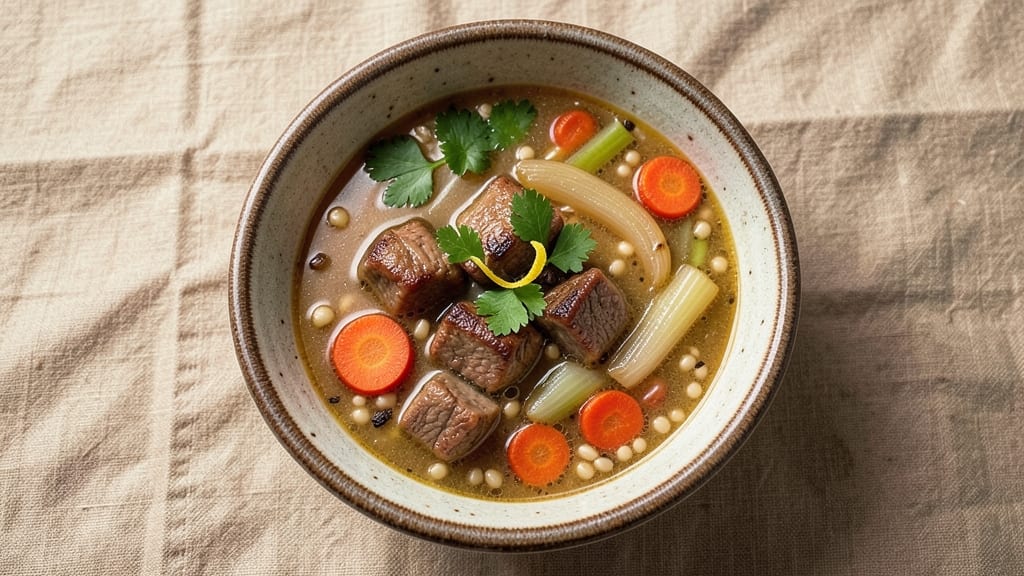
This beef barley soup recipe transforms humble ingredients into a deeply comforting bowl of warmth that tastes like home.
What starts with tough cuts of beef and simple vegetables becomes a rich, aromatic broth infused with nutty barley and tender vegetables—perfect for chilly evenings when you crave a meal that nourishes both body and soul.
The secret lies in slow simmering, which melts collagen from the bones into the broth, creating a depth of flavor that store-bought versions can't match.
Unlike quick soups that rely on shortcuts, this recipe builds flavor over time—browning the beef first develops a rich foundation, while the barley softens just enough to hold its shape without turning mushy.
The result is a harmonious balance of protein, fiber, and vegetables that feels satisfying yet light enough for a weeknight dinner. Every spoonful delivers layers of savory, herby, and slightly sweet notes that make it impossible to stop eating.
What makes this soup truly special is its versatility—it warms up beautifully for leftovers, making it ideal for meal prep, and pairs perfectly with crusty bread to soak up every last drop of that velvety broth.
The barley adds a satisfying chew, while the vegetables remain vibrant and fresh-tasting. Whether you're feeding a family or treating yourself, this recipe delivers restaurant-quality comfort without the fuss.
Ready in about 2 hours (with minimal active time), this beef barley soup is the ultimate slow-cooked meal that gets better as it sits. The aroma alone will have everyone gathering around the table, and the first bite will remind them why homemade soup beats any takeout option.
Here’s how to make it—step by step—for a bowl that feels like a hug in every spoonful.
Ingredients for beef barely soup
Six hearty ingredients build this soul-warming beef barley soup from scratch.
| Ingredient | Amount | Notes |
|---|---|---|
| Chuck Roast 🥩 | 2 lb | Cut into 1-inch cubes |
| Yellow Onion 🧅 | 1 whole | Medium size, chopped |
| Carrots 🥕 | 4 medium | Peeled and sliced into rounds |
| Celery Stalks 🧄 | 3 whole | Trimmed and chopped |
| Garlic Cloves 🧄 | 4 cloves | Peeled and minced |
| Pearl Barley 🌾 | 1 cup | Uncooked, rinsed |
| Tomato Paste 🍅 | 2 tbsp | Smooth, not chunky |
| Beef Broth 💧 | 6 cups | Low-sodium preferred |
| Red Wine 🍷 | 1 cup | Dry, like Cabernet |
| Fresh Thyme 🌿 | 1 tbsp | Leaves only, chopped |
| Fresh Parsley 🌿 | ¼ cup | Chopped, for garnish |
| Bay Leaves 🌿 | 2 whole | Dried, removed before serving |
| Olive Oil 🫒 | 2 tbsp | For browning beef |
| Salt 🧂 | 1 ½ tsp | Kosher or sea salt |
| Black Pepper 🌶️ | ½ tsp | Freshly ground |
The chuck roast is your flavor foundation—look for good marbling at the butcher counter, especially if buying whole. Costco or Whole Foods carry pre-cubed chuck, saving you chopping time. If using a whole roast, trim excess fat before cubing. The barley? Pearl barley is the classic choice—it holds its shape better than steel-cut, but don't substitute instant barley (it'll turn mushy). For the broth, low-sodium is key—you'll be adding plenty of salt later. The red wine adds depth, but dry Cabernet or Merlot works best; avoid sweet varieties.
No red wine? Substitute extra beef broth with 1 tbsp balsamic vinegar for acidity. Fresh thyme is ideal, but dried thyme at one-third the amount works in a pinch. The tomato paste can be skipped if you dislike its intensity, but it adds a subtle sweetness that balances the broth. For the vegetables, baby carrots or pre-cut celery save chopping time—just adjust the amount to match the recipe. If you're using frozen vegetables, thaw them first and pat dry to prevent diluting the broth. The bay leaves are non-negotiable—they infuse subtle earthy notes that elevate everything.
This soup tastes even better the next day as flavors meld. Store in an airtight container in the fridge for up to 5 days, or freeze portions for 3 months. I like to portion it into individual containers for easy lunches—just reheat with a splash of broth or water. The barley will thicken slightly upon reheating, so add extra liquid as needed. For serving, keep the fresh parsley and thyme separate until ready to garnish—this preserves their vibrant color and fresh aroma. The soup pairs perfectly with crusty bread or a simple green salad to round out the meal.
Why You'll Love This Recipe
- Hands-Off Cooking: I swear by this—dump everything raw into the pot, walk away for hours, and come back to melt-in-your-mouth beef. The chuck roast practically falls apart on its own, and the onions caramelize into sweet perfection without a single stir.
- Umami Bomb: That first spoonful? Pure satisfaction. The garlic and celery sing together while the carrots add natural sweetness, but the real star is the beef—deep, rich, and packed with flavor from the slow simmer.
- Leftovers That Don’t Suck: Between us, most soups turn sad after day two. Not this one. The broth gets even better as the flavors meld, and the beef stays tender. I freeze half the batch and reheat it like it’s fresh—no one can tell the difference.
- Budget-Friendly Powerhouse: A single chuck roast stretches across multiple meals, and the veggies? Basic, cheap, and always on hand. Honestly, it’s the kind of recipe that makes grocery day feel like a win—no fancy ingredients, just big flavor.
Step-by-step instructions for beef barely soup
Transform tough chuck roast into rich, velvety soup with deep umami flavor and perfectly tender barley.
Sear the Chuck Roast for Maximum Flavor
Heat the 2 tablespoons olive oil in a large Dutch oven over medium-high heat until shimmering. Pat the 2 lb chuck roast dry with paper towels and cut into 1-inch cubes. Working in batches, add the beef to the pot and sear for 3-4 minutes per side until deeply browned with a crust forming.
This initial browning creates the Maillard reaction, which develops the soup's deep, meaty flavor. Don't crowd the pot—sear in batches if needed. Once all beef is browned, transfer it to a plate and set aside. The browned bits left in the pot will form the flavor base for your soup.
Build the Aromatic Base with Vegetables
In the same Dutch oven, add the chopped yellow onion, sliced carrots, and chopped celery stalks. Cook over medium heat for 5-6 minutes, stirring occasionally, until the vegetables begin to soften and their edges turn translucent.
Add the minced garlic cloves and cook for another 30 seconds until fragrant. Stir in the 2 tablespoons tomato paste and cook for 1 minute to deepen its flavor. This aromatic base forms the flavor foundation for your soup, so don't rush this step—properly caramelized vegetables create rich, complex flavors.
Deglaze and Simmer the Beef
Pour in the 1 cup red wine and scrape up all the browned bits from the bottom of the pot with a wooden spoon. This deglazing step captures all the concentrated beef flavor. Let the wine simmer for 3-4 minutes until reduced by half and slightly thickened.
Return the seared beef to the pot along with the 6 cups beef broth, 1.5 teaspoons salt, and 0.5 teaspoon black pepper. Bring to a boil, then reduce heat to low and cover. Simmer for 1.5 hours until the beef is fork-tender and easily pulls apart. This long simmering time is crucial for developing rich, tender meat and extracting maximum flavor from the beef.
Add Barley and Herbs for Perfect Texture
Stir in the 1 cup rinsed pearl barley, 2 whole bay leaves, and 1 tablespoon chopped fresh thyme. Return to a gentle simmer and cook uncovered for 30-40 minutes, stirring occasionally, until the barley is tender but still has a slight bite. The barley should absorb the broth but remain distinct in the soup.
Check the barley's doneness by tasting—it should be tender but not mushy. If it's not quite done, continue cooking for another 5-10 minutes. The barley should have a pleasant chewiness that complements the tender beef. Remove and discard the bay leaves before serving.
Finish and Serve with Fresh Herbs
Taste the soup and adjust seasoning with additional salt or pepper if needed. Remove from heat and stir in the 0.25 cup chopped fresh parsley. The parsley adds a bright, fresh finish that cuts through the richness of the beef and wine.
Ladle the soup into bowls and serve immediately. Each serving should have tender beef chunks, perfectly cooked barley, and a rich, flavorful broth. The wine adds subtle depth, while the fresh herbs provide a bright contrast. This hearty soup makes a comforting meal for chilly days, with each spoonful delivering satisfying texture and rich flavor.
Pro Tips For Making Beef Barely Soup
- Brown the Chuck First: That chuck roast won’t add rich depth to your soup if you just toss it in raw—high heat for 5-7 minutes until it’s deeply browned on all sides. I used to skip this, and the soup always tasted flat until I learned better.
- Cut Celery into Matchsticks: No, don’t dice it like stew meat—slice celery into thin matchsticks so it cooks faster and stays crisp enough to actually bite into. Thick chunks turn to mush, and you don’t want that in a barley soup where texture matters.
- Don’t Overcrowd the Pot: If you dump all your veggies in at once, they’ll steam instead of caramelize. Cook onions, carrots, and celery in batches for 5 minutes each before adding barley or broth—this builds real flavor, not just a watery base.
- Use Cold Barley: Tossing in barley straight from the pantry? Rinse it first, then add it cold to the simmering broth. It’ll absorb liquid more evenly and cook through without clumping—no more gummy, half-raw grains ruining your soup.
Make-ahead tips for beef barely soup
Prep Ahead Strategy
Start by prepping all your vegetables the night before—chop the yellow onion, slice the carrots, and trim the celery stalks. Store them in a sealed container in the fridge. The barley can be rinsed and measured out in advance too, saving you time on cooking day.
This simple prep cuts your active time by 20 minutes and makes the whole process feel effortless. 📅
Freezer-Friendly Components
Make this soup even more convenient by prepping the beef and vegetable base ahead. Brown the chuck roast and sauté the vegetables as directed, then store them in a freezer-safe bag with the tomato paste and garlic.
When ready to cook, just thaw overnight in the fridge, add the wine and broth, and continue with the recipe. This method preserves all the deep flavors you worked so hard to build. ❄️
Barley Cooking Shortcut
If you're short on time, you can partially cook the barley ahead of time. Simmer it in water for 20 minutes (instead of the full 30-40 minutes in the soup), then drain and store in the fridge.
When you're ready to finish the soup, add it back in with the other ingredients and let it simmer for the remaining 10-15 minutes to absorb the broth fully. This keeps the barley from becoming mushy during the long simmer. 🌾
Leftovers Like a Pro
This soup actually tastes better the next day as the flavors meld together. Store leftovers in an airtight container in the fridge for up to 5 days. When reheating, add ¼ cup water or beef broth per quart to prevent thickening.
For a quick lunch, portion individual servings into microwave-safe containers—just heat for 2-3 minutes at 50% power and stir before eating. The barley will soften slightly, adding extra comfort. 💡
Freezing for Later
Freeze this soup in quart-sized freezer bags for up to 3 months. Leave 1-inch of headspace to account for expansion, and squeeze out excess air to prevent freezer burn. Thaw overnight in the fridge before reheating.
I like to freeze portions with a ½ cup serving of crusty bread in a separate bag—just reheat both together for a complete meal. The texture remains excellent after freezing, though the barley may soften slightly. 🥶
Make-Ahead Serving Suggestions
Plan to serve this soup with warm crusty bread or garlic rolls that you can bake ahead. Keep the bread wrapped in a clean kitchen towel and reheat in a 350°F oven for 10 minutes.
For a complete meal, prep a simple arugula salad with lemon vinaigrette the night before—it adds a refreshing contrast to the rich soup. Garnish with fresh parsley just before serving to keep it vibrant. 🍞
Nutrition facts
Frequently asked questions
Why does this recipe call for chuck roast instead of a leaner cut like sirloin?
Chuck roast is perfect because it's well-marbled with fat, which melts during cooking to create a rich, flavorful broth. Lean cuts like sirloin would dry out and lack the deep umami flavor that comes from slow-cooking connective tissue. The fat also helps tenderize the beef, making it fork-tender after simmering.
Can I substitute pearl barley for another type of barley or grain?
Pearl barley is ideal because it holds its shape beautifully while absorbing flavor. For a quicker option, try steel-cut barley (add 10 extra minutes to cooking time), but avoid instant barley—it turns mushy. You could also use wild rice or quinoa for a different texture, but the flavor profile will change slightly.
How do I know when the beef is fully tender?
The beef should easily pull apart with a fork after 1.5 hours of simmering. For extra assurance, cut a small piece—it should be fork-tender with no resistance. If it's still tough, add ½ cup hot broth and simmer uncovered for another 20-30 minutes. Never rush this step, as proper tenderness is key to the soup's texture.
Can I make this soup in an Instant Pot or slow cooker?
For the Instant Pot, brown the beef first, then add all ingredients and pressure cook for 60 minutes (natural release). For a slow cooker, combine everything (except fresh herbs) and cook on low for 8 hours or high for 5 hours). Adjust barley cooking time accordingly—it may need 10-15 extra minutes in a slow cooker. The wine will reduce faster in these methods, so add it later if needed.
What if my barley turns out mushy?
Mushy barley usually means it overcooked. Next time, check doneness by tasting—it should be tender but still have a slight bite. If it's already too soft, stir in 1-2 tablespoons cold water to separate the grains. For future batches, reduce cooking time by 5 minutes or use ½ cup less broth to concentrate the flavors.