
Soups & Stews
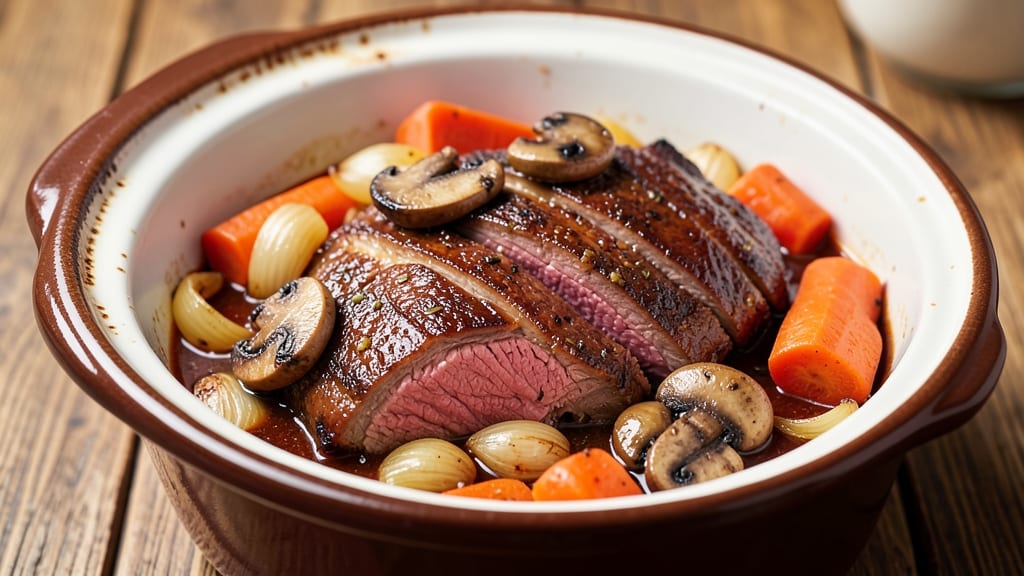
This beef and vegetable slow cooker recipe transforms tough cuts into melt-in-your-mouth tenderness while developing deep, caramelized fond flavors that elevate every bite. The slow cooker's steady heat works magic—breaking down connective tissue in beef chuck while gently caramelizing onions, garlic, and mushrooms into a rich, savory base.
What starts as simple ingredients becomes a hearty, restaurant-quality stew that requires minimal effort but delivers maximum satisfaction.
The beauty of this method lies in its hands-off approach: chop vegetables, season the beef, and let the slow cooker do the work over 6-8 hours on low. No need for constant stirring or monitoring—just return to perfectly tender beef and vegetables that have absorbed all the aromatic flavors.
The key to that signature caramelized fond? Browning the beef before adding it to the pot, which creates a flavorful crust that dissolves into the cooking liquid.
By the time it's done, you'll have a pot filled with fork-tender beef, perfectly softened vegetables, and a sauce so rich it clings to every bite.
The aromas alone will have everyone gathering around the table, and the texture—juicy beef, tender carrots, and mushrooms that've absorbed all the savory goodness—makes this a weeknight meal that feels like a celebration.
Serve with crusty bread to soak up every last drop of that flavorful sauce, or pair with a simple green salad for balance. The leftovers reheat beautifully, making this the ultimate make-ahead meal for busy families.
Let's get started on creating this comforting, flavorful dish that's sure to become a staple in your slow cooker rotation.
Ingredients for beef and vegetable slow cooker
Sixteen ingredients transform into a restaurant-quality slow cooker masterpiece with caramelized depth.
| Ingredient | Amount | Notes |
|---|---|---|
| Beef Chuck Roast 🥩 | 2 ½ lb | Pre-cubed, 1-1.5 inch pieces |
| Yellow Onions 🧅 | 2 whole | Cut into 1-inch chunks |
| Carrots 🥕 | 1 ½ lb | Whole, peeled, cut into 2-inch pieces |
| Creamy Mushrooms 🍄 | 8 oz | Sliced, stems removed |
| Garlic Cloves 🧄 | 6 cloves | Minced, for depth of flavor |
| Tomato Paste 🍅 | ½ cup | High-quality, for richness |
| Red Wine 🍷 | 1 cup | Bold, dry variety like Cabernet |
| Beef Broth 💧 | 2 cups | Low-sodium preferred |
| All-Purpose Flour 🌾 | 2 tbsp | For thickening sauce |
| Fresh Rosemary 🌿 | 1 tbsp | Chopped, for aromatic depth |
| Fresh Thyme 🌿 | 1 tbsp | Leaves only, for herbal notes |
| Black Peppercorns 🌶️ | 1 tsp | Freshly cracked for intensity |
| Kosher Salt 🧂 | 1 ½ tsp | Diamond Crystal preferred |
| Olive Oil 🫒 | 1 tbsp | Extra-virgin for browning |
| Balsamic Vinegar 🍶 | 1 tbsp | For finishing touch |
The beef chuck roast is non-negotiable for this recipe—its connective tissue dissolves into the sauce, creating that signature fond. Costco or Whole Foods carry excellent pre-cubed beef chuck, but if buying whole, ask your butcher to cut it into 1-1.5 inch pieces for even cooking. For the vegetables, organic carrots and mushrooms hold up better during long cooking, but conventional works fine. The red wine should be bold and dry—think Cabernet Sauvignon or Merlot. Avoid sweet varieties like Zinfandel, as they'll overpower the dish. Fresh herbs are ideal, but if using dried, reduce to one-third the amount and toast them briefly in a dry pan to release their oils.
No red wine? Beef broth with an extra splash of balsamic vinegar works beautifully. Prefer mushrooms without stems? Baby bella mushrooms are perfect—they're already stemless and cook faster. The tomato paste can be substituted with crushed San Marzano tomatoes if you prefer, though paste gives a deeper, more concentrated flavor. For a gluten-free version, replace the flour with cornstarch or arrowroot powder. The rosemary and thyme can be swapped for Italian seasoning if you're in a pinch, though fresh herbs elevate the dish significantly. Always use extra-virgin olive oil for browning—the cheaper varieties burn too easily and lack flavor.
This dish tastes even better the next day as flavors meld. Store in an airtight container in the fridge for up to 5 days, or freeze portions for 3 months. For reheating, add a splash of broth or water to prevent drying out. The sauce thickens as it cools, so you may need to thin it slightly with additional broth when reheating. Portion into individual containers for easy lunches—just grab and go. The caramelized fond develops more overnight, so if you can wait, let it sit at room temperature for 15 minutes before serving to allow the flavors to fully integrate.
Why You'll Love This Recipe
- Dump-and-Walk Away: I swear, this is the kind of meal where you toss in the beef chuck, dump in the chopped veggies (onions, carrots, mushrooms—none of that fancy dicing), sprinkle garlic, and walk away. The slow cooker does all the work while you answer emails, fold laundry, or pretend to organize your junk drawer. No stirring, no babysitting—just come back to melt-in-your-mouth beef.
- Umami Bomb: That beef chuck? It gets deep in the slow cooker—tender, rich, and packed with flavor. The mushrooms add this earthy, creamy punch, while the garlic and onions caramelize into something ridiculously savory. Honestly, it’s the kind of taste that makes you go back for seconds without even thinking.
- Budget Stretch: A beef chuck roast is one of those “buy it cheap, make it legendary” proteins. Pair it with affordable veggies (carrots, onions, mushrooms), and you’ve got a hearty, filling meal that won’t break the bank. I’ll be real: this feeds four for under $15, and I’ve never once regretted the math.
Step-by-step instructions for beef and vegetable slow cooker masterpiece
This method transforms humble ingredients into a deeply flavorful stew with caramelized fond depth.
Sear the Beef Chuck Roast for Maximum Flavor
Heat a large Dutch oven over medium-high heat until hot. Add the 1 tablespoon olive oil and swirl to coat the bottom. Pat the 2.5 lb beef chuck roast pieces dry with paper towels—this ensures a proper sear. Working in batches if needed, add the beef and sear for 2-3 minutes per side until deeply browned with a crust forming.
Don't rush this step. The Maillard reaction happening here creates complex flavors that will infuse throughout the stew. Once browned, transfer the beef to a plate and set aside. You'll notice the pan will have beautiful browned bits—these are pure flavor, so we'll scrape them up later.
Build the Vegetable Base with Aromatics
In the same Dutch oven, add the 2 whole yellow onions cut into 1-inch chunks and the 1.5 lb carrots cut into 2-inch pieces. Cook for 5-6 minutes until the onions soften and begin to caramelize slightly at the edges. Add the 8 oz sliced creamy mushrooms and cook for another 4-5 minutes until they release their moisture and begin to brown.
Stir occasionally to ensure even cooking. The mushrooms should release about ¼ cup of liquid—this will contribute to the rich sauce. Add the 6 minced garlic cloves and cook for 30 seconds until fragrant. The garlic should sizzle slightly but not burn—this prevents bitterness in your final dish.
Deglaze and Combine All Ingredients
Pour in the 1 cup red wine and scrape the bottom of the pan vigorously with a wooden spoon to release all those flavorful browned bits. Let the wine simmer for 2-3 minutes until reduced by half. Add the 0.5 cup tomato paste, 2 cups beef broth, 2 tablespoons all-purpose flour, 1.5 teaspoons kosher salt, and 1 teaspoon freshly cracked black peppercorns.
Stir well to combine, then return the seared beef to the pot. Add the 1 tablespoon chopped fresh rosemary and 1 tablespoon fresh thyme leaves. The mixture should be thick but not pasty—if it appears too thick, add ¼ cup water to help create the proper consistency for slow cooking.
Transfer to Slow Cooker and Cook Low and Slow
Carefully transfer the entire contents to your slow cooker. The vegetables should be mostly submerged, but don't worry if they're not completely covered—they'll release more liquid as they cook. Set the slow cooker to low heat and cook for 7-8 hours or until the beef is fork-tender and easily pulls apart.
This long cooking time is essential for developing deep, complex flavors. The beef should have a rich, dark sauce clinging to it and the vegetables should be tender but still hold their shape. I check for doneness by inserting a fork into the thickest piece of beef—it should slide in easily with no resistance.
Finish with Balsamic Vinegar and Serve
Remove the slow cooker from heat and stir in the 1 tablespoon balsamic vinegar. This final touch adds a subtle tang that brightens all the rich flavors. Let the stew rest for 10 minutes before serving to allow the flavors to meld completely. The balsamic will also help balance any acidity from the tomatoes.
Serve immediately with crusty bread or over mashed potatoes. Each spoonful should deliver tender beef, caramelized vegetables, and a sauce that's rich yet balanced with herbal notes. The slow cooking process ensures maximum tenderness while developing deep, complex flavors that come together beautifully in this hands-off preparation.
Pro Tips For Making Beef And Vegetable Slow Cooker
- SEAR THE BEEF FIRST: I learned this the hard way—skipping the sear means flavor hiding in the slow cooker instead of building layers. Use a hot pan with 2 tablespoons of oil, pat the chuck roast very dry, and cook it 3-4 minutes per side until deep brown. That crust locks in juices and makes the difference between "meh" and "worth the wait."
- CHOP ONIONS UNEVENLY: Small, irregular pieces dissolve faster and sweeten the broth without turning mushy. Cut the yellow onions into 3-4 uneven chunks—some bigger, some smaller—and toss them in the slow cooker whole. They’ll soften perfectly while keeping texture, and the bigger pieces won’t turn to paste.
- SAVE THE MUSHROOM WATER: Drain those creamy mushrooms after rinsing, but don’t pour that starchy water down the drain. Add it to the slow cooker with the beef and veggies—it thickens the sauce naturally and keeps everything moist. I used to waste it until my mom called me out for it.
- DON’T OVERFILL THE POT: Slow cookers need room to breathe, and this recipe isn’t an exception. Fill it only halfway with liquid (broth, water, or sauce) and let the beef and veggies sit close but not packed. Crowding steams the onions and carrots into mush instead of caramelizing them. Trust me, it’s not worth the soggy mess.
Make-ahead tips for this dish
Prep Ahead Strategy
Start your prep the night before by cubing the 2.5 lb beef chuck roast into 1-1.5 inch pieces and storing it in an airtight container in the fridge. Chop all vegetables—2 onions, 1.5 lb carrots, and 8 oz mushrooms—and store in separate containers.
This saves 20-30 minutes of prep time on cooking day. 💡
Slow Cooker Prep
Assemble everything in the slow cooker the morning of your meal. Simply add the seared beef, vegetables, and all liquid ingredients to the pot, then set it to low heat.
The slow cooker will do all the work while you handle other tasks—this is perfect for busy mornings or when you want to come home to a ready meal. 🕒
Freezer-Friendly Components
Make a double batch and freeze half for later. Portion the stew into quart-sized freezer bags, leaving 1 inch headspace for expansion. Label with the date—it keeps well for 3 months.
When ready to eat, thaw overnight in the fridge, then reheat on the stovetop with ¼ cup beef broth to restore moisture. ❄️
Make-Ahead Sauce Base
For even more convenience, prepare the sauce base ahead of time. Sear the beef and sauté the vegetables as directed, then store the mixture in an airtight container in the fridge for up to 3 days.
When ready to cook, simply transfer to the slow cooker, add the remaining ingredients, and cook as usual. This cuts your active cooking time by nearly half! 💪
Portion Control
Divide the stew into individual serving containers for easy grab-and-go lunches. Store in the fridge for up to 5 days or freeze for 3 months. Reheat portions in the microwave for 2-3 minutes on 50% power, stirring halfway.
Add a splash of water if the sauce looks too thick. Perfect for meal prep on busy weeks! 📅
Flavor Boost Overnight
Let the stew sit at room temperature for 15 minutes before serving to allow flavors to meld completely. The caramelized fond deepens overnight, making leftovers even more delicious.
If reheating, add a pinch of salt and a splash of balsamic vinegar to refresh the flavors. Trust me, the second day is often the best! ✨
Nutrition facts
Frequently asked questions
Can I use a different cut of beef instead of chuck roast?
Yes, but chuck roast is ideal for its fat content and connective tissue. For similar results, try stew beef or brisket—both work well. Avoid lean cuts like sirloin or tenderloin, as they'll dry out during slow cooking. If using a tougher cut, increase cooking time by 1-2 hours on low heat.
What vegetables can I substitute if I don't have carrots or mushrooms?
Swap carrots for potatoes or sweet potatoes (add 30 minutes to cook time), and mushrooms for bell peppers or zucchini. For heartier texture, try celery or turnips. Just adjust cooking time—softer veggies like zucchini may need only 4-5 hours on low, while denser options like potatoes need the full 7-8 hours.
Can I make this recipe in an Instant Pot or electric pressure cooker?
Yes, but with adjustments! Sear the beef first, then sauté veggies as directed. Add all remaining ingredients, seal the lid, and cook on high pressure for 30 minutes. Quick-release the pressure, then stir in balsamic vinegar. The beef will be tender but slightly less saucy—add broth if needed. For best results, use the sauté function for browning.
Why did my beef turn out tough instead of tender?
This usually happens from overcooking or not searing properly. Ensure you brown the beef thoroughly before slow cooking, and use low heat for 7-8 hours—never high. If the beef was lean or small pieces, reduce time to 5-6 hours. Always check doneness by inserting a fork—it should slide in easily with no resistance.
Can I make this gluten-free or dairy-free?
Easily! For gluten-free, replace the 2 tbsp flour with 2 tbsp cornstarch or arrowroot powder. This dish is naturally dairy-free, but check your broth for hidden dairy additives. The recipe already avoids common allergens—just confirm all ingredients are certified if needed. The texture and flavor remain identical with these swaps!