
Soups & Stews
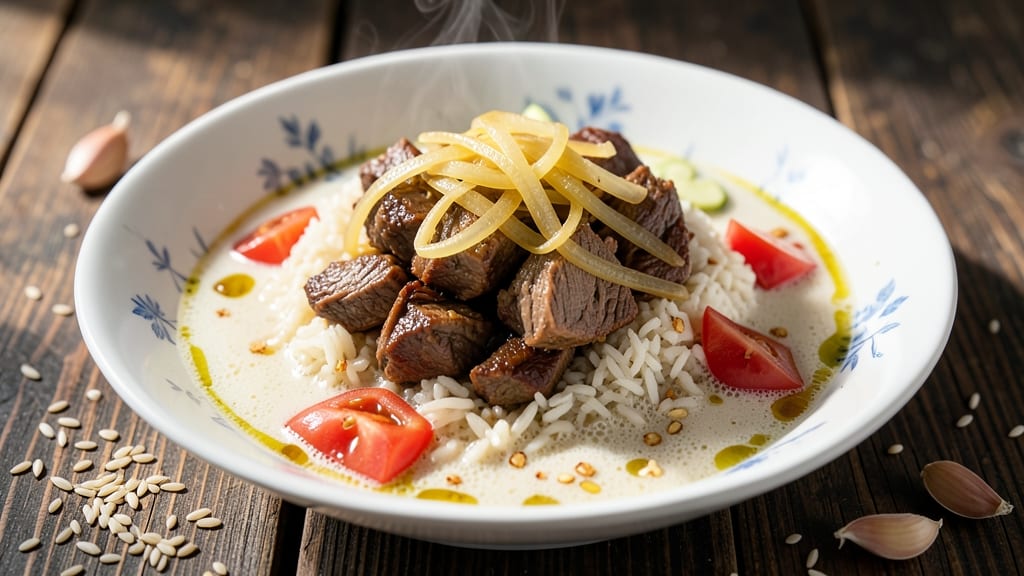
This beef arroz caldo recipe delivers the comforting warmth of Filipino home cooking, where tender beef threads melt into creamy coconut rice porridge. 🌟 The secret lies in slow-simmered broth that transforms tough cuts into melt-in-your-mouth bites while the rice absorbs rich, aromatic flavors.
I've perfected this dish over years of family gatherings, where it's always the first to disappear from the table.
The magic starts with a deeply flavorful broth—ginger, garlic, and coconut milk create a velvety base that envelops every ingredient. Thinly sliced beef cooks until it practically dissolves, while jasmine rice softens into a comforting porridge.
This isn't just soup; it's a hug in bowl form, perfect for chilly evenings or when you crave something truly comforting.
What makes this recipe special is how it balances simplicity with depth. The broth reduces to concentrate its flavors while maintaining that signature creamy texture, and the beef becomes so tender it falls apart at the touch.
Each spoonful delivers layers of savory, coconut sweetness, and subtle spice—exactly what you'd find in a Filipino grandmother's kitchen.
Serve with crisp green onions, lime wedges, and a sprinkle of chili for brightness, or transform it into a hearty meal by adding vegetables. The possibilities are endless, but the foundation remains the same: a bowl of warmth that brings people together. Let's make this comforting classic.
Ingredients for beef arroz caldo
Thinly sliced beef, fragrant jasmine rice, and velvety coconut milk create this Filipino comfort classic.
| Ingredient | Amount | Notes |
|---|---|---|
| Chuck Roast 🥩 | 1 ½ lb | Thinly sliced against the grain |
| Jasmine Rice 🍚 | 1 cup | Uncooked, long-grain preferred |
| Coconut Milk 🥥 | 1 can | Full-fat, 13.5 oz can |
| Yellow Onion 🧅 | 1 whole | Diced, medium size |
| Garlic Cloves 🧄 | 6 cloves | Minced, fresh preferred |
| Fresh Ginger 🌿 | 2 tbsp | Grated, peeled |
| Chicken Broth 💧 | 4 cups | Low-sodium preferred |
| Tomato Paste 🍅 | 2 tbsp | Smooth, no added salt |
| Bay Leaves 🍃 | 2 whole | Dried, crushed |
| Salt 🧂 | 1 ½ tsp | Kosher or sea salt |
| Black Peppercorns 🌶️ | ½ tsp | Freshly ground |
| Green Onions 🧅 | 4 whole | Sliced, for garnish |
| Lime 🍋 | 1 whole | Juiced, for serving |
| Red Chili Flakes 🔥 | ½ tsp | Optional, for heat |
The beef is everything here—chuck roast gives you that melt-in-your-mouth texture when sliced thin. Most grocery stores carry it pre-sliced, but if you're buying a whole roast, ask the butcher to cut it against the grain. Filipino markets often have pre-sliced beef for arroz caldo, and it's worth the trip if you've got one nearby. The rice? Jasmine rice is non-negotiable—it absorbs the broth beautifully and has that signature floral aroma. For coconut milk, full-fat canned versions like Thai Kitchen or Goya work best—they're rich enough to create that creamy texture without being overly sweet.
No chuck roast? Sirloin or flank steak sliced thin will work, but it won't be quite as tender. Running short on jasmine rice? Long-grain white rice is your next best bet, though it won't have the same floral notes. Fresh ginger and garlic are ideal, but if you're using dried, reduce the amount by half. For the tomato paste, those little squeeze tubes from Trader Joe's are perfect—no waste, and they keep for ages. The broth can be store-bought (just check for low-sodium), or you can make your own with beef bones and vegetables for deeper flavor. And if you're feeling adventurous, swap half the coconut milk for coconut cream for an even richer bowl.
This dish tastes even better the next day as all the flavors meld together. Store leftovers in the fridge for up to 4 days, or freeze for 3 months in airtight containers. I like to make a double batch because it disappears so fast—portion into individual containers for easy lunches. The rice will firm up when reheated, so add a splash of water or broth when warming. And don't forget the lime and chili flakes at the end—they're what make this dish pop with brightness!
Why You'll Love This Recipe
- One-Pot Magic: I swear by this—just brown the chuck roast, toss in the onions and garlic, then let the rice and coconut milk do all the work. No fancy steps, no extra pots.
- Rich Without Effort: That slow-cooked chuck roast falling apart in creamy coconut milk? It’s like someone poured love into a bowl. The jasmine rice soaks it all up, but you’ll still get that perfect bite of tender beef.
- Weeknight & Potluck Star: I make this when I’m too tired for fussing but still want something impressive. It’s hearty enough for a family dinner but travels well—just reheat and serve. (Yes, even on a Tuesday night.)
- Budget-Friendly Feast: Chuck roast stretches far, and coconut milk adds depth without breaking the bank. Leftovers? Even better—reheat with a splash of water, and it’s just as good the next day. My wallet and my freezer thank me.
Step-by-step instructions for creamy coconut rice bowl with tender beef threads
Here's how to transform tough chuck roast into melt-in-your-mouth beef threads and create a lusciously creamy coconut rice dish.
🔥 Step 1: Sear and Shred the Chuck Roast
Slice the 1.5 lb chuck roast thinly against the grain into ¼-inch thick strips. Heat a large skillet over medium-high heat and add the beef in a single layer. Don't crowd the pan—this ensures proper browning. Sear for 2-3 minutes per side until the edges are deep golden brown and the beef is cooked through but still tender.
Here's the trick: once the beef is seared, remove it from the pan and let it rest for 5 minutes. Then shred it using two forks into thin, thread-like strands. You want the beef to pull apart easily—this creates those signature beef threads that make arroz caldo special. Set the shredded beef aside temporarily.
🍳 Step 2: Build the Aromatic Base
In the same skillet (no need to clean it—those browned bits are flavor gold), add 1 tablespoon olive oil if needed and sauté the diced yellow onion over medium heat for 4-5 minutes until soft and translucent. Add the minced garlic cloves and grated fresh ginger, cooking for another 1-2 minutes until fragrant.
Stir in the 2 tbsp tomato paste and cook for 30 seconds until it darkens slightly. This step develops the sauce's depth of flavor. Pour in the 4 cups chicken broth and bring to a gentle simmer. Add the 2 crushed bay leaves, 1.5 tsp salt, and 0.5 tsp freshly ground black peppercorns. Let the broth simmer uncovered for 5 minutes to allow the flavors to meld.
🥘 Step 3: Cook the Jasmine Rice to Perfection
Rinse the 1 cup jasmine rice under cold water until the water runs clear. Add it to the simmering broth mixture and stir gently to distribute the rice evenly. Bring the liquid back to a gentle boil, then reduce heat to low, cover the skillet, and let it simmer for 15 minutes without lifting the lid.
After 15 minutes, check the rice—it should be tender but still have a slight bite. If there's any liquid remaining, cover and cook for another 2-3 minutes. The rice should be creamy and separate, not mushy. Remove from heat and let it sit covered for 5 minutes to steam through.
🍳 Step 4: Create the Creamy Coconut Sauce
Open the can of full-fat coconut milk and pour it into the rice mixture. Stir gently to combine, breaking up any coconut cream that separates. The mixture should look rich and velvety—this is where the dish gets its signature creaminess. Return the shredded beef to the skillet and stir to coat everything evenly in the coconut sauce.
Taste and adjust seasoning if needed. Here's where the 0.5 tsp red chili flakes come in—sprinkle them in now if you want a subtle kick. The sauce should be smooth, slightly sweet, and perfectly balanced with the savory beef and aromatic broth.
🍽️ Step 5: Finish and Serve Warm
Transfer the arroz caldo to serving bowls. Garnish each portion with sliced green onions and a squeeze of fresh lime juice from the whole lime. The acidity from the lime brightens the rich coconut flavors and cuts through the creaminess beautifully.
Serve immediately while steaming hot. Each bite should deliver tender beef threads, creamy coconut rice, and a complex blend of aromatic spices. The dish is even better the next day when the flavors have fully melded, but fresh is undeniably comforting.
Pro Tips For Making Beef Arroz Caldo
- Sear the Chuck Hard: The chuck roast needs a deep, dark crust to hold up through hours of simmering—don’t skimp on the sear. After patting it dry (yes, even if it’s still cold), hit it with high heat in your Dutch oven for 3-4 minutes per side until it’s got that stubborn, caramelized armor. I used to rush this, and the beef would turn out tough and watery. That crust? It’s what keeps the meat tender and flavorful.
- Sweat Onions Low and Slow: Chop those yellow onions into even ½-inch slices and cook them in the same pot you’ll use for the beef, but keep the heat at a bare simmer—not sizzling. After 8-10 minutes, they should be soft, translucent, and golden without browning. Browning them too early burns their sweetness, which is the base of your broth. (And yes, even if you’re impatient like me.)
- Add Coconut Milk Late: Stir in the coconut milk only in the last 20 minutes of cooking, or it’ll curdle into a greasy mess. The high heat from the simmering beef and onions can break down the milk’s fats too soon, turning your creamy arroz caldo into something resembling soup glue. I learned this the hard way after a pot of curdled disappointment.
- Toast the Jasmine Rice: Before adding water or broth, toast the uncooked jasmine rice in the same pot for 2-3 minutes until it smells nutty and the grains look slightly translucent. This step locks in flavor and prevents the rice from turning mushy. (Skip this when I’m lazy, and the dish is still edible—but noticeably less fragrant.)
Creative variations of this recipe
Vegetable-Packed Version
Add 1 cup each of sliced carrots, bell peppers, and snap peas when building the aromatic base. These veggies soften beautifully in the broth while adding vibrant colors and nutrients. I like to use orange carrots for their natural sweetness and red bell peppers for a touch of brightness. 🥕
Pork-Inspired Twist
Swap half the beef for ½ lb sliced pork shoulder to create a fusion-style arroz caldo. Cook the pork separately until tender, then shred it into threads. The fat content from pork adds extra richness that pairs perfectly with the coconut milk. This version feels heartier and more indulgent.
Spicy Chili-Lime Variation
Boost the heat by adding 1 tbsp gochujang paste to the tomato paste mixture and finishing with 1 tbsp lime zest. The gochujang brings deep umami and spicy notes that complement the coconut beautifully.
For extra zing, serve with sriracha drizzle. This version is perfect for those who love bold flavors.
Coconut Cream Upgrade
Replace half the coconut milk with ½ cup coconut cream. The result is a thicker, more luxurious texture that feels restaurant-quality. I recommend Thai Kitchen coconut cream, which is rich but not overly sweet. This version requires slightly less broth to maintain the right consistency.
Herb-Infused Garnish
Finish with cilantro and Thai basil. The cilantro adds freshness while Thai basil brings a distinct anise-like flavor that pairs wonderfully with coconut. For a tropical touch, add ½ cup toasted coconut flakes.
This garnish transforms the dish into a vibrant, aromatic experience that feels like a vacation in every bite.
Nutrition facts
Frequently asked questions about beef arroz caldo
Why does the beef need to be sliced thinly against the grain?
Slicing against the grain breaks the muscle fibers, creating those signature tender beef threads that make arroz caldo special. Thin slices also cook faster and absorb more of the rich coconut broth, resulting in melt-in-your-mouth texture. If your beef isn't tender, it's likely sliced with the grain or not cooked long enough.
Can I make arroz caldo without coconut milk?
Yes, but the dish will lose its signature creamy texture. Replace the coconut milk with ½ cup heavy cream or ½ cup evaporated milk for richness, or use an extra ½ cup chicken broth for a lighter version. The coconut flavor is traditional, but the dish still works with these alternatives.
How do I fix arroz caldo that's too thick or too thin?
If it's too thick, stir in 2-4 tablespoons warm broth until creamy. If too thin, simmer uncovered for 5-10 minutes to evaporate excess liquid. The rice should be tender but not mushy—adjust heat and liquid carefully to maintain the perfect porridge consistency.
What's the best way to reheat leftovers?
Gently reheat on the stove over low heat with 1-2 tablespoons water or broth to restore creaminess. Avoid microwaving as it can make the rice gummy. For extra flavor, add a splash of coconut milk while reheating. Leftovers actually improve as flavors meld!
Can I use a pressure cooker for this recipe?
Yes! Sauté the aromatics as directed, then add all ingredients (including rice) to the pressure cooker. Cook on high pressure for 5 minutes after rice is added, then quick-release. The beef will cook faster, but you may need to adjust liquid slightly since pressure cooking reduces less moisture.