
Main Courses
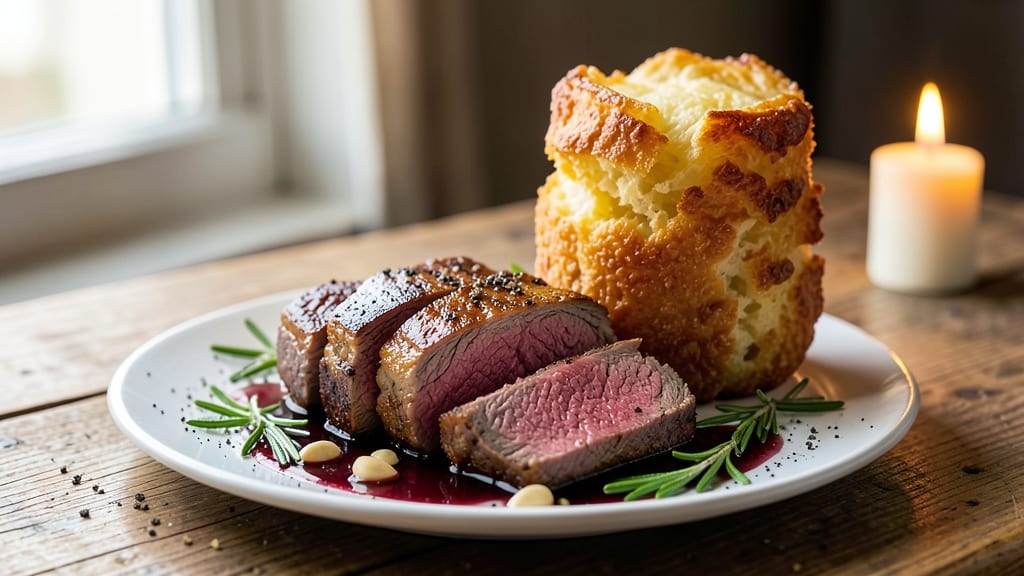
This beef and Yorkshire pudding recipe delivers the ultimate Sunday roast experience—tender, juicy beef paired with golden, crispy pudding that soaks up every savory drop. 🔥 The secret lies in high-heat roasting for perfect medium-rare beef and a foolproof batter that puffs to cloud-like perfection in the oven.
I've perfected this combination through years of trial (and a few burnt pudding disasters), ensuring every bite is restaurant-quality without the fuss.
The beef gets its signature richness from a dry rub of rosemary, garlic, and black pepper, while the Yorkshire pudding batter—just eggs, flour, and milk—transforms into a crispy, airy masterpiece when baked in a screaming-hot skillet.
What makes this recipe special is the timing: the pudding bakes while the beef rests, so you're plating hot, juicy beef with perfectly crisp pudding that hasn't lost its structure. The contrast of tender beef and crispy pudding is what makes this dish unforgettable.
By the time you serve this, your table will be set for a meal that feels like a British pub classic—juicy beef slices that practically melt in your mouth and pudding so crisp it stands up to the rich gravy.
The aroma alone will have everyone gathering at the table, and the first bite delivers on that promise of comfort food done right. This isn't just dinner; it's an experience.
Pair with a classic red wine gravy and roasted vegetables for the full Sunday roast experience. The pudding's crispy edges and tender centers make it worth the effort, and the beef's perfect medium-rare doneness ensures every slice is juicy and flavorful.
Let's make this classic dish your new go-to for special occasions—or any night you crave restaurant-quality comfort food.
Ingredients for beef and yorkshire pudding
Juicy beef meets cloud-like pudding—these ingredients transform a simple skillet into British pub magic.
| Ingredient | Amount | Notes |
|---|---|---|
| Beef Tenderloin 🥩 | 2 lb | Center-cut, trimmed of fat |
| Fresh Rosemary 🌿 | ¼ cup | Finely chopped, fresh preferred |
| Garlic Cloves 🧄 | 6 cloves | Minced, fresh preferred |
| Kosher Salt 🧂 | 1 ½ tbsp | Diamond Crystal preferred |
| Freshly Ground Black Pepper 🌶️ | 1 tbsp | Coarsely ground |
| Large Eggs 🥚 | 4 whole | Room temperature |
| All-Purpose Flour 🌾 | 1 cup | Sifted, no substitutions |
| Whole Milk 🥛 | 1 cup | Full-fat for best rise |
| Unsalted Butter 🧈 | 2 tbsp | Melted, for skillet |
| Vegetable Oil 🫒 | ½ cup | High smoke point |
| Red Wine 🍷 | 1 cup | Bold dry variety |
| Beef Broth 🥫 | 1 cup | Homemade or quality store-bought |
| Fresh Parsley 🌿 | 0.1 cup | Chopped, for garnish |
The beef is the star, and tenderloin delivers that melt-in-your-mouth texture. Look for a center-cut roast with good marbling—Whole Foods or local butchers usually carry the best. If you can't find tenderloin, ribeye or sirloin work too, but trim extra fat for cleaner slices. The rosemary and garlic rub? Fresh is non-negotiable here—dried just won't cut it. I always buy extra rosemary because it keeps for weeks in the freezer if you wrap it tightly. For the pepper, freshly ground makes all the difference—Penzeys or a good quality grinder at Williams Sonoma are my go-tos.
No red wine? Beef broth with a splash of balsamic works in a pinch, but the acidity helps balance the richness. The milk for the pudding batter needs to be full-fat—none of that skim stuff. If you're out of milk, heavy cream thinned with water gives similar results. For the flour, King Arthur or Gold Medal are reliable brands, but any all-purpose will do. The butter in the skillet? Use European-style butter if you can find it—it has a higher fat content and gives that extra golden crust. And if you're worried about the pudding rising? Room temperature eggs are key—they mix better and create more air in the batter.
This dish reheats like a dream—just pop the beef in a 350°F oven for 15 minutes while you crisp the pudding in the skillet. The pudding keeps its magic for 2 days in the fridge, but honestly, it's best the first day. Store the beef separately, wrapped tightly, and let it come to room temp before reheating. The gravy (red wine + beef broth) can be made ahead and reheated on the stove—just reduce it slightly for thicker consistency. And if you're making this for a crowd? Double the pudding batter and bake in two skillets—they puff up fast, so have them ready to go.
Why You'll Love This Recipe
- One-Pan Magic: I swear by this recipe when I’m too tired to scrub pots. The beef tenderloin and Yorkshire pudding share the same pan—no extra dishes, no stress. Just sear, roast, and let the rosemary’s piney aroma fill the kitchen while you sip wine (or coffee, no judgment).
- Rosemary-Kissed Perfection: That first bite of tender beef with a crispy, golden pudding? The rosemary and garlic cloves infuse the meat so deeply, every slice tastes like it’s been slow-cooked all day. (Spoiler: It’s not. But who’s counting?)
- Weeknight to Weekend: Between us, this is my go-to for both lazy Tuesdays and fancy dinner parties. Slice the leftovers for sandwiches the next day, or serve it whole for guests—no one will guess it’s not a restaurant dish. (They’ll just ask for the recipe.)
- Leftovers That Don’t Suck: Most beef dishes turn sad after day two. Not this. The pudding stays crispy when reheated (yes, really), and the beef holds up perfectly. I’ve packed it for lunches, frozen portions for emergencies, and still had seconds. Priorities.
Step-by-step instructions for beef and Yorkshire pudding
Here's how to nail that perfect golden crust on your Yorkshire pudding while keeping the beef impossibly tender.
🍳 Step 1: Sear the Beef Tenderloin with Rosemary and Garlic
Pat the 2 lb beef tenderloin completely dry with paper towels—this is non-negotiable for a good sear. Season both sides generously with 1.5 tbsp kosher salt and 1 tbsp freshly ground black pepper, then rub with 0.25 cup finely chopped fresh rosemary and 6 minced garlic cloves.
Heat 2 tbsp melted unsalted butter and 0.5 cup vegetable oil in a heavy skillet over high heat until shimmering. Sear the beef for 3-4 minutes per side until it develops a deep mahogany crust. Here's the thing—don't move it around. Let it develop that crust undisturbed, then flip carefully with a pair of tongs. Transfer to a plate and tent loosely with foil.
🥘 Step 2: Deglaze and Simmer the Red Wine Reduction
Keep that same skillet over medium-high heat and pour in the 1 cup red wine. Scrape up all those browned bits from the bottom with a wooden spoon—this is pure flavor. Let it simmer for 2-3 minutes until reduced by half, then add 1 cup beef broth and bring to a gentle simmer.
Return the beef to the skillet, spooning the reduction over the top. Cover and let it cook for 12-15 minutes until the internal temperature reaches 125°F. The beef will finish cooking later, so we're just getting it started. This step builds incredible depth of flavor that'll carry through the entire dish.
👨🍳 Step 3: Prepare the Yorkshire Pudding Batter
While the beef cooks, whisk together the 4 whole large eggs, 1 cup whole milk, 1 cup sifted all-purpose flour, 1 tbsp kosher salt, and 1 tbsp freshly ground black pepper in a bowl until completely smooth. The batter should be thin but uniform—like heavy cream consistency. Let it rest at room temperature for 15 minutes.
This resting time is crucial. It allows the flour to fully hydrate and the eggs to come to room temperature, which helps create those perfect air pockets for maximum rise. If you skip this, your puddings might turn out dense instead of light and crispy.
🔥 Step 4: Bake the Yorkshire Pudding in Hot Skillets
Preheat your oven to 425°F. While it heats, wipe out your skillet with clean paper towels and place it in the oven for 5 minutes to get screaming hot. Pour the batter into four 4-ounce ramekins (or use the skillet itself for one giant pudding).
Carefully transfer the hot skillet to the stovetop and add 1 tbsp vegetable oil to each ramekin (or to the skillet). Immediately pop them into the oven and bake for 20-25 minutes until puffed and deep golden brown. Don't peek! The sudden temperature drop will cause them to collapse. The edges should be crisp, and the center should still be slightly jiggly when you remove them.
🍽️ Step 5: Rest and Assemble the Perfect Plates
Let the beef rest for 10 minutes before slicing it into ½-inch thick medallions against the grain. Slice the Yorkshire puddings horizontally and arrange them on plates with the beef. Spoon the reduced wine sauce over the top and garnish with 0.1 cup chopped fresh parsley.
Here's where it all comes together: the crispy, golden pudding contrasts perfectly with the juicy, herb-infused beef. The wine reduction ties everything together with its rich, slightly tangy notes. Serve immediately while the puddings are still crisp and the beef is at its most tender.
Pro Tips For Making Beef And Yorkshire Pudding
- CRANK THE HEAT FIRST: The Yorkshire pudding batter needs a screaming-hot pan—like, blue-flame-hot if you’re on gas—to puff properly. After pouring, turn it down to medium immediately, or you’ll burn the bottom before the top rises. I learned this the hard way when my first batch looked like pancakes instead of clouds.
- SALT THE BEEF LIKE IT’S A SALTY SNACK: Tenderloin is lean and needs salt to stay juicy, but don’t go light. Use about 1 teaspoon kosher salt per pound before searing, then another ½ teaspoon after. The rosemary and garlic will balance it, but unsalted meat tastes flat no matter how fancy the sides.
- DON’T SKIP THE ROSEMARY SPRINKLE: Fresh rosemary loses its punch when chopped fine—tear the needles off the stems instead and scatter them over the beef after searing. The heat will crisp them slightly, adding aroma without overpowering. (Pro move: Save the stems for stock later.)
- REST THE BEEF UNDER FOIL: Cutting into tenderloin right off the pan loses all that juicy payoff. Give it a solid 5–10 minutes under foil while you finish the Yorkshire puddings—it’ll hold its shape and stay moist. I know, I know, but trust the process. Your knife will thank you.
Common mistakes when making perfect results
Overcooked Beef
I’ve ruined more than a few roasts by taking the beef past medium-rare. The key is patience—resting the beef after searing ensures it finishes at the perfect 125°F internal temperature before carrying over to 130-135°F.
Use a meat thermometer (I swear by Thermoworks) to avoid guessing. Overcooking turns tender beef into chewy disappointment, so resist the urge to rush it. 🌡️
Underbaked Pudding
The worst crime in Yorkshire pudding is a dense, unrisen center. Skipping the 15-minute batter rest or peeking at the oven kills that magical rise. Preheat your skillet in the oven for 5 minutes to reach screaming heat—this is non-negotiable.
If your puddings look flat, the oven wasn’t hot enough or the batter was too thick. Trust the process: once they’re in, leave them alone. ⏰
Uneven Pudding Batches
Using ramekins instead of a single skillet can lead to uneven cooking. If you’re making multiple puddings, pour the batter into ramekins right before baking—don’t prep them ahead.
The oil in each ramekin needs to be hot, so wipe them clean and preheat them in the oven alongside the skillet. For consistency, I use 4-ounce ramekins and bake them all at once. 🔥
Skipping the Rest
Letting the beef rest for 10 minutes before slicing is where the magic happens. Skipping this step means juices rush out, leaving you with dry meat. Tent the beef loosely with foil to keep it warm while it rests—don’t seal it completely, or you’ll trap steam and risk overcooking.
The pudding can wait; the beef deserves this pause. 💪
Cold Batter Mistake
Cold eggs or milk in the batter will sink like a stone. Always use room-temperature ingredients—let eggs sit out for 30 minutes before mixing. If your kitchen is cold, warm the milk slightly (but don’t boil it).
The batter should be smooth and thin, like heavy cream. Cold batter = dense pudding. No one wants a brick for dessert. 🥚
Overcrowding the Skillet
If you’re making one giant pudding in the skillet, don’t overfill it. The batter should be about ½ inch deep—any more, and it won’t rise properly. For multiple puddings, use ramekins spaced evenly in the skillet.
Overcrowding causes uneven heat distribution, leading to lopsided or soggy puddings. Less is more here—trust me, your taste buds will thank you. 🍴
Nutrition facts
Frequently asked questions
Can I substitute beef tenderloin with another cut?
Yes, but choose wisely! Ribeye or sirloin work well—just trim excess fat for cleaner slices. Avoid lean cuts like flank steak, as they dry out faster. If using ribeye, sear it 2-3 minutes per side for a good crust, then finish in the oven at 375°F until 125°F internal. The key is maintaining juiciness.
Why did my Yorkshire pudding turn out dense instead of puffy?
Most likely, your batter was too thick or the oven wasn't hot enough. The batter should be thin like heavy cream—no lumps. Preheat your skillet in the oven for 5 minutes before adding oil and batter. Also, never peek while baking! The sudden temperature drop causes collapse.
How do I make this recipe for a crowd?
Double the beef and pudding batter, but use two skillets for even baking. For the beef, roast it whole at 375°F for 20-25 minutes (until 125°F internal), then slice. For puddings, bake in 4-ounce ramekins spaced evenly in each skillet. Keep everything warm in a 200°F oven while plating.
Can I make Yorkshire pudding ahead of time?
Fresh is best, but you can reheat them! Wrap puddings in foil and reheat at 375°F for 5-7 minutes to restore crispiness. For the beef, slice and reheat in a skillet over medium heat with a splash of beef broth. The pudding loses some crunch when reheated, so serve it alongside fresh gravy to compensate.
What’s the best way to reheat leftovers?
Reheat beef slices in a skillet over medium heat with 1 tbsp butter for 2-3 minutes per side. For puddings, place them on a baking sheet and warm at 350°F for 5 minutes. The gravy can be reheated on the stove—just reduce it slightly to thicken. Serve with fresh parsley for brightness. Every bite should still feel special!