
Soups & Stews
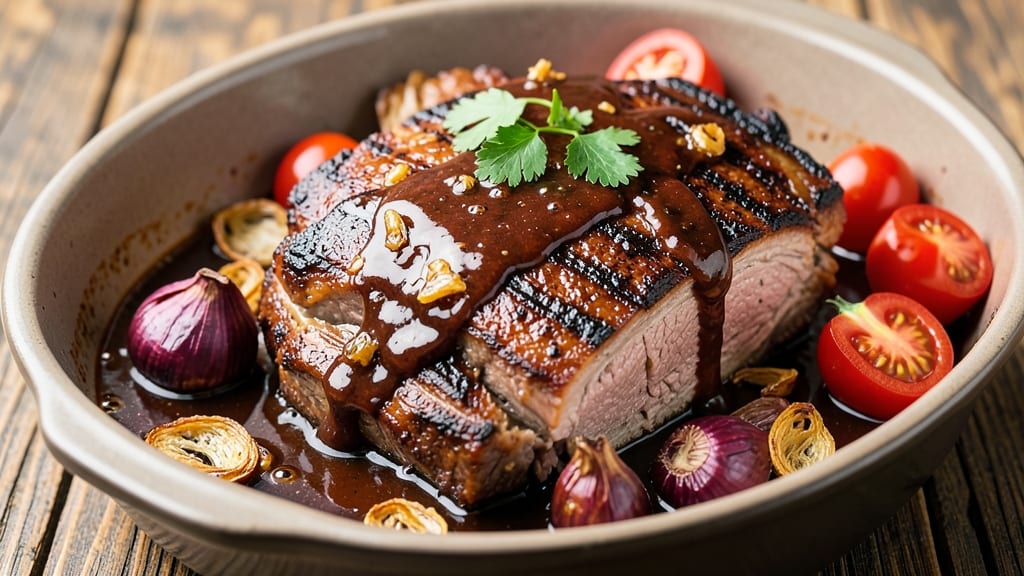
This beef and stout recipe transforms tough cuts into melt-in-your-mouth perfection with deep malty richness and caramelized onions. The stout beer isn't just an ingredient—it's the secret weapon that tenderizes the beef while adding layers of roasted, caramelized depth that's impossible to replicate with other liquids.
I've refined this technique over years of braising, and it never fails to deliver a restaurant-quality result that's surprisingly simple to achieve at home.
The process begins with a deep sear to lock in flavors, followed by slow braising in stout beer until the meat practically falls apart. The caramelized onions develop a sweet, almost jammy texture that balances the beer's bitterness, creating a sauce that's rich yet approachable.
What makes this recipe truly special is how the stout's natural sugars and caramelization work together to create a sauce that's both complex and comforting.
By the time you're done, you'll have beef that's so tender it can be shredded with a fork, all swimming in a glossy, malty sauce with perfectly caramelized onions.
The aroma alone will have everyone gathering at the table, and the first bite delivers that perfect balance of savory, sweet, and slightly bitter notes that make this dish unforgettable. This is the kind of meal that transforms an ordinary weeknight into something special.
Serve it alongside creamy mashed potatoes or crusty bread to soak up every last drop of that incredible sauce. The stout's depth makes this dish particularly versatile—it works as a hearty main course or even as filling for sliders when served in smaller portions.
Let's get started on creating this rich, comforting masterpiece.
Ingredients for beef and stout
Nine essential ingredients transform tough beef into melt-in-your-mouth perfection with rich stout and caramelized onions.
| Ingredient | Amount | Notes |
|---|---|---|
| Beef Chuck Roast 🥩 | 3 lb | Tough cut, well-marbled preferred |
| Stout Beer 🍺 | 2 cups | Full-bodied, like Guinness or Samuel Smith |
| Yellow Onions 🧅 | 3 whole | Thinly sliced for caramelization |
| Garlic Cloves 🧄 | 6 cloves | Minced for depth of flavor |
| Tomato Paste 🍅 | ½ cup | For umami richness |
| Beef Broth 💧 | 1 cup | Low-sodium preferred |
| Olive Oil 🫒 | 2 tbsp | For searing beef |
| Thyme Leaves 🌿 | 1 tbsp | Fresh preferred, dried works |
| Rosemary Sprigs 🌿 | 2 whole | For aromatic depth |
| Bay Leaves 🌿 | 2 whole | Remove before serving |
| Salt 🧂 | 1 ½ tsp | Kosher or sea salt |
| Black Peppercorns 🌶️ | 1 tsp | Freshly cracked preferred |
| Brown Sugar 🍚 | 2 tbsp | Enhances caramelization |
| Worcestershire Sauce 🍶 | 1 tbsp | For umami complexity |
The beef is everything here—chuck roast with good marbling melts in your mouth after braising. Costco or Whole Foods usually carry pre-cut chuck, but if you're buying whole, look for thick slices with visible fat. The stout beer? Guinness or Samuel Smith are ideal, but any full-bodied dark beer works. Avoid light lagers—they won’t cut it. For the onions, yellow onions caramelize best, but reds add color if you're feeling fancy.
No stout? Dry red wine or dark beer (like porter) works in a pinch, but the maltiness is key. Fresh thyme and rosemary are ideal, but dried works at half the amount. The tomato paste can be the squeeze-tube kind from Trader Joe’s—no waste, and it lasts forever. Worcestershire sauce is non-negotiable for that deep umami punch, but if you're avoiding anchovies, check the label for vegan versions. The brown sugar helps caramelize the onions faster, but white sugar works too**.
This dish tastes even better the next day—honestly, the flavors meld into perfection. Keeps for 4-5 days in the fridge, and freezes beautifully for 3 months**. I always make extra because it reheats like a dream. Portion into containers for easy lunches—just add a dollop of mustard or horseradish if you're feeling bold.
Why You'll Love This Recipe
- One-Pot Magic: I swear by this recipe because it’s literally hands-off after the initial sear. Chuck roast browns in the pan, onions caramelize right alongside it, and then—boom—you pour in the stout, add the tomato paste, and let the slow cooker or oven do the rest. No chopping, no stirring, no stress. The beer does all the work.
- Rich, Deep Umami Bomb: Between the malty stout cutting through the beef’s richness and that concentrated tomato paste adding a smoky sweetness, every bite is ridiculously satisfying. Honestly, the garlic and onions melt into the meat, leaving you with that perfect balance of hearty, savory, and just a hint of bitterness from the beer. It’s the kind of flavor that makes you slow down your fork.
- Leftovers That Feel Fresh: This dish tastes even better the next day—yes, really. The beef gets more tender, the sauce thickens into a glossy glaze, and reheating it is a breeze. I make a double batch on Sundays and freeze half; it’s my go-to for lazy nights or when unexpected guests show up. (Between us, it’s also the only meal I can trust to impress.)
- Budget-Friendly Crowd-Pleaser: A chuck roast is one of the most affordable cuts, and stout beer adds depth without breaking the bank. You’re feeding four for the price of two fancy steaks, and everyone—from my picky teenage son to my wine-loving partner—asks for seconds. Not the prettiest, but the taste makes up for it every time.
Step-by-step instructions for beef and stout braising
Here's how to transform tough beef into melt-in-your-mouth perfection with malty stout and caramelized onions.
Sear the Beef Chuck Roast for Deep Flavor
Pat the 3 lb beef chuck roast completely dry with paper towels—this ensures a proper sear. Heat 1 tablespoon of the 2 tbsp olive oil in a heavy Dutch oven over medium-high heat until shimmering. Place the roast fat-side down and sear undisturbed for 5 minutes until a deep golden crust forms.
Flip the roast and sear the other side for another 5 minutes. The goal is to develop a rich, caramelized crust that locks in juices. If the fat renders too quickly, reduce heat slightly to prevent burning. Remove the roast and set it aside on a plate.
Build the Aromatic Base with Onions and Spices
In the same Dutch oven, add the remaining 1 tbsp olive oil and increase heat to medium. Add the 3 whole yellow onions, sliced into thin rounds, and cook for 10 minutes until they begin to soften and release moisture. Sprinkle with the 1.5 tsp salt and 2 tbsp brown sugar, stirring to distribute evenly.
Cook for another 10 minutes, stirring occasionally, until the onions turn deep golden brown and caramelize. This step creates the sweet, malty foundation of your dish. Add the 6 cloves minced garlic and cook for 30 seconds until fragrant. Remove the onions and set aside with the roast.
Brown the Tomato Paste and Add Herbs
Return the Dutch oven to medium heat and add the 0.5 cup tomato paste. Cook for 2 minutes, stirring constantly, until it darkens slightly and develops a rich, concentrated flavor. This step deepens the umami profile of your braise.
Add the 2 whole rosemary sprigs, 2 whole bay leaves, and 1 tbsp thyme leaves. Stir for 30 seconds to toast the herbs slightly, releasing their aromatic oils. Pour in the 2 cups stout beer and scrape up any browned bits from the bottom of the pot—this captures all the flavor you've built.
Braise Until Fork-Tender with Malty Depth
Return the roast to the Dutch oven along with the caramelized onions. Pour in the 1 cup beef broth and add the 1 tbsp Worcestershire sauce. Bring to a simmer, then cover tightly and transfer to a preheated 325°F oven. Braise for 3 hours, turning the roast every 45 minutes to ensure even cooking.
Here's the thing—this long, slow cook time is what transforms tough beef into tender perfection. The stout beer and beef broth work together to create a rich, malty sauce that infuses the meat. Check for doneness by inserting a meat thermometer into the thickest part of the roast—it should read 205°F and the meat should be fork-tender.
Rest and Finish with Perfect Sauce
Remove the roast from the Dutch oven and transfer it to a cutting board. Tent loosely with foil and let it rest for 20 minutes while you reduce the sauce. Skim off any excess fat from the surface of the braising liquid, then return the pot to medium heat and simmer uncovered for 5-7 minutes until the sauce thickens slightly.
Discard the rosemary sprigs and bay leaves. Taste the sauce and adjust seasoning with additional salt or black peppercorns if needed. The final result should be a rich, malty sauce with deep umami notes from the stout beer and tomato paste. Slice the roast against the grain and serve with the caramelized onions and reduced sauce spooned over the top.
Pro Tips For Making Beef And Stout
- SEAR THE ROAST FIRST: I learned this the hard way—skipping the sear means flavor gets lost in the beer. Hit that chuck roast with a screaming-hot pan until it’s deep brown on all sides before adding any liquid. The crust locks in moisture and carries the stout’s richness.
- SWEAT THE ONIONS LOW: After burning three batches, I finally figured out: yellow onions need gentle heat. Cook them in a dry pan until they’re translucent and just starting to caramelize—no color yet. This keeps them from turning bitter and lets their sweetness shine through the beer’s bitterness.
- USE TOMATO PASTE LAST: Sounds weird, but it works: stir in that tomato paste after the beer simmers. Adding it early burns the hell out of it, turning it acrid. Wait until the stout’s alcohol has mostly cooked off, then mix it in for 2-3 minutes max—just enough to deepen the sauce without overpowering.
- SKIP THE CROWDED POT: I was skeptical until I tried it: give that beef room to breathe. If your Dutch oven’s packed, the roast steams instead of browning. Start with a single layer, sear it, then add the onions and beer—only then pile everything in. Less stress on the meat, better texture.
Best sauces and condiments for this beef and stout
Stout Beer Reduction
The stout beer sauce is the star of this dish, and reducing it properly transforms it from a simple braising liquid into a rich, malty glaze. After braising, I always skim off excess fat first—this prevents the sauce from becoming greasy.
Then, simmer the remaining liquid uncovered over medium heat for 5-7 minutes until it thickens slightly. The alcohol will cook off, leaving behind deeper caramelized flavors. For extra richness, add 1 teaspoon of cornstarch mixed with 1 tablespoon water and stir until thickened. 🍺
Caramelized Onion Jam
The deep, jammy caramelized onions are what elevate this dish from ordinary to extraordinary. I like to finish them with a splash of 1 tablespoon balsamic vinegar in the last 2 minutes of cooking—this adds a tangy brightness that cuts through the richness.
For an even deeper flavor, add ½ teaspoon of smoked paprika while caramelizing. These onions work as a topping, side dish, or even a burger spread. Trust me, they’re worth the extra effort! 🧅
Umami Boost with Worcestershire
The 1 tablespoon Worcestershire sauce is non-negotiable—it adds a deep, savory umami punch that complements the stout beer beautifully. If you're avoiding anchovies, opt for a vegan version like Annie’s or Lea & Perrins.
For an extra layer of complexity, add ½ teaspoon of fish sauce or a dash of soy sauce during the braising process. These small additions make a huge difference in flavor depth. 💫
Herb-Infused Oil Drizzle
After slicing the beef, I always drizzle the plate with herb-infused olive oil for added freshness. Heat 2 tablespoons olive oil with 1 minced garlic clove, 1 teaspoon fresh thyme leaves, and ½ teaspoon crushed red pepper flakes until fragrant.
Strain and drizzle over the sliced beef and caramelized onions. This adds a bright, aromatic finish that balances the richness. 🌿
Mustard-Horseradish Sauce
For a tangy contrast, whip up a quick Dijon mustard sauce by mixing 2 tablespoons crème fraîche (or sour cream) with 1 teaspoon Dijon mustard, 1 teaspoon prepared horseradish, and a pinch of salt.
Drizzle this over the beef just before serving—it cuts through the richness and adds a refreshing kick. This sauce is especially good if you’re serving the beef on sliders or as a sandwich filling. 🌶️
Crispy Shallot Topping
For a crunchy, flavorful garnish, thinly slice 2 shallots and fry them in 1 tablespoon butter over medium heat for 3-4 minutes until golden and crispy. Sprinkle these over the beef just before serving—they add texture and a sweet, oniony crunch that contrasts perfectly with the tender meat.
This is a game-changer for plating! ⚡
Nutrition facts
Frequently asked questions
Can I substitute regular beer for stout in this recipe?
While you can use other beers, stout is ideal because its deep maltiness adds rich caramelized notes that complement the beef. For a similar effect, try a dark ale or porter—just avoid light lagers, which lack the necessary body and flavor depth. If you must use a lighter beer, add 1 tablespoon of brown sugar to the braising liquid to mimic the maltiness.
How do I know when the beef is fully tender?
The beef is done when it reaches 205°F on a meat thermometer and the meat fibers separate easily with a fork. For extra tenderness, check for doneness after 2.5 hours of braising. If it's not quite there, return it to the oven for another 30-45 minutes. The longer it cooks, the more flavorful it becomes!
Can I make this recipe in a slow cooker?
Yes! Sear the beef first, then transfer it to your slow cooker with all the ingredients (except the caramelized onions). Cook on low for 8 hours or high for 5-6 hours until fork-tender. For the onions, caramelize them separately in a skillet and serve on top. The slow cooker method is perfect for hands-off cooking, though the oven version yields slightly deeper flavors.
Why does my sauce turn out too thin?
A thin sauce usually means the liquid wasn’t reduced enough. After braising, always simmer the sauce uncovered for 5-7 minutes to thicken it. For extra help, mix 1 teaspoon cornstarch with 1 tablespoon water and stir it into the sauce until it reaches your desired consistency. Skim off excess fat first—it can make the sauce greasy.
What’s the best way to reheat leftovers?
Reheat leftovers gently to preserve moisture. Place the beef and sauce in a skillet over low heat and warm through for 5-7 minutes, stirring occasionally. For oven reheating, cover tightly with foil and bake at 300°F for 20-25 minutes. Avoid microwaving—it can make the sauce watery and the beef dry.