
Soups & Stews
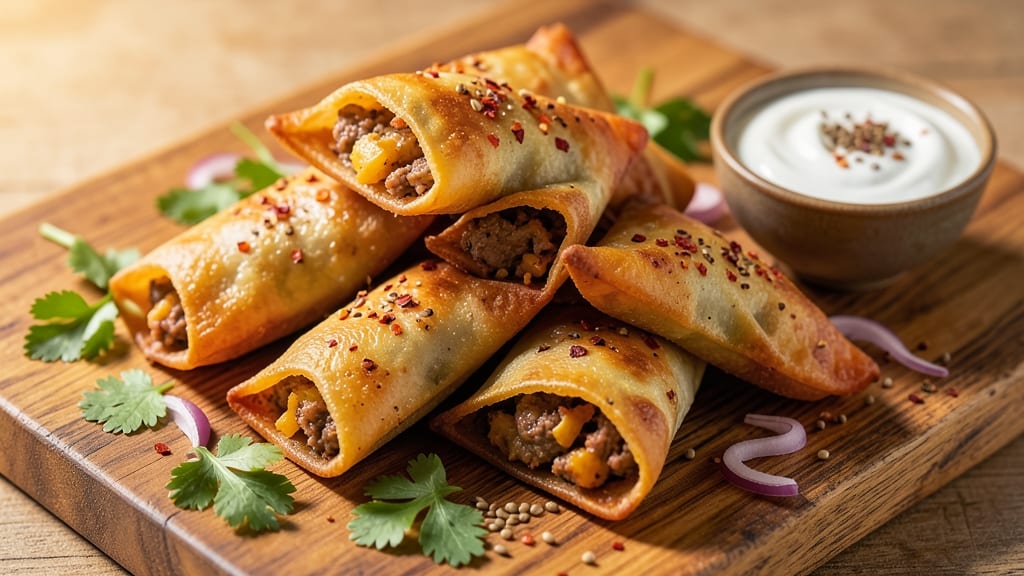
This beef and potato samosa recipe delivers the perfect balance of crispy golden pastry and aromatic spiced filling that makes every bite irresistible. ✨ The secret lies in a well-spiced potato-beef mixture that stays tender while the flaky dough achieves that signature crunch.
I've refined this recipe over years of testing to ensure the filling doesn't dry out and the samosas hold their shape beautifully during frying.
The dough preparation is straightforward but requires patience—rolling it thin ensures crispiness without sacrificing structure. Meanwhile, the filling combines tender potatoes with flavorful beef, all coated in a blend of cumin, coriander, and garam masala that creates layers of warmth and earthiness.
This recipe serves as a perfect balance between traditional technique and home-friendly adaptability.
What you'll end up with are samosas that are crispy on the outside and perfectly seasoned within, ready to be served with mint chutney or tamarind sauce for that authentic touch.
The aroma alone will have everyone gathering around, and the first bite delivers that satisfying crunch followed by rich, savory filling. This is comfort food at its finest—crispy, flavorful, and utterly satisfying.
Whether you're preparing for a festive gathering or simply craving a taste of India, these samosas deliver restaurant-quality results with minimal fuss. The recipe scales easily, so you can make just a few for a snack or double the batch for a crowd.
Let's get started on creating these golden, crispy delights!
Ingredients for beef and potato samosa
Golden, crispy samosas start with these 14 ingredients balancing spice and texture perfectly.
| Ingredient | Amount | Notes |
|---|---|---|
| Russet Potatoes 🥔 | 3 lb | Peeled, boiled until tender |
| Ground Beef 🥩 | 1 ½ lb | 70% lean, finely chopped |
| All-Purpose Flour 🌾 | 4 cups | For dough, plus extra for dusting |
| Ghee or Vegetable Oil 🫒 | ½ cup | For frying, ghee preferred |
| Garam Masala 🌶️ | 2 tbsp | Ground, for authentic flavor |
| Ground Cumin 🌿 | 1 ½ tbsp | Toasted for deeper aroma |
| Ground Coriander 🌿 | 1 ½ tbsp | Freshly ground preferred |
| Red Chili Powder 🌶️ | 1 tbsp | Adjust for heat preference |
| Salt 🧂 | 1 ½ tsp | Kosher or sea salt |
| Fresh Ginger 🧄 | 2 tbsp | Grated, for filling |
| Green Chilies 🌶️ | 2 whole | Finely chopped, for heat |
| Lemon Juice 🍋 | 2 tbsp | Freshly squeezed |
| Fresh Cilantro 🌿 | ¼ cup | Chopped, for garnish |
| Water 💧 | ½ cup | For dough, room temperature |
The potatoes and beef are the heart of this recipe, so quality matters. Russet potatoes work best—they stay firm when boiled. For the beef, 70% lean ground chuck gives the right texture (leaner cuts dry out the filling). I always buy mine from Costco or the butcher counter at Whole Foods—freshness makes a difference. The spices? Penzeys Spices has the best garam masala, but the bulk bins at Indian markets are usually cheaper. Toast your cumin and coriander seeds before grinding for deeper flavor—worth the extra minute.
No ghee? Vegetable oil or butter works fine for frying, though ghee gives that authentic taste. Short on cilantro? Fresh parsley at half the amount works in a pinch. The dough can be made ahead and refrigerated for up to 2 days—just let it sit at room temperature before rolling. For the filling, if you can't find green chilies, red chili powder at double the amount gets you close. The lemon juice is non-negotiable though—it brightens everything up.
The dough stays fresh for 2 days wrapped in plastic, but the filling can be prepped ahead and refrigerated for 3 days. For extra crispiness, fry the samosas in batches—don't overcrowd the pan. They reheat beautifully in the oven at 350°F for 10 minutes. Store leftovers in an airtight container, but honestly, they're best eaten fresh. I always make a double batch—one for today, one for tomorrow's lunch.
Why You'll Love This Recipe
- No Fuss Filling: I just boil the potatoes whole, then mash them with the beef and spices—no peeling, no dicing, no stress. The flour crust comes together faster than ordering takeout, and honestly? It’s the kind of recipe where you can chat with someone while you make it.
- Spice-Packed Crunch: That garam masala and ghee? It’s where the magic happens. The crust gets golden and shatteringly crisp, while the inside stays tender with a warm, savory depth—like a hug from a street food stall, but in your kitchen.
- Leftovers? No Problem: Make a double batch, and you’ve got lunch for three days. Reheat them in the oven until crispy again, or pack them cold for a no-muss workday meal. My kids beg for them even after the third day—proof they’re that good.
- Budget-Friendly Feast: Ground beef and potatoes stretch far, and you’re using pantry staples. For under $10, you feed a family of four with meals that taste like you slaved over them. (Between us, I’ve made this on grocery store sales—it’s my secret weapon.)
Step-by-step instructions for beef and potato samosa
Master the art of crispy samosa pastry with this foolproof method.
👨🍳 Step 1: Prepare the Spiced Filling
Boil the 3 lb Russet Potatoes in salted water until fork-tender, about 15-20 minutes. Drain and mash them until smooth, then let cool completely. In a large skillet, heat 0.25 cup of the ghee or vegetable oil over medium-high heat.
Add the 1.5 lb Ground Beef and cook until browned, breaking it into small pieces with a wooden spoon. Drain excess fat, then return the beef to the pan. Add the grated fresh ginger, finely chopped green chilies, ground cumin, ground coriander, red chili powder, and 1 tsp of the salt. Stir well and cook for 3-4 minutes until fragrant.
Combine the cooled mashed potatoes with the spiced beef mixture. Stir in the lemon juice and garam masala, mixing until fully incorporated. The filling should be moist but not soupy—adjust with a splash of water if needed. Let it cool completely before filling the pastry.
👨🍳 Step 2: Make the Samosa Dough
In a large mixing bowl, combine the 4 cups all-purpose flour and the remaining 0.5 tsp salt. Gradually add the 0.5 cup water while stirring with a fork until a shaggy dough forms. Knead the dough on a lightly floured surface for 8-10 minutes until smooth and elastic.
Cover the dough with a damp cloth and let it rest for 30 minutes at room temperature. This resting period relaxes the gluten, making it easier to roll out thin layers. Divide the dough into 12 equal portions, rolling each into a smooth ball. Keep the unused dough balls covered to prevent drying.
🔥 Step 3: Shape and Fill the Samosas
Take one dough ball and roll it between two sheets of parchment paper into a 6-inch circle, about 1/8-inch thick. Use a small bowl to cut out a 4-inch circle from the center, leaving a ring of dough. Repeat with the remaining dough balls.
Place 2 tablespoons of the spiced filling onto one of the dough rings. Fold the ring in half to form a semicircle, then fold the edges inward to create a cone shape. Press the edges firmly with your fingers to seal, ensuring no filling escapes. Repeat with the remaining dough and filling, creating 12 samosas in total.
🍳 Step 4: Fry to Golden Perfection
Heat 0.25 cup ghee or vegetable oil in a deep skillet over medium heat until shimmering. Fry the samosas in batches, ensuring they don’t overcrowd the pan. Cook for 4-5 minutes per side until the pastry turns a deep golden brown and the oil sizzles gently.
Drain the fried samosas on a paper towel-lined plate to remove excess oil. The samosas should be crispy on the outside and tender on the inside. If any samosas brown too quickly, reduce the heat slightly to prevent burning.
🥘 Step 5: Garnish and Serve
While still warm, sprinkle the fried samosas with the chopped fresh cilantro for a burst of freshness. Serve immediately with tamarind chutney or mint yogurt sauce for dipping. The contrast of crispy pastry and spiced filling makes every bite irresistible.
Real talk: The secret to crispy samosas is in the frying. Keep the oil at a consistent temperature, and don’t rush the process. If the pastry puffs up too much, gently press it down with a spatula to ensure even cooking.
Pro Tips For Making Beef And Potato Samosa
- BOIL POTATOES HALF-DONE: Russets stay gluey if you boil them all the way—pull them when a knife slides in easily but still has a tiny bite. They’ll finish cooking in the filling while you work the dough, and you’ll avoid that sad, mushy center.
- FRY BEEF LOW AND SLOW: After browning the meat, drop the heat to medium-low and let it cook uncovered for 5–7 minutes. This drives off raw taste and renders fat without turning the filling greasy—trust me, your samosas won’t taste like a school cafeteria.
- CHILL THE DOUGH: Roll out the flour-ghee dough cold, even if it feels stubborn. Wrap it in plastic and refrigerate 20 minutes first—this prevents shrinking and makes folding those crispy triangles way easier. (Yes, I’ve fought with sticky dough at 3 AM. Don’t be me.)
- SEAL WITH WATER, NOT EGGS: Brush the edges with water before folding, not beaten egg. Egg makes the pastry soggy faster, and water gives you that classic samosa crunch without the mess. Just dab, fold, and press firmly—no need to overcomplicate it.
Make-ahead tips for beef and potato samosa
Filling Prep Ahead
Prepare the spiced filling up to 3 days in advance and store it in an airtight container in the refrigerator. The flavors deepen overnight, and the potatoes absorb the spices beautifully.
When ready to assemble, simply reheat the filling in a skillet with 1 tablespoon ghee over low heat for 5 minutes to revive its moisture and aroma. This step saves you time on the actual cooking day—perfect when hosting guests. 💫
Dough Prep Timeline
Make the dough the night before and refrigerate it wrapped in plastic. The cold temperature prevents drying, and the dough will be easier to roll out the next day. Divide it into 12 equal balls and store them in a single layer in an airtight container.
Let the dough sit at room temperature for 30 minutes before rolling—this prevents cracking and ensures even thickness. Trust me, this small step makes shaping samosas a breeze. ✨
Frying in Batches
Fry samosas in 2-3 batches to maintain oil temperature consistency. Use a deep pot with 2-3 inches of oil and keep it at 350-375°F—a candy thermometer helps here. Overcrowding lowers the oil temperature, leading to greasy samosas.
I like to fry 3-4 samosas at a time, turning them gently with tongs for even browning. Keep fried samosas warm in a 200°F oven while finishing the batch. 🔥
Freezer-Friendly Assembly
Assemble the samosas (filled and shaped) but unfried up to 24 hours ahead. Place them on a parchment-lined tray, cover with plastic wrap, and freeze. When ready to fry, transfer frozen samosas directly to the hot oil—no thawing needed!
They’ll crisp up perfectly, though you may need to extend frying time by 1-2 minutes per side. This is a game-changer for parties or large gatherings. ⏰
Reheating Leftovers
Store leftover samosas in an airtight container for up to 3 days at room temperature or 1 week in the fridge. Reheat in a skillet with 1 tablespoon ghee over medium heat for 3-4 minutes per side—this restores crispiness.
For oven reheating, bake at 375°F for 8-10 minutes until golden. Microwaving is possible but results in soggy pastry—avoid it if you want that satisfying crunch. 💡
Make-Ahead Serving Plan
Plan your make-ahead strategy by step: Day 1—make filling and dough; Day 2—shape samosas and freeze half. On serving day, fry the refrigerated batch first, then the frozen ones. Keep fried samosas warm in a 200°F oven** with a damp paper towel to prevent drying.
This method ensures you’re not stuck in the kitchen while guests arrive. Perfect for stress-free entertaining! 🎉
Nutrition facts
Frequently asked questions
Can I substitute beef with another protein?
For a vegetarian version, replace the beef with 1.5 lb crumbled paneer or tofu (pressed and drained). For seafood lovers, try 1.5 lb shrimp or scallops—just reduce cooking time slightly. Chicken works too, but use 1.5 lb ground chicken thigh for juicier results. The key is keeping the protein finely chopped to maintain the samosa texture.
Why did my samosa dough crack when rolling?
Dough cracks usually happen when it's too dry or hasn't rested enough. First, ensure your dough has rested for 30 minutes before rolling. If it's still cracking, add 1 teaspoon water at a time until pliable. Rolling too thin or using cold dough also causes cracks—keep your rolling pin and surface at room temperature. Work quickly to prevent drying.
How do I make the filling less greasy?
Greasy filling often comes from excess fat in the beef or potatoes. Drain all fat after browning the beef, and pat the cooked potatoes dry before mashing. For extra insurance, sprinkle 1 tablespoon cornstarch over the filling while it cools—this absorbs excess moisture and fat. Also, avoid overfilling the samosas (stick to 2 tablespoons per piece).
Can I bake these samosas instead of frying?
Yes, but the texture will differ. Brush shaped samosas with 1 tablespoon oil and bake at 400°F for 20-25 minutes until golden. For crispiness, broil for 2-3 minutes at the end. They'll be softer than fried versions but still delicious. Pro tip: Place on a wire rack over a baking sheet to prevent sogginess.
What's the best way to store leftover samosa dough?
Wrap the unused dough balls tightly in plastic wrap and refrigerate for up to 2 days. For longer storage, freeze the dough balls on a tray first (to prevent sticking), then transfer to a freezer bag. Thaw overnight in the fridge before using. Always let frozen dough sit at room temperature for 30 minutes before rolling to prevent cracking.