
Soups & Stews
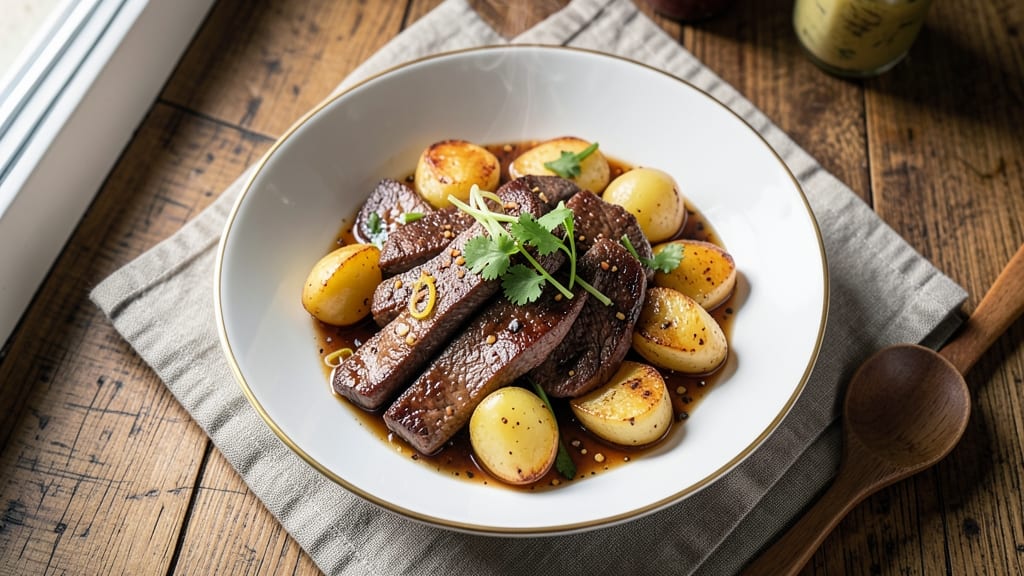
This beef and potato Chinese recipe delivers the perfect balance of wok-fired crunch and silky soy-ginger depth you crave. The secret lies in high-heat searing followed by a slow simmer that transforms tough beef into tender, flavorful bites while keeping potatoes perfectly crisp on the outside and tender inside.
I developed this recipe after years of perfecting home-style Chinese stews that rival restaurant quality.
The foundation starts with a rich soy-ginger base built on authentic Chinese pantry staples like Shaoxing wine, star anise, and fermented black beans. These ingredients create complex layers of umami that penetrate every component.
The beef first gets a quick sear in a hot wok to develop that signature wok hei aroma, then simmers until fork-tender while the potatoes absorb all that savory goodness.
What emerges from your pot is a dish where each bite offers contrasting textures and flavors: crispy potato edges, tender beef, and a sauce that's both silky and packed with aromatic depth.
The aroma alone will have everyone gathering at your table, and the first taste will convert even the most skeptical eaters. This recipe serves as both a comforting weeknight meal and an impressive dish for guests.
Perfect for feeding a family or bringing to potlucks, this dish reheats beautifully while maintaining its incredible texture contrast. The leftovers actually taste better the next day as the flavors continue to meld. Let's get cooking!
Ingredients for beef and potato chinese
Authentic Chinese pantry staples meet wok-fired textures for a dish that delivers restaurant-quality depth.
| Ingredient | Amount | Notes |
|---|---|---|
| Flank Steak 🥩 | 2 lb | Thinly sliced against grain |
| Yukon Gold Potatoes 🥔 | 3 lb | Cut into 1-inch chunks |
| Shaoxing Wine 🍷 | ½ cup | Dry Chinese cooking wine |
| Soy Sauce 🥄 | ½ cup | Light or dark preferred |
| Ginger Root 🧄 | 2 tbsp | Fresh, finely minced |
| Garlic Cloves 🧄 | 6 cloves | Minced for aromatic base |
| Star Anise Pods 🌿 | 2 whole | For deep aromatic flavor |
| Fermented Black Beans 🫘 | ¼ cup | Rinsed, for umami depth |
| Sesame Oil 🫒 | 1 tbsp | Toasted for finishing |
| Vegetable Oil 🫒 | ½ cup | High smoke point preferred |
| Green Onions 🧅 | ¼ cup | Sliced, for garnish |
| Cornstarch 🌾 | 1 tbsp | For tenderizing beef |
| Salt 🧂 | 1 ½ tsp | Diamond Crystal preferred |
| Ground Black Pepper 🌶️ | ½ tsp | Freshly cracked |
| Sugar 🍯 | 1 tbsp | Balances flavors |
The flank steak is non-negotiable here—its lean texture and grain make it perfect for quick searing and tenderizing. Ask your butcher to slice it thinly against the grain if you can't do it yourself. For potatoes, Yukon Golds are ideal—they hold their shape while absorbing flavor beautifully. Shaoxing wine is the secret weapon; look for it in the international aisle at Whole Foods or Asian markets. Fermented black beans add that signature umami punch—rinsed well to remove excess salt. Star anise might be tricky to find, but Penzeys or local spice shops usually carry it.
No Shaoxing wine? Dry sherry or even a splash of white wine vinegar will work in a pinch, though the flavor won't be identical. Fresh ginger and garlic are musts for that bright, aromatic base, but powdered works at double the amount if you're desperate. The cornstarch isn't just for thickening—it tenderizes the beef during the marinade. Don't skip it. For the potatoes, if you can't find Yukon Golds, russets or red potatoes will do, though they'll break down faster. The sesame oil should be toasted—heat it gently in a pan before adding to the dish for maximum aroma.
This dish tastes even better the next day as the flavors meld. Store leftovers in an airtight container for up to 4 days in the fridge, or freeze for 3 months. The potatoes will soften further, but that's part of the charm. For reheating, add a splash of water or broth to keep the sauce from drying out. Double the recipe if you're feeding a crowd—it's that good.
Why You'll Love This Recipe
- One-Pan Magic: I swear by this recipe when I’m too tired to scrub pots—just slice the potatoes, sear the steak, and toss everything in one pan. The potatoes caramelize right alongside the beef, and the Shaoxing wine turns the whole thing into a fragrant, sticky mess that’s exactly what you need after work.
- Umami Bomb: That combo of soy sauce, Shaoxing wine, and fresh ginger? It’s like a flavor grenade in the best way. The steak stays tender but develops this deep, savory crust, while the potatoes soak up all the richness—no bland bites here.
- Lunchbox Hero: Between us, this is my go-to for meal prep. The leftovers reheat like a dream (thanks to the wine’s magic), and it’s hearty enough to pack for work or feed the kids without looking like sad cafeteria food. Plus, the potatoes stay firm—no mushy surprises.
- Budget Steakhouse Feel: Flank steak is affordable, and a pound goes a long way when you’re stretching it with potatoes. I’ll be real: it tastes way fancier than it costs, especially when you drizzle that last bit of pan sauce over the top. Instant restaurant vibes for less than takeout.
Step-by-step instructions for wok-fired beef and potatoes
Here's how to transform simple ingredients into a restaurant-worthy dish with perfect texture contrasts.
Prepare the Beef for Maximum Tenderness
Slice the 2 lb flank steak thinly against the grain into ¼-inch strips—this ensures each bite will be fork-tender. Place the sliced beef in a bowl and add 1 tbsp cornstarch, 1.5 tsp salt, and 0.5 tsp ground black pepper. Toss gently but thoroughly to coat each piece evenly. Let it marinate for 15 minutes at room temperature while you prep the potatoes.
This cornstarch coating creates a delicate crust that locks in juices while adding texture. Don't skip the room temperature step—cold beef releases less moisture during cooking, leading to tougher results. I like to work the beef in batches if needed, keeping the marinated pieces in a single layer to prevent sticking.
Parboil the Potatoes for Crunchy Texture
In a large pot, bring 8 cups water to a rolling boil and add 1 tbsp sugar and 1 tsp salt. Add the 3 lb Yukon Gold potatoes cut into 1-inch chunks and cook for 6-8 minutes until they're just tender—they should still have a slight bite when pierced with a fork. Drain immediately and rinse under cold water to stop the cooking process.
The sugar balances the earthy potato flavor while the partial cooking ensures they develop crispy edges during the wok-firing stage. Overcooking here will turn them mushy—this is where many home cooks go wrong. Drain them well in a colander before proceeding to remove excess moisture that would steam instead of crisp.
Build the Aromatic Base in the Wok
Heat 0.5 cup vegetable oil in a 14-inch wok over medium-high heat until shimmering. Add the 2 whole star anise pods, 6 cloves garlic, and 2 tbsp minced ginger root, stirring constantly for 30 seconds until fragrant. Add the 0.25 cup rinsed fermented black beans and cook for 1 minute until they begin to sizzle and release their deep umami essence.
This aromatic base forms the flavor foundation of the dish. The star anise adds subtle licorice notes that complement the soy, while the black beans contribute that signature Chinese restaurant umami punch. Watch the heat carefully—ginger burns quickly, so keep it moving in the wok. If you smell burning, reduce to medium heat immediately.
Wok-Fire the Beef and Potatoes Together
Increase heat to high and add the marinated beef in a single layer. Stir-fry for 2-3 minutes until the beef is 75% cooked and beginning to brown. Add the parboiled potatoes and toss everything together for 4-5 minutes until the beef is fully cooked through and the potatoes develop crispy edges. Pour in the 0.5 cup Shaoxing wine and 0.5 cup soy sauce, stirring constantly to coat everything evenly.
The key here is high heat and constant movement. You want the beef to sear quickly while the potatoes crisp up from their residual starch. The Shaoxing wine deglazes the wok, lifting up all those delicious browned bits that contain concentrated flavor. If the mixture looks too dry, add 2-3 tablespoons water to create a glossy sauce that clings to everything.
Finish with Sesame Oil and Garnish
Remove from heat and stir in 1 tbsp toasted sesame oil and 0.25 cup sliced green onions. Taste and adjust seasoning if needed—you might want to add a splash more soy sauce or a pinch of sugar to balance the flavors. Transfer immediately to a serving platter while the potatoes are still crisp and the beef retains its juices.
The sesame oil adds that final nutty aroma and rich mouthfeel that makes this dish sing. Serve immediately while the potatoes maintain their perfect texture contrast—crispy edges with tender centers. The green onions not only look beautiful but also add a fresh, bright note that cuts through the richness of the beef and potatoes. This dish tastes even better the next day, but the texture suffers if left too long.
Pro Tips For Making Beef And Potato Chinese
- SEAR FLANK STEAK IN BATCHES: Flank steak releases a ton of juice when you slice it raw—don’t drown it in its own liquid. Cut against the grain into ½-inch strips, then sear in two rounds. First batch gets 3 minutes on high heat to brown; set aside. Repeat with the second batch in the same pan (the residual fat will keep things moving). This keeps the meat tender and the wok from turning into a soup.
- PARBOIL POTATOES UNTIL FIRM: Yukon Golds go mushy fast in stir-fries, and nobody wants gluey potatoes. Boil them whole for 6 minutes—just until a knife slips in easily but still meets resistance. Drain well, then shock in ice water for 1 minute to stop cooking. Cold potatoes also crisp up better when they hit the hot pan later.
- DEGLAZE WITH SHAOXING WINE FIRST: I used to add soy sauce right after searing, but that dulls the wine’s bright flavor. Instead, pour in 2 tablespoons Shaoxing wine immediately after removing the first batch of beef—let it sizzle for 30 seconds to lift those caramelized bits. Then add soy sauce (and ginger) to build the sauce layer. The wine’s depth stays intact.
- USE A LITTLE CORNSTARCH ON POTATOES: Toss the parboiled potatoes with 1 teaspoon cornstarch before stir-frying. It’s not about thickening—it’s about creating a light crust that soaks up the sauce without turning soggy. I was skeptical until I tried it; the potatoes now hold their shape and absorb flavor like a sponge. (Yes, even if you’re impatient like me.)
Health benefits of this recipe
Protein Powerhouse
This dish delivers a substantial 30-35 grams of high-quality protein per serving thanks to the lean flank steak. Protein supports muscle repair, immune function, and keeps you feeling satisfied for hours.
The cornstarch coating not only tenderizes but also helps retain moisture, ensuring you get maximum protein benefits without dryness. 💪
Complex Carbohydrates
The 3 lbs of Yukon Gold potatoes provide complex carbohydrates that fuel your body with sustained energy. Unlike refined carbs, these slow-digesting potatoes help stabilize blood sugar levels while providing fiber for digestive health. The partial boiling preserves more nutrients than fully cooking them.
Healthy Fats Balance
While this isn't a fat-heavy dish, the 1 tbsp sesame oil and vegetable oil contribute beneficial unsaturated fats. Sesame oil is particularly rich in vitamin E and antioxidants that support skin health and reduce inflammation. The small amount used adds flavor without excess calories.
Umami Flavor Benefits
The fermented black beans and star anise create a flavor profile packed with natural umami compounds that enhance digestion and may even help reduce cravings for processed foods. These ingredients also contain plant-based compounds that support gut health and reduce inflammation in the body.
Low-Sodium Options
While traditional Chinese cooking often uses salt, this recipe balances sodium with low-sodium soy sauce alternatives (like Kikkoman Low Sodium) if needed. The fermented black beans provide umami depth without excessive salt. For even lower sodium, reduce the salt in the potato water to just ½ tsp.
Meal Prep Advantage
The dish's components reheat beautifully while maintaining nutritional integrity. The beef remains tender and the potatoes retain their texture when stored properly.
This makes it an excellent meal prep option for busy weeks, as you can prepare the full recipe ahead and portion it out for 4-5 days in the fridge.
Nutrition facts
Frequently asked questions
Can I substitute flank steak with another cut of beef?
Yes, but choose cuts with similar tenderness. Sirloin or ribeye work well—just slice thinly against the grain. Avoid tougher cuts like chuck as they won't tenderize properly during the short cooking time. For extra tenderness, marinate for 30 minutes instead of 15 minutes if using a slightly tougher cut.
What if I can't find Shaoxing wine?
Use dry sherry or white wine vinegar in a pinch. For best results, combine ¼ cup sherry + ¼ cup water to mimic Shaoxing's depth. Avoid sweet wines—they'll make the dish overly cloying. The flavor won't be identical, but it'll still create a delicious sauce with proper acidity.
How do I get crispy potatoes without a wok?
Use a large skillet or cast-iron pan on high heat. Parboil the potatoes as directed, then pat them completely dry before cooking. Work in batches if needed—don't overcrowd. For extra crunch, add 1 tsp cornstarch to the potatoes before the final stir-fry. The key is high heat and constant tossing.
Can I make this dish in a slow cooker?
Yes, but with adjustments. Sear the beef first in a skillet, then combine everything in the slow cooker on low for 4-5 hours. Add ½ cup water to prevent drying. The texture will be softer (no crispy potatoes), but the flavors will meld beautifully. Perfect for hands-off cooking!
What's the best way to reheat leftovers?
Gently reheat in a skillet with 1 tbsp oil over medium heat for 5-7 minutes, stirring occasionally. Add 1-2 tbsp water if it looks dry. Microwaving works too—cover with a damp paper towel and heat in 1-minute intervals to maintain texture. Leftovers actually taste better as flavors deepen!