
Main Courses
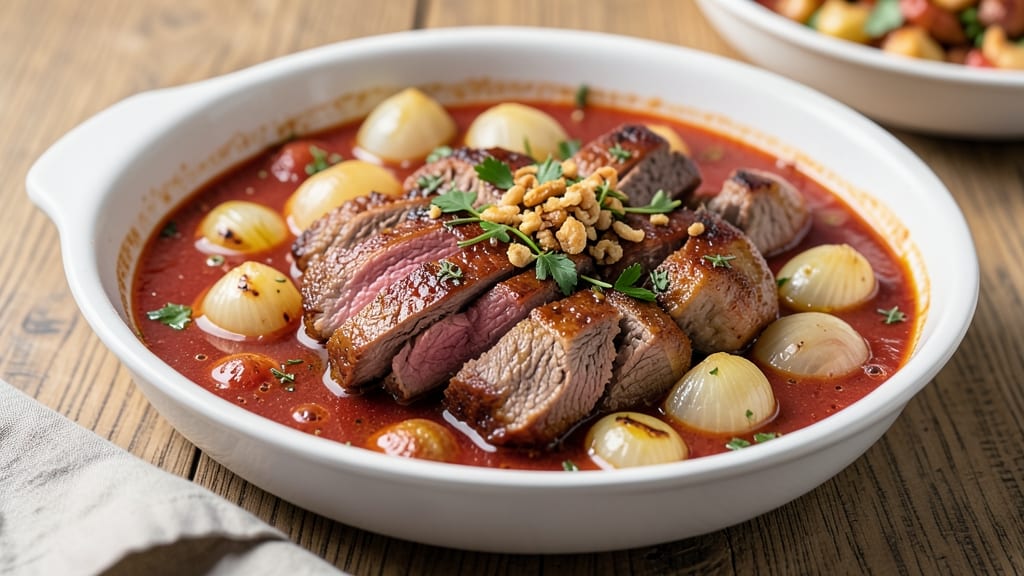
This beef and pork caldereta recipe transforms humble ingredients into a rich, braised masterpiece that carries the soul of Filipino comfort food. 🌟 The secret lies in slow-cooked meat melting into a deep, tomato-chile sauce, topped with crispy tortilla pieces that add irresistible texture.
I first encountered this dish in Manila's bustling carinderias, where it became an instant favorite—now I'm sharing the refined version I've perfected in my Atlanta kitchen.
The recipe begins with proper meat preparation: browning beef and pork cuts until deeply caramelized, a crucial step that builds the sauce's complex flavor foundation. We then simmer everything in a rich tomato-chile base until the meat becomes fork-tender and the sauce thickens to a velvety consistency.
The crispy tortilla topping, made from simple ingredients, adds that satisfying crunch that makes this dish truly special.
What you'll achieve is a restaurant-quality caldereta that's hearty enough for family dinners but elegant enough for special occasions. The sauce clings to perfectly cooked meat, while the crispy tortilla topping provides the perfect textural contrast.
This dish embodies the balance of rich, savory flavors with just the right amount of heat—comfort food at its finest.
Serve it over steamed white rice to soak up every last bit of that delicious sauce, or with warm crusty bread for dipping. The leftovers actually taste better the next day as the flavors continue to meld.
This is the kind of dish that becomes a staple in your home cooking rotation—once you try it, you'll never go back to store-bought versions.
Ingredients for beef and pork caldereta
Humble ingredients meet bold Filipino flavors in this rich, braised masterpiece.
| Ingredient | Amount | Notes |
|---|---|---|
| Beef Chuck Roast 🥩 | 2 lb | Cut into 1.5-inch cubes |
| Pork Shoulder 🐷 | 2 lb | Cut into 1.5-inch cubes |
| Yellow Onions 🧅 | 3 whole | Thinly sliced, about 4 cups |
| Garlic Cloves 🧄 | 8 cloves | Minced, about 2 tbsp |
| Tomato Sauce 🍅 | 2 cups | Canned, San Marzano preferred |
| Tomato Paste 🍅 | ½ cup | Squeeze tube or canned |
| Red Chile Peppers 🌶️ | 4 whole | Ancho or guajillo, stems removed |
| Bay Leaves 🌿 | 2 whole | Dried, crushed slightly |
| Cinnamon Sticks 🌿 | 2 whole | 1-inch pieces |
| Salt 🧂 | 2 tsp | Diamond Crystal preferred |
| Black Peppercorns 🌶️ | 1 tsp | Freshly ground |
| Flour Tortillas 🍞 | 8 whole | Small, store-bought |
| Olive Oil 🫒 | ½ cup | Extra-virgin for browning |
| White Wine 🍷 | ½ cup | Dry, like Sauvignon Blanc |
| Chicken Broth 💧 | 2 cups | Low-sodium preferred |
The meat is everything here—beef chuck for deep flavor and pork shoulder for tender bite. Grab them from the butcher counter if possible; pre-cut meat works too, but ask for good marbling. I always buy Filipino-style chiles at H Mart or Asian markets—they're dried, smoky, and perfect for this dish. If you can't find them, ancho peppers are a solid swap. The tortillas? Mission brand from the store—anything too thick won't crisp right.
No wine? Extra chicken broth works in a pinch. The tomato paste can be the squeeze-tube kind (Trader Joe's has great ones), but if you're using canned, make sure it's not watery. Fresh garlic is non-negotiable here—dried just won't cut it. For the tortilla topping, cut them into small triangles so they crisp faster. And if your chiles are tough, soak them in hot water for 10 minutes first. The onions? Yellow or red both work, but yellow has more sweetness to balance the heat.
This dish tastes even better the next day—3-4 days in the fridge, 3 months frozen. I always make extra because it's perfect for leftovers. Store the sauce separately if you want to keep the tortillas crispy longer. For reheating, low heat is key—you're not cooking it again, just warming through. The tortilla topping? Make it fresh the day you serve—it loses crispness fast.
Why You'll Love This Recipe
- One-Pot Magic: I swear by this—just dump everything into a deep pot, simmer, and walk away. No chopping, no fussing, no extra pans. That beef chuck and pork shoulder practically melt into tender perfection while you sip your coffee.
- Deep, Rich Umami: The slow-cooked tomato sauce and caramelized onions create this unreal depth—like a hug in a bowl. Between us, the garlic cloves roasted right in the oil? That’s where the magic happens.
- Leftovers That Beg for More: This stew only gets better the next day. Honestly, I make double batches just so I can reheat it for lunch. The flavors meld into something so hearty, even my picky teenage son grabs seconds.
- Budget-Friendly Feast: You’re getting two cuts of meat for the price of one fancy dinner. Pork shoulder and chuck roast stretch across meals, and the onions/garlic/tomato sauce are pantry staples. My wallet thanks me every time.
Step-by-step instructions for beef and pork caldereta
Here's how to create a rich, braised masterpiece with tender meats and crispy tortilla topping.
🔥 Step 1: Sear the Meats for Maximum Flavor
Heat 0.5 cup olive oil in a large Dutch oven over medium-high heat. Working in batches, add the 2 lb beef chuck roast and 2 lb pork shoulder (cut into 1.5-inch cubes) and sear until deeply browned on all sides—about 5-6 minutes per batch. This step creates that fundamental caramelized crust that builds the rich base of your caldereta.
As you sear, resist the urge to overcrowd the pan. I like to work in two batches if needed, letting the meat develop that beautiful crust without steaming. Once all the meat is browned, transfer it to a plate and set aside. You'll notice the oil will look darker and more flavorful—this is your foundation for the braise.
👨🍳 Step 2: Build the Aromatic Base
In the same Dutch oven, reduce heat to medium and add the 3 whole yellow onions (thinly sliced) and 8 cloves garlic cloves (minced). Cook for 5-6 minutes until the onions soften and become translucent, stirring occasionally. Here's the thing—don't let them brown too much or they'll turn bitter.
Next, stir in the 0.5 cup tomato paste and cook for 2 minutes until it darkens slightly. This step deepens the tomato flavor and creates a thicker base for your sauce. Then add the 2 cups tomato sauce, 0.5 cup white wine, and 2 cups chicken broth, scraping up any browned bits from the bottom of the pan. These bits are pure flavor, so don't miss this step!
🍳 Step 3: Simmer the Braise with Spices
Return the seared meats to the pot and add the 4 whole red chile peppers (stems removed), 2 whole bay leaves (crushed slightly), and 2 whole cinnamon sticks (cut into 1-inch pieces). Bring everything to a gentle simmer, then reduce heat to low and cover partially. Here's where patience pays off—simmer for 2-2.5 hours until the meat is fork-tender and the sauce has thickened.
I check for doneness by inserting a fork into the thickest piece of meat—it should slide in easily with no resistance. The sauce should coat the back of a spoon and have a rich, velvety consistency. If it's too thin, uncover and simmer for another 10-15 minutes to reduce it. Season with the 2 tsp salt and 1 tsp black peppercorns (freshly ground) right before serving.
🥘 Step 4: Prepare the Crispy Tortilla Topping
While the caldereta simmers, heat 2 tablespoons olive oil in a separate skillet over medium heat. Working in batches, add the 8 whole flour tortillas and fry for 20-30 seconds per side until golden brown and crispy. The key is to work quickly—overcrowding will steam them instead of crisping.
Transfer the crispy tortillas to paper towels to drain excess oil, then cut each into 4 wedges. You'll use these to top your caldereta just before serving. This step adds that perfect textural contrast—crispy, warm tortilla against the rich, tender meat and sauce.
🍽️ Step 5: Serve with Crispy Topping
Ladle the caldereta into serving bowls, making sure each portion has plenty of meat and sauce. Top immediately with the crispy tortilla wedges so they stay crunchy. The contrast of temperatures and textures makes this dish truly special—warm, tender meat with that satisfying crunch on top.
Serve with extra tortilla wedges on the side if you're really hungry. The sauce will continue to thicken slightly as it sits, so don't worry if it looks a bit loose when you first serve it. Each bite should deliver layers of flavor—smoky from the chiles, sweet from the tomatoes, and rich from the slow-braised meats.
Pro Tips For Making Beef And Pork Caldereta
- Sear the Meat First: High heat until browned—no excuses. The beef chuck and pork shoulder need that crust to lock in flavor, and skipping this step means you’ll end up with bland, stringy meat instead of rich, tender chunks. Use about 2 tablespoons of oil per side, and don’t rush it; let the meat sit for 2-3 minutes per side until deep golden.
- Cut Onions Thinly: No big chunks—slice those yellow onions paper-thin. They’ll cook faster, soften evenly, and blend into the sauce without leaving chewy bits. I used to chop them roughly, and they’d always sit at the bottom like little rocks. Thin slices caramelize properly and disappear into the dish.
- Simmer, Don’t Boil: Low and slow is the only way. Once the meat and veggies are in the pot with the tomato sauce, keep the heat at a bare simmer—just enough to see tiny bubbles breaking the surface. Boiling will turn the sauce watery and make the meat tough. Patience here makes the difference between a rich stew and a sad one.
- Deglaze with Wine: Yes, even if you’re not a wine drinker. After searing the meat, splash in ½ cup of dry white wine (or even cheap cooking wine) and scrape the browned bits off the bottom. That crust packs flavor, and wine cuts through the richness of the beef and pork. Skip this, and you’re missing out on the depth of the sauce.
Best sauces and condiments for this dish
Classic Tomato-Chile Base
This rich sauce is the heart of caldereta, where San Marzano tomato sauce meets ancho chiles for that signature smoky-sweet depth. I always toast the dried chiles briefly in a dry skillet before soaking them—this intensifies their smoky flavor.
For extra richness, stir in 1 tbsp tomato paste at the end of cooking to thicken the sauce naturally. The key is balancing sweetness from the tomatoes with the chiles' heat—about 2-3 tbsp of chile paste gives perfect warmth without overpowering. 🌶️
White Wine Reduction
The 0.5 cup dry white wine (I use Sauvignon Blanc) deglazes the pan after searing, capturing all those meaty browned bits. Reduce it by half before adding broth to concentrate the flavors.
If you're avoiding alcohol, substitute with extra chicken broth—just add 1 tsp lemon juice to mimic the acidity. The wine adds brightness that cuts through the richness of the braised meats. Don't skip this step—it's what makes the sauce sing.
Creamy Variations
For a modern twist, stir in ½ cup coconut milk during the last 30 minutes of simmering. This creates a velvety texture while keeping the dish authentically Filipino. I also love adding 1 tbsp soy sauce for umami depth—it's a secret I picked up from my time in Manila.
For extra richness, a splash of heavy cream at the end works beautifully, though it's not traditional. The sauce should still coat the back of a spoon but remain spoonable, not watery.
Spice Level Control
Adjust heat by controlling the chiles. For mild versions, remove seeds and membranes before soaking. For extra kick, add 1 tsp cayenne pepper or ½ tsp red pepper flakes during the final 10 minutes of cooking.
I keep a small bowl of chile powder on hand to let guests add heat to their liking. The sauce should have a gentle warmth, not a fiery punch—think "comfort food" heat, not "emergency room" heat.
Garnish Game-Changers
Fresh cilantro and green onions brighten the dish at the table. I also sprinkle toasted sesame seeds for nutty crunch. For a smoky finish, drizzle with 1 tsp chile oil (mix ½ cup neutral oil with 1 tbsp chile flakes and simmer for 5 minutes).
The crispy tortilla topping is non-negotiable—it adds that satisfying crunch that makes every bite perfect. Serve with extra tortilla wedges on the side for dipping into the rich sauce. 🥗
Nutrition facts
Frequently asked questions
What's the best cut of meat for this beef and pork caldereta?
For authentic richness, use beef chuck roast (for deep flavor) and pork shoulder (for tender bite). The chuck's marbling keeps it juicy during long braising, while pork shoulder stays succulent. Ask your butcher for well-marbled cuts—this makes all the difference in the final texture. If you can't find chuck, beef short ribs work beautifully too.
Can I make this recipe without wine?
Replace the 0.5 cup white wine with extra chicken broth and add 1 tsp lemon juice to mimic the acidity. The wine deglazes the pan and adds brightness, but this substitution keeps the dish just as flavorful. For even more depth, add 1 tsp soy sauce along with the broth—it enhances the umami without alcohol.
How do I keep the tortilla topping crispy?
Fry the tortillas in small batches over medium heat for just 20-30 seconds per side—they crisp fast! Transfer them immediately to paper towels to drain excess oil. Cut them into wedges right before serving so they stay crunchy. For extra insurance, keep them in a 200°F oven while you plate the main dish.
What if I can't find ancho or guajillo chiles?
Use pasilla or New Mexico chiles as substitutes—they have similar smoky depth. For milder heat, remove seeds and membranes first. If you're using fresh chiles like serranos, reduce the quantity to 2-3 peppers and remove seeds completely. The key is balancing sweetness and heat—adjust to taste after cooking.
Can I make this in a slow cooker?
Yes! Brown the meats first, then transfer everything (except tortillas) to your slow cooker. Cook on low for 6-7 hours or high for 4-5 hours until meat is tender. The sauce may need thickening—reduce it on the stovetop before adding tortillas. For best results, use a Dutch oven first to develop the deep flavors, then transfer to slow cook for convenience.