
Main Courses
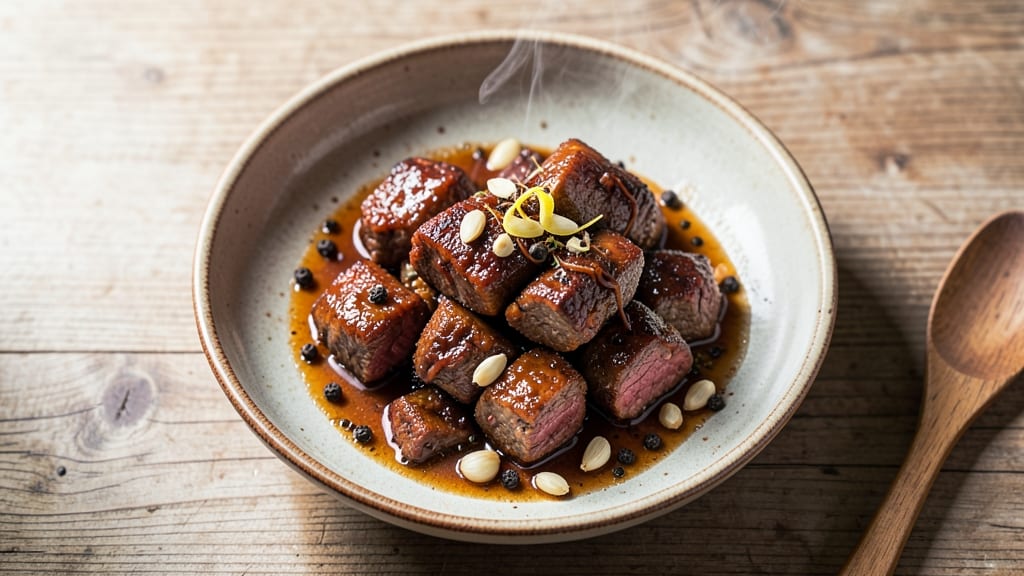
This beef agujas recipe brings the bold, tangy flavors of Filipino adobo to your table with tender beef skewers that develop a charred crust and sweet tomato glaze over slow cooking. The marinade—soy sauce, vinegar, garlic, and black peppercorns—transforms tough cuts into melt-in-your-mouth bites, while the caramelized edges add depth.
I’ve perfected this method to balance traditional techniques with modern convenience, whether you’re using a Dutch oven, Instant Pot, or oven. The beauty of beef agujas lies in its simplicity: just a few pantry staples and 30 minutes of prep before letting the flavors meld during cooking.
The vinegar tenderizes the beef while the soy sauce adds umami, and the garlic-peppercorn marinade infuses every skewer with aromatic warmth. Unlike traditional adobo stews, this version keeps the beef intact on skewers, making it ideal for serving as a centerpiece dish.
What you’ll end up with is juicy, caramelized beef with a glossy, slightly sticky glaze that clings to each bite. The skewered presentation elevates it from weeknight dinner to restaurant-worthy meal, perfect for gatherings or a special occasion.
Serve with steamed rice to soak up the rich sauce and a side of atchara for a tangy contrast. For those short on time, the Instant Pot version cuts cooking time in half without sacrificing flavor.
Once you try this, you’ll understand why beef agujas is a staple in Filipino homes—it’s hearty, flavorful, and impossible to resist. Let’s get cooking!
Ingredients for beef agujas
Pantry staples meet Filipino flavors—just eight ingredients transform tough beef into restaurant-style skewers.
| Ingredient | Amount | Notes |
|---|---|---|
| Beef Chuck Roast 🥩 | 2 lb | Cut into 1-inch cubes, boneless |
| Soy Sauce 🥢 | ½ cup | High-quality, preferably Japanese |
| White Vinegar 🍶 | ¼ cup | Distilled or apple cider |
| Garlic Cloves 🧄 | 8 cloves | Minced, fresh preferred |
| Black Peppercorns 🌶️ | 1 tbsp | Crushed, whole preferred |
| Brown Sugar 🍚 | 2 tbsp | Light or dark, packed |
| Olive Oil 🫒 | 2 tbsp | Extra-virgin for richness |
| Tomato Paste 🍅 | 2 tbsp | Smooth, unsweetened |
| Wooden Skewers 🪵 | 8 whole | Soaked in water 30 minutes |
| Salt 🧂 | 1 tsp | Kosher or sea salt |
| Green Bell Pepper 🧅 | 1 whole | Cut into 1-inch chunks |
| Yellow Onion 🧅 | 1 whole | Cut into wedges |
| Fresh Cilantro 🌿 | ¼ cup | Chopped, for garnish |
The beef is everything here. Chuck roast delivers that melt-in-your-mouth texture—sirloin or ribeye stays too firm. Cut it into even 1-inch cubes so they cook uniformly. For the best soy sauce, grab Kikkoman or Yamasa from the Asian aisle—they’ve got that deep umami punch. The vinegar should be white distilled or apple cider—avoid balsamic, it’ll overpower the marinade. If you’re using wooden skewers, soak them in water for at least 30 minutes before threading the beef to prevent burning. Pro tip: Costco or Walmart often sell pre-cut beef chunks, saving you chopping time.
No soy sauce? Coconut aminos works in a pinch, though the flavor won’t be identical. Skip the vinegar? Lemon juice at double the amount adds brightness. The garlic-peppercorn marinade is non-negotiable—those crushed peppercorns add aromatic depth. For the tomato paste, Rao’s or Muir Glen are my go-tos, but any smooth paste will do. Bell peppers can be swapped for red or yellow, and onions? Red or white both work. Fresh cilantro is ideal, but if you’re out, dried oregano at half the amount gives a similar earthy note. The brown sugar caramelizes beautifully, but white sugar works too—just watch it closely to avoid burning.
Marinate the beef for at least 4 hours (overnight is best) to maximize tenderness. The skewers keep well in the fridge for 2 days before cooking, but the marinade flavor peaks at 24 hours. For leftovers, store the cooked skewers in an airtight container with a little extra marinade to keep them moist. They reheat beautifully—just warm in a 350°F oven for 10 minutes. Freeze uncooked skewers for up to 2 months by wrapping them tightly in plastic wrap and foil. The glaze thickens as it cools, so reheating helps restore that glossy finish.
Why You'll Love This Recipe
- No-Fuss Marinade: The beef soaks up that soy-vinegar mix in minutes—no fancy prep, just toss and let it sit. I swear, the acidity tenderizes it so well that even the toughest roast falls apart like butter.
- Umami Bomb: That combo of garlic, peppercorns, and soy sauce? It’s ridiculously addictive. The vinegar cuts through the richness, leaving you with a tangy, savory bite that lingers—exactly how beef should taste.
- Weeknight Workhorse: Serve it sliced over rice for dinner, shredded in tacos for lunch, or cold in sandwiches the next day. Honestly, I’ve made it for date night, potlucks, and lazy Sundays—it never lets me down.
- Budget Stretch: A single chuck roast feeds my family for days—leftovers reheat perfectly, and the marinade’s cheap ingredients mean I’m not breaking the bank. (Yes, even on a Tuesday night.)
Step-by-step instructions for spiced beef skewers
Transform tough beef into tender, caramelized skewers with a perfect balance of smoky, sweet, and tangy flavors.
Marinate the Beef for Maximum Tenderness
In a large bowl, combine the 2 lb beef chuck roast cut into 1-inch cubes, 0.5 cup soy sauce, 0.25 cup white vinegar, 2 tbsp brown sugar, 1 tbsp crushed black peppercorns, 1 tsp salt, and 8 minced garlic cloves. Mix thoroughly until every piece of beef is coated in the marinade. Here's the thing—this marinade does double duty: the acidity from the vinegar tenderizes the meat while the sugar and soy sauce create a caramelized crust.
Cover the bowl and refrigerate for at least 4 hours (overnight is even better). The longer it marinates, the more flavorful and tender your beef will become. I've found that the acidity breaks down the muscle fibers, ensuring each bite is melt-in-your-mouth tender. Don't skip this step—it's what transforms tough chuck roast into restaurant-quality skewers.
Assemble the Skewers with Vegetables
Soak the 8 wooden skewers in water for 30 minutes to prevent them from burning on the grill. Drain and discard the excess water. Thread the marinated beef cubes onto the skewers, alternating with 1-inch chunks of green bell pepper and yellow onion wedges. I like to start and end each skewer with a piece of beef to ensure even cooking and maximum flavor.
Arrange the skewers on a plate and let them sit at room temperature for 15 minutes before grilling. This brief resting period ensures even cooking and prevents the skewers from falling apart when you handle them. Here's a pro tip: if your skewers feel too loose, you can secure them with a small piece of kitchen twine tied around the top and bottom.
Grill to Perfectly Charred Crust
Preheat your grill to medium-high heat (about 400°F). Once the grill is hot, place the skewers on the grates, leaving space between each one for even cooking. Grill for 8-10 minutes, turning occasionally, until the beef is deeply browned and slightly charred on all sides. The key here is to let the skewers develop that beautiful crust—this is what gives beef agujas their signature smoky flavor.
Watch for flare-ups from the marinade—if the flames get too high, move the skewers to a cooler part of the grill. You want the beef to sear and caramelize, not burn. The vegetables should be tender-crisp, with slightly charred edges. Once the beef reaches an internal temperature of 145°F (use a meat thermometer), it's ready to be finished with the glaze.
Create the Sweet Tomato Glaze
While the skewers are grilling, heat 2 tbsp olive oil in a small saucepan over medium heat. Add 2 tbsp tomato paste and cook for 2-3 minutes, stirring constantly, until it darkens slightly and becomes fragrant. Pour in 0.25 cup white vinegar and 0.5 cup soy sauce from the marinade (reserve some for basting), then add 1 tbsp brown sugar to balance the acidity.
Simmer the mixture for 5-7 minutes until it thickens into a glossy, syrupy glaze. The glaze should coat the back of a spoon and have a rich, slightly tangy sweetness. If it's too thick, add 1-2 tablespoons of water to loosen it. This glaze is what ties all the flavors together—sweet, savory, and slightly tangy.
Finish with Glaze and Garnish
Once the skewers are off the grill, brush them generously with the tomato glaze, coating each piece of beef and vegetable evenly. Let the skewers sit for 2-3 minutes to allow the glaze to caramelize slightly and stick to the meat. This final step ensures every bite is packed with flavor and that beautiful glossy finish.
Garnish each skewer with 0.25 cup chopped fresh cilantro and serve immediately. The contrast of the bright herbs against the deep, caramelized beef and sweet glaze makes these skewers irresistible. Serve with warm pita bread or crusty naan to soak up any extra glaze. The result is a dish that's perfect for gatherings—juicy, flavorful, and full of texture.
Pro Tips For Making Beef Agujas
- Sear the Roast First: Hit that chuck roast with high heat until it’s deeply browned—no rushing here. The crust locks in flavor and keeps the meat from drying out later, especially since this dish relies on long, slow cooking to tenderize.
- Peel and Smash Garlic: Skip the minced garlic—peel those cloves whole, smash them with the flat side of your knife, and let them sit in the vinegar-soy mix for 10 minutes. The raw, pungent flavor softens and infuses better than pre-chopped bits.
- Don’t Crowd the Pan: If you’re braising, resist the urge to add all the liquid at once. Start with just enough to coat the bottom, then let the beef release its juices before adding the full vinegar-soy mixture—this builds deeper flavor layer by layer.
- Rest Before Slicing: Let the roast sit under foil for 5-10 minutes after cooking. Cutting into it too soon sends all the juices pooling out, and you’ll end up with dry, stringy agujas instead of tender, saucy slices. (Yes, even if you’re impatient like me.)
Wine and beer pairings for this beef agujas
Filipino Red Wine
For a true taste of the Philippines, pair your beef agujas with a Filipino red wine like Petron Red Blend or Lambrusco. These wines complement the dish’s sweet-savory glaze and charred crust beautifully.
The Lambrusco’s light tannins and fruity notes balance the soy and vinegar, while Petron Red Blend (made from local grapes) adds a rustic, earthy depth that mirrors Filipino flavors. 🍷
Crisp White Options
If you prefer white wine, a dry Riesling or Sauvignon Blanc works wonders. The acidity in these wines cuts through the richness of the glaze, cleansing your palate between bites.
I love a New Zealand Sauvignon Blanc—its citrus and herbal notes pair perfectly with the cilantro garnish. For a budget-friendly pick, Kim Crawford Sauvignon Blanc is a crowd-pleaser.
Beer Pairings
A light lager like San Miguel Pale Pilsen (a Filipino classic) or a crisp German Pilsner keeps the meal refreshing. The beer’s hoppy bitterness contrasts the sweet glaze, while its carbonation helps balance the dish’s richness.
For a bolder option, try a wheat beer—the banana and clove notes in Blue Moon Belgian White echo the garlic and peppercorns in the marinade.
Non-Alcoholic Choices
For a non-alcoholic match, sparkling limeade or hibiscus iced tea (sari-sari style) adds brightness. The tartness of limeade mirrors the vinegar in the glaze, while hibiscus tea’s floral notes complement the cilantro. Serve chilled over ice with a slice of lime for an authentic Filipino touch. 💛
Nutrition facts
Frequently asked questions
Can I use beef other than chuck roast for this recipe?
While chuck roast is ideal for its tenderness, you can use sirloin or ribeye if preferred. However, these cuts stay firmer—marinate them for 6-8 hours instead of 4 to ensure maximum tenderness. Avoid lean cuts like flank steak, as they dry out easily on skewers. For best results, stick with chuck or round roast for that melt-in-your-mouth texture.
How do I prevent the skewers from falling apart?
Soak wooden skewers in water for 30 minutes before using to prevent burning. For extra security, thread beef and veggies tightly, then tie each skewer with kitchen twine at both ends. If using metal skewers, ensure they're sturdy enough to hold 1-inch cubes without bending. Avoid overloading each skewer—space the ingredients evenly for even cooking.
Can I make beef agujas in the oven instead of grilling?
Preheat oven to 400°F and place skewers on a wire rack over a baking sheet. Bake for 12-15 minutes, turning occasionally, until beef reaches 145°F internally. For extra char, broil for 2-3 minutes at the end. The oven method works well for indoor cooking and gives similar results to grilling.
What’s the best way to store leftovers?
Store cooked skewers in an airtight container with a little extra marinade or glaze to keep them moist. They’ll stay fresh in the fridge for 3-4 days. For longer storage, freeze uncooked skewers (wrapped tightly) for up to 2 months. Reheat in a 350°F oven for 10 minutes or microwave for 1-2 minutes—just add a splash of water to restore moisture.
Is there a quicker marinating method?
For a 30-minute shortcut, use 1 tbsp baking soda in the marinade (remove after 30 minutes). However, the traditional 4+ hour marinade delivers the best tenderness. If short on time, try tenderizing beef cubes with a meat mallet before marinating for 2 hours. The acidity still works, but texture won’t be as perfect.