
Main Courses
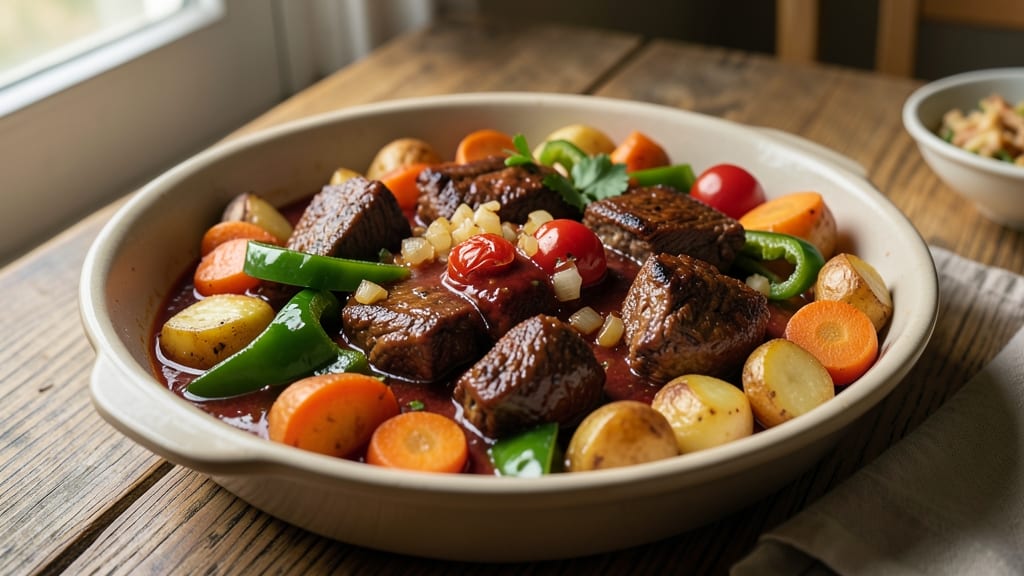
This beef afritada Pinoy recipe delivers the hearty, comforting flavors of Filipino home cooking in one simple pot. The secret lies in long, slow simmering that transforms tough beef into melt-in-your-mouth threads, all wrapped in a rich tomato-soy sauce.
I've perfected this version after countless batches—each one better than the last as the flavors meld together over time.
The dish combines tender beef with classic Filipino vegetables—potatoes, carrots, and bell peppers—that soak up the savory sauce perfectly. What makes this recipe special is the balance of sweetness from tomatoes, depth from soy sauce, and just the right amount of acidity from vinegar.
The result is a dish that's both comforting and restaurant-quality, perfect for family meals or special gatherings.
By the time you're done, you'll have perfectly tender beef that practically falls apart at the touch of a fork, surrounded by vegetables that are just soft enough to absorb all that delicious sauce.
The aroma alone will have everyone gathering around the table, and the first bite delivers on that promise of home-cooked Filipino comfort food.
Whether you're serving this for a weeknight dinner or a weekend feast, the recipe scales beautifully. The sauce thickens as it cooks, creating a perfect consistency that coats every bite.
Ready in about 1.5 hours, this beef afritada is the kind of dish that gets better with every reheat—making it ideal for meal prep too.
Ingredients for beef afritada pinoy
Six hearty ingredients transform into melt-in-your-mouth beef afritada that tastes like home.
| Ingredient | Amount | Notes |
|---|---|---|
| Beef Chuck Roast 🥩 | 2 lb | Cut into 1-inch cubes |
| Russet Potatoes 🥔 | 2 medium | Peeled and cut into chunks |
| Carrots 🥕 | 4 medium | Peeled and sliced into rounds |
| Green Bell Peppers 🌶️ | 2 whole | Sliced into strips |
| Onions 🧅 | 2 large | Thinly sliced |
| Tomatoes 🍅 | 6 medium | Crushed by hand |
| Soy Sauce 🥄 | ½ cup | Light or regular |
| Canned Tomatoes 🍅 | 1 can | 15 oz, San Marzano preferred |
| White Vinegar 💧 | ¼ cup | For acidity balance |
| Garlic Cloves 🧄 | 6 cloves | Minced |
| Olive Oil 🫒 | 2 tbsp | For browning beef |
| Bay Leaves 🌿 | 2 whole | For aromatic depth |
| Salt 🧂 | 1 ½ tsp | Kosher or sea salt |
| Black Pepper 🌶️ | ½ tsp | Freshly ground |
| Sugar 🍚 | 1 tbsp | Balances acidity |
The beef is everything here. Chuck roast breaks down beautifully into those signature threads, but sirloin or round work in a pinch. Most grocery stores carry pre-cubed chuck—Costco or Walmart have the best deals if you're feeding a crowd. Look for marbled pieces; they stay juicier. Potatoes and carrots should be firm with no soft spots. Russets hold up best for the potatoes, while orange carrots add a pop of color. The bell peppers? Green or red—whatever's on sale. Skip the pre-sliced kind; chopping them fresh keeps them crunchy longer.
No soy sauce? Coconut aminos or tamari work in a bind, though the flavor will be slightly different. Running low on tomatoes? Tomato paste plus water gets you close—just add a splash of vinegar to cut the thickness. Fresh garlic is ideal, but garlic powder at half the amount works if you're in a hurry. The vinegar matters—white vinegar or cane vinegar both work, but avoid apple cider if you want that classic tang. For the canned tomatoes, San Marzano is the gold standard, but any good-quality brand will do. The sugar balances the acidity, so don't skip it—even if you're not sweet-toothed, the dish needs that touch.
This stew tastes even better the next day as the flavors meld. Store leftovers in the fridge for up to 5 days or freeze for 3 months. I like to portion it into containers so lunches are ready to grab. The sauce thickens as it cools, so you might need to add a splash of water when reheating. If you're prepping ahead, brown the beef and set it aside—you can finish cooking later. The veggies can be prepped the night before too, just store them separately in the fridge.
Why You'll Love This Recipe
- One-Pot Magic: I swear by this—just toss everything in a deep pan, add soy sauce and tomato ketchup, and let it simmer. No fancy prep, no extra dishes. The beef practically melts into tender perfection while the veggies soften just enough to soak up all that savory sauce.
- Sauce Obsession: That tangy, slightly sweet sauce—tomato, soy, and a hint of vinegar—is the star. It clings to the beef like a hug and turns the potatoes into little flavor sponges. Honestly, I’ll eat it straight from the pot with a spoon.
- Weeknight Workhorse: Between us, this feeds my family of five and leaves leftovers for lunch. Double the batch, freeze half, and you’ve got a 30-minute meal later. It’s my go-to when I’m too tired to plan but still want something hearty.
- Budget Beef Boost: Chuck roast is cheap, but it tastes like a steakhouse cut after it braises in this sauce. Stretch it over rice, serve it cold in wraps, or reheat it for days—every bite feels special without breaking the bank. My wallet thanks me every time.
Step-by-step instructions for beef afritada Pinoy recipe
Here's how to make this classic Filipino stew with melt-in-your-mouth beef threads.
Brown the Beef for Maximum Flavor
Heat the 2 tablespoons olive oil in a large Dutch oven or heavy pot over medium-high heat. Working in batches to avoid crowding, add the 2 lb beef chuck roast cut into 1-inch cubes and brown on all sides. This should take about 5-7 minutes per batch—don't rush it. You're looking for a deep golden color on each piece, which builds rich flavor in the sauce.
Once all the beef is browned, remove it from the pot and set it aside. The browned bits left in the pot are called fond, and they'll dissolve into the sauce later, creating depth of flavor. If you don't brown the beef properly, your afritada will taste more like a simple stew than the rich, savory dish it should be.
Sauté the Aromatic Vegetables
In the same pot, add the 2 large onions sliced thinly and cook for 3-4 minutes until softened and translucent. Then add the 6 cloves garlic cloves minced and stir for 30 seconds until fragrant—don't let it burn. Next, add the 2 whole green bell peppers sliced into strips and cook for 2-3 minutes until slightly softened.
Add the 4 medium carrots sliced into rounds and the 2 medium russet potatoes cut into chunks. Stir everything together and cook for another 3 minutes to let the vegetables begin to soften. The goal here is to develop the flavors of the vegetables before adding the tomatoes and liquid, which will cook them further later in the process.
Build the Tomato-Soy Base
Add the 6 medium tomatoes crushed by hand to the pot. Stir well to combine with the vegetables. Then pour in the 0.5 cup soy sauce, 0.25 cup white vinegar, and 1 can canned tomatoes. Add the 1 tablespoon sugar, 1.5 teaspoons salt, and 0.5 teaspoon black pepper, along with the 2 whole bay leaves. Stir everything together thoroughly.
Return the browned beef to the pot and add enough water to just cover the ingredients—about 3 cups should do it. Bring the mixture to a gentle boil, then reduce the heat to medium-low and let it simmer uncovered for 45 minutes. This initial simmering time allows the flavors to meld and the beef to begin breaking down into tender threads.
Simmer to Tender Perfection
After the initial 45 minutes, check the consistency of the sauce. If it's too thin, let it simmer uncovered for another 15-20 minutes to reduce slightly. You want the sauce to coat the back of a spoon but still be saucy enough to serve over rice. The beef should be tender and easily pull apart with a fork—this is the hallmark of a well-made afritada.
Once the beef is tender, taste the sauce and adjust the seasoning if needed. You might need a bit more salt or a splash of vinegar to balance the flavors. The sauce should be rich, slightly tangy from the vinegar, and well-seasoned with the soy sauce and spices. The vegetables should be tender but still hold their shape slightly, not completely mushy.
Serve with Steamed Rice
Remove the 2 whole bay leaves before serving. Ladle the beef afritada over steamed white rice, making sure each serving gets plenty of those tender beef threads and flavorful sauce. The rice will soak up the delicious sauce, creating a perfect balance of flavors in every bite.
This dish is best served immediately while the beef is still tender and the sauce is hot. The combination of the rich, slightly sweet and tangy tomato-soy sauce with the tender beef threads makes this a true Filipino comfort food classic. Enjoy with extra rice and perhaps a side of steamed vegetables for a complete meal.
Pro Tips For Making Beef Afritada Pinoy
- SEAR THE BEEF FIRST: I learned this the hard way—skipping the sear means your chuck roast will turn out tough and bland. Use a hot pan with 2 tablespoons of oil and cook the beef in batches until deep brown (about 3-4 minutes per side). That crust locks in flavor and keeps the meat tender when it slow-cooks later.
- CUT POTATOES UNIFORM: Big chunks mean some potatoes stay rock-hard while others turn to mush. Aim for 1.5-inch cubes—big enough to hold shape but small enough to cook through. I used to eyeball it, but measuring with a knife (about the width of your palm) guarantees consistency.
- DON’T CROWD THE PAN: After searing the beef, resist the urge to dump everything in at once. Give the onions, peppers, and carrots space to brown for 5 minutes before adding the potatoes. Crowding steams the veggies instead of caramelizing them, and that’s where the real flavor hides.
- USE COLD POTATOES: Sounds weird, but it works—add raw, cold potatoes to the braise with the beef and sauce. They absorb the flavors better and cook through without breaking apart. I was skeptical until I tried it: the texture is perfect, and they soak up all that rich sauce.
Regional styles of these flavors
Classic Filipino Version
This is the most traditional approach to beef afritada, where the sauce is built entirely around tomatoes, soy sauce, and vinegar. The key is using San Marzano canned tomatoes for their sweet, rich flavor and balancing the acidity with 1 tablespoon sugar.
I always add 2 bay leaves for that classic aromatic depth that makes this dish taste like home. The vegetables—potatoes, carrots, and bell peppers—are cooked until tender but still hold their shape slightly, so they don't turn to mush. 🌶️
Manila-Style Adaptation
In Manila, many home cooks add hard-boiled eggs to the stew during the last 10 minutes of cooking. The eggs soak up the flavorful sauce and add a creamy texture that contrasts beautifully with the tender beef.
Another Manila twist is using 1 tablespoon of calamansi juice (or lime juice) instead of some of the vinegar—this brightens the sauce without overpowering it.
I've found that adding ½ cup of coconut milk at the end gives the sauce a luxurious richness that still keeps it light enough to serve over rice.
Visayan Regional Twist
The Visayan region often includes beef liver in their afritada, adding about ½ lb of liver along with the beef. The liver cooks quickly, so it's added in the last 15 minutes of simmering.
They also tend to use more vinegar—up to ⅓ cup—to give the sauce a sharper tang. Another Visayan staple is green papaya (about 1 cup diced) added in the final 10 minutes of cooking.
The papaya adds a refreshing crunch that cuts through the richness of the beef and sauce.
Modern Fusion Approach
For a contemporary take, I like adding 1 tablespoon of fish sauce along with the soy sauce to deepen the umami flavor. Some modern versions also include 1 cup of mushrooms (shiitake or cremini) for an earthy note.
To make it even more interesting, I've experimented with adding 1 teaspoon of ground coriander and ½ teaspoon of turmeric to the sauce for a subtle, aromatic complexity. These additions work beautifully while staying true to the dish's comforting essence. 💫
Pampanga Specialty
The Pampanga region is famous for its rich, slightly sweet sauces, and their version of afritada often includes 1 tablespoon of banana ketchup mixed into the sauce. They also use 1 tablespoon of annatto seeds (achuete) to give the sauce a beautiful golden color and a subtle earthy flavor.
Another Pampanga touch is adding 1 tablespoon of bagoong (shrimp paste) at the end for a funky, salty depth. This version is sweeter and more complex, perfect for those who enjoy bold flavors with a touch of sweetness.
Nutrition facts
Frequently asked questions
Can I use a different cut of beef instead of chuck roast?
Yes! While chuck roast is ideal for its marbling and tenderness, you can use sirloin, round, or even flank steak cut into thin strips. For tougher cuts like round, increase simmering time by 15-20 minutes to ensure perfect tenderness. Avoid lean cuts like tenderloin—they'll turn out dry.
Why does my beef afritada sauce turn out too thin?
The sauce may be too thin if you didn't simmer long enough or used too much liquid. Try reducing it uncovered over medium-low heat for an extra 15-20 minutes, stirring occasionally. For next time, use just enough water to cover the ingredients by ½ inch instead of fully submerging them. A thicker sauce coats the beef better!
How can I make this dish vegetarian?
Replace the beef with firm tofu or extra-firm tofu cut into cubes, and marinate in soy sauce for 30 minutes before cooking. Use mushrooms (shiitake or portobello)** instead of beef for a meatier texture. Keep all other ingredients the same—just reduce simmering time to 25 minutes since plant-based proteins cook faster.
Can I make beef afritada in a slow cooker?
Brown the beef first, then transfer everything to a 6-quart slow cooker. Cook on low for 6-7 hours or high for 3-4 hours. The slow cooker's gentle heat makes the beef extra tender. Add a splash of water if the sauce gets too thick during cooking. Perfect for hands-off meal prep!
What's the best way to reheat leftovers?
Reheat in a pot over medium-low heat with 2-3 tablespoons of water to prevent drying. Stir occasionally until hot (5-7 minutes). For microwave reheating, cover with a damp paper towel and heat in 1-minute intervals, stirring between each. The sauce thickens when cold, so adding liquid helps restore the perfect consistency.