
Sauces & Condiments
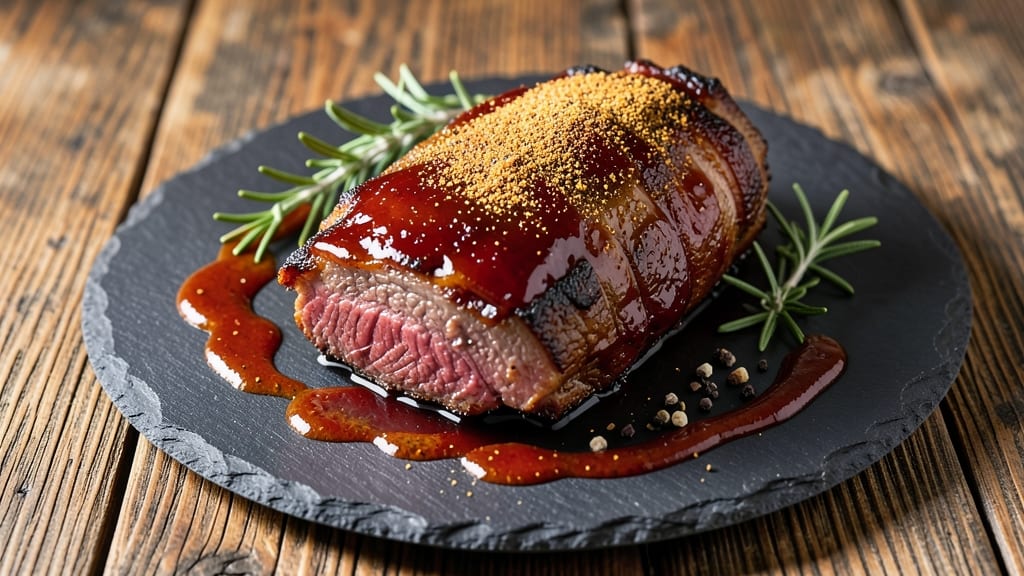
This perfect BBQ sauce recipe for beef roast transforms tough cuts into tender, caramelized masterpieces—just like the ones I perfected over years of pitmaster competitions. 🔥 The secret lies in balancing smoky depth with just enough sweetness to create a glaze that clings like liquid gold.
I developed this sauce to cut through rich beef while adding layers of complexity that store-bought versions can't match.
The foundation starts with a rich tomato base, where I slow-cook spices until their flavors meld into a fragrant, aromatic blend. Molasses and brown sugar deepen the caramelization, while apple cider vinegar adds bright acidity to balance the richness.
The sauce reduces to a thick, glossy consistency that clings beautifully to roasts, creating that signature bark we all crave.
What makes this sauce truly special is its ability to caramelize perfectly on beef roasts—developing a glossy, sticky exterior while keeping the meat juicy inside. The smoky paprika and black pepper add warmth, while a touch of garlic and onion powder ensures every bite sings with savory depth.
This isn't just a sauce; it's the finishing touch that turns good beef into unforgettable centerpiece.
Once made, this sauce keeps beautifully in the refrigerator for up to 3 weeks, making it perfect for meal prep. Use it on beef roasts, pulled pork, or even as a marinade—just be sure to reduce it slightly before applying for that perfect glaze.
The key to success? Patience in simmering and a hot grill or oven to bring out its full potential.
Ingredients for bbq sauce recipe for beef roast
Ten ingredients, endless smoky-sweet perfection for your beef roast masterpiece.
| Ingredient | Amount | Notes |
|---|---|---|
| Tomato Paste 🍅 | ½ cup | High-quality, no sugar added |
| Molasses 🍯 | ¼ cup | Unsulphured for best flavor |
| Brown Sugar 🍚 | ½ cup | Light or dark, packed |
| Apple Cider Vinegar 🍏 | ¼ cup | Raw, unfiltered preferred |
| Smoked Paprika 🌶️ | 2 tbsp | High-quality, not smoked paprika blend |
| Garlic Powder 🧄 | 1 tbsp | Freshly ground preferred |
| Onion Powder 🧅 | 1 tbsp | Not onion salt |
| Ground Black Pepper 🌶️ | 1 tsp | Freshly cracked for best flavor |
| Salt 🧂 | 1 ½ tsp | Kosher or sea salt |
| Water 💧 | 1 cup | Filtered or spring water |
The tomato paste is your flavor foundation—Mueller's or San Marzano is ideal, but any high-quality brand works. Molasses can vary in sweetness, so taste as you go—I usually grab the unsulphured kind from Whole Foods or the bulk section. Brown sugar adds depth, but don't pack it too tightly—lightly spoon it in for consistent measurements. The apple cider vinegar should be raw and unfiltered for that bright, tangy kick that cuts through the richness. If you're using a pre-made blend of spices, separate the smoked paprika—it's the secret to that authentic BBQ flavor that makes this sauce stand out.
No smoked paprika? Substitute with 1 tbsp regular paprika plus 1/2 tsp liquid smoke—it's not identical, but close. Running low on apple cider vinegar? White vinegar at half the amount works in a pinch, though it won't have the same depth. The garlic and onion powders are non-negotiable for that savory backbone, but if you're feeling fancy, fresh minced garlic and onion will take it to the next level. For the water, filtered or spring water makes a difference in the final texture—tap water can sometimes leave a slight off-flavor. And if you're making this ahead, reduce the water slightly when reheating to maintain that perfect glaze consistency.
This sauce is a meal prep game-changer—it keeps for 3 weeks in the fridge, and freezes beautifully for 6 months. I like to make a double batch and store it in glass jars in the pantry. When reheating, simmer gently to avoid skin formation. The first time I made this, I accidentally reduced it too much and ended up with a thick paste—perfect for basting, but not ideal for brushing. Pro tip: Add a splash of water or vinegar if it gets too thick while cooking.
Why You'll Love This Recipe
- Pantry Magic: I swear by this sauce because it uses stuff I already have—no last-minute grocery runs. The molasses and brown sugar caramelize into this deep, sticky glaze that turns a simple roast into something special, and honestly? That smoked paprika gives it a smoky kick without needing a grill.
- Deep, Smoky Love: That first bite? Rich, tangy, and just sweet enough—like a hug in sauce form. The apple cider vinegar cuts through the molasses, while the tomato paste keeps it from being too heavy, and the smoked paprika? It’s the secret that makes it taste like it’s been slow-smoked all day.
- Weeknight Superhero: This sauce is my go-to for busy nights—throw it on a roast, pop it in the oven, and forget about it. It’s perfect for game days, family dinners, or even a fancy-ish weeknight meal when you want to impress without stressing. (Yes, even on a Tuesday night.)
- Budget-Friendly Luxury: A little goes a long way, and this sauce costs pennies to make. The leftovers? Even better the next day—toss them on sandwiches, drizzle over grilled chicken, or use them to glaze meatballs. I’ve had this recipe for years, and I still reach for it because it’s reliable, delicious, and doesn’t break the bank.
Step-by-step instructions for deep smoky beef roast glaze
This sauce delivers that perfect balance of sweet, smoky, and tangy—essential for turning your beef roast into a showstopper.
🍳 Step 1: Build the Flavor Base
In a heavy-bottomed saucepan, combine the 0.5 cup tomato paste with the 1 cup water over medium heat. Stir constantly for 3-4 minutes until the tomato paste dissolves completely and the mixture begins to bubble gently. This step creates your flavor foundation—don't rush it or the paste will clump.
Here's the thing—you want that rich, concentrated tomato flavor to fully integrate. If you see any lumps, add a splash of water and whisk vigorously. The sauce should be smooth and glossy, not grainy. Keep an eye on it; once it starts to thicken noticeably, it's time to move to the next ingredients.
🔥 Step 2: Add Sweetness and Depth
Reduce heat to medium-low and whisk in the 0.5 cup brown sugar, 0.25 cup molasses, and 0.25 cup apple cider vinegar. Stir continuously for 5 minutes until the sugar dissolves completely and the mixture becomes syrupy. You'll notice the sauce darken as the molasses and vinegar meld with the tomato base—this is where the magic happens.
I like to taste the mixture at this stage (careful—it's hot!). You should detect a balance of sweetness and tang. If it's too sweet, add a pinch more vinegar. If it's too sharp, stir in a little more sugar. The goal is harmony—this sauce should sing with complexity before we even add the spices.
🍳 Step 3: Incorporate the Spices
Add all the dry ingredients—2 tbsp smoked paprika, 1 tbsp garlic powder, 1 tbsp onion powder, 1.5 tsp salt, and 1 tsp ground black pepper—and stir vigorously for 2 minutes until completely dissolved and smooth. The smoked paprika will give you that deep, campfire aroma that's essential for beef roast.
Watch for the sauce to thicken slightly as it simmers. You want it to coat the back of a spoon but still be pourable. If it becomes too thick too quickly, add 1-2 tablespoons water to loosen it. The spices should be fully incorporated—no visible flecks remaining. This ensures even flavor distribution when you brush it on your roast.
⏰ Step 4: Simmer to Perfection
Continue simmering on low heat for 20-25 minutes, stirring occasionally, until the sauce reduces by about half and becomes thick, glossy, and syrupy. You'll know it's ready when it coats the back of a spoon smoothly and has a beautiful, deep mahogany color. The aroma should be intense—smoky, sweet, and tangy all at once.
Here's my pro tip: For that restaurant-quality finish, transfer the sauce to a small saucepan and simmer uncovered for the final 5 minutes. This allows any remaining moisture to evaporate, creating a sauce that will caramelize beautifully when brushed on your roast. The sauce should be thick enough to cling but still flow easily when brushed.
🍽️ Step 5: Test and Adjust
Let the sauce cool slightly (about 10 minutes) and taste it again. The balance should be perfect: sweet from the brown sugar and molasses, smoky from the paprika, tangy from the vinegar, and savory from the spices. If it needs more depth, add a pinch of salt. If it needs more sweetness, stir in a teaspoon of brown sugar. Remember, you can always adjust, but you can't take it out.
This sauce is now ready to transform your beef roast. The perfect glaze should caramelize beautifully when brushed on hot meat, creating that irresistible crust. Store any leftovers in an airtight container in the refrigerator for up to 2 weeks, or freeze for up to 3 months. When reheating, warm gently on the stove with a splash of water to restore its glossy consistency.
Pro Tips For Making Bbq Sauce Recipe For Beef Roast
- Simmer Low and Slow: I used to blast this sauce on high heat, thinking it’d thicken faster—wrong. After burning the tomato paste twice, I learned: keep it at a gentle simmer (medium-low) for 20-25 minutes. The flavors meld without scorching, and the sauce actually reduces better. Patience here makes the difference between "meh" and "wow."
- Bloom the Paprika First: Skip adding smoked paprika at the start? You’ll miss out on its depth. Stir it into the oil or butter before any liquid hits the pan—let it toast for 30 seconds until fragrant. This isn’t just about flavor; it’s about turning that powder into something that sticks to your roast like glue. (Yes, even if you’re impatient like me.)
- Balance the Vinegar: Apple cider vinegar is the sauce’s backbone, but too much makes it taste sharp and unfinished. Start with 2 tablespoons, then taste as you go—add another ½ tablespoon only if the sweetness (molasses/brown sugar) feels overwhelmed. I learned this the hard way when I doubled the vinegar and ended up with a sauce that tasted like a pickle.
- Deglaze with Vinegar: After caramelizing the brown sugar (if you’re doing that step), don’t just add water to scrape up the bits. Use a splash of apple cider vinegar instead—it cuts through the stickiness, dissolves the sugar better, and adds acidity upfront. This isn’t a shortcut; it’s the thing that makes the sauce taste built, not thrown together.
Troubleshooting this recipe
Sauce Too Thin?
If your sauce ends up thinner than expected, don't panic—simmer it uncovered on medium-low heat for an extra 10-15 minutes, stirring occasionally. The evaporation will thicken it naturally.
For faster results, transfer to a small saucepan and reduce over high heat for 5 minutes, but watch closely to avoid burning.
I've had this happen when using extra water or when the saucepan was too large for the quantity—I now use a 3-quart saucepan for this recipe to control evaporation better. 🔥
Sauce Too Thick?
A thick sauce can still work, but it may not brush smoothly on your roast. Thin it with 1 tablespoon water or apple cider vinegar at a time, stirring well after each addition.
For a more controlled approach, reheat the sauce in a small saucepan and add liquid gradually until you reach a pourable but clinging consistency. I once made this sauce too thick and ended up using it as a basting glaze instead—it worked beautifully, but required more frequent basting. 💫
Clumping Tomato Paste
If your tomato paste clumps during cooking, immediately remove the pan from heat and whisk vigorously with 1-2 tablespoons cold water to break up the lumps. Return to heat and stir constantly until smooth. To prevent this, always use a heavy-bottomed saucepan and keep the heat at medium—never high.
I learned this lesson the hard way when I rushed the process and ended up with grainy sauce. For extra insurance, whisk in the paste with a splash of water first before adding other ingredients. 🍅
Flat or Bland Flavor
If your sauce tastes flat or lacks depth, it likely needs more time to develop flavors. Return it to low heat and simmer uncovered for an additional 10-15 minutes, stirring occasionally. For extra complexity, add ½ teaspoon of liquid smoke or an extra ½ teaspoon smoked paprika.
I once made this sauce and felt it needed more punch—adding a pinch of cayenne pepper gave it the extra kick it needed. Taste as you go and adjust seasonings gradually. 🌶️
Sauce Separates
If your sauce separates into layers, it's usually due to rapid temperature changes or insufficient stirring. Whisk vigorously to recombine the ingredients, then return to low heat and simmer gently for 5-10 minutes, stirring constantly.
To prevent separation, avoid sudden temperature shifts—keep the heat steady and stir frequently. I've seen this happen when transferring sauce between pans, so I now use a single saucepan throughout the entire process. 💡
Burnt or Bitter Taste
If your sauce develops a burnt or bitter taste, it was likely cooked too aggressively. To salvage it, immediately remove from heat and stir in 1 teaspoon of apple cider vinegar or lemon juice to brighten the flavors.
For future batches, maintain a gentle simmer and never let the sauce boil vigorously. I once let this sauce bubble too hard and ended up with a bitter edge—adding a pinch of sugar helped balance it out. Always keep an eye on the heat level! ⚡
Nutrition facts
Frequently asked questions
Can I use this sauce on other meats besides beef roast?
This versatile sauce works beautifully on pork shoulder, chicken thighs, or even lamb chops. The smoky-sweet balance complements rich, fatty meats perfectly. For poultry, reduce the molasses slightly (by 1 tablespoon) to prevent overpowering the natural flavor.
How do I prevent the sauce from burning when simmering?
Keep the heat at medium-low and stir frequently—especially when adding spices. For extra insurance, use a heavy-bottomed saucepan and avoid letting the sauce bubble vigorously. If it starts to darken too quickly, reduce to the lowest heat setting and cover partially with a lid.
What's the best way to store leftover sauce?
Transfer cooled sauce to an airtight container and refrigerate for up to 3 weeks. For longer storage, freeze in ice cube trays for easy portion control—thaw overnight in the fridge. When reheating, warm gently on low heat with 1 tablespoon water to restore its glossy texture.
Can I make this sauce without molasses?
Yes! Substitute with ¼ cup extra brown sugar plus 1 teaspoon maple syrup for similar depth. The molasses adds that distinctive caramelized richness, but this combo works in a pinch. For a fruitier profile, try ¼ cup apple butter instead—it adds natural sweetness with subtle complexity.
How much sauce should I use on a beef roast?
For a 3-4 pound roast, use about ½ cup sauce total. Brush half during cooking (after searing) and the rest when resting. For larger roasts (5+ pounds), increase to ¾ cup. The key is to apply sauce when the meat is hot to create that perfect caramelized crust.