
Sauces & Condiments
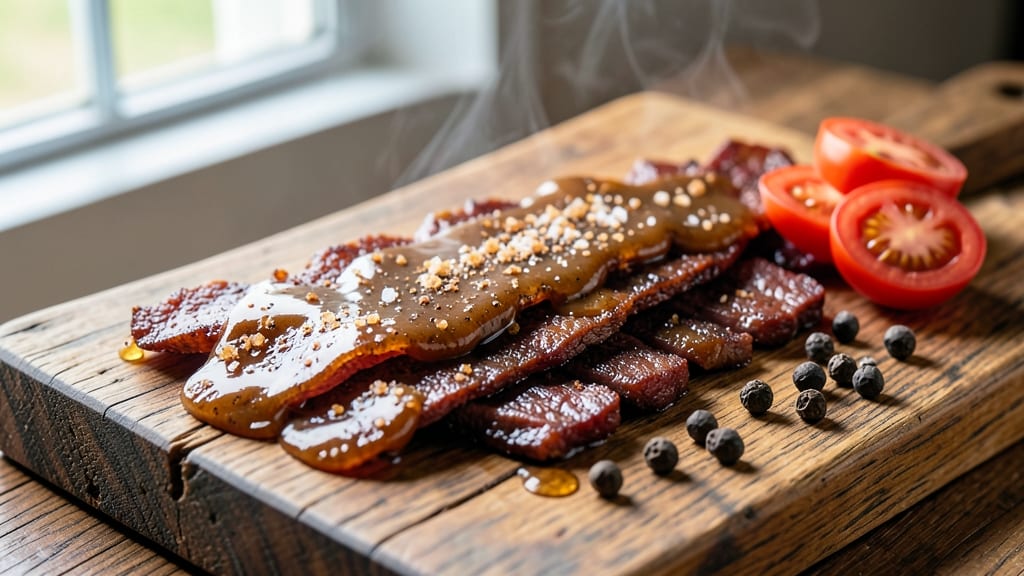
This BBQ sauce beef jerky recipe transforms tough cuts into smoky-sweet, shelf-stable protein that rivals your favorite store-bought—except you control the heat and flavor. 🔥 After years of perfecting my pitmaster techniques, I’ve developed a method that delivers jerky with a perfect balance of tangy BBQ, caramelized edges, and tender bites.
The secret lies in the marinade: a bold blend of BBQ sauce, Worcestershire, and brown sugar that penetrates deep while keeping the texture just right.
What sets this recipe apart is the two-stage curing process—first a salt cure to draw out moisture, then the BBQ marinade to infuse flavor. You can dry it in a dehydrator, smoker, or even your oven (with precise temperature control), giving you flexibility for any kitchen setup.
Safety is critical here: proper drying times prevent bacteria while preserving that perfect chewy texture.
The result? Jerky with a deep, smoky-sweet profile that’s rich enough to stand alone but versatile enough for tacos, salads, or trail mix. The BBQ sauce marinade caramelizes slightly during drying, creating a sticky, flavorful crust that clings to every slice.
It keeps for weeks in the pantry, making it ideal for meal prep or camping trips.
For presentation, slice the jerky into uniform strips and package it in airtight containers. Optional: finish with a quick smoke on the grill or in your smoker for an extra layer of depth. This isn’t just jerky—it’s a flavor-packed protein upgrade you’ll reach for every time.
Ingredients for bbq sauce beef jerky
Tough cuts and bold flavors make this jerky recipe unforgettable.
| Ingredient | Amount | Notes |
|---|---|---|
| Beef Top Round Roast 🥩 | 2 lb | Tough cut preferred, trimmed of fat |
| BBQ Sauce 🍅 | 1 ½ cups | Store-bought or homemade, thick consistency |
| Worcestershire Sauce 🥫 | 2 tbsp | Classic or vegetarian version |
| Light Brown Sugar 🍚 | ½ cup | Packed tightly for accurate measure |
| Kosher Salt 🧂 | 2 tbsp | Diamond Crystal preferred |
| Black Peppercorns 🌶️ | 1 tbsp | Freshly cracked, coarse grind |
| Garlic Powder 🧄 | 1 tbsp | Freshly ground preferred |
| Onion Powder 🧅 | 1 tbsp | For depth of flavor |
| Smoked Paprika 🌶️ | 1 tbsp | For smoky depth |
| Liquid Smoke 🔥 | 1 tsp | Optional for extra smokiness |
| Apple Cider Vinegar 🍎 | 1 tbsp | For tangy balance |
| Granulated Sugar 🍬 | 1 tbsp | For extra sweetness |
| Cornstarch 🌾 | 1 tbsp | For tenderizing meat |
The beef cut matters most here—top round roast delivers that perfect chewy texture without turning mushy. Look for pre-cut roasts at Costco or your local butcher shop, where they can trim excess fat for you. If buying whole, ask for the leanest portion—fat renders out during drying and can make jerky greasy. For a quicker prep, pre-sliced jerky steaks work too, though they cost more. The key is even thickness (about 1/4-inch) for consistent drying. If your butcher won’t slice it, grab a delicate meat slicer or ask the fish counter—they often have one.
No thick BBQ sauce? Mix 1 cup ketchup with 1/2 cup molasses and 1 tbsp smoked paprika for a quick substitute. The Worcestershire sauce is non-negotiable—it carries that umami punch, but if you’re vegetarian, coconut aminos work in a pinch. For extra heat, swap half the brown sugar for turbinado sugar (it’s coarser and caramelizes better). The cornstarch might seem odd, but trust me—it tenderizes the meat slightly during the curing process. If you’re short on time, skip the salt cure and go straight to the BBQ marinade, but drying times will be longer. The apple cider vinegar adds tang—substitute with lemon juice if that’s what you’ve got, but reduce to 1 tsp to avoid over-acidifying.
This jerky keeps for 3-4 weeks in an airtight container in a cool, dark pantry. For longer storage, vacuum-seal portions and freeze for up to 6 months. The first batch is always the best—once you’ve mastered the drying times, you’ll nail it every time. I like to slice into uniform strips with a sharp serrated knife (a meat slicer makes this easier) and arrange them on parchment-lined trays for even drying. If using a dehydrator, rotate trays halfway for consistent results. For smoker enthusiasts, finish with 10 minutes of indirect smoke at 165°F for that extra depth—just don’t skip the final drying stage.
Why You'll Love This Recipe
- Five-Ingredient Magic: I swear by this combo—just beef, BBQ sauce, Worcestershire, a pinch of sugar, and salt. No fancy marinades or overnight soaks. The Worcestershire cuts through the smokiness of the BBQ sauce while the sugar caramelizes into a sticky, sweet-savory crust that’s ridiculously easy to achieve.
- Smoky-Sweet Addiction: That balance of tangy BBQ and deep umami from the Worcestershire? It’s the kind of flavor that makes you reach for seconds without thinking. The brown sugar isn’t just for sweetness—it creates this perfect chewy texture that’s crispy on the edges but tender inside. (Yes, even my picky husband can’t resist.)
- Grab-and-Go Protein: This jerky keeps forever in the fridge and travels like a dream—no reheating, no mess. I pack it in lunches, toss it in backpacks for hikes, or stash it in the car for road trips. Honestly, it’s saved me from forgetting snacks more times than I can count.
- Budget Meal Upgrade: Top round roast is cheap, and a little goes a long way. A single pound makes enough jerky to feed my family for days, and the BBQ sauce and Worcestershire are pantry staples. I’ll be real: it’s my go-to way to stretch a budget without sacrificing flavor. Plus, the leftovers? They’re just as good cold as they are fresh.
Step-by-step instructions for BBQ sauce beef jerky
This method transforms tough beef into tender, smoky-sweet jerky with a perfect balance of sweetness and spice.
👨🍳 Step 1: Prepare the Meat Marinade
In a large bowl, combine the 1.5 cups BBQ sauce, 2 tbsp Worcestershire sauce, 1 tbsp apple cider vinegar, 1 tbsp granulated sugar, 1 tbsp cornstarch, 1 tsp liquid smoke, 1 tbsp smoked paprika, 1 tbsp onion powder, 1 tbsp garlic powder, and 1 tbsp freshly cracked black peppercorns. Mix thoroughly until the cornstarch dissolves completely—this creates a thick, clinging marinade that penetrates the meat.
Add the 2 lb beef top round roast, breaking it into ¼-inch thick strips (about ½-inch wide). The thinner the strips, the faster they'll cook and the more tender they'll become. Toss the beef strips in the marinade until they're fully coated, pressing gently to ensure the mixture adheres to every surface. Let it marinate for at least 4 hours (overnight is ideal) in the refrigerator—this allows the marinade to tenderize the meat and infuse deep flavor.
🔥 Step 2: Prep the Dehydrator or Oven
If using a dehydrator, set it to 160°F—this gentle heat ensures even drying without overcooking the edges. Arrange the beef strips in a single layer on the dehydrator trays, leaving ¼-inch space between each piece for proper air circulation. If using an oven, prop the door open 2-3 inches with a wooden spoon and set the temperature to 175°F (this mimics dehydrator conditions).
Here's the thing—jerky needs to dry thoroughly to prevent spoilage, but it also needs to stay tender. Too hot, and it'll turn tough; too cool, and it'll stay moist. The 160-175°F range is the sweet spot for perfect texture. Preheat your dehydrator or oven for 10 minutes before adding the beef to ensure consistent temperature.
⏰ Step 3: Dry the Jerky to Perfection
Place the marinated beef strips on the dehydrator trays or oven racks, ensuring they don't overlap. Dehydrate for 4-6 hours, checking periodically. The jerky is done when it's leather-like and no longer sticky to the touch—press a piece gently; it should feel firm but still pliable, not rubbery. If using an oven, you may need to rotate the trays halfway through for even drying.
This is where patience pays off. Jerky needs to dry completely to last, but over-drying makes it tough. If the edges start to darken too quickly, cover them loosely with parchment paper to slow the process. The center should remain slightly moist but not wet—this ensures chewy texture, not dryness.
🔪 Step 4: Cool and Store for Maximum Freshness
Once the jerky reaches the perfect texture, remove it from the dehydrator or oven and let it cool completely on a wire rack. This cooling step is crucial—it prevents condensation from forming when you store it, which can lead to spoilage. Cut any uneven edges with a sharp knife for a clean finish.
Store the jerky in an airtight container or vacuum-sealed bag. It'll keep for up to 2 weeks in the pantry or 3 months in the freezer. The smoky-sweet flavor will deepen over time, making it even more delicious as the days pass. For best results, consume within 1 month for peak tenderness and flavor.
Pro Tips For Making Bbq Sauce Beef Jerky
- Slice Against the Grain: The first time I made this jerky, I sliced with the grain and ended up with chewy, tough strips—no one wants that. Grab your knife and cut perpendicular to the muscle fibers for tender, bite-sized pieces that actually hold up during dehydrating. (Yes, it takes a few extra minutes, but trust me on this.)
- Marinate Overnight—Seriously: I used to rush the marinade, thinking 4 hours would do. Wrong. The sugar and Worcestershire need time to penetrate that tough top round. Toss your beef with the BBQ sauce, Worcestershire, and brown sugar, then let it sit in the fridge for at least 12 hours. The flavor will be deeper, and the meat will be more pliable when slicing.
- Dehydrate at 160°F: Too high, and your jerky burns before it’s done. Too low, and you’re waiting forever. Lock your dehydrator—or oven—at 160°F (145°F if you’re using a fan). Check after 4 hours; it’s ready when it’s leathery but still slightly flexible, not brittle. (If you’re oven-drying, prop the door open with a wooden spoon.)
- Skip the Crowding: I learned this the hard way—stacking wet jerky strips on the dehydrator trays creates steam, which slows drying and risks mold. Stagger your slices so they’re not touching, even if it means two batches. Your jerky will dry faster and stay safe to eat. (Pro move: Line trays with parchment for easy cleanup.)
Regional styles of this recipe
Texas-Style Smoky Sweet
Inspired by Central Texas BBQ traditions, this version swaps the marinade’s brown sugar for 2 tbsp molasses and adds 1 tsp chipotle powder to deepen the smokiness.
I like to finish the jerky with a quick 10-minute smoke using hickory chips in my pellet grill at 225°F—just before the final drying stage. This creates that signature "Texas bark" while keeping the interior tender.
Serve with pickled jalapeños on the side for a true Lone Star State experience. 🔥
Carolina Vinegar-Kissed
For a tangier twist, boost the marinade with 2 tbsp apple cider vinegar and 1 tbsp hot sauce (like Crystal Hot Sauce). Add 1 tsp cayenne pepper for heat and a pinch of ground mustard for complexity.
After dehydrating, brush the cooled jerky with a thin layer of honey and let it set for 10 minutes—this creates a glossy finish reminiscent of Carolina BBQ. Pair with coleslaw for a Southern-inspired snack. 🌶️
Kansas City Spiced
Kansas City BBQ lovers will appreciate this version with 1 tbsp coffee grounds and 1 tsp cinnamon in the marinade. The coffee adds depth, while cinnamon gives a subtle warmth.
After drying, I like to lightly toast the jerky in a 350°F oven for 5 minutes to caramelize the sugars further. This mimics the sweet-and-smoky profile of KC’s famous ribs. Serve with baked beans for a full BBQ spread. ✨
California Grilled
For a West Coast take, reduce the BBQ sauce marinade by 2 tbsp and add 1 tbsp Dijon mustard and 1 tsp dried rosemary. After dehydrating, grill the jerky strips over indirect heat on a gas grill at 300°F for 5 minutes to add grill marks.
Finish with a sprinkle of flaky sea salt and fresh cilantro. This version works perfectly in wraps or salads with avocado. 🌿
Hawaiian Pineapple Glaze
This tropical twist replaces half the BBQ sauce with ½ cup pineapple juice and adds 1 tbsp grated fresh ginger. After dehydrating, brush the jerky with a glaze made from 2 tbsp pineapple jam and 1 tsp soy sauce, then broil for 2 minutes to set.
The sweet-tangy combo pairs beautifully with macadamia nuts for a unique snack mix. 🍍
Midwest Maple-Bourbon
For a cozy Midwestern flavor, mix 2 tbsp pure maple syrup and 1 tbsp bourbon (or non-alcoholic maple extract) into the marinade. After drying, drizzle with maple glaze and toast in a 375°F oven for 3 minutes to enhance the caramel notes.
This version shines in cheese boards or as a trail mix ingredient. 🍁
Nutrition facts
Frequently asked questions
Can I use pre-made jerky seasoning instead of making my own marinade?
You can, but the flavor won't be as rich or balanced. Pre-made seasonings often lack the depth of BBQ sauce and Worcestershire. If you do use one, add 1 extra tablespoon of BBQ sauce and 1 teaspoon of brown sugar to compensate for the missing sweetness and umami. For best results, stick with the marinade recipe—it's designed to create that signature smoky-sweet flavor profile.
How do I know when my jerky is fully dried?
The jerky is done when it feels leather-like and isn't sticky to the touch. Press a piece gently—it should bend slightly but not feel moist. A good test is the finger test: if a small piece doesn't leave any moisture on your finger, it's ready. Over-drying makes jerky tough, so check every 30 minutes during the last hour of drying.
Can I make this jerky without a dehydrator?
Use your oven set to 175°F with the door propped open 2-3 inches for airflow. Line a baking sheet with parchment paper and arrange strips in a single layer. Rotate trays halfway through for even drying. A smoker also works at 160-165°F—just avoid direct heat to prevent burning. The key is patience: oven drying takes 6-8 hours vs. 4-6 hours in a dehydrator.
Why did my jerky turn out too tough?
Over-drying or using meat that's too thick are the most common causes. For perfect texture, slice strips to ¼-inch thickness and dry at 160-175°F until just firm (not rubbery). If using lean beef like top round, the cornstarch in the marinade helps tenderize. For extra tenderness, try marinating overnight or adding 1 teaspoon of baking soda to the marinade (neutralizes tough meat fibers).
How can I add extra smokiness to my jerky?
For deeper smoke flavor, add 1 teaspoon of liquid smoke to the marinade, or finish drying in a smoker with hickory or applewood chips at 165°F for 10-15 minutes. Another trick: sprinkle ½ teaspoon of smoked paprika over the strips before drying. If you love bold smoke, try the Texas-Style Smoky Sweet variation from the regional styles section—it includes chipotle powder for extra depth.