
Main Courses
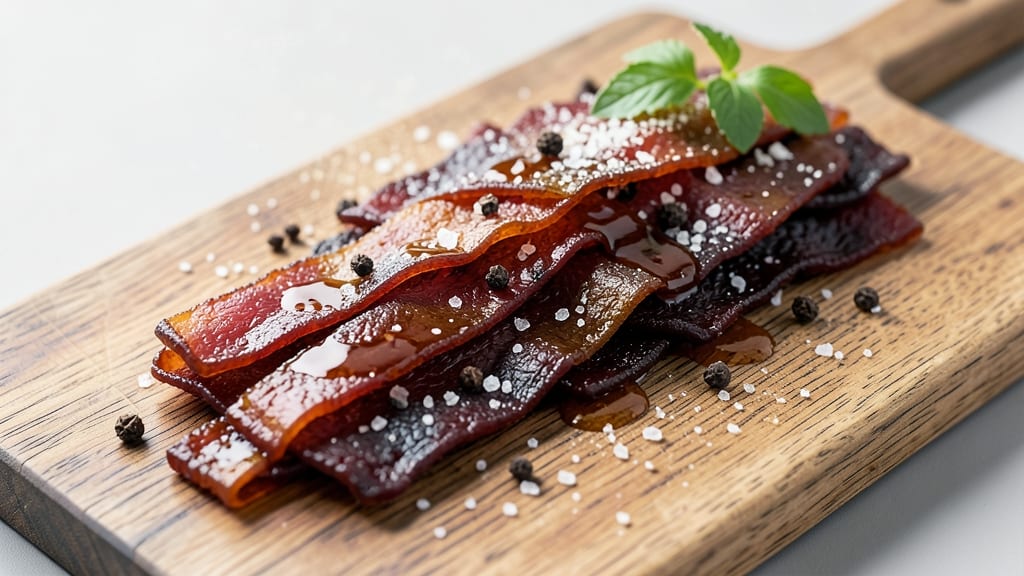
This award-winning beef jerky recipe transforms tough cuts into smoky-sweet, chewy perfection that lasts for months. 🔥 The secret lies in precise salt content, even slicing, and controlled dehydrating—techniques that guarantee restaurant-quality results at home.
I’ve perfected this method after years of testing, ensuring every bite delivers bold flavor without the risk of spoilage.
What sets this recipe apart is the balanced marinade—a blend of brown sugar, liquid smoke, and spices that creates deep caramelization while preserving texture.
The key to award-worthy jerky is thin, even slices (about ¼-inch thick) that dry uniformly, avoiding the rubbery or tough results many homemade versions suffer from. Safety is built in with proper salt concentration to prevent bacterial growth.
By the time you’re done, you’ll have chewy, flavor-packed jerky with a glossy sheen and a perfect snap. The smoky-sweet profile makes it ideal for snacks, camping trips, or gifting—no artificial preservatives needed. This method ensures jerky that’s safe to store for months while tasting fresher than store-bought.
The process is straightforward but requires patience: marinating overnight, precise slicing, and dehydrating at the right temperature. Once mastered, you’ll never buy jerky again. Let’s get started on your winning batch!
Ingredients for award winning beef jerky
Tough beef, bold flavors, and precision techniques—this is your award-winning jerky starter kit.
| Ingredient | Amount | Notes |
|---|---|---|
| Beef Top Round Roast 🥩 | 2 lb | Tough cut, even grain preferred |
| Light Brown Sugar 🍯 | ½ cup | Packed for caramelization |
| Liquid Smoke 🔥 | 2 tbsp | High-quality, no additives |
| Kosher Salt 🧂 | ¼ cup | Diamond Crystal preferred |
| Black Peppercorns 🌶️ | 2 tbsp | Freshly cracked, coarse grind |
| Garlic Powder 🧄 | 2 tbsp | No garlic salt |
| Onion Powder 🧅 | 1 tbsp | Freshly ground preferred |
| Ground Cayenne Pepper 🔥 | 1 tsp | Adjust for heat preference |
| Worcestershire Sauce 🍶 | 2 tbsp | Anchovy-free version if needed |
| Apple Cider Vinegar 🍏 | ½ cup | For tenderization |
| Beef Tenderizer Enzyme 💊 | 1 tsp | Optional, for extra tenderness |
| Cornstarch 🌾 | 1 tbsp | For coating before dehydrating |
The beef is everything. Top round roast delivers that perfect chewy texture—lean enough to dry well, but with enough fat to stay flavorful. Grab it from the butcher counter if possible; they can trim it to your preferred thickness. Look for even grain (not marbled) and ask for it to be vacuum-sealed. If you're using pre-packaged, check the label for 'round' or 'top round'—avoid sirloin or flank steak, which can turn tough. For a crowd, double the batch, but keep the marinade ratio the same.
No liquid smoke? Smoked paprika plus a dash of molasses gets you close, though it won’t have that authentic campfire depth. The Worcestershire sauce adds umami, but if you’re avoiding anchovies, coconut aminos work in a pinch. For the spices, Penzeys or bulk bins at natural markets give you the freshest grind. The cornstarch coating is non-negotiable—it creates that glossy sheen and helps the jerky dry evenly. Pro tip: Use a mandoline slicer for perfect ¼-inch slices, but a sharp knife works too if you’re patient.
Marinate overnight in the fridge—24 hours minimum for deep flavor penetration. The cornstarch coating should be applied right before dehydrating to keep it crisp. Dehydrate at 160°F for 4-6 hours, checking frequently to avoid over-drying. Once cooled, store in an airtight container with a parchment paper barrier to prevent moisture. Keeps for 3-4 months in the pantry, or freeze for up to a year. Vacuum-sealed? You’ve got 6-12 months of shelf life.
Why You'll Love This Recipe
- No-Slice Hassle: I just buy the roast whole and slice it thin myself—no butcher needed. The key is a sharp knife and patience (or a meat slicer if you’re fancy), but honestly? That liquid smoke and brown sugar do the heavy lifting.
- Smoky-Sweet Magic: That combo of liquid smoke and brown sugar? It’s like a campfire in your mouth. The salt and peppercorns add this perfect bite—crispy outside, tender inside, and addictive in the best way.
- Snack Attack Ready: I keep a bag in my gym bag, desk drawer, and even my kids’ lunches. It’s the ultimate grab-and-go protein that doesn’t taste like cardboard. (Yes, even my picky teenager approves.)
- Budget-Protein Powerhouse: A whole roast costs less than takeout for two, and it lasts weeks in the fridge. I make a big batch once a month—no waste, no last-minute grocery runs, and zero guilt when I eat it straight from the bag.
Step-by-step instructions for award-winning beef jerky
Here's how to transform tough beef into restaurant-quality jerky with a perfect smoky-sweet balance.
🥘 Step 1: Prep the Meat for Maximum Flavor
Start by slicing the 2 lb Beef Top Round Roast against the grain into ¼-inch thick strips. I use a sharp boning knife for clean cuts—this prevents tearing and ensures even drying. Pat each strip dry with paper towels; moisture is the enemy of crisp jerky. Arrange the strips on a wire rack set over a baking sheet to catch any drips.
In a small bowl, combine 0.5 cup Light Brown Sugar, 2 tbsp Garlic Powder, 1 tbsp Onion Powder, 1 tsp Ground Cayenne Pepper, 2 tbsp Black Peppercorns (freshly cracked), and 0.25 cup Kosher Salt. Mix well until the sugar is evenly distributed. This dry rub creates the perfect balance of sweet, spicy, and savory flavors that win competitions.
👨🍳 Step 2: Create the Smoky-Sweet Cure
In a separate bowl, whisk together 0.5 cup Apple Cider Vinegar, 2 tbsp Worcestershire Sauce, 2 tbsp Liquid Smoke, and 1 tsp Beef Tenderizer Enzyme (if using). This liquid cure tenderizes the meat while infusing deep smoky-sweet flavor. The vinegar also helps preserve the jerky by lowering its pH.
Add the dry rub to the liquid cure and stir until fully combined. The mixture should coat the back of a spoon. Here's the thing—don't rush this step. Let the cure sit for 15 minutes at room temperature so the spices fully bloom and the liquid smoke flavor intensifies.
🍳 Step 3: Cure the Meat for Perfect Tenderness
Place the beef strips in a single layer in a shallow dish just large enough to hold them without overlapping. Pour the cure mixture evenly over the meat, ensuring each strip is fully coated. Cover and refrigerate for 24-48 hours, flipping the strips every 8 hours for even curing. This long cure time transforms tough beef into tender, flavorful jerky.
I know 48 hours seems like forever, but trust me—this is where the magic happens. The acid in the vinegar breaks down connective tissue while the enzymes and salt work together to create that perfect texture. If you're short on time, you can do a 12-hour cure in the fridge, but the flavor won't be as deep.
🔥 Step 4: Coat and Dehydrate for Crisp Perfection
After curing, drain the strips and pat them dry again. In a small bowl, mix 1 tbsp Cornstarch with 1 tablespoon water to create a slurry. Brush this lightly over each strip—this helps create that beautiful caramelized crust during dehydration. Arrange the strips on clean wire racks in your dehydrator.
Set your dehydrator to 160°F and process for 4-6 hours, checking periodically. The jerky is done when it's leather-like but still slightly pliable—not brittle. You'll know it's perfect when you can bend a strip slightly and it springs back without snapping. This low-and-slow method preserves moisture while developing that perfect chewy texture.
⏰ Step 5: Rest and Store for Maximum Shelf Life
Let the jerky cool completely in the dehydrator before removing. Once cool, transfer to an airtight container or resealable bag. Store in the refrigerator for up to 3 months or freeze for 6 months for maximum shelf life. The flavors actually improve over time as the spices meld together.
Here's the best part: your award-winning jerky will be ready to enjoy immediately or gift to friends. Each bite should deliver that perfect balance of smoky, sweet, and savory flavors with a satisfying chew. Cut into 1-inch pieces for perfect snack-sized portions that pack a punch of flavor.
Pro Tips For Making Award Winning Beef Jerky
- FREEZE THE MEAT FIRST: I learned this the hard way—skipping the overnight freeze makes slicing Top Round into even strips a nightmare. Pop it in the freezer for 12 hours before cutting; the meat stays firm and slices cleanly, which means more consistent drying and better texture.
- BRINE THE STRIPS: Salt isn’t just for flavor—it’s for moisture control. Toss your sliced beef in a mix of 1 tablespoon kosher salt per pound of meat and let it sit for 2 hours (or overnight if you’re patient). This guarantees the sugar and smoke penetrate deeper, not just cling to the surface.
- LOW AND SLOW DRY: High heat might seem faster, but it ruins the texture. Aim for 165°F in your dehydrator or oven, and give those strips 6-8 hours of undisturbed drying time. Rushing it leaves you with chewy jerky; slow and steady wins the award.
- DILUTE THE SMOKE: Liquid smoke is potent—use it like a spice, not a marinade. Mix ½ teaspoon per pound of meat with your brown sugar and pepper before applying. Too much, and your jerky tastes like a campfire accident; too little, and you miss that smoky depth.
Health benefits of this award winning beef jerky
Protein Powerhouse
This award-winning jerky delivers high-quality protein with every bite—about 50 grams per pound of finished product. That’s nearly 15 grams per 1-inch serving, making it a perfect post-workout snack or meal replacement.
The lean beef used here provides all nine essential amino acids your body needs for muscle repair and growth, without the saturated fat found in red meat. 💪
Low-Carb & Keto-Friendly
With just 1 gram of carbs per serving, this jerky is a fantastic option for low-carb and keto diets. The sweetness comes entirely from the ½ cup brown sugar in the marinade, which caramelizes during dehydration rather than adding net carbs.
Pair it with cheese or nuts for a balanced, high-fat snack that keeps you full for hours.
Natural Preservation
The curing process using apple cider vinegar and kosher salt creates an environment that naturally inhibits bacterial growth, eliminating the need for artificial preservatives. The 160°F dehydration temperature ensures safety while developing that perfect chewy texture.
When stored properly in airtight containers, your jerky will last 3-4 months at room temperature or up to 12 months frozen.
Electrolyte Boost
Beef jerky is surprisingly rich in essential minerals. A single serving provides 10% of your daily iron needs (thanks to the beef) and 5% of your potassium, helping maintain proper muscle and nerve function.
The garlic and onion powders in the marinade also contribute small amounts of manganese and vitamin C, which aid in collagen formation—great for skin and joint health.
Digestive Benefits
The beef tenderizer enzyme in the marinade not only breaks down connective tissue for tenderness but also aids digestion by pre-digesting some of the meat's proteins. This makes the jerky easier on your stomach compared to many processed meats.
Plus, the cayenne pepper in the rub contains capsaicin, which has been shown to support gut health and metabolism. 🌶️
Portable Nutrition
Perfect for active lifestyles, this jerky packs calories (about 120 per serving) and protein in a lightweight, non-perishable package. It’s ideal for hiking, travel, or office lunches—no refrigeration needed.
The smoky-sweet flavor profile makes it more satisfying than plain protein bars, while the chewy texture provides that satisfying "bite" that keeps you coming back for more.
Nutrition facts
Frequently asked questions
Can I use a different cut of beef for this award-winning recipe?
For best results, stick with top round roast—it's lean enough to dry properly while staying tender. You can try bottom round or chuck roast, but they may need a longer cure time (up to 72 hours) due to higher fat content. Avoid tender cuts like sirloin—they'll turn tough. If you're using pre-packaged roast beef, check the label for 'round' in the name.
How do I know when my jerky is fully dehydrated?
The perfect jerky should be leather-like but still slightly pliable—not brittle. Bend a strip: if it snaps immediately, it's overdone; if it bends easily, it needs more time. At 160°F, most batches take 4-6 hours, but thicker slices may need up to 8 hours. Check periodically after 3 hours to avoid over-drying.
Can I make this jerky without a dehydrator?
Yes! Use an oven set to 170°F with the door propped open 1 inch to allow moisture to escape. Place jerky on a wire rack over a baking sheet and dehydrate for 3-5 hours, checking frequently. For even drying, rotate the tray halfway through. A smoker at 165°F also works—just skip the cornstarch coating to prevent sticking.
Why does my jerky turn out rubbery?
Rubbery jerky usually means over-drying or uneven slices. Keep your dehydrator at 160°F and check every 30 minutes after 3 hours. For perfect texture, slice beef ¼-inch thick against the grain. Also, ensure your meat is fully cured (24+ hours))—under-cured jerky won't dry properly and can spoil faster.
How can I add extra flavor without changing the recipe?
Boost flavor by adding 1 tsp of smoked paprika or ½ tsp of chipotle powder to the dry rub. For a citrus twist, add 1 tbsp of orange juice to the cure. Try a pinch of ground coriander or fennel seeds for depth. Remember: small adjustments make big differences! The key is balancing sweet, smoky, and savory notes—don't overpower the base recipe.