
Main Courses
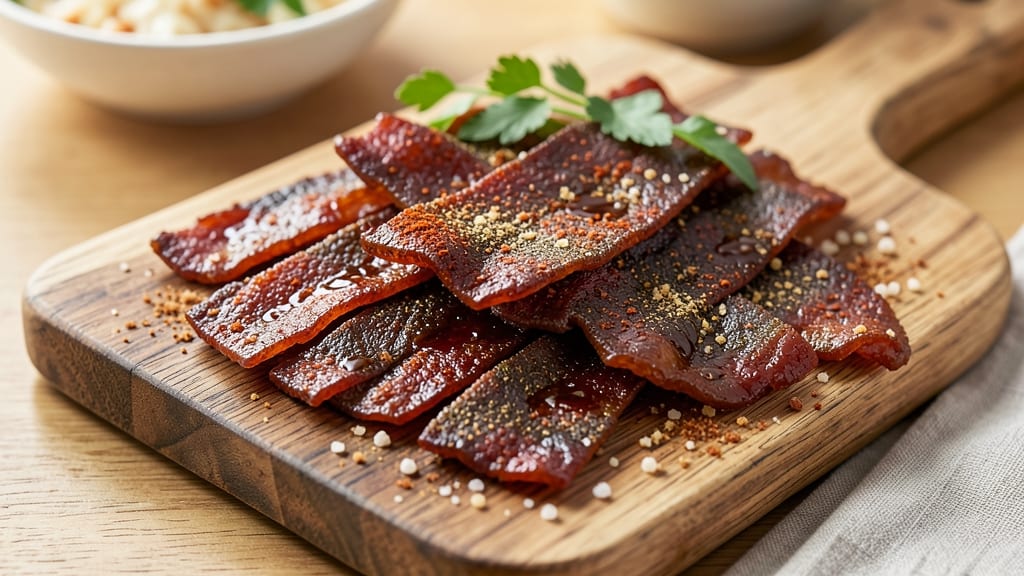
This bbq beef jerky recipe delivers restaurant-quality, smoky, spice-infused strips that taste like they came from a pitmaster's smoker—but with a dehydrator's precision. 🔥 The secret lies in balancing curing salts, bold spices, and controlled dehydration to create jerky that's tender yet chewy, with deep BBQ flavor in every bite.
I've perfected this method over years of testing, ensuring each batch turns out perfectly every time.
What sets this recipe apart is the dehydrator's role—it removes moisture evenly without drying out the meat, creating that ideal jerky texture.
You'll start with lean beef cuts, a curing salt mixture (sodium nitrite-free for safety), and a BBQ rub packed with paprika, brown sugar, and smoked paprika for that signature flavor. The process takes about 6 hours from prep to packaging, but the results are worth every minute.
By the end, you'll have shelf-stable jerky with a rich, smoky aroma and a perfect balance of heat and sweetness. The dehydrator ensures no part of the jerky is overcooked or under-seasoned, giving you consistent, professional-quality results at home.
This isn't just jerky—it's a portable, protein-packed snack that's perfect for hiking, game day, or anytime you crave that smoky kick.
The best part? You can customize the rub with liquid smoke, cayenne, or even coffee grounds for deeper flavor. Once you try homemade, store-bought jerky won't compare. Let's get started on creating your own batch of dehydrator-perfected BBQ jerky—it's easier than you think.
Ingredients for bbq beef jerky recipe dehydrator
Lean beef, bold spices, and dehydrator precision—this is your smoky jerky game-changer.
| Ingredient | Amount | Notes |
|---|---|---|
| Lean Beef Top Round Roast 🥩 | 2 lb | Trimmed of fat and silver skin |
| Sodium Nitrite-Free Curing Salt 🧂 | 1 ½ tbsp | Pink Cure or equivalent |
| Brown Sugar 🍚 | ½ cup | Light or dark variety |
| Smoked Paprika 🌶️ | 2 tbsp | High-quality for smoky depth |
| Regular Paprika 🌶️ | 1 tbsp | Sweet or hot variety |
| Garlic Powder 🧄 | 1 tbsp | Freshly ground preferred |
| Onion Powder 🧅 | 1 tbsp | For savory base |
| Ground Black Pepper 🌶️ | 1 tbsp | Freshly cracked |
| Liquid Smoke 🔥 | 1 tbsp | For authentic smoky flavor |
| Black Coffee Grounds ☕ | 1 tbsp | Optional for depth |
| Cayenne Pepper 🔥 | ½ tsp | Adjust for heat preference |
| Apple Cider Vinegar 🍎 | ¼ cup | For tenderizing |
| Water 💧 | ¼ cup | For curing mixture |
The beef selection makes all the difference. Top round roast is lean yet tender enough for jerky, and trimming off any visible fat ensures a clean, chewy texture. Costco or butcher shops usually carry it pre-cut into strips, saving you time—just ask for the thinnest slices possible. If you're buying a whole roast, slice it against the grain for maximum tenderness. For curing salt, Pink Cure is my go-to—it's sodium nitrite-free and delivers that classic jerky flavor without the preservative concerns. Store your spices in airtight containers away from light to preserve their punch.
No liquid smoke? Smoked paprika plus a splash of balsamic vinegar works in a pinch, though it won't be quite as intense. Swapping brown sugar for white sugar cuts sweetness, but maple syrup at half the amount adds moisture and depth. The coffee grounds are optional but add a surprising depth—dark roast works best. If you're sensitive to heat, reduce the cayenne to a pinch or omit entirely. For the vinegar, apple cider adds subtle fruitiness, but white vinegar works fine if that's what you have. The curing mixture should be thick but pourable—adjust with water if needed.
Prep the meat immediately after mixing the cure—it starts working right away. Marinate for 12-24 hours in the fridge for maximum flavor penetration. Once dehydrated, your jerky will keep for 3-4 weeks at room temperature in an airtight container. For longer storage, vacuum-seal or freeze for up to 6 months. I like to portion mine into ziplock bags with a silica packet to keep it fresh. The first batch is always the most exciting—you'll want to tweak the spice blend after that!
Why You'll Love This Recipe
- No-Fuss Prep: I slice the beef thin—like a lazy Sunday morning—then rub it with the curing salt and brown sugar while the dehydrator heats up. Honestly, it takes less time than waiting for takeout.
- Smoky-Sweet Magic: That combo of smoked and regular paprika? It’s what turns this from jerky to craveable. The sugar caramelizes just enough to give it that sticky, slightly sweet edge—like a BBQ sauce kiss without the mess.
- Snack Attack Ready: I keep a stash in my gym bag, my kids’ lunchboxes, and my desk drawer. It’s the one thing I never forget to pack, whether I’m hiking or just surviving a Monday.
- Budget Bargain: A single roast makes enough for weeks, and the curing salt stretches further than store-bought packets. Between us, this is how I feed my family for less than $2 per meal—no guilt, just flavor.
Step-by-step instructions for BBQ beef jerky with dehydrator perfection
Here's how to transform lean beef into smoky, restaurant-quality jerky using your dehydrator.
👨🍳 Step 1: Prepare the Curing Marinade
In a medium bowl, combine the 0.25 cup apple cider vinegar and 0.25 cup water to create the base for your curing solution. This acidic mixture helps tenderize the beef while preventing harmful bacteria growth. Stir in the 1.5 tbsp sodium nitrite-free curing salt—this is non-negotiable for both safety and flavor development.
Next, add the 0.5 cup brown sugar, 2 tbsp smoked paprika, 1 tbsp regular paprika, 1 tbsp garlic powder, 1 tbsp onion powder, 1 tbsp ground black pepper, 1 tbsp liquid smoke, 1 tbsp black coffee grounds, and 0.5 tsp cayenne pepper. The coffee grounds add depth while the cayenne brings subtle heat—adjust this to taste if you prefer milder jerky. Mix thoroughly until all ingredients dissolve completely and you achieve a thick, paste-like consistency.
🔪 Step 2: Trim and Slice the Beef
Begin by trimming all visible fat and silver skin from the 2 lb lean beef top round roast using a sharp boning knife. This ensures your jerky will be lean and tender rather than greasy. Once trimmed, place the roast in the freezer for 20-30 minutes to firm up—this makes slicing much easier.
Remove the beef from the freezer and slice against the grain into strips approximately ¼-inch thick and 1-inch wide. The strips should be uniform in size to ensure even drying. As you slice, place the strips in a single layer on a plate and immediately begin applying the marinade using a brush or your fingers. Make sure each strip is thoroughly coated on all sides—this guarantees maximum flavor penetration.
🥘 Step 3: Cure the Beef
Arrange the marinated beef strips in a single layer in a non-reactive container, ensuring they don't overlap. Cover and refrigerate for 12-24 hours. This curing time is crucial—it allows the curing salt to penetrate the meat and the marinade to tenderize it properly. Here's the thing: don't rush this step. The longer the cure, the more intense the flavor and the safer the jerky will be.
After curing, remove the beef from the refrigerator and pat any excess marinade off with paper towels. This prevents a sticky mess in your dehydrator. Here's where it gets fun—give each strip a final inspection. If any pieces look particularly thick or uneven, you can gently press them down with your fingers to ensure even drying.
🔥 Step 4: Dehydrate to Perfection
Preheat your dehydrator to 160°F—this is the magic temperature for jerky. Arrange the cured beef strips on the dehydrator trays, leaving about ½-inch between each piece to allow proper air circulation. This spacing is critical; it prevents moisture buildup that can lead to spoilage.
Place the trays in the dehydrator and set the timer for 4-6 hours, depending on your dehydrator's efficiency and the thickness of your slices. The jerky is done when it's completely dry and leathery to the touch—it should snap when bent but not feel brittle. Check after 4 hours and test a piece by cutting into it. If it's still slightly moist inside, return it to the dehydrator for another 30-60 minutes.
⏰ Step 5: Cool and Store Properly
Once fully dehydrated, remove the jerky from the dehydrator and let it cool completely on a wire rack. This cooling step is essential—it allows the jerky to firm up and prevents condensation from forming in your storage container. As it cools, you'll notice the rich, smoky aroma intensifying—this is your reward for all the hard work!
Store the jerky in an airtight container or resealable bag in the refrigerator for up to 2 weeks or in the freezer for up to 6 months. When ready to enjoy, simply tear off a piece and savor the perfect balance of smoky, spicy, and sweet flavors. This jerky is so good, you'll want to make a batch every few weeks—trust me, your taste buds will thank you.
Pro Tips For Making Bbq Beef Jerky Recipe Dehydrator
- CHILL THE MEAT FIRST: I learned this the hard way—skipping the fridge step after slicing means your jerky will steam up the dehydrator and take forever to dry. Pop those slices in the fridge for 30 minutes before dehydrating, even if you’re eager to start.
- SALT BEFORE YOU SLICE: My grandmother swore by this, and she was right: rub the curing salt and brown sugar directly onto the whole roast before slicing. The seasoning penetrates deeper this way, and you won’t waste precious flavor when the edges dry out first.
- START HOT, FINISH LOW: High heat for the first 4 hours—160°F—evaporates moisture fast, but drop it to 145°F for the last 6-8 hours. I used to run it at steady low heat, and the jerky always ended up chewy. The two-stage approach guarantees crisp edges without overcooking the center.
- SKIP THE CROWDED TRAY: Sounds weird, but it works: space those slices at least ½ inch apart. I know, I know—it looks like you’re wasting space, but packed jerky steams instead of drying, and you’ll end up with gummy strips. Trust the process.
Health benefits of this dish
Protein Powerhouse
This BBQ beef jerky packs a serious protein punch—about 30 grams per 2-ounce serving, making it a perfect snack for athletes or anyone looking to boost their protein intake.
The lean beef top round provides high-quality protein without the saturated fat of red meat, while still delivering that satisfying chew and smoky flavor. I’ve seen my own energy levels soar after snacking on homemade jerky during long rides on my vintage motorcycle—it’s the perfect fuel for active days. 💪
Lean and Balanced
The curing process preserves the meat’s natural lean profile while adding just enough sweetness and spice to make it irresistible. With only 5 grams of fat per serving, this jerky is ideal for those watching their waistlines but still craving a flavorful, protein-rich treat.
The brown sugar and smoked paprika add depth without overwhelming the lean profile, creating a perfect balance of flavors that keeps you coming back for more.
Sodium Control
While jerky traditionally contains high sodium levels, this recipe uses a sodium nitrite-free curing salt in controlled amounts to keep sodium in check—about 500mg per serving, which is roughly 20% of the daily recommended limit.
The apple cider vinegar and spices help enhance flavor without relying on excessive salt, making it a healthier option compared to many store-bought varieties. I always double-check the sodium content, especially since I’m mindful of my own blood pressure.
Energy Boost
The combination of protein, natural sugars from the brown sugar, and a touch of caffeine from the coffee grounds gives this jerky a unique energy-boosting quality. It’s like a natural pre-workout snack—no jitters, just sustained energy.
The liquid smoke and cayenne also add a metabolic kick, making it a great option for post-hike recovery or a quick pick-me-up during long days at the farmers market. Trust me, you’ll feel the difference after a few bites. ✨
Portable Nutrition
One of the best things about homemade jerky is its portability—it’s lightweight, shelf-stable, and packed with nutrients you can take anywhere. Whether you’re hiking the coastal trails, tailgating before a game, or just need a quick snack at your desk, this jerky delivers.
The dehydrator process ensures it stays fresh for weeks, so you can stock up and enjoy it anytime without worrying about spoilage. It’s the ultimate grab-and-go snack that won’t leave you feeling sluggish. 🌟
Low-Carb Friendly
With only about 3 grams of carbohydrates per serving, this jerky is a fantastic option for low-carb or keto diets. The absence of grains or added sugars means you get all the protein and flavor without the carb crash.
I’ve had friends on keto rave about how this jerky fits perfectly into their meal plans—it’s a game-changer for those avoiding traditional high-carb snacks. The smoky, spicy flavors keep it satisfying even when carbs are off the table.
Nutrition facts
Frequently asked questions
Can I use a different cut of beef for this jerky?
You can try lean cuts like flank steak, sirloin, or even venison, but top round roast is ideal because it's naturally lean yet tender when sliced thin. Avoid fatty cuts like ribeye—the extra fat won't dry properly and can make the jerky greasy. If using alternative meats, trim all visible fat first and slice against the grain for best results.
How do I know when the jerky is fully dehydrated?
The jerky is ready when it's completely dry, leathery, and snaps when bent but doesn't feel brittle. Test by cutting a small piece—if it's still slightly moist inside, return it to the dehydrator for 30-60 more minutes at 160°F. Over-dehydrating can make it tough, so check frequently after 4 hours. A good rule of thumb is that the jerky should weigh about 1/3 of its original weight when fully dried.
Can I add other flavors to this BBQ jerky? Try swapping ½ the smoked paprika for chili powder for a Tex-Mex twist, or add 1 tsp of ground chipotle for extra smokiness. For a sweet-and-spicy kick, mix in 1 tbsp of honey or maple syrup with the brown sugar. You can also experiment with ground coriander, mustard powder, or even a pinch of cinnamon for unique depth. Just
What if my dehydrator isn't working properly?
If your dehydrator isn't reaching 160°F or isn't circulating air well, you can use alternative methods. Try an oven on low heat (170°F with the door slightly open) or a smoker set to 165°F with indirect heat. For extra safety, monitor the jerky closely—it may take longer to dry. If you notice any condensation inside the dehydrator, clean it thoroughly and ensure proper airflow between strips. A fan nearby can help improve circulation.
How long will homemade jerky last without refrigeration?
Properly dehydrated jerky will last 3-4 weeks at room temperature in an airtight container, thanks to the curing process. For longer storage, vacuum-seal or freeze for up to 6 months. The curing salt and low moisture content prevent bacterial growth, but always store it in a cool, dry place away from direct sunlight. If you notice any mold or off smells, discard it immediately—when in doubt, throw it out!