
Soups & Stews
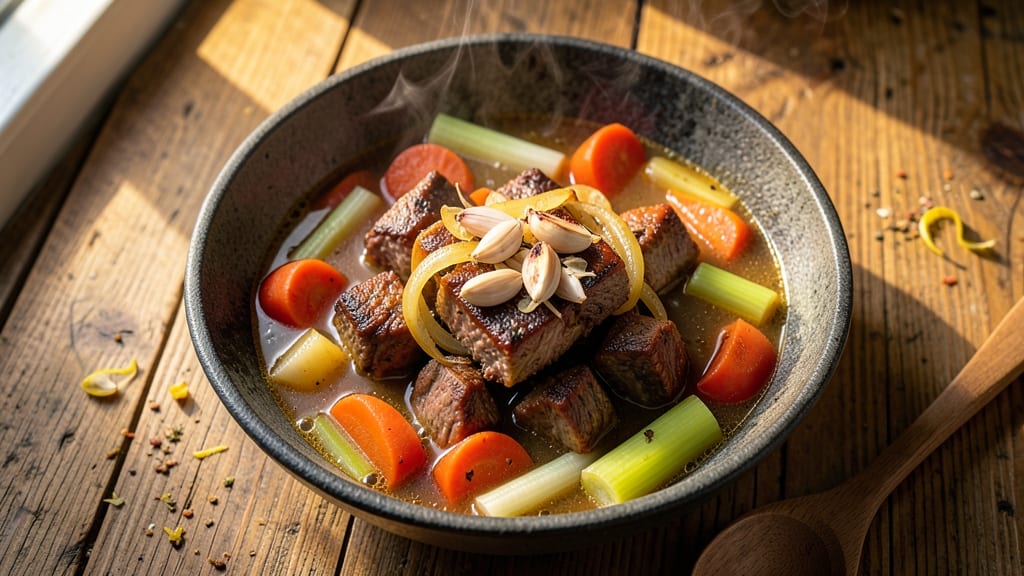
This basic beef stew recipe without wine delivers all the deep, savory richness of a classic while keeping the flavors bold and satisfying. The secret lies in a rich beef stock foundation, caramelized vegetables, and a blend of herbs that build layers of flavor without alcohol. I've perfected this version over years of testing—no wine needed, just pure, comforting taste that warms you from the inside out.
What makes this recipe work is the proper technique: browning the beef thoroughly to develop deep flavor, sautéing vegetables until caramelized for natural sweetness, and letting the stew simmer slowly to meld everything together.
The result is tender beef, perfectly softened vegetables, and a broth so rich it practically tastes like it's been simmering all day—even though it only takes about 3 hours of active cooking time.
By the time you serve this stew, you'll have a dish that's hearty enough for a family dinner but simple enough for a weeknight meal. The beef becomes fork-tender, the vegetables melt into the broth, and every spoonful delivers that satisfying combination of meaty, herby, and slightly sweet flavors.
It's the kind of meal that makes your kitchen smell like home and leaves everyone asking for seconds.
The best part? This recipe scales perfectly for any gathering—whether you're feeding four or twelve. Serve it with crusty bread for soaking up every last drop of that flavorful broth, or pair it with mashed potatoes for a complete comfort food experience.
The flavors only get better as it sits, making it ideal for meal prep too. Let's get started on creating this timeless classic.
Ingredients for basic beef stew recipe without wine
Pantry staples and fresh veggies combine to create this deeply satisfying beef stew.
| Ingredient | Amount | Notes |
|---|---|---|
| Chuck Roast 🥩 | 2 lb | Cut into 1-inch cubes |
| Yellow Onion 🧅 | 1 whole | Chopped into wedges |
| Carrots 🥕 | 4 medium | Peeled, cut into chunks |
| Celery Stalks 🧅 | 3 whole | Chopped into 1-inch pieces |
| Garlic Cloves 🧄 | 4 cloves | Minced for depth |
| Beef Stock 💧 | 4 cups | Homemade or high-quality |
| Tomato Paste 🍅 | 2 tbsp | For umami richness |
| All-Purpose Flour 🌾 | 1 tbsp | For thickening |
| Dried Thyme 🌿 | 1 tsp | Fresh works too |
| Dried Rosemary 🌿 | 1 tsp | Crushed between fingers |
| Salt 🧂 | 1 ½ tsp | Kosher or sea salt |
| Black Pepper 🌶️ | 1 tsp | Freshly ground |
| Olive Oil 🫒 | 2 tbsp | For browning beef |
| Fresh Parsley 🌿 | ¼ cup | Chopped for garnish |
The chuck roast is the star here—look for well-marbled cuts at Costco or your local butcher for that melt-in-your-mouth texture. Pre-cut cubes save time, but if you're buying a whole roast, ask for it to be cut into 1-inch pieces. The beef stock is non-negotiable: homemade or high-quality store-bought makes all the difference. I always grab Kitchen Basics or Pacific Foods beef stock from the grocery store—they've got great flavor without any weird additives. For the vegetables, fresh is best, but frozen carrots and celery work in a pinch (just thaw and drain well).
No fresh thyme or rosemary? Dried works perfectly—just use about one-third the amount. Short on tomato paste? A splash of balsamic vinegar or extra beef stock adds depth. The flour is just for thickening, but if you're avoiding gluten, cornstarch works too. For the parsley, fresh is ideal, but dried parsley at half the amount gets you close. The olive oil matters for browning—avoid the cheap stuff. A good quality olive oil gives you that rich, toasty flavor that makes the stew sing.
This stew tastes even better the next day—make extra for leftovers. Store in an airtight container in the fridge for up to 5 days or freeze for 3 months. I like to portion it into individual containers so I can grab a serving straight from the freezer. The flavors meld beautifully over time, so don't rush it. If you're prepping ahead, you can brown the beef and sauté the vegetables a day in advance, then finish cooking when you're ready to serve.
Why You'll Love This Recipe
- One-Pot Magic: That’s it—just a big pot, a few veggies, and the chuck roast. No wine, no fuss, no extra pans. I swear, the only chopping I do is the onions and celery, and even that’s quick if you’re not picky about dice size.
- Deep, Rich Flavor: Between us, the slow simmer of the garlic and carrots softens the beef until it’s fall-apart tender. The onions caramelize just enough to add this sweet, earthy depth—no wine needed, just pure savory goodness.
- Leftovers for Days: This stew only gets better after sitting overnight. Honestly, I make a double batch on Sundays because my kids beg for it through the week. Freeze half if you’re not a repeat eater (though I doubt it).
- Budget-Friendly Powerhouse: Chuck roast is cheap, carrots and celery last forever, and this feeds six for under $15. That’s a meal that actually fills you up without draining your wallet—or your patience.
Step-by-step instructions for hearty beef stew without wine
This method delivers deep, savory flavor using simple pantry staples and proper technique.
Brown the Chuck Roast in Batches
Heat the 2 tablespoons olive oil in a large Dutch oven over medium-high heat. Working in batches if needed, add the 2 lb chuck roast cut into 1-inch cubes—don't overcrowd the pan. Let each piece sear for 2-3 minutes per side until deeply browned and crispy on the edges. This step builds rich flavor through the Maillard reaction.
As you brown, remove the cooked beef and set it aside. If the pan gets too crowded, reduce heat slightly to prevent steaming instead of browning. You'll want golden-brown beef with some caramelized bits sticking to the bottom—this is your flavor foundation.
Sauté Vegetables and Aromatics
In the same Dutch oven (no need to wipe it clean), add the 1 whole yellow onion chopped into wedges, 4 medium carrots cut into chunks, and 3 whole celery stalks chopped into 1-inch pieces. Cook over medium heat for 5-6 minutes, stirring occasionally, until the vegetables begin to soften and the onion turns translucent.
Add the 4 cloves minced garlic and cook for another 30 seconds until fragrant. Here's where the aromatics transform from raw to deeply flavorful. If the vegetables start sticking, add 1-2 tablespoons of beef stock to deglaze and keep everything moist.
Build the Stew Base
Stir in the 2 tablespoons tomato paste and cook for 1 minute to deepen its umami flavor. Sprinkle the 1 tablespoon all-purpose flour over the vegetables and stir vigorously for 30 seconds to toast it lightly—this helps thicken the stew later. Pour in the 4 cups beef stock, scraping up any browned bits from the bottom with a wooden spoon.
Bring the mixture to a gentle boil, then reduce heat to low. Return all the browned beef to the pot and add the 1.5 teaspoons salt, 1 teaspoon black pepper, 1 teaspoon dried thyme, and 1 teaspoon dried rosemary. Here's where everything comes together—let it simmer uncovered for 30 minutes to allow flavors to meld.
Simmer Until Tender
After the initial 30 minutes, partially cover the Dutch oven and continue simmering for 1.5 to 2 hours until the beef is fork-tender and easily pulls apart. You'll know it's ready when the meat separates cleanly from the bone and the carrots are soft but still hold their shape.
Check the stew occasionally and add 1-2 tablespoons of water if it becomes too thick. The liquid should coat the back of a spoon but not be watery. If the stew reduces too much, you can always add a splash of stock later—it's better to have a bit more liquid than too little.
Finish and Garnish
Once the beef is tender, stir in the 0.25 cup chopped fresh parsley just before serving. This adds a bright finish that cuts through the richness. Taste and adjust seasoning if needed—sometimes the beef absorbs more salt than expected. Let the stew sit off the heat for 5-10 minutes before serving to allow flavors to settle.
Serve directly from the Dutch oven with crusty bread or over mashed potatoes. The stew should be thick enough to coat a spoon but still have enough liquid to create a luscious broth. Each bite should deliver tender beef, sweet carrots, and aromatic herbs in perfect harmony.
Pro Tips For Making Basic Beef Stew Recipe Without Wine
- SEAR THE ROAST FIRST: I learned this the hard way—skipping the sear means flavorless broth. Get your Dutch oven screaming hot, pat the chuck roast very dry, and let it sit untouched for 3-4 minutes per side until deep brown. That crust isn’t just for looks; it’s where the meat’s flavor dissolves into the stew.
- CUT VEGETABLES UNIFORM: I used to eyeball it, and half the carrots stayed rock-hard while the onions turned to mush. For this stew, chop all veggies into exactly 1-inch chunks—onions, carrots, celery—so they cook at the same pace. No one wants a stew where you’re picking out al dente celery stalks.
- DON’T OVERFILL THE POT: After burning three batches, I finally figured out: liquids should only come halfway up the roast. Too much water = bland, watery stew. Too little = dried-out meat. Aim for about 2 cups of liquid (broth + tomato paste) per pound of chuck, and let the meat release its own moisture as it cooks.
- SMASH THE GARLIC: My grandmother swore by this, and she was right: mincing garlic is fine, but smashing the cloves with the flat side of your knife releases more flavor. Do it right after peeling, then toss the whole smashed cloves into the pot—no need to fish out burnt bits later. Yes, even if you’re impatient like me.
Regional styles of basic beef stew recipe without wine
French Classic Approach
In France, beef stew often centers on bœuf bourguignon techniques—even without wine, you can capture that essence. Use red wine vinegar (just 1 tablespoon) to mimic acidity, and add 1 bay leaf and 2 sprigs fresh thyme for classic French depth.
The French also swear by browning the beef until deeply caramelized—this creates the signature fond that forms the stew's base. Serve with crusty baguette and buttery mashed potatoes for an authentic touch. 🥖
Irish Hearty Style
Irish beef stews often include potatoes and onions as the vegetable base, creating a thicker, more rustic texture. Add 1 large russet potato (peeled and cubed) with the carrots and celery. Irish cooks also use black pepper liberally—try 1.5 teaspoons for a bold kick.
Finish with a splash of apple cider vinegar (just 1 teaspoon) to brighten the flavors. This version pairs perfectly with soda bread or boxty (Irish potato pancakes).
German Sunday Dinner
German Rindfleisch-Eintopf (beef stew) often features sauerkraut for tanginess and dark rye bread for serving. Sauté 1 cup sauerkraut with the onions and carrots, then add it to the stew during the final 30 minutes of cooking.
Germans also use mustard seeds—add ½ teaspoon with the herbs for a subtle kick. Serve with dark rye bread and applesauce on the side for a complete meal. This version is hearty enough for a cold winter day. ❄️
American Comfort Twist
In the U.S., beef stew often includes corn kernels and bell peppers for a sweeter, slightly sweet-and-sour flavor. Add 1 cup frozen corn and ½ bell pepper (diced) with the vegetables. Americans also love a touch of smoked paprika—sprinkle ½ teaspoon with the herbs for depth.
This version pairs well with cornbread or mac and cheese for a Southern-inspired meal. The corn adds a fun texture contrast to the tender beef.
Mediterranean Herb Focus
Mediterranean stews emphasize fresh herbs and lemon zest for brightness. Add 1 teaspoon dried oregano and zest of 1 lemon with the thyme and rosemary. Use olive oil liberally (up to 3 tablespoons) for richness.
Serve with warm pita bread or couscous for a lighter take. The lemon zest cuts through the richness, making this version feel fresh and vibrant—perfect for a lighter dinner. 🍋
Slow-Cooker Adaptation
For a hands-off approach, transfer all ingredients to a 6-quart slow cooker after browning the beef. Cook on low for 8 hours or high for 4 hours, stirring occasionally. This method works especially well for the Irish or German styles, where longer cooking times enhance the flavors.
The slow cooker keeps the stew tender without requiring constant attention—ideal for busy weeknights. Just add 1 extra cup of beef stock to account for evaporation. 💫
Nutrition facts
Frequently asked questions about beef stew without wine
Can I use beef broth instead of beef stock?
Technically yes, but there's a key difference: beef stock is made from simmering bones and connective tissue, creating a richer, gelatinous broth. Beef broth is usually made from meat scraps and has less depth. If using broth, add 1 tablespoon cornstarch mixed with 1 tablespoon cold water at the end to thicken it properly. For best results, use beef stock—it's worth the extra effort for that restaurant-quality texture.
How do I make this stew more flavorful without wine?
Focus on three key techniques: browning the beef until deeply caramelized, toasting the flour for 30 seconds before adding liquid, and using high-quality beef stock (homemade or premium brands). For extra depth, add 1 tablespoon soy sauce or 1 teaspoon fish sauce when you combine everything—these add umami without alcohol. A splash of balsamic vinegar (just 1 teaspoon) also brightens flavors beautifully.
Can I make this stew in an Instant Pot?
Brown the beef in the Instant Pot as directed, then sauté the vegetables. Add all remaining ingredients except the parsley, seal the lid, and cook on high pressure for 45 minutes. Quick-release the pressure, then stir in the parsley. The Instant Pot version cooks faster but may need 1 extra tablespoon of flour to thicken since it doesn't reduce as much. For extra richness, add ½ cup red wine vinegar instead of water when adjusting thickness.
Why did my stew turn out watery?
Watery stew usually means one of three things: not enough browning (the beef needs that crispy crust), too much liquid added during cooking, or not enough simmering time. For this recipe, the beef should cook until it falls apart easily—that's when the broth naturally thickens. If it's still too thin, mix 1 tablespoon cornstarch with 2 tablespoons cold water and stir it in during the last 5 minutes of cooking. Never add flour directly to hot liquid—it clumps!
What's the best way to reheat leftover beef stew?
Reheat gently on the stove over low heat for 10-15 minutes, stirring occasionally, until warmed through. Avoid microwaving—it makes the beef tough. For best results, cover the pot and let it heat slowly. If the stew seems too thick after reheating, add 1-2 tablespoons of beef stock or water to restore the proper consistency. The flavors actually improve after the first day, so don't hesitate to enjoy leftovers! This stew keeps well in the fridge for 5 days or freezes beautifully for 3 months.