
Main Courses
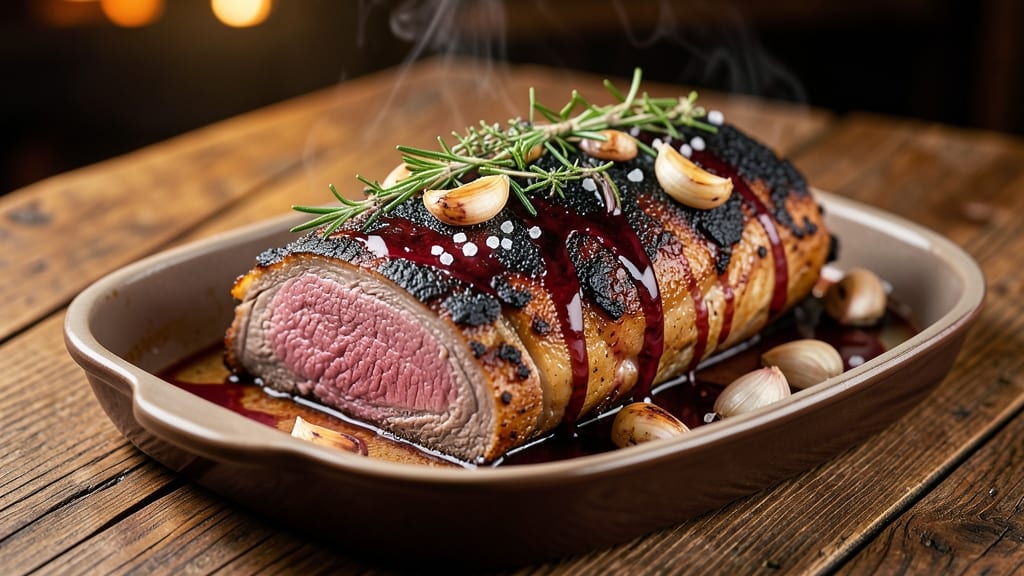
This baron beef roast recipe delivers melt-in-your-mouth tenderness that transforms tough cuts into showstopping centerpieces. 🔥 The secret lies in slow-braising—where hours of gentle heat break down collagen, yielding a texture so tender it practically falls apart at the touch.
I’ve perfected this method over years of holiday feasts, ensuring every bite is rich, juicy, and packed with deep, savory flavor.
What sets this recipe apart is the balance of tradition and technique: a dry brine for enhanced moisture, a flavorful rub of herbs and spices, and precise oven control to avoid overcooking. The result?
A roast with a golden crust and a core that’s so tender it’s nearly impossible to cut through—without falling apart. This isn’t just dinner; it’s an experience that turns ordinary weeknights into memorable gatherings.
By the time you carve into this roast, you’ll be rewarded with slices that glisten with natural juices and hold their shape beautifully—ideal for serving with classic sides like creamy mashed potatoes, roasted root vegetables, or a rich red wine gravy.
The aroma alone will have everyone anticipating the first bite, while the texture delivers on that elusive "fork-tender" promise.
Whether you’re hosting a holiday feast or simply craving a restaurant-quality roast at home, this method guarantees success. The key is patience—letting the beef work its magic in the oven while you prepare the rest of your meal. Let’s get started on creating a roast worthy of any table.
Ingredients for baron beef roast
Six ingredients transform tough beef into melt-in-your-mouth perfection—no shortcuts, just patience and love.
| Ingredient | Amount | Notes |
|---|---|---|
| Baron Beef Roast 🥩 | 4 lb | Bone-in, well-marbled cut |
| Kosher Salt 🧂 | 2 tbsp | Diamond Crystal preferred |
| Fresh Black Peppercorns 🌶️ | 1 ½ tbsp | Coarsely ground |
| Fresh Rosemary 🌿 | ½ cup | Chopped, stems removed |
| Fresh Thyme 🌿 | ¼ cup | Leaves only, stems removed |
| Garlic Cloves 🧄 | 6 cloves | Smashed, skin on |
| Extra-Virgin Olive Oil 🫒 | 2 tbsp | For dry rub |
| Red Wine 🍷 | 1 cup | Bold, dry variety |
| Beef Broth 💧 | 1 ½ cups | Low-sodium preferred |
| Yellow Onion 🧅 | 1 whole | Quartered, peeled |
| Carrots 🥕 | 4 whole | Peeled, cut into chunks |
| Fresh Bay Leaves 🍃 | 2 whole | Dried if unavailable |
| Fresh Parsley 🌿 | ¼ cup | Chopped, for garnish |
The beef is everything. Baron beef roast—that's your chuck roast—is the star here, and you want a cut with good marbling for that buttery texture. Costco and Whole Foods usually have it pre-cut, but if you're buying a whole roast, ask your butcher to trim it evenly. Look for a piece that's about 1.5 inches thick all over—this ensures even cooking. Fresh herbs matter too: grab them from the grocery store's produce section (not the sad plastic containers). The rosemary should smell piney, and thyme should be vibrant green. If you're short on time, dried herbs work at one-third the amount, but fresh is worth the extra minute.
No red wine? Beef broth with a splash of balsamic vinegar works in a pinch—just add an extra tablespoon of broth. The carrots can be baby carrots if that's what's in the fridge, but regular carrots add more natural sweetness. For the dry rub, Diamond Crystal kosher salt
This roast tastes even better the next day, so plan ahead. Once cooked, let it rest for at least 20 minutes before carving—this keeps the juices locked in. Store leftovers in the fridge for up to 5 days, or freeze portions for 3 months. I always make extra because it reheats beautifully—just warm it in the oven with a splash of broth. The gravy? Save that pan drippings and reduce them with a little more broth and a cornstarch slurry for a silky finish. Leftovers make amazing sandwiches the next day too.
Why You'll Love This Recipe
- I’ll be real: this is my secret weapon for busy nights. Toss the beef in the oven, let it slow-roast while I chop veggies or throw together sides, and boom—dinner’s done. No babysitting, no stress. Even my picky husband doesn’t complain. (Yes, even on a Tuesday night.)
- Fewer Ingredients, Bigger Impact: I swear by this recipe because it’s that simple—just salt, pepper, rosemary, and thyme. No fancy marinades or last-minute shopping. The baron beef’s natural richness shines when you let those herbs and a little crust do the heavy lifting.
- Herb-Crusted Magic: That rosemary and thyme? They don’t just happen—they meld into the beef until every bite tastes like a Sunday dinner. The peppercorns add a little bite, and the salt? It turns the outside into a golden, crackly blanket. Honestly, I’ve tried fancier roasts, but this one’s my go-to for pure flavor.
- Leftovers That Don’t Suck: Between us, most beef roasts turn into sad, dry leftovers. Not this one. The baron cut stays tender, so I can slice it for sandwiches, toss it into pasta, or even reheat it for tacos the next day. No sad, overcooked mess—just reliable, delicious meat.
Step-by-step instructions for slow-braised baron beef roast
Here's how to transform tough beef into melt-in-your-mouth perfection using just a few simple techniques.
👨🍳 Step 1: Prepare the Herb Rub and Season the Meat
In a small bowl, combine the 2 tbsp kosher salt, 1.5 tbsp fresh black peppercorns, 0.5 cup fresh rosemary, and 0.25 cup fresh thyme. Crush the peppercorns lightly with your palm to release their oils. This dry rub will create an aromatic crust while tenderizing the beef.
Pat the 4 lb baron beef roast dry with paper towels—this helps the rub adhere and creates crispy edges. Rub the herb mixture all over the beef, pressing firmly so it sticks. Then drizzle the 2 tbsp extra-virgin olive oil evenly over the surface and rub it in. Let the roast sit at room temperature for 30 minutes before cooking—this ensures even cooking.
🔥 Step 2: Sear the Beef for Deep Flavor
Heat a large Dutch oven over medium-high heat until it's very hot. Add the roast and sear it on all sides for 4-5 minutes per side, turning occasionally, until it develops a deep golden-brown crust. Don't rush this step—the crust locks in juices and adds incredible flavor.
Once browned, remove the roast from the Dutch oven and set it aside. In the same pot, add the 6 smashed garlic cloves and cook for 30 seconds until fragrant. This infuses the cooking liquid with garlic flavor that will penetrate the beef.
🍳 Step 3: Build the Braising Liquid
Add the 1 quartered yellow onion, 4 peeled carrot chunks, and 2 whole fresh bay leaves to the Dutch oven. Pour in the 1 cup red wine and scrape up any browned bits from the bottom—this releases flavor that would otherwise be lost. Let it simmer for 2 minutes until the wine reduces slightly and becomes aromatic.
Then pour in the 1.5 cups beef broth. The liquid should come about halfway up the sides of the roast. Bring the mixture to a gentle simmer, then place the roast back in the pot, fat-side up. This ensures the meat cooks evenly and stays moist throughout the long braising process.
⏰ Step 4: Braise Until Fork-Tender
Cover the Dutch oven with a lid and transfer it to a preheated 300°F oven. Braise the beef for 3-3.5 hours, turning it occasionally to ensure even cooking. The goal is to reach an internal temperature of 205°F—this is where collagen breaks down and the meat becomes incredibly tender.
About halfway through cooking (1.5-2 hours in), check the liquid level. If it's reduced too much, add ½ cup water to maintain moisture. The beef is done when it's fork-tender and pulls apart easily—you'll know it's ready when you can see the meat fibers separate with minimal resistance.
🍽️ Step 5: Rest and Serve with Herb Garnish
Remove the roast from the Dutch oven and transfer it to a cutting board. Tent loosely with foil and let it rest for 20-30 minutes. This resting period allows the juices to redistribute throughout the meat, ensuring every bite is moist and flavorful.
While the beef rests, skim any excess fat from the braising liquid and strain the vegetables if you prefer a smooth sauce. To serve, slice the beef against the grain into ½-inch thick pieces. Garnish with the 0.25 cup chopped fresh parsley and serve with the reduced braising liquid spooned over the top. The result is a rich, aromatic dish that's perfect for feeding a crowd.
Pro Tips For Making Baron Beef Roast
- SEAR THE ROAST HARD: That first crust isn’t just for looks—it’s what locks in flavor. Hit the roast with a screaming-hot pan (no oil needed if it’s dry) for 3-4 minutes per side until deep brown. I used to rush this, and the meat always tasted dull afterward.
- SALT THE HERBS FIRST: Toss your fresh rosemary and thyme sprigs with a pinch of kosher salt before tucking them into the roast. This keeps the leaves from burning and lets their aroma infuse the meat properly. (Yes, even if you’re impatient like me.)
- DON’T OPEN THE OVEN TOO SOON: The first 45 minutes are critical—resist the urge to check for doneness. Every time you crack the door, you’re letting heat escape and making the roast take longer. Trust the thermometer (130°F for medium-rare) instead.
- USE A THYME SPRIG INSTEAD OF RUBBING: Skip the minced thyme—whole sprigs stay fragrant longer and don’t turn bitter. Tuck 2-3 sprigs under the roast’s fat cap where they’ll baste in juices. I learned this the hard way after burning a batch of overworked herbs.
Perfect pairings for this baron beef roast
Wine Pairings
A bold, full-bodied red wine complements the deep, savory flavors of this braised beef. I always reach for a Cabernet Sauvignon from Napa Valley—its dark fruit notes and firm tannins stand up to the rich, herbed beef.
For something slightly lighter but still robust, a Syrah from the Rhône Valley brings peppery spice that enhances the rosemary and thyme in the rub. 🍷
Beer Pairings
If you prefer beer, opt for a malty amber ale or a dark lager. A Belgian-style Dubbel with its caramel and chocolate undertones pairs beautifully, while a German Dunkel adds a touch of sweetness that balances the beef’s savory depth.
For a lighter option, a crisp Pilsner cleanses the palate between bites.
Side Dish Harmony
Creamy mashed potatoes soaked in the beef’s braising juices make the ultimate pairing—they absorb all the rich flavors. I also love serving this roast with roasted root vegetables like carrots, parsnips, and potatoes tossed in olive oil and herbs.
For a touch of brightness, add a simple arugula salad with lemon vinaigrette to cut through the richness. 🥕
Gravy Perfection
Never skip the gravy! Skim the fat from the braising liquid and reduce it with a splash of red wine and a cornstarch slurry for a velvety finish.
A red wine gravy elevates the dish to restaurant-quality elegance. For extra depth, stir in a spoonful of the herb rub before serving—it ties everything together beautifully.
Bread Service
A crusty baguette or sourdough loaf is essential for soaking up those precious juices. Toast it lightly and serve with extra herb butter on the side. I also like offering garlic bread with a sprinkle of fresh parsley—it’s a crowd-pleaser that complements the beef perfectly.
Nutrition facts
Frequently asked questions
What's the difference between a baron beef roast and a chuck roast?
They're essentially the same thing! Baron beef roast is the traditional name for a chuck roast from the shoulder area of the cow. The key is choosing a well-marbled cut—look for thick fat streaks throughout the meat. This marbling is what gives your roast that buttery texture after slow braising.
Can I cook this roast in a slow cooker instead of the oven?
For a slow cooker version, sear the roast first, then transfer it to the slow cooker with all the braising ingredients. Cook on low for 8-10 hours or high for 5-6 hours. The texture will be just as tender, though you'll lose the beautiful crust. Add a splash of broth if the liquid reduces too much during cooking.
How do I know when the beef is perfectly tender?
Use a meat thermometer for accuracy—aim for 205°F internal temperature. The beef should be fork-tender, meaning it should fall apart easily when pierced with a fork. You'll also see the meat fibers separate cleanly. If it's still tough at 205°F, let it cook another 30 minutes—patience is key with this method!
Can I make this recipe with a smaller cut of beef?
Yes! For a 2-3 lb roast, reduce the cooking time to 2-2.5 hours and adjust the braising liquid proportionally. The herb rub and seasoning ratios can stay the same. Just be sure to use a meat thermometer to check doneness—smaller cuts cook faster. The texture will still be tender, just with slightly less depth of flavor.
What's the best way to reheat leftovers?
For the best results, reheat in a skillet with a splash of beef broth over medium-low heat until warmed through (165°F). Avoid microwaving—it can make the meat dry. You can also reheat portions in the oven at 325°F for 15-20 minutes with a little extra braising liquid. Leftovers taste even better the next day!