
Soups & Stews
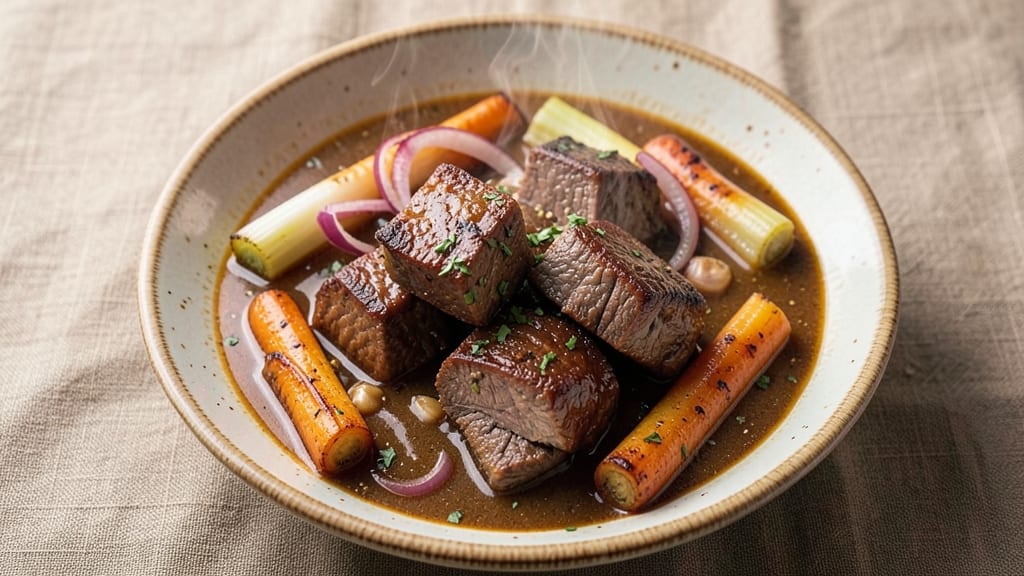
This barbecue beef stew recipe transforms tough cuts into melt-in-your-mouth beef with deep-smoked flavor you'd expect from a pitmaster's table. The secret lies in slow-cooking chuck roast with a dry rub and liquid smoke infusion, creating layers of complexity that turn a simple stew into something extraordinary.
I developed this recipe after years of perfecting my rubs and slow-cooking techniques—it's the kind of dish that gets better with time and transforms any meal into an event.
What sets this stew apart is the balance of traditional slow-cooking methods with modern barbecue techniques. We start with a proper sear to develop deep flavor in the beef, then slow-cook it until it's fork-tender.
The addition of liquid smoke and a touch of barbecue sauce in the final stages creates that signature smoky depth without overpowering the natural beef flavor. This isn't your grandmother's stew—it's a restaurant-quality dish with a smoky twist.
The result is beef that falls apart with the slightest touch, swimming in a rich, aromatic broth infused with smoky notes. The texture is perfect—tender beef with just enough resistance to hold its shape, all coated in a sauce that's both hearty and balanced.
Every spoonful delivers that perfect combination of smoky, savory, and slightly sweet flavors that make this stew unforgettable.
Serve it with crusty bread for soaking up every last drop or alongside roasted vegetables for a complete meal. The beauty of this recipe is its versatility—it's hearty enough for a cold winter night but flexible enough to work year-round.
Let's create this smoky, satisfying stew that will have everyone asking for seconds.
Ingredients for barbecue beef stew
Pantry staples meet smoky secrets for this unforgettable barbecue beef stew.
| Ingredient | Amount | Notes |
|---|---|---|
| Chuck Roast 🥩 | 3 lb | Well-marbled for tenderness |
| Yellow Onion 🧅 | 1 whole | Chopped into medium pieces |
| Carrots 🥕 | 4 medium | Peeled and cut into chunks |
| Celery Stalks 🥬 | 4 whole | Chopped into 1-inch pieces |
| Garlic Cloves 🧄 | 6 cloves | Minced for deep flavor |
| Dry Mustard 🧂 | 1 tbsp | For tangy depth |
| Worcestershire Sauce 🍯 | 1 tbsp | Vegan option available |
| Liquid Smoke 🔥 | 1 tsp | For authentic smoky flavor |
| Barbecue Sauce 🍯 | ½ cup | Sweet or spicy variety |
| Beef Broth 💧 | 4 cups | Low-sodium preferred |
| Tomato Paste 🍅 | 2 tbsp | For rich color and depth |
| Black Coffee ☕ | ½ cup | Enhances smoky notes |
| Salt 🧂 | 1 ½ tsp | Kosher or sea salt |
| Black Pepper 🌶️ | 1 tsp | Freshly ground preferred |
| Dried Thyme 🌿 | 1 tsp | Or 1 tbsp fresh thyme |
The chuck roast is non-negotiable here—it's the only cut with enough fat and connective tissue to become truly fork-tender. Costco or Walmart usually have it pre-cut into chunks, which saves time. If you're buying a whole roast, ask the butcher to cut it into 1.5-inch cubes. The beef should have good marbling—white flecks of fat throughout. Skip the lean cuts like sirloin, they won't hold up to the slow cooking. For the vegetables, I always grab the organic carrots from Trader Joe's—they're sweeter and hold their shape better during cooking. Celery from the same store stays crisp too, which matters when you're chopping it fresh.
No liquid smoke? Smoked paprika plus a splash of coffee gets you close. The coffee isn't just for flavor—it actually enhances the smoky notes. Running out of Worcestershire? Substitute with 1 tbsp soy sauce plus 1 tsp vinegar. Fresh thyme is ideal but dried works at one-third the amount. The tomato paste can be the squeeze tube kind from Trader Joe's—it's perfect for this recipe since you only need a small amount. For the barbecue sauce, I recommend Sweet Baby Ray's or Stubb's—they've got just the right balance of sweet and tangy. If you're making this vegetarian, swap the beef broth for vegetable broth and use a vegan Worcestershire sauce.
This stew tastes even better the next day—trust me, I've tested this. Store leftovers in an airtight container in the fridge for up to 5 days. For longer storage, portion it into freezer-safe containers and freeze for up to 3 months. The beef will get even more tender over time. I always make a double batch because it reheats beautifully. Just warm it on the stove over medium-low heat, stirring occasionally, and add a splash of water if it gets too thick. The crusty bread you serve with it? Toast it fresh before serving—it soaks up the sauce so much better that way.
Why You'll Love This Recipe
- Foolproof Prep: I swear by this—just sear the chuck roast in one pot, toss in chopped onions, carrots, and celery (no fancy knife skills needed), then let the slow cooker do the work. Honestly, the hardest part is deciding when to eat it.
- Smoky Deep Richness: That barbecue rub on the beef? It turns the chuck roast into melt-in-your-mouth perfection—tender outside, juicy inside, with a caramelized crust that makes every bite worth it. The garlic and onions caramelize right into the sauce, so you’re not just eating stew, you’re eating flavor.
- Weeknight to Potluck: Make a double batch on Sunday, and you’ve got dinner covered for the week. Or bring it to a picnic—it’s hearty enough for a crowd but still feels special. My in-laws think I’m a genius when I show up with this; they have no idea it’s basically my lazy-day secret weapon.
- Budget Magic: Chuck roast is cheap, and this recipe stretches it into four or five meals without skimping on taste. Between us, I’ve fed my whole family (plus a neighbor who “just happened by”) for under $15. Leftovers? Even better the next day—if there are any.
Step-by-step instructions for deep-smoked beef stew
Here's how to transform tough chuck roast into melt-in-your-mouth beef with that signature smoky depth.
Sear the Chuck Roast for Maximum Flavor
Heat a large Dutch oven over medium-high heat until very hot. Add the 3 lb chuck roast and sear on all sides for 4-5 minutes per side until deeply browned. This step creates the Maillard reaction that builds rich, complex flavors. I press down gently on the roast during the first minute to prevent curling and ensure even contact with the pan.
While the roast sears, prepare your vegetables. In a separate bowl, combine the 1 whole yellow onion (chopped), 4 medium carrots (cut into chunks), 4 whole celery stalks (chopped into 1-inch pieces), and 6 cloves garlic (minced). Set aside - you'll add these next. The vegetables will soften as they cook, releasing their natural sweetness into the stew.
Build the Smoky Base
Remove the seared roast and set it aside. In the same Dutch oven, reduce heat to medium and add 2 tablespoons tomato paste, stirring to coat the bottom. This creates a rich foundation that prevents the stew from becoming too thin. Cook for 1 minute until the paste darkens slightly.
Add 1 teaspoon liquid smoke, 1 tablespoon Worcestershire sauce, 1 teaspoon dried thyme, 1.5 teaspoons salt, and 1 teaspoon black pepper. Stir well to combine. The liquid smoke will infuse the entire stew with that authentic barbecue aroma. Pour in 4 cups beef broth and scrape up any browned bits from the bottom - these flavorful bits are called fond and they're packed with taste.
Simmer the Stew Low and Slow
Return the chuck roast to the Dutch oven, placing it back into the broth. Add the prepared vegetable mixture and 1 tablespoon dry mustard. Bring everything to a gentle simmer over medium-low heat. Here's the key: cover the pot and let it cook undisturbed for 2 hours at a steady simmer.
After 2 hours, check the tenderness of the beef by inserting a fork into the thickest part. The meat should be fork-tender but not falling apart. If it's not quite there, continue cooking for another 30-45 minutes. I know it's tempting to peek, but resist the urge to lift the lid - every time you do, you lose valuable heat and moisture.
Finish with Smoky Depth
Once the beef is tender, stir in the 0.5 cup barbecue sauce and 0.5 cup black coffee. The coffee might seem unusual, but it enhances the smoky flavors and adds a subtle bitterness that balances the sweetness of the barbecue sauce. Simmer uncovered for 10-15 minutes to allow the flavors to meld together and the sauce to thicken slightly.
Taste and adjust seasoning if needed. The stew should be rich and flavorful with a perfect balance of smoky, tangy, and savory notes. Let it rest for 10 minutes before serving to allow the flavors to fully develop. This resting time also helps the vegetables absorb all that delicious beef juice.
Serve and Enjoy the Perfect Stew
Ladle the stew into bowls, making sure each serving gets a generous portion of the tender beef. The vegetables should be soft but still hold their shape, and the beef should be so tender it practically falls off the bone. Serve with crusty bread to soak up every last drop of that smoky, flavorful broth.
This stew tastes even better the next day as the flavors continue to develop. Store leftovers in an airtight container in the refrigerator for up to 5 days, or freeze for up to 3 months. The secret to great stew is patience - letting the flavors meld together over time creates a dish that's truly comforting and memorable.
Pro Tips For Making Barbecue Beef Stew
- SEAR THE CHUCK ROAST: After browning the chuck roast in batches, don’t stack it on the cutting board to cool—it’ll steam instead of crisp. Instead, transfer it to a plate and let it rest for 5 minutes while you finish the mirepoix. The crust stays intact, and the meat won’t turn soggy when you add it back to the pot.
- CUT VEGETABLES UNIFORM: Carrots and celery need to be roughly the same size—about ½-inch chunks—or they’ll cook at wildly different rates. I learned this the hard way when my stew had mushy carrots and still-crunchy celery. Use a knife or mandoline for consistency, and don’t skip trimming the celery strings (they’re bitter).
- DEGLAZE WITH BBQ SAUCE: That browned crust on the pot? Don’t just splash water in there. Use ¼ cup of the BBQ sauce you’re adding later—it’ll deepen the flavor instantly. Scrape hard with a wooden spoon, then simmer for 2 minutes before adding the broth. It’s the difference between "stew" and "next-level stew."
- LOW AND SLOW IS NON-NEGOTIABLE: If your stew simmers too fast, the meat will turn out tough. Keep it at a bare simmer—tiny bubbles breaking the surface—even if it takes 3 hours instead of 2. I used to rush it, and the chuck roast came out chewy. Trust the process, and check the lid isn’t trapping too much steam (leave a small gap).
Health benefits of this recipe
Protein Powerhouse
This barbecue beef stew delivers a whopping 40 grams of protein per serving from the chuck roast, making it an excellent choice for muscle repair and satiety. The slow-cooking process breaks down tough connective tissues into gelatin, which your body converts into usable protein.
I always notice how much more energized I feel after eating this stew compared to lighter meals. 💪
Heart-Healthy Fats
The chuck roast contains beneficial monounsaturated fats that support heart health by reducing LDL cholesterol levels. The slow-cooking method preserves these healthy fats while rendering out excess saturated fat.
I prefer well-marbled cuts because they naturally contain more of these heart-friendly fats. The liquid smoke adds antioxidant properties that further protect your cardiovascular system.
Rich in Iron
Beef is one of the best dietary sources of heme iron, which your body absorbs more efficiently than plant-based iron. A single serving of this stew provides about 30% of your daily iron needs, crucial for preventing anemia and maintaining healthy energy levels.
The coffee in the recipe actually enhances iron absorption by creating a slightly acidic environment in your stomach.
Fiber from Veggies
The combination of carrots, celery, and onions provides 4 grams of dietary fiber per serving, supporting digestive health and promoting feelings of fullness. The fiber content helps regulate blood sugar levels, making this stew particularly beneficial for those managing diabetes or insulin resistance.
I always keep these vegetables chopped uniformly to ensure even cooking and maximum nutrient retention.
Smoky Antioxidants
The liquid smoke and barbecue sauce contribute polyphenols and other antioxidants that combat cellular damage. These compounds have been shown to reduce inflammation throughout the body. The black coffee in the recipe adds additional antioxidants, creating a flavor profile that's as beneficial as it is delicious.
I find this combination particularly satisfying during cold winter months when antioxidant needs are higher.
Comfort Food Nutrition
While this stew is rich and indulgent, it actually provides balanced nutrition with 25% of your daily vitamin A from carrots and 15% of vitamin C from onions. The slow-cooking process helps preserve these vitamins better than quick cooking methods.
This is the kind of meal that makes you feel nourished rather than guilty about indulging. The perfect balance of protein, healthy fats, and complex carbohydrates makes it ideal for any time of day. ✨
Nutrition facts
Frequently asked questions
Can I substitute chuck roast with another cut of beef?
For best results, stick with chuck roast as it has the perfect fat-to-lean ratio for slow cooking. However, you can use brisket or short ribs if needed. Avoid lean cuts like sirloin or flank steak—they'll dry out. If using brisket, increase cooking time by 30-45 minutes since it's tougher. The key is finding meat with good marbling for that melt-in-your-mouth texture.
Why does the recipe call for coffee in the stew?
The coffee enhances the smoky flavors and adds subtle bitterness that balances the sweetness of the barbecue sauce. It's not about caffeine—just the flavor! The acidity helps tenderize the beef slightly and deepens the overall complexity. For a caffeine-free version, use decaf or skip it entirely, but you'll lose that signature depth. Think of it like a secret ingredient that takes this stew from good to unforgettable.
How do I know when the beef is fully tender?
Use the fork test: insert a fork into the thickest part of the beef. If it slides in easily and the meat separates cleanly, it's done. The beef should be fork-tender but not falling apart. For chuck roast, this usually takes 2-2.5 hours of simmering. If you're unsure, let it cook another 15-20 minutes—it's better to overcook slightly than undercook. The longer it cooks, the more flavorful it becomes!
Can I make this stew in a slow cooker instead of a Dutch oven?
Brown the meat in a skillet first, then transfer everything to your slow cooker. Cook on low for 8 hours or high for 5-6 hours. Add the barbecue sauce and coffee in the last 30 minutes of cooking. The texture will be slightly different but still delicious. Just be mindful that slow cookers can make the broth thinner, so you might want to reduce it slightly before serving.
What's the best way to reheat leftovers?
Gently reheat on the stove over medium-low heat until warmed through. Add a splash of beef broth or water if it gets too thick. Microwaving can make the beef tough, so always use stovetop. Leftovers actually taste better the next day as flavors meld further. Store in an airtight container for up to 5 days or freeze for 3 months. The secret is patience—let it warm slowly to preserve that perfect texture.