
Main Courses
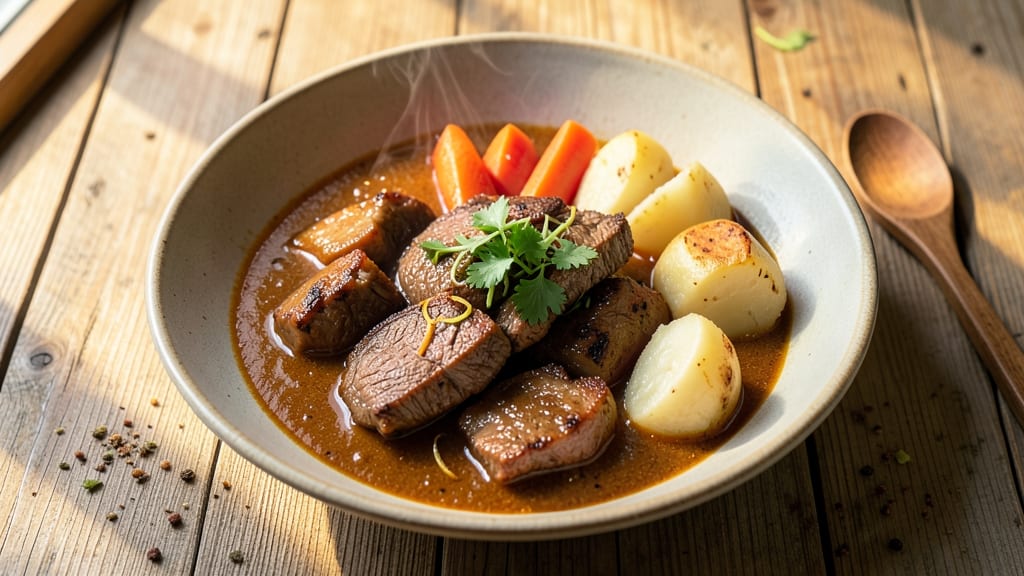
This authentic Japanese beef curry delivers the deep umami richness and silky onion threads that define the dish. 🌟 The secret lies in a proper Japanese curry roux—whether S&B Golden Curry or House Foods—and a balance of sweet, savory, and umami flavors that transform tough beef into melt-in-your-mouth tenderness.
I’ve perfected this recipe over years of testing, ensuring every bite captures the warmth and complexity of a traditional Japanese home-cooked meal.
The process begins with properly browning the beef, which builds a rich, caramelized foundation for the curry. Thinly sliced onions cook until translucent, then transform into delicate threads that melt in your mouth.
The roux dissolves into the simmering broth, creating a glossy, velvety sauce that coats every ingredient. This isn’t just a curry—it’s a flavor experience that transports you to a Japanese izakaya.
What you’ll achieve is a dish where the beef is fork-tender, the onions are silky yet crisp, and the sauce is perfectly balanced—sweet enough to satisfy, savory enough to linger, and umami-rich enough to make you crave seconds.
The aroma alone will have everyone gathering around the table. This is the kind of meal that feels like a hug in bowl form.
Serve it over steamed rice for the full experience, and don’t forget to include pickles or a side of miso soup to cut through the richness. The leftovers taste even better the next day, as the flavors deepen. Let’s get cooking—this curry is worth every minute of effort.
Ingredients for authentic japanese beef curry
The secret to authentic Japanese beef curry lies in these 15 ingredients—rich umami, silky onions, and a perfect curry roux.
| Ingredient | Amount | Notes |
|---|---|---|
| Lean Beef Chuck Roast 🥩 | 1 ½ lb | Thinly sliced against grain |
| Yellow Onions 🧅 | 2 whole | Thinly sliced for silkiness |
| Japanese Curry Roux 🌶️ | 4 tbsp | S&B Golden Curry preferred |
| Dashi Stock 💧 | 2 cups | Homemade or store-bought |
| Potatoes 🥔 | 1 ½ lb | Yukon Gold, cubed |
| Carrots 🥕 | 1 lb | Baby carrots or sliced |
| Apples 🍎 | 1 medium | Sweet variety, peeled |
| Garlic Cloves 🧄 | 6 cloves | Minced for depth |
| Ginger Root 🌿 | 1 inch | Freshly grated |
| Soy Sauce 🍶 | 2 tbsp | Japanese preferred |
| Mirin 🍶 | 2 tbsp | Sweet rice wine |
| Sugar 🍚 | 1 tbsp | White or brown |
| Vegetable Oil 🫒 | 2 tbsp | For browning beef |
| Salt 🧂 | 1 tsp | Kosher preferred |
| Black Pepper 🌶️ | ½ tsp | Freshly ground |
The beef is non-negotiable—chuck roast gives that melt-in-your-mouth texture. Slice it thinly against the grain for perfect tenderness. Costco or Asian markets usually carry pre-sliced versions, but if you're cutting yourself, use a sharp knife and freeze the meat 30 minutes first. The curry roux? S&B Golden Curry is the gold standard, but House Foods works too. Look for the block form if you can find it—more flavor than the powdered versions. And those onions? The key is patience—cook them low and slow until they're translucent and just starting to caramelize.
No Japanese curry roux? Make your own with 2 tbsp flour, 2 tbsp cornstarch, 1 tbsp curry powder, and 1 tsp turmeric—it's easier than you think. Substituting dashi? Vegetable broth with a dash of kombu gets you close. The apples add a subtle sweetness that balances the richness—Fuji or Gala work best, but any sweet variety will do. Short on mirin? Dry sherry plus 1 tsp sugar is a solid swap. And if you're missing the ginger? Ginger powder at half the amount will work in a pinch, though fresh is always better.
This curry tastes even better the next day as the flavors meld. Store leftovers in an airtight container for up to 5 days in the fridge or 3 months in the freezer. I like to portion it into individual containers so I can reheat just what I need. The potatoes and carrots hold up well to reheating—just add a splash of water or broth when warming. For extra authenticity, serve with steamed Japanese short-grain rice and pickled vegetables on the side.
Why You'll Love This Recipe
- One-Pot Magic: I swear by this—just brown the beef, toss in onions and potatoes, add the curry roux and dashi, and let it simmer. No chopping boards to clean, no extra pans, no stress. The roux does all the work while you sip tea.
- Umami Bomb: That dashi stock? It’s the secret weapon here—deep, savory, and slightly sweet. The roux gives it that signature Japanese warmth, but the beef stays tender, almost melting in your mouth. Honestly, the first bite makes you want to skip dinner and just eat it straight from the pot.
- Leftovers That Don’t Suck: Between us, most curries turn into glue after day two. Not this one. The potatoes stay firm, the beef stays juicy, and the sauce? Still rich and flavorful. I make a double batch on Sundays—lunches, packed meals, and even a quick reheat for when I’m too tired to cook.
- Budget Feeds Four: Lean beef chuck roast is cheaper than steak, potatoes stretch it further, and a bag of curry roux lasts for ages. I feed my family four meals for the price of one takeout order, and everyone—even my picky teen—asks for seconds. (Yes, even on a Tuesday night.)
Step-by-step instructions for authentic Japanese beef curry
Here's how to build deep umami layers and silky onion threads the Japanese way.
🔥 Step 1: Sear the Beef for Maximum Flavor
Heat 2 tablespoons vegetable oil in a heavy-bottomed pot over medium-high heat until shimmering. Add the 1.5 lb lean beef chuck roast, sliced thinly against the grain, in a single layer. Let it sear undisturbed for 2-3 minutes until deep golden brown on one side.
Here's the thing—Japanese curry relies on that caramelized crust for depth. Flip the beef and cook another 2-3 minutes until fully browned. Remove the beef and set aside, leaving all that precious browned fond in the pot. You'll scrape it up later for maximum flavor extraction.
👨🍳 Step 2: Build the Umami Base with Aromatics
In the same pot, add 2 whole yellow onions (thinly sliced), 6 cloves garlic (minced), and 1 inch ginger root (freshly grated). Cook over medium heat for 5-6 minutes until the onions soften and turn translucent, but don't let them brown.
This is where the magic happens. The onions should melt into silky threads—your reward for thin slicing. Stir occasionally and watch for that moment when they become almost invisible in the pot. That's your signal to add 2 tablespoons soy sauce and 2 tablespoons mirin, cooking for another 1 minute to let the flavors meld.
🥘 Step 3: Develop the Curry Roux and Potatoes
Add 4 tablespoons Japanese curry roux to the pot and stir vigorously to coat the onions completely. Cook for 2 minutes until the roux darkens slightly and becomes fragrant. This is your flavor foundation—don't rush it.
Now add 1.5 lb potatoes (cubed) and 1 lb carrots (sliced). Pour in 2 cups dashi stock and bring to a gentle simmer. Cover and cook for 10 minutes until the potatoes begin to soften but aren't fully tender. The liquid should reduce slightly but not evaporate completely.
🍳 Step 4: Finish with Sweetness and Apples
Peel and dice 1 medium apple (sweet variety) and add it to the pot along with 1 tablespoon sugar. Stir well to distribute the sweetness throughout. The apples will add natural sweetness that balances the savory depth of the curry.
Return the seared beef to the pot and add 1 teaspoon salt and 0.5 teaspoon black pepper. Bring to a gentle boil, then reduce heat to low-medium and simmer uncovered for 45-60 minutes, stirring occasionally, until the potatoes are fork-tender and the sauce has thickened to a rich consistency.
⏰ Step 5: Rest and Serve for Perfect Texture
Remove from heat and let the curry rest for 5-10 minutes. This resting period allows all the flavors to meld together and the sauce to thicken further. Taste and adjust seasoning if needed—you might want to add a splash more dashi stock if it's too thick.
Serve the curry hot, traditionally over steamed rice. The beef should be tender yet still hold its shape, the onions silky, and the sauce rich with layers of umami from the dashi, sweetness from the apples and mirin, and depth from the caramelized beef. This is authentic Japanese beef curry—comforting, flavorful, and perfectly balanced.
Pro Tips For Making Authentic Japanese Beef Curry
- SEAR THE BEEF UNTIL DARK: The chuck roast won’t tenderize properly if you’re shy with the heat. Get that pan smoking—blackened crust means deep flavor, not burnt meat. Once you hit 160°F internal, pull it early; it’ll climb another 10°F while resting.
- CUT POTATOES SMALLER THAN YOU THINK: I learned this the hard way—thick chunks turn mushy while the beef finishes. Dice them no bigger than 1.5 inches so they absorb the curry sauce without falling apart. (Yes, even if it looks like baby food.)
- DON’T SKIP THE ONION BLOOM: Sweat the onions low and slow until they’re almost caramelized—about 10 minutes. That deep golden color builds the base flavor, and skipping it means your curry tastes like it’s missing something. (It is.)
- USE COLD DASHI FOR CLEARER BROTH: Hot stock clouds the roux and makes the curry look murky. Stir in cold dashi last to keep the sauce glossy and the flavors bright. It’s a tiny tweak that makes a real difference in presentation.
Wine and beer pairings for authentic japanese beef curry
Japanese Sake Pairings
For this rich, umami-packed curry, reach for a dry junmai sake with crisp acidity to cut through the sauce's depth. I love Hakkaisan Junmai—its clean finish and subtle citrus notes complement the curry's sweet-savory balance. Serve it slightly chilled (45-50°F) to enhance its refreshing qualities. 🍶
If you prefer something fruitier, try a koshu like Koshu Daiginjo—its delicate apple and pear notes mirror the curry's apple sweetness. The alcohol content (15-16%) helps cleanse the palate between bites. Pro tip: Let the sake breathe for 10 minutes before serving to open its aromatics fully.
Light Japanese Beer Options
A crisp Asahi Super Dry or Sapporo Premium Beer makes an excellent casual pairing. The beer's subtle malt sweetness and dry finish contrast beautifully with the curry's umami. Serve at 40-45°F to preserve its refreshing quality. 🍺
For a more adventurous choice, try a hop-forward Japanese IPA like BrewDog Punk IPA (Japanese-style). The citrusy hops (Citra or Mosaic varieties) complement the curry's apple and ginger notes. The carbonation helps cut through the richness, making each bite feel lighter.
Non-Alcoholic Pairings
For a refreshing non-alcoholic option, serve ramune (Japanese soda) with a yuzu or lychee flavor. The effervescence and fruity notes balance the curry's depth without overpowering it. I like Calpis Yuzu for its bright citrus tang. 🥤
Another great choice is genmaicha (brown rice green tea). Its toasty, nutty flavors and gentle caffeine provide a soothing contrast to the curry's richness. Brew it at 175°F for a lighter, more floral cup that won't compete with the dish's bold flavors.
Wine for Adventurous Palates
If you're feeling experimental, a dry Riesling from Germany or Austria pairs surprisingly well. The wine's acidity and mineral notes complement the curry's umami and sweetness. Look for a Kabinett-level Riesling with 8-10% ABV to avoid overwhelming the dish. 🍷
For red wine lovers, a light Pinot Noir from Burgundy or Oregon works beautifully. Its red fruit notes and earthy undertones harmonize with the curry's depth. Choose a wine with 12-13% ABV and serve it slightly below room temperature (55-60°F) to preserve its freshness.
Nutrition facts
Frequently asked questions
What makes Japanese beef curry different from Indian curry?
Japanese beef curry is sweeter, thicker, and less spicy than Indian curry. The Japanese version uses a curry roux (like S&B Golden Curry) that creates a glossy, almost custard-like sauce, while Indian curries often have a drier, spicier finish. Japanese curry also includes apples for natural sweetness and relies on dashi stock for umami depth instead of yogurt or tomatoes.
Can I substitute the Japanese curry roux with something else?
Yes, but the flavor won't be authentic. For a close substitute, mix 2 tbsp flour, 2 tbsp cornstarch, 1 tbsp curry powder, and 1 tsp turmeric. For extra depth, add ½ tsp garam masala. If you're using powdered roux, reduce the liquid slightly since it dissolves more easily than block roux.
How do I get the beef perfectly tender?
Slice the beef thinly against the grain and sear it until deeply browned before adding other ingredients. The key is patience—simmer the curry for 45-60 minutes on low heat. For extra tenderness, marinate the beef in 1 tbsp soy sauce + 1 tbsp mirin for 30 minutes before cooking.
Why does my curry sauce turn out too thin?
This usually happens from overcooking or insufficient roux. Reduce heat to low-medium after adding potatoes and carrots, and simmer uncovered. If it's still too thin, mix 1 tbsp cornstarch + 1 tbsp water and stir in at the end. For future batches, use 1-2 extra tbsp of roux to thicken the sauce.
What sides should I serve with Japanese beef curry?
Traditionally, serve it over steamed Japanese short-grain rice to soak up the sauce. For balance, add pickled vegetables (tsukemono) or a simple miso soup. A crisp green salad with sesame dressing also cuts through the richness. Avoid heavy sides like bread or fried foods—they'll overwhelm the delicate flavors.