
Soups & Stews
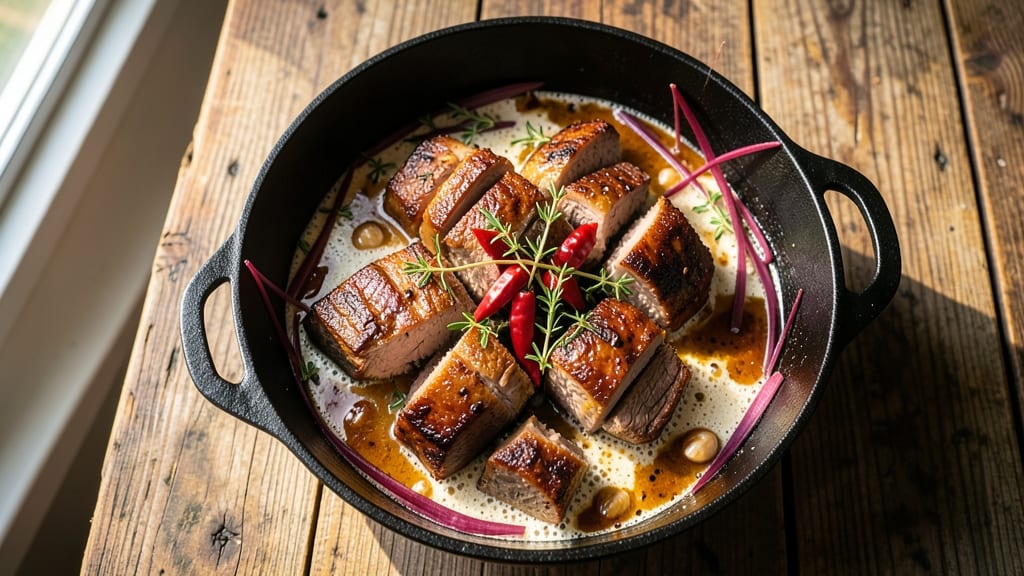
This authentic Jamaican stew beef recipe captures the soul of Caribbean cooking in every rich, spiced bite—where tender beef simmers in a fragrant blend of coconut milk, Scotch bonnet peppers, and traditional spices.
The secret lies in slow-cooking the meat until it falls apart, creating a dish that’s both hearty and deeply flavorful, just like Jamaican grandmothers have been making for generations. What sets this recipe apart is the balance of heat, sweetness, and earthy aromatics that make it unforgettable.
The foundation of this stew beef is a bold spice mix—thyme, garlic, scallions, and allspice—that infuses the beef with layers of warmth, while the Scotch bonnet pepper adds a fiery kick that’s essential to Jamaican cuisine. Coconut milk rounds out the flavors, giving the stew its signature creamy depth.
The dish is traditionally cooked low and slow, allowing the spices to meld and the beef to tenderize perfectly. This method ensures every bite is packed with authentic, restaurant-quality flavor.
By the time you serve this stew beef, you’ll have a dish that’s rich, aromatic, and deeply satisfying, perfect for feeding a crowd or enjoying with family. The tender beef pairs beautifully with steamed rice and peas or festival (Jamaican fried dumplings), making it a complete meal.
The slow-cooked sauce clings to the meat, delivering all the complex flavors in every spoonful. This is the kind of dish that turns a simple dinner into a celebration.
Whether you’re cooking for a special occasion or just craving a taste of Jamaica, this recipe delivers authentic, restaurant-quality results without the fuss. The key is patience—letting the flavors develop over time transforms simple ingredients into something extraordinary.
Ready to bring the flavors of Jamaica to your kitchen? Let’s get started.
Ingredients for authentic jamaican stew beef
Sixteen ingredients, Caribbean soul—where tender beef meets fiery Scotch bonnet and creamy coconut depth.
| Ingredient | Amount | Notes |
|---|---|---|
| Beef Chuck Roast 🥩 | 3 lb | Cut into 1.5-inch cubes, bone-in preferred |
| Coconut Milk 🥥 | 2 cans | Full-fat, 13.5 oz each (one can reserved for sauce) |
| Scotch Bonnet Peppers 🌶️ | 2 whole | Seeds removed, finely chopped (use gloves) |
| Fresh Thyme 🌿 | ½ cup | Stems removed, loosely packed |
| Garlic Cloves 🧄 | 6 cloves | Peeled, minced (about 2 tbsp) |
| Scallions 🧅 | 4 whole | White and green parts, chopped |
| Allspice Berries 🌶️ | 1 tsp | Crushed lightly (or 0.5 tsp ground) |
| Fresh Ginger 🌿 | 2 tbsp | Grated, finely (about 1 oz) |
| Tomato Paste 🍅 | 2 tbsp | Smooth, no sugar added |
| Brown Sugar 🍯 | 2 tbsp | Packed lightly |
| Kosher Salt 🧂 | 1 ½ tsp | Diamond Crystal preferred |
| Black Peppercorns 🌶️ | ½ tsp | Freshly cracked |
| Olive Oil 🫒 | 2 tbsp | Light or extra-virgin |
| Bay Leaves 🌿 | 2 whole | Dried, standard size |
| Vegetable Oil 🫒 | 1 tbsp | For initial searing |
The beef selection is non-negotiable for authenticity. Chuck roast delivers the signature fall-apart texture—sirloin or flank steak won't tenderize properly. Most Caribbean markets carry pre-cubed chuck, but if shopping at Whole Foods or Costco, look for well-marbled cuts. The Scotch bonnet peppers are the heart of this dish; Caribbean stores or specialty grocers carry them fresh year-round, but frozen works in a pinch. For the allspice, Penzeys Spices sells whole berries that release more aroma when crushed lightly—worth the investment over pre-ground. Fresh ginger should have tight, bumpy skin and no soft spots; Asian markets often have the freshest root selections.
No Scotch bonnet? Habanero plus 1 tbsp tomato paste mimics the heat profile, though flavor won't be identical. Substituting dried thyme for fresh? Use one-third the amount—dried thyme packs more punch. The coconut milk must be full-fat; light versions create a watery stew. For the tomato paste, San Marzano is ideal, but any smooth paste works. Brown sugar caramelizes beautifully during cooking, but muscovado sugar adds molasses depth if you want to get fancy. The vegetable oil for searing can be swapped for butter or ghee if you prefer richer flavor, but render the fat first to avoid burning.
This stew tastes even better the next day as flavors meld—plan ahead. Store in an airtight container in the fridge for up to 5 days, or freeze portions for 3 months. The sauce thickens upon reheating, so add a splash of water or coconut milk if needed. For meal prep, double the recipe and freeze half; the extra chilled portion reheats perfectly for a quick weeknight dinner. The bay leaves should be removed before serving—no one wants to bite into one. Garnish with fresh thyme sprigs and extra Scotch bonnet slices for presentation, but save some for the heat seekers.
Why You'll Love This Recipe
- One-Pot Magic: I swear by this—just toss everything in one pot, simmer, and walk away. The beef practically falls apart on its own, and the coconut milk thickens into that perfect, velvety sauce without any fuss.
- Heat & Cream in Balance: That Scotch bonnet gives it a gentle kick—enough to wake up your taste buds but not so much it ruins the meal. The thyme and garlic? Pure alchemy. It’s rich, it’s warm, and it’s got layers you’ll taste with every bite.
- Leftovers That Beg for More: This stew begs to be made in bulk. The flavors deepen overnight, and reheating it? A crime if you don’t. My freezer is always stocked—because nothing beats pulling this out for a lazy Sunday or a last-minute dinner guest.
- Budget-Friendly Crowd-Pleaser: Beef chuck roast is affordable, and coconut milk stretches it into a hearty meal for four (or six, if you’re honest). Serve it over rice, with dumplings, or straight from the pot—it’s the kind of dish that makes you look like a hero without breaking the bank.
Step-by-step instructions for Jamaican stew beef
Master this traditional technique for perfectly tender beef infused with Scotch bonnet heat and aromatic spices.
Prepare the Beef and Build the Spice Base
Cut the 3 lb beef chuck roast into 1.5-inch cubes—bone-in pieces hold up better to long cooking. Pat each piece dry with paper towels to ensure maximum browning. In a large Dutch oven, heat the 1 tablespoon vegetable oil over medium-high heat until shimmering. Working in batches, sear the beef for 3-4 minutes per side until deeply browned—this develops the rich, caramelized foundation of the stew.
Once all beef is browned, remove it from the pot and set aside. In the same Dutch oven, add the 2 tablespoons olive oil and swirl to coat. Add the 6 cloves minced garlic, 2 tablespoons grated ginger, and 2 whole chopped scallions, cooking for 1 minute until fragrant. Immediately add the 2 whole finely chopped Scotch bonnet peppers (wear gloves!) and cook for 30 seconds—this preserves their fiery flavor without burning.
Develop the Spiced Coconut Sauce
Reduce heat to medium-low and stir in the 2 tablespoons tomato paste, spreading it evenly to coat the bottom of the pot. Cook for 2 minutes until it darkens slightly. Add the 1 teaspoon crushed allspice berries, 1.5 teaspoons kosher salt, 0.5 teaspoon cracked black peppercorns, 0.5 cup fresh thyme, 2 whole bay leaves, and 2 tablespoons brown sugar. Stir for 1 minute to toast the spices and release their aromatic oils.
Pour in 1 can coconut milk (reserve the second can for later) and scrape up any browned bits from the bottom. Bring to a gentle simmer, then add the seared beef back to the pot. The liquid should just cover the beef—if it looks too thin, add ½ cup water. Partially cover and simmer for 1 hour, stirring occasionally, until the beef begins to soften and the sauce thickens slightly.
Finish with Coconut Milk and Rest
After the initial hour, add the second can coconut milk and stir gently to combine. Increase heat to medium-high and bring to a boil, then immediately reduce to a gentle simmer. Continue cooking uncovered for 1.5 to 2 hours, stirring occasionally, until the beef is fork-tender and pulls apart easily. The sauce should coat the back of a spoon and have a velvety consistency.
Taste and adjust seasoning—add more kosher salt if needed, or a pinch of brown sugar to balance acidity. Remove the bay leaves and discard. Let the stew rest for 15 minutes before serving—this allows the flavors to meld and the sauce to thicken slightly. Serve over steamed rice or with crusty bread to soak up the rich, spiced coconut sauce.
Pro Tips For Making Authentic Jamaican Stew Beef
- SEAR THE BEEF FIRST: Hit that chuck roast with a hot pan—no oil needed—until it’s deep brown in spots. I used to skip this, and the stew always tasted flat; the crust locks in flavor when the coconut milk joins later.
- DEGLAZE WITH VODKA: After browning the beef, splash in ¼ cup Jamaican rum or vodka (yes, even if you’re not drinking it). Let it sizzle for 30 seconds—this pulls up all the stuck-on bits and adds depth without extra effort.
- TOAST THE SCOTCH BONNET: Char the whole pepper over a gas flame or under a broiler for 30 seconds per side. The smoky edge cuts through the richness of the coconut milk and beef—don’t just chop it raw.
- SIMMER LOW AND LONG: After adding coconut milk, drop the heat to a bare simmer (tiny bubbles, occasional skims). I learned this the hard way—boiling curdles the milk and turns the stew grainy. Patience here makes all the difference.
Essential equipment for authentic jamaican stew beef
Dutch Oven Essentials
A heavy-duty Dutch oven is non-negotiable for Jamaican stew beef—it distributes heat evenly and locks in moisture. I swear by the Lodge 5.5-quart cast iron Dutch oven for its durability and heat retention.
If you don’t own one, a Le Creuset enameled Dutch oven (5-6 quarts) offers similar performance with easier cleanup. Avoid thin, lightweight pots—they can’t handle the long simmer without scorching. 🔥
Slow-Cooker Adaptation
For hands-off cooking, a 6-quart slow cooker works beautifully. Transfer the seared beef and spice base to the slow cooker, then add the coconut milk and remaining ingredients. Cook on LOW for 8 hours or HIGH for 5-6 hours—the longer cook time mimics traditional methods.
I use my Hamilton Beach programmable slow cooker for precise timing. Just stir occasionally to prevent sticking.
Scotch Bonnet Handling
This pepper is the heart of the dish, but it’s hot and acidic—handle with care! I keep a pair of nitrile gloves (available at Amazon or Caribbean markets) and a small bowl of water nearby to rinse my hands after chopping.
For extra safety, wear safety goggles if you’re sensitive to capsaicin. Never touch your face or eyes while working with Scotch bonnet—trust me, the burn is real. 🌶️
Measuring Tools
Precision matters with spices and liquids. A digital kitchen scale (like the OXO Good Grips) ensures accurate measurements for allspice and ginger, while a stainless steel measuring cup (like Farberware) handles coconut milk without warping.
For mincing garlic and ginger, a microplane or small food processor saves time and ensures consistency. A fine-mesh strainer helps remove unwanted bits from the sauce if needed.
Optional: Instant Pot
If you’re short on time, an Instant Pot (6-8 quarts) cuts cooking time dramatically. Sear the beef in a separate pan, then transfer everything to the pot. Cook on HIGH PRESSURE for 45 minutes, followed by a 10-minute natural release.
Finish with the second can of coconut milk and simmer on SAUTE mode for 10 minutes to thicken. My Instant Pot Duo handles the job flawlessly—just don’t skip the searing step. ⚡
Nutrition facts
Frequently asked questions
Can I substitute Scotch bonnet peppers with something milder?
Yes! For a milder heat, use 1 habanero pepper plus 1 tbsp tomato paste—this mimics the fruity depth without the extreme spice. For even less heat, reduce to ½ habanero and add ½ tsp sugar to balance. Always wear gloves when handling hot peppers, as oils can linger on your skin.
How do I make this stew beef less fatty?
Trim excess fat from the beef before searing, and skim any surface fat from the sauce after cooking. For a lighter version, use leaner cuts like chuck shoulder instead of roast, and reduce the coconut milk to 1 can (plus ½ cup water). The sauce will still be rich but less heavy.
Can I use ground beef instead of cubed beef?
Ground beef won't work for this recipe—it lacks the texture and depth of slow-cooked chunks. For a similar texture, try beef brisket or short ribs, but increase cooking time to 3-4 hours for tenderness. The fat content in these cuts enhances the sauce's richness.
Why does my stew beef taste bland?
Blandness usually means under-seasoning or not enough cooking time. Double-check your salt (1.5 tsp is correct), and let the stew simmer uncovered for the full 2 hours—this reduces liquid and intensifies flavors. For extra depth, add 1 tsp soy sauce or ½ cup beef stock at the end.
What’s the best way to reheat leftovers?
Reheat gently in a pot over low heat with 2 tbsp water or coconut milk to prevent drying. Microwaving can make the sauce watery—use the stovetop method instead. For best results, reheat only what you need and store the rest in the fridge for up to 5 days.