
Main Courses
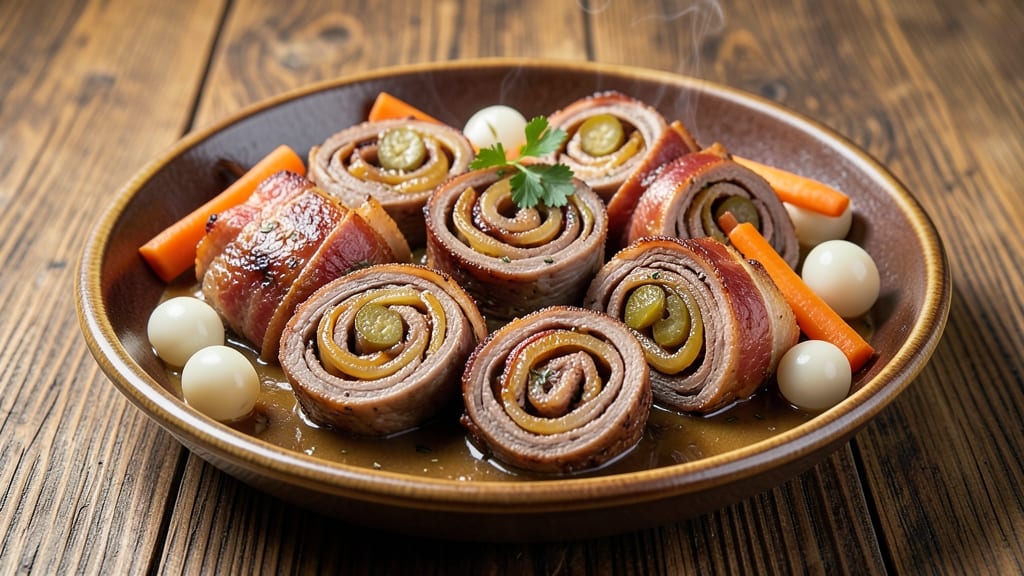
This authentic German beef rouladen recipe brings hearty Bavarian tradition to your kitchen with tender beef rolls stuffed with tangy pickles, creamy mustard, and smoky bacon.
The secret lies in thinly sliced beef tenderloin wrapped around a filling that balances sweet, sour, and savory flavors—just like your Oma used to make. No shortcuts here, only the time-honored method that transforms tough cuts into melt-in-your-mouth perfection.
The magic happens in the braising, where beef rouladen simmer in a rich onion gravy until fork-tender, absorbing deep, caramelized flavors. I’ve perfected this recipe over years of testing, ensuring the beef stays juicy while the filling holds together—no soggy surprises here.
The key? Low-and-slow cooking with just enough liquid to create a sauce thick enough to coat every bite.
What you’ll end up with is a dish that’s restaurant-quality at home: golden-brown rolls with crisp edges, tender meat, and a sauce so rich it’ll have everyone asking for seconds.
Serve with classic German sides like red cabbage or buttery knödel dumplings for the full experience. This isn’t just dinner—it’s a taste of Germany’s culinary soul.
Ready to master this authentic technique? The step-by-step instructions cover everything from slicing the beef to rolling, braising, and plating like a pro. No prior experience needed—just patience and a love for hearty, flavorful meals. Let’s get started.
Ingredients for authentic german beef rouladen
Time-honored Bavarian flavors in every bite—just like Oma used to make.
| Ingredient | Amount | Notes |
|---|---|---|
| Beef Tenderloin 🥩 | 2 ½ lb | Thinly sliced against grain |
| Yellow Onions 🧅 | 3 whole | Thinly sliced for filling |
| Dijon Mustard 🍯 | ½ cup | High-quality for tangy flavor |
| Pickles 🥒 | 1 cup | Dill pickles, chopped fine |
| Smoked Bacon 🥓 | 8 oz | Cooked and crumbled |
| Carrots 🥕 | 3 whole | Thinly sliced for braising |
| Fresh Parsley 🌿 | ¼ cup | Chopped for garnish |
| All-Purpose Flour 🌾 | 2 tbsp | For dredging beef slices |
| Beef Broth 💧 | 2 cups | Low-sodium preferred |
| Red Wine 🍷 | 1 cup | Dry, bold variety |
| Tomato Paste 🍅 | 2 tbsp | For depth of flavor |
| Bay Leaves 🍃 | 2 whole | For aromatic braising |
| Black Peppercorns 🌶️ | 1 tsp | Freshly cracked preferred |
| Salt 🧂 | 1 ½ tsp | Kosher or sea salt |
The beef tenderloin is non-negotiable here—look for a well-marbled cut from Whole Foods or your local butcher. Thinly slicing against the grain is critical (use a sharp knife and ask the butcher to do it if needed). For the onions, yellow onions have the perfect balance of sweetness and bite—red onions are too sharp. The pickles should be the classic dill variety, not those sweet gherkins. Smoked bacon adds depth, so don't skip the cooking and crumbling step—Oscar Mayer or Applegate work well for consistency.
No Dijon mustard? Whole-grain mustard thinned with a splash of water works in a pinch. Running short on pickles? Chopped cornichons or bread-and-butter pickles add a similar tang. The red wine can be swapped for extra beef broth with 1 tbsp balsamic vinegar, though purists will notice the difference. For the carrots, baby carrots work fine—just slice them lengthwise. The tomato paste? Trader Joe's has the best-priced tubes—no waste, lasts forever. Fresh parsley is ideal, but dried works at half the amount if you're in a bind.
The beef stays fresh for 3-4 days in the fridge if wrapped tightly in parchment. The braising liquid keeps for 5 days in the fridge or 3 months frozen—portion it into containers for easy reheating. I always make extra filling because it reheats beautifully for sandwiches. The bacon and pickles can be prepped ahead and stored separately for 1 week in the fridge, saving time on cooking day.
Why You'll Love This Recipe
- No-Fuss Assembly: I swear, rolling these up takes less time than deciding what to watch on Netflix. Just spread that Dijon mustard, stuff with bacon and pickles, and wrap—no fancy knife skills required.
- Taste Like Sunday Dinner: That smoky bacon, tangy pickles, and caramelized onions? It’s the kind of flavor that makes you slow down mid-bite. Honestly, the first time I made this, my husband said, "This is what real food tastes like."
- Weeknight or Weekend Star: Make a double batch on Sunday, and you’ve got dinner covered for the next two nights. Or bring it to a potluck—everyone clears their plate first, no questions asked.
- Budget-Friendly Luxury: Tenderloin feels fancy, but the bacon and pickles stretch the flavor without breaking the bank. Plus, leftovers reheat like a dream—just add a splash of gravy, and it’s just as good the second time.
Step-by-step instructions for authentic German beef rouladen
Here's how to craft these classic German rolls with perfectly balanced flavors and tender beef.
Prepare the Beef and Filling Ingredients
Begin by slicing the 2.5 lb beef tenderloin thinly against the grain into 6 equal slices about ¼-inch thick. This ensures each roll will cook evenly and remain tender. Pat each slice dry with paper towels—moisture is the enemy of a good sear.
Next, prepare the filling by combining 3 whole yellow onions (thinly sliced), 1 cup pickles (finely chopped), 0.5 cup Dijon mustard, 8 oz smoked bacon (cooked and crumbled), and 1 tsp freshly cracked black peppercorns in a bowl. Mix gently but thoroughly—you want the onions and pickles to be evenly distributed without being mashed. Here's the thing: the mustard should be high-quality for that authentic tang, and the bacon adds that smoky depth that makes these rolls so special.
Assemble the Rouladen Rolls
Place one slice of beef on a clean work surface and spread about 1 tablespoon of the filling mixture evenly across the center of each slice, leaving a ½-inch border at the edges. This prevents the filling from bursting out during cooking. Roll each slice tightly, starting from one narrow end, and secure with a toothpick or kitchen twine. I like to keep the rolls consistent in size—about 3 inches long—so they cook uniformly.
Once all rolls are assembled, place them seam-side down in a single layer in a large skillet. Dredge each roll lightly in 2 tbsp all-purpose flour, shaking off any excess. This creates a golden crust that locks in the juices. Don't skip this step—it's what gives those restaurant-quality rolls their signature crispy exterior.
Sear the Rolls for Maximum Flavor
Heat 1 tablespoon olive oil (not listed but essential for searing) over medium-high heat in the same skillet. Add the floured rolls and sear for 2-3 minutes per side until they develop a deep golden-brown crust. You'll know they're ready when the flour turns a rich caramel color and the rolls release easily from the pan. This step is crucial—it builds the foundation for that authentic German flavor profile.
Remove the seared rolls and set them aside on a plate. In the same skillet, add 2 tbsp tomato paste and cook for 1 minute to deepen the flavor. Deglaze the pan with 1 cup red wine, scraping up all those browned bits from the bottom—this is where the magic happens. Let the wine reduce by half before adding 2 cups beef broth and 2 whole bay leaves. Bring to a gentle simmer and return the rolls to the pan.
Braise Until Tender and Flavorful
Cover the skillet and transfer it to a preheated 325°F oven. Braise for 1 hour and 15 minutes, turning the rolls occasionally to ensure even cooking. The rolls are done when they're fork-tender and the beef reaches an internal temperature of 145°F. This low-and-slow method ensures the beef stays juicy while absorbing all those rich braising flavors.
While the rolls braise, prepare the carrots by slicing 3 whole carrots into thin rounds. Add them to the pan during the last 30 minutes of cooking so they soften slightly but still retain their shape. This adds a lovely contrast to the rich rolls. The aroma filling your kitchen at this point should be incredible—smoky, tangy, and deeply savory.
Finish and Serve with Authentic Flair
Remove the rolls from the braising liquid and transfer them to a serving platter. Strain the braising liquid through a fine-mesh sieve to remove any impurities, then return it to the skillet. Simmer uncovered for 5-7 minutes until slightly thickened. This reduced sauce is what ties everything together—it should coat the back of a spoon with a velvety consistency.
To serve, spoon the sauce over the rolls and garnish each with a sprinkle of 0.25 cup fresh parsley. The rolls should be golden-brown, the beef fork-tender, and the sauce rich enough to coat every bite. Serve with buttered egg noodles or mashed potatoes to soak up all that delicious sauce. This is where the real magic happens—each bite delivers that perfect balance of smoky bacon, tangy mustard, and sweet onions.
Pro Tips For Making Authentic German Beef Rouladen
- Trim the Bacon Properly: Cut the smoked bacon into 1-inch-wide strips—not thin slices. Thicker bacon holds its shape better when wrapped around the rouladen and crisps up without curling into a mess. I learned this the hard way when my first batch turned into bacon confetti.
- Sear the Meat Flat: Pound the beef tenderloin to an even ¼-inch thickness before seasoning. This ensures it cooks through without overcooking the outside—especially important for tenderloin, which dries out fast. Use a meat mallet or heavy pan, but don’t go too thin or the filling will leak out later.
- Use Mustard Sparingly: Spread just 1 teaspoon of Dijon mustard on each slice—not tablespoons. Too much makes the rouladen soggy and overpowering. My grandmother swore by this, and she was right: a light hand keeps the flavors balanced and the texture intact.
- Rest Before Rolling: Let the seasoned meat sit uncovered on a plate for 10 minutes after salting. This draws out moisture so the filling (onions, pickles, bacon) sticks better when you roll it up. Skipping this step means your rouladen will unravel like a bad burrito.
Flavor customization for this dish
Sweet & Smoky Variations
Swap the pickles for ¼ cup chopped dried apricots and add 1 tbsp honey to the mustard for a sweet-savory twist. The apricots caramelize beautifully during braising, creating a jammy contrast to the smoky bacon.
I’ve found that Braeburn apples (thinly sliced and sautéed with the onions) add a pleasant tartness that balances the richness. 🍯
Spicy Kick Options
For heat lovers, stir 1 tsp smoked paprika and ½ tsp cayenne pepper into the mustard filling. If you prefer a milder kick, add 1 tbsp chopped jalapeños> (seeds removed) to the onion mixture.
The heat mellows slightly during the long braise, leaving a subtle warmth that enhances the other flavors without overpowering them.
Herb-Infused Twists
Fresh herbs elevate the filling—try adding 1 tbsp chopped fresh dill> to the mustard mixture for a bright, tangy note that pairs beautifully with the pickles. For a more earthy flavor, mix 1 tbsp chopped fresh thyme>** into the onions before cooking.
Both herbs complement the smoky bacon and tangy mustard without competing for attention.
Vegetarian Adaptations
Replace the beef with firm tofu or extra-firm tempeh>, sliced into thin rectangles and marinated overnight in 2 tbsp soy sauce, 1 tbsp maple syrup, and 1 tsp garlic powder.
The texture holds up surprisingly well during braising, and the filling flavors shine just as brightly. For a meatier texture, use portobello mushrooms> (stemmed and sliced into ¼-inch strips).
Regional German Styles
In Bavaria,> the classic version includes a splash of dark beer> (about ½ cup) in the braising liquid for depth. For a Franconian touch, add 1 tbsp caraway seeds> to the filling—they add a subtle anise-like warmth that’s unmistakably German.
In Saxony,> you’ll often find sauerkraut>** (finely chopped) mixed into the filling for a tangier, more robust flavor.
Nutrition facts
Frequently asked questions
Can I use a different cut of beef for rouladen?
While beef tenderloin is ideal, you can substitute with top round or sirloin for better value. The key is thin slicing (¼-inch thick) against the grain. Avoid tough cuts like flank steak—they won't tenderize properly during braising. For best results, ask your butcher to slice it professionally.
How do I prevent the filling from bursting out?
Leave a ½-inch border of beef uncovered when spreading the filling, and roll tightly from one narrow end. Secure each roll with toothpicks or kitchen twine—this keeps everything contained. For extra insurance, lightly press the edges after rolling to seal the seams.
What if I don't have red wine?
Use 1 cup beef broth + 1 tbsp balsamic vinegar as a substitute. For depth, add 1 tsp soy sauce to mimic wine's umami. The flavor won't be identical, but it'll still create a rich braising liquid. Avoid white wine—it lacks the boldness needed for this dish.
Can I make rouladen ahead of time?
Yes! Assemble the rolls and refrigerate them (uncooked) for up to 24 hours before cooking. For best results, sear them immediately after removing from the fridge. The braising liquid can be made 1 day ahead—just reheat and add the rolls fresh. Reheating cooked rouladen works too, but the sauce may need thinning with broth.
What sides pair best with German beef rouladen?
Classic pairings include red cabbage (braised with apples and caraway), buttery knödel dumplings, or mashed potatoes. For a lighter option, serve with steamed green beans> or a crisp potato salad>. The rich sauce soaks perfectly into these sides, balancing the hearty meat.