
Main Courses
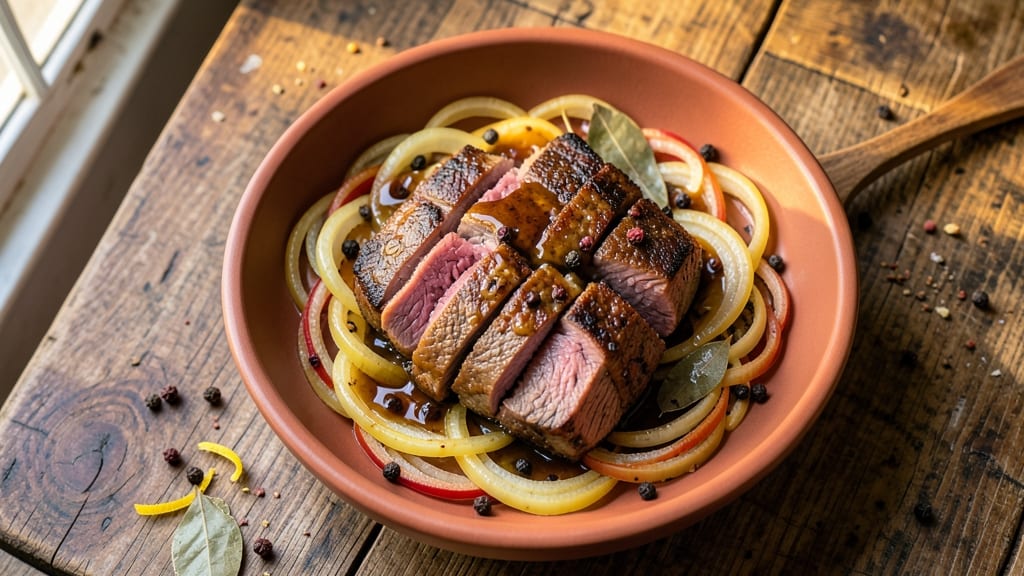
This authentic beef on weck recipe brings Alsatian tradition to your kitchen with tender beef, caramelized onions, and vinegar-braised richness—all served on crispy bread. The key lies in marinating the beef overnight in a tangy vinegar-spice blend, which tenderizes while building deep flavor.
This isn’t just a sandwich; it’s a slow-cooked masterpiece where acidity and patience transform tough cuts into melt-in-your-mouth perfection.
The process begins with caramelizing onions until they’re golden and sweet, forming the heart of this dish. Meanwhile, the beef braises low and slow, absorbing the vinegar’s sharpness while developing a glossy, savory finish.
The crusty bread, toasted to crispy golden-brown, becomes the perfect vessel for this hearty filling—a balance of textures that makes every bite satisfying.
What sets this recipe apart is its authenticity: no shortcuts, just time-honored techniques like acid-based tenderization and slow braising. The result is a sandwich with layers of flavor—tangy, sweet, and rich—that stays with you long after the last bite.
Whether you’re recreating Alsatian tradition or introducing it to new palates, this dish delivers restaurant-quality depth at home.
For a modern twist, consider deglazing the onions with a splash of red wine instead of vinegar, adding complexity without losing the dish’s signature tang. The crispy bread is non-negotiable—look for a sturdy roll that holds up to the juicy filling while adding satisfying crunch.
This is comfort food elevated, where tradition meets technique for a dish worth savoring.
Ingredients for authentic beef on weck
Tender beef, caramelized onions, and vinegar-braised richness on crispy bread—this Alsatian masterpiece needs just these ingredients.
| Ingredient | Amount | Notes |
|---|---|---|
| Beef Chuck Roast 🥩 | 1 ½ lb | Tough cut for braising, pre-sliced preferred |
| Yellow Onions 🧅 | 4 whole | Medium size, thinly sliced for caramelizing |
| White Wine Vinegar 🍷 | ½ cup | For marinade and braising liquid |
| Bay Leaves 🌿 | 2 whole | Fresh preferred, dried works in pinch |
| Black Peppercorns 🌶️ | 1 tsp | Crushed, not ground |
| Allspice Berries 🌶️ | 4 whole | Crushed lightly, essential for authenticity |
| Cloves 🌶️ | 2 whole | Whole, lightly crushed |
| Salt 🧂 | 1 ½ tsp | Diamond Crystal preferred for accuracy |
| Crusty Bread Rolls 🍞 | 4 whole | Baguette-style, 8-10 inches long |
| Unsalted Butter 🧈 | 4 tbsp | For toasting bread, full-fat preferred |
| Fresh Thyme Leaves 🌿 | ¼ cup | Chopped, stems removed |
| Red Wine 🍷 | ¼ cup | Dry variety for modern twist option |
| Beef Broth 💧 | ½ cup | Homemade or high-quality low-sodium |
The beef is non-negotiable—chuck roast delivers that melt-in-your-mouth texture after slow braising. Costco or Whole Foods carry pre-sliced versions, but if buying whole, ask the butcher to cut it into 1/2-inch slices. Yellow onions should be medium-sized (about 4 inches across) for perfect caramelization—no tiny red onions here. The vinegar matters too: Bragg's or Heinz work, but local apple cider vinegar adds depth if you're feeling fancy. Look for fresh bay leaves at the grocery store's produce section—they're often overlooked but make a huge difference.
No white wine vinegar? Apple cider vinegar works in a pinch, though it'll have a slightly different tang. Fresh thyme is ideal, but dried at half the amount gets you close. Want that modern twist? Swap half the vinegar for dry red wine (Cabernet Sauvignon or Merlot) when deglazing the onions. The beef broth should be low-sodium—homemade is best, but Swanson's or Pacific Foods are solid store-bought options. For the bread, baguette-style rolls are essential—they toast up perfectly crispy while holding the juicy filling. No crusty bread? Sourdough or a sturdy Italian loaf works too.
The beef marinates overnight, so plan ahead—it's worth the wait. Store raw beef in its original packaging on the bottom shelf of your fridge. Caramelized onions keep for 3 days in the fridge if stored in an airtight container. The bread? Toast it fresh before assembling—5 minutes in a 375°F oven with butter until golden and crispy. Leftovers? The beef on weck reheats beautifully—350°F for 15 minutes restores that crispy bread texture. Freeze portions without bread for up to 3 months—just toast fresh bread when ready to serve.
Why You'll Love This Recipe
- One-Pot Magic: I swear by this—just toss the chuck roast, onions, and peppercorns into a pot with vinegar and bay leaves, then walk away. The slow simmer does all the work while you answer emails or binge that show you’ve been putting off.
- Tangy, Deep Umami Bomb: That white wine vinegar? It’s not just for salads. It cuts through the beef’s richness, while the peppercorns add a subtle crack that makes every bite feel like a little reward. Honestly, the flavor builds in layers—first rich, then bright, then addictive.
- Leftovers That Beg for More: This isn’t one of those recipes where seconds feel like a chore. The beef gets so tender it practically falls apart, and the sauce thickens into something you’ll slather on toast the next morning. I’ll be real: I’ve reheated this for lunch three times in a row without getting sick of it.
- Budget Feast for Crowds: A chuck roast stretches farther than you’d think, especially when you’re braising it low and slow. Feed six for dinner, then have leftovers for sandwiches or tacos—all while spending less than you would on takeout. Plus, onions and vinegar? Those are the kind of ingredients that don’t break the bank.
Step-by-step instructions for authentic beef on weck
Here's how to recreate this German classic with perfectly tender beef and perfectly crispy bread.
Prepare the Beef and Aromatics for Braising
Pat the 1.5 lb beef chuck roast completely dry with paper towels—this ensures maximum browning later. In a large bowl, combine the beef with 4 whole yellow onions (thinly sliced), 0.5 cup white wine vinegar, 2 whole bay leaves, 1 tsp crushed black peppercorns, 4 whole allspice berries (lightly crushed), 2 whole cloves (lightly crushed), and 1.5 tsp salt. Massage the mixture with your hands for 2 minutes to ensure the marinade penetrates the beef thoroughly.
Transfer everything to a resealable plastic bag and refrigerate for at least 4 hours—overnight is even better. This long marinade breaks down the tough beef fibers and infuses it with deep, aromatic flavors. The acidity from the vinegar will tenderize the meat while the spices create that signature German warmth.
Caramelize the Onions and Brown the Beef
Remove the beef from the marinade (reserve the liquid) and pat it dry again. Heat a large Dutch oven over medium-high heat with 1 tablespoon olive oil (not listed but essential for browning). Working in batches, sear the beef on all sides until deeply browned—about 3-4 minutes per side. This step is crucial for developing that rich, caramelized crust that carries through the braising process.
Remove the beef and set it aside. In the same pot, add another 1 tablespoon olive oil and cook the reserved sliced onions over medium heat for 15-20 minutes, stirring occasionally. You're looking for deep golden caramelization—the onions should be soft, sweet, and nearly jam-like. This takes patience, but it's worth it for that authentic German depth of flavor.
Braise the Beef to Perfection
Return the browned beef to the Dutch oven along with all the marinade, 0.25 cup red wine, and 0.5 cup beef broth. Bring to a simmer, then reduce heat to low and cover. Braise for 2.5-3 hours until the beef is fork-tender and easily pulls apart. The liquid should reduce significantly, creating a thick, flavorful sauce that clings to the beef.
About 30 minutes before the beef is done, stir in the 0.25 cup fresh thyme leaves. This late addition ensures the thyme releases its aromatic oils without becoming bitter. The beef should reach an internal temperature of 203°F—this makes it incredibly tender and perfect for slicing thinly. If the liquid evaporates before the beef is done, add a splash of water to prevent burning.
Toast the Bread Rolls
While the beef braises, prepare the bread. Preheat your oven to 375°F and slice each crusty bread roll lengthwise. Brush both halves generously with 1 tablespoon unsalted butter (use all 4 tbsp total). Place them cut-side down on a baking sheet and toast for 8-10 minutes until deeply golden brown and crispy.
Here's the secret: the bread should be almost crackling when you press it gently. If it's not crisp enough, return it to the oven for another 2-3 minutes. This crispness is what makes Beef on Weck so special—it contrasts perfectly with the tender, saucy beef. Keep the toasted bread warm while you assemble the sandwiches.
Assemble and Serve
Remove the beef from the braising liquid and let it rest for 10 minutes before slicing thinly against the grain. Spoon the reduced braising sauce over the beef and toss gently to coat. Pile the beef mixture onto the toasted bread halves, dividing evenly among the 4 whole crusty bread rolls. The sandwiches should be generously filled with beef and sauce, but not so much that they're messy.
Serve immediately while the bread is still crispy. The contrast between the tender, saucy beef and the crunchy bread is what makes this sandwich legendary. For an extra touch, sprinkle with additional fresh thyme leaves just before serving. Each bite should deliver that perfect balance of crispy, tender, and deeply savory flavors that define authentic German comfort food.
Pro Tips For Making Authentic Beef On Weck
- Sear the Chuck Hard: The first 10 minutes in a screaming-hot Dutch oven with oil are where the flavor happens—don’t skimp. I used to rush this, and the onions would turn to mush before the beef got a crust. Get that roast browned in patches, then back off the heat.
- Slice Onions Thinly: A sharp knife and steady hand make all the difference here. Too thick, and they’ll stay tough; too thin, and they’ll burn before softening. Aim for 1/8-inch slices—just enough to caramelize without turning to paste. (Yes, it takes patience.)
- Don’t Crowd the Pot: If you dump everything in at once, the onions will steam instead of caramelize. Layer the onions in a single layer first, let them soften, then add the beef and liquid. This isn’t a stew—it’s a slow-cooked harmony.
- Deglaze with Vinegar: After browning the beef, splash in that white wine vinegar immediately—it cuts through the fond and brightens the whole dish. I used to use water, and the flavor was flat. The acidity here is non-negotiable; it’s what makes the sauce sing.
Creative variations of this dish
Modern Vinegar Twist
Swap the traditional white wine vinegar for a balsamic reduction made by simmering ½ cup balsamic vinegar with 1 tbsp brown sugar until thickened. This adds a caramelized depth that complements the beef beautifully.
I've found that Balsamic Glaze by Colavita works in a pinch if you're short on time. 🍷
Spiced Beer Braise
Replace the white wine vinegar marinade with a dark beer braise using 1 cup German pilsner or Dunkel beer (like Paulaner or Weihenstephaner). Add 1 tsp coriander seeds and ½ tsp caraway seeds to the marinade for authentic German spice notes. The beer's maltiness balances the beef's richness perfectly.
Sweet and Smoky Version
Caramelize 2 tbsp brown sugar with the onions until deep amber, then add 1 tbsp smoked paprika for a sweet-smoky profile. This variation works wonderfully with a sourdough bread that can handle the extra moisture. I've had great success using Annie's Organic Sourdough for this twist.
Herb-Infused Oil Bread
Instead of plain butter, make an herb-infused oil by combining 4 tbsp olive oil with 1 tbsp chopped rosemary and 1 tsp garlic powder. Brush this on the bread before toasting for an aromatic twist that pairs beautifully with the beef's savory depth.
The herbs add a fresh contrast to the rich filling.
Gingered Beef Option
Add 1 tbsp freshly grated ginger to the marinade for a subtle warmth that cuts through the vinegar's sharpness. This works particularly well with a lightly sweetened chutney (mix 2 tbsp apple butter with 1 tsp Dijon mustard) as a side.
The ginger adds complexity without overpowering the dish's traditional flavors. 🌶️
Regional Variations
In Bavaria, this dish often includes pickled mustard seeds in the marinade for a tangy crunch. For a Swiss twist, substitute white wine for the vinegar and add ½ cup grated Gruyère cheese to the braising liquid.
Both variations maintain the dish's hearty character while offering unique regional flair.
Nutrition facts
Frequently asked questions
Why does the beef need to marinate overnight?
The overnight marinade is essential for two reasons: first, the white wine vinegar's acidity breaks down tough beef fibers, creating that signature tender texture. Second, the spices and aromatics infuse deeply, ensuring every bite carries authentic German flavor. Skipping this step results in tougher meat and less complex taste.
Can I use a different cut of beef?
While chuck roast is ideal for its fat content and flavor, you can substitute with chuck shoulder or brisket—both braise well. Avoid lean cuts like sirloin, as they won't become tender enough. If using a different cut, increase marinating time to 12-18 hours for maximum tenderness.
What's the secret to crispy bread?
The key is toasting the bread at 375°F until it's golden and crackling. Use a baguette-style roll for best results—its sturdy crust holds up to the juicy filling. Brush with butter and toast cut-side down for even browning. For extra crunch, broil for 1-2 minutes at the end.
How do I fix if the onions burn during caramelization?
If your onions start burning, immediately reduce heat to low and add 1-2 tablespoons of water or beef broth. Stir gently and continue cooking at a slower pace. The onions should caramelize, not char—this process takes 15-20 minutes over medium heat. Patience is key!
Can I make this dish ahead of time?
The beef and sauce keep well in the fridge for 3 days or freeze for 3 months. Reheat gently in a skillet over low heat to maintain moisture. Toast the bread fresh before serving—it's the only component that loses crispness when reheated. The flavors actually improve overnight!