
Main Courses
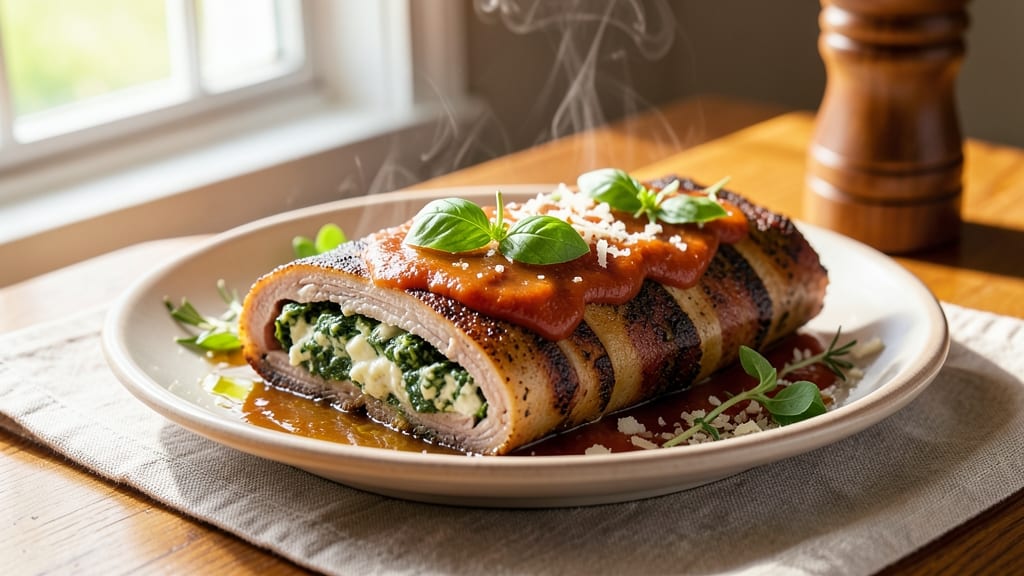
This authentic beef braciole recipe brings the rich flavors of Italian nonna cuisine to your dinner table, where tender beef rolls stuffed with herbed cheese and vegetables braise in a slow-simmered tomato sauce. The secret lies in thinly sliced beef, carefully pounded and layered with a savory filling of ricotta, spinach, and herbs—a technique that transforms simple ingredients into a restaurant-quality masterpiece. I’ve perfected this version after years of testing, balancing traditional methods with modern shortcuts to ensure foolproof results every time.
The beauty of braciole is in its layers—both literal and culinary. Thinly sliced beef is the canvas, while the filling of ricotta, spinach, and Parmesan adds depth, and the tomato sauce ties everything together with its aromatic sweetness.
What sets this recipe apart is the slow braising process, which melts the beef into tender perfection while infusing it with the flavors of garlic, onions, and herbs. The result is a dish that’s hearty enough for a family dinner but elegant enough for a special occasion.
By the time you serve this dish, you’ll have perfectly rolled, golden-brown braciole with a filling that stays intact, all swimming in a rich, velvety sauce.
The aroma alone will have everyone gathering at the table, and the first bite delivers that unmistakable combination of tender meat, creamy cheese, and bright tomato flavors. This is the kind of meal that feels like a hug—comforting, flavorful, and deeply satisfying.
Serve with crusty bread to soak up the sauce or alongside a simple side salad to balance the richness. The leftovers, if there are any, reheat beautifully, making this an ideal dish for meal prep or feeding a crowd. Here’s how to bring the flavors of Italy to your kitchen.
Ingredients for authentic beef braciole
Thinly sliced beef and creamy ricotta form the heart of this Italian masterpiece.
| Ingredient | Amount | Notes |
|---|---|---|
| Top Round Steak 🥩 | 1 ½ lb | Thinly sliced against grain |
| Whole Milk Ricotta Cheese 🧀 | 1 cup | Full-fat for creaminess |
| Fresh Spinach Leaves 🌿 | 4 cups | Chopped, tightly packed |
| Parmesan Cheese 🧀 | ½ cup | Freshly grated, block preferred |
| Garlic Cloves 🧄 | 4 cloves | Minced for filling and sauce |
| Yellow Onion 🧅 | 1 whole | Finely chopped for filling |
| Fresh Basil Leaves 🌿 | ¼ cup | Chopped, for filling and sauce |
| Fresh Parsley Leaves 🌿 | ¼ cup | Chopped, for filling |
| Large Eggs 🥚 | 2 whole | Beaten for binding filling |
| Salt 🧂 | 2 tsp | Kosher salt, divided |
| Ground Black Pepper 🌶️ | 1 tsp | Freshly ground |
| Extra-Virgin Olive Oil 🫒 | 2 tbsp | For panning beef |
| Canned San Marzano Tomatoes 🍅 | 1 can | 28 oz, crushed by hand |
| Dry Red Wine 🍷 | ½ cup | Bold variety like Cabernet |
| Fresh Rosemary 🌿 | 1 tbsp | Chopped, for sauce |
The beef selection matters most—top round steak is ideal for its lean texture and ability to stay tender when rolled thin. Most butcher shops slice it against the grain for you, but if you're doing it yourself, ask for help or use a meat slicer. For the ricotta, whole milk is non-negotiable—it's creamier and binds better. I always grab mine from Trader Joe's or the Italian market section at Whole Foods; avoid part-skim versions. The spinach should be fresh—baby spinach works best—and the herbs need to be vibrant. If you're using dried herbs, reduce to half the amount and toast them lightly in a dry pan first for deeper flavor.
No ricotta? Cottage cheese blended with a splash of milk gets you close, though it won't be as creamy. Short on fresh herbs? Dried basil and parsley work at one-third the amount, but toast them first. The wine can be swapped for beef broth with a splash of balsamic vinegar—just skip the reduction step. For the tomatoes, San Marzano is worth the splurge; their sweetness balances the acidity perfectly. If you can't find them, any high-quality crushed tomatoes will do, but taste before using—some brands add excess salt. The Parmesan must be freshly grated; pre-grated clumps and loses flavor when reheated.
Prep the filling ahead and store it covered in the fridge for up to 2 days—it actually improves as flavors meld. The rolled braciole keeps 3-4 days in the fridge before cooking, wrapped tightly in plastic. Once cooked, it reheats beautifully—simmer the rolls in their sauce for 5-10 minutes on the stove or bake covered at 350°F for 20 minutes. For freezing, portion the cooked rolls with sauce and freeze for up to 3 months. Thaw overnight in the fridge before reheating.
Why You'll Love This Recipe
- No-Roll Required: I swear, no fancy butchering skills here—the steak stays whole, just pounded thin enough to sink your teeth in. Slap that ricotta-spinach mix between two slices, fold it like a letter, and you’re done. Not the prettiest, but the taste makes up for it every time.
- Garlic-Parmesan Magic: That crispy, caramelized crust? All thanks to the garlic and Parmesan clinging to the edges while the ricotta keeps the center lusciously tender. Honestly, the first time I made this, my husband stole a piece before it even hit the table.
- Weeknight to Sunday Table: Same roll-ups for Tuesday dinners or a fancy spread for company—just adjust the sides. Serve with crusty bread for a quick meal or pair it with polenta and a bold red wine for an effortless special occasion. My go-to when I don’t want to overthink it.
- Budget-Friendly Leftovers: Top round steak stretches further than you’d think, and the ricotta-spinach filling turns scraps into something luxurious. I’ll be real: these reheat like a dream, so I often make a double batch. Freezer-friendly too—just thaw and bake.
Step-by-step instructions for authentic beef braciole
Master the traditional Italian technique for tender, flavorful stuffed meat rolls with this precise guide.
Prepare the Herbed Filling
In a food processor, combine the 4 cups chopped fresh spinach leaves, 1 whole yellow onion, 4 cloves minced garlic, 0.25 cup chopped fresh basil leaves, 0.25 cup chopped fresh parsley leaves, 1 cup whole milk ricotta cheese, 0.5 cup freshly grated Parmesan cheese, 2 whole beaten large eggs, 1 tsp ground black pepper, and 1 tsp of the 2 tsp salt. Pulse until just combined but still slightly textured—about 10-15 seconds. The mixture should be moist but not soupy, holding its shape when pressed.
Transfer the filling to a bowl and cover with plastic wrap, pressing gently to form a flat disc. Chill for 30 minutes while you prepare the meat. This resting time ensures the filling stays cohesive when rolled later. If the mixture feels too sticky after chilling, add 1-2 tablespoons of the reserved salt to help bind it.
Roll the Stuffed Meat
Lay the 1.5 lb top round steak slices flat on a clean work surface. Place 1-2 tablespoons of the chilled filling at one end of each slice, then roll tightly away from you, tucking in the sides as you go. Secure each roll with kitchen twine, spacing the twine evenly along the length to prevent unraveling. You should have 4-6 rolls depending on slice thickness.
Here's the key: don't overstuff the rolls or they'll burst during cooking. The filling should be snug but not bulging. If you notice any gaps in the twine, tighten them immediately—this prevents the filling from escaping during the long simmer. Place the completed rolls seam-side down on a plate and cover with a damp towel to prevent drying.
Sear the Braciole Rolls
Heat 1 tablespoon of the 2 tbsp extra-virgin olive oil in a large Dutch oven over medium-high heat until shimmering. Working in batches, add the braciole rolls and sear on all sides until deeply browned, about 2-3 minutes per side. The rolls should develop a rich, caramelized crust that traps moisture inside. Don't crowd the pan or they'll steam instead of brown.
Remove the seared rolls and set aside. To the same Dutch oven, add the remaining 1 tablespoon olive oil and pour in the 0.5 cup dry red wine. Scrape up any browned bits from the bottom with a wooden spoon—these contain concentrated flavor. Let the wine reduce by half, about 2 minutes, until slightly syrupy.
Simmer in Tomato Sauce
Add the 1 can crushed San Marzano tomatoes to the Dutch oven, along with the 1 tbsp chopped fresh rosemary and the remaining 1 tsp salt. Stir well to combine, then return the braciole rolls to the pot. Add enough water to just cover the rolls—about 1 cup—and bring to a gentle simmer over medium-low heat.
Cover the pot and simmer for 1 hour 15 minutes, turning the rolls occasionally to ensure even cooking. The sauce should reduce slightly, becoming thick and glossy. You'll know they're done when the meat is fork-tender and the filling is heated through. If the sauce reduces too quickly, add small amounts of water to maintain coverage. The rolls should be submerged at all times to prevent drying.
Rest and Serve
Remove the braciole rolls from the sauce and transfer them to a serving platter. Let them rest for 10 minutes before slicing—this allows the juices to redistribute throughout the meat. Discard the twine and slice each roll diagonally into ½-inch thick pieces. Ladle the rich tomato sauce over the top and serve immediately with crusty bread or over polenta.
The authentic version should have tender, melt-in-your-mouth meat with a perfectly balanced herbed filling that doesn't overpower the beef. Each bite should deliver the bright acidity of the tomatoes, the herbal notes from the fresh basil and parsley, and the deep umami from the Parmesan and ricotta. The sauce should coat the meat beautifully without being watery.
Pro Tips For Making Authentic Beef Braciole
- Pound Flat Before Rolling: Top round steak fights back when you try to roll it—so slap it between two sheets of plastic wrap first and pound it to ¼-inch thickness with a meat mallet. I used to wrestle with uneven rolls until I learned this; now they wrap like a dream.
- Drain Ricotta Well: Whole milk ricotta holds more water than you’d think. Press it in a cheesecloth-lined colander for 15 minutes before mixing—this keeps your filling from turning soggy when it hits the pan. Trust me, your braciole won’t fall apart later.
- Sear in Batches: Crowd the pan, and your sear turns into a steam bath. Work in two batches over medium-high heat, giving each side 2-3 minutes until deep brown. Rushed searing = gray, flavorless rolls. Don’t skip this step.
- Simmer Covered, Low: After browning, add broth and cover the pot—then reduce to a bare simmer. Too much heat, and the rolls toughen; too little, and they won’t finish cooking. I aim for a gentle bubble, not a boil, and check every 15 minutes. Patience here makes all the difference.
Pro cooking tips for authentic beef braciole
Pounding Perfection
For authentic braciole, the beef must be thinly sliced and pounded to an even ¼-inch thickness—this ensures even cooking and tender results. Use a meat mallet or heavy rolling pin to pound the slices while they're still on the cutting board.
I find a Lodge cast iron skillet works perfectly for this step. Pound each slice until it's uniform in thickness, but don't overdo it or the meat will tear. 💪
Twine Technique
Securing your braciole rolls with kitchen twine is non-negotiable for keeping the filling intact during cooking. Use ¼-inch wide twine and wrap it tightly every 1-2 inches along each roll. I like to make a figure-eight pattern at each end to prevent unraveling.
If you don't have twine, cooking twine from the grocery store works just as well. Don't skip this step—the filling will escape otherwise!
Sauce Reduction
The secret to a rich, velvety sauce lies in proper reduction. After adding the tomatoes and wine, let the sauce simmer uncovered for the final 10-15 minutes to thicken. This concentrated flavor is what makes the dish taste restaurant-quality.
I recommend using a heavy-bottomed Dutch oven like Le Creuset to prevent scorching. Stir occasionally and add 1-2 tbsp water if it gets too thick before the rolls are done.
Filling Consistency
Your herbed filling should be moist but not runny—think of it like thick hummus. If it's too sticky after chilling, add 1 tbsp breadcrumbs or grated Parmesan to help it bind. I've found that using whole milk ricotta (not part-skim) makes all the difference in texture.
The filling should hold its shape when pressed but still be spreadable with a spoon. This balance is key to perfect rolls that stay intact during cooking. ✨
Don't Overcrowd
When searing the braciole rolls, work in batches to avoid steaming instead of browning. Crowding the pan will make them cook unevenly and lose their beautiful caramelized crust. I typically sear 2-3 rolls at a time in a 12-inch cast iron skillet.
The rolls should sizzle loudly and develop a deep golden-brown color. This crust is what traps all the juices inside during the long simmer. 🔥
Resting Matters
Never skip the 10-minute rest before slicing your braciole. This crucial step allows the juices to redistribute throughout the meat, preventing dry slices. I like to tent the platter with foil during resting to keep the rolls warm.
The filling will also firm up slightly, making it easier to slice cleanly. Trust me, this small step makes a world of difference in the final texture. 💡
Nutrition facts
Frequently asked questions
Can I substitute beef with another type of meat?
While beef is traditional, you can use lean pork tenderloin or chicken breast for a lighter version. Pork works best when sliced thinly and pounded to ⅛-inch thickness—it cooks faster than beef, so reduce simmering time to 45-60 minutes. Avoid fatty cuts like ribeye, as they can make the rolls greasy during cooking.
What if I don't have kitchen twine? How can I secure the rolls?
No twine? No problem! Use cooking twine from the grocery store, or tie with heavy-duty aluminum foil wrapped tightly around each roll. For a quick fix, secure with toothpicks (remove before serving) or even plastic wrap wrapped snugly. The key is to keep the filling contained—just avoid anything that might melt or burn during cooking.
Can I make braciole ahead of time?
Assemble the rolls and refrigerate them uncooked for up to 3 days before searing and simmering. For the cooked version, store in the sauce for 4-5 days in the fridge or freeze for 3 months. To reheat, simmer gently in the sauce for 10-15 minutes or bake at 350°F covered for 20 minutes. The flavors actually deepen overnight!
Why did my filling fall out during cooking?
This usually happens when the filling is too wet or the rolls aren't secured tightly. Chill the filling for 30+ minutes before rolling, and use whole milk ricotta (not part-skim). If the mixture feels sticky, add 1 tbsp breadcrumbs or extra Parmesan. Also, ensure the twine is wrapped every 1-2 inches—loose twine lets filling escape during simmering.
What's the best way to serve braciole?
Pair with creamy polenta, crusty Italian bread, or a simple arugula salad with lemon vinaigrette. For a traditional Italian meal, add roasted potatoes or steamed green beans**. The sauce is rich, so balance it with bright, acidic sides. Leftovers reheat beautifully—just warm through in the sauce on low heat.