
Salads
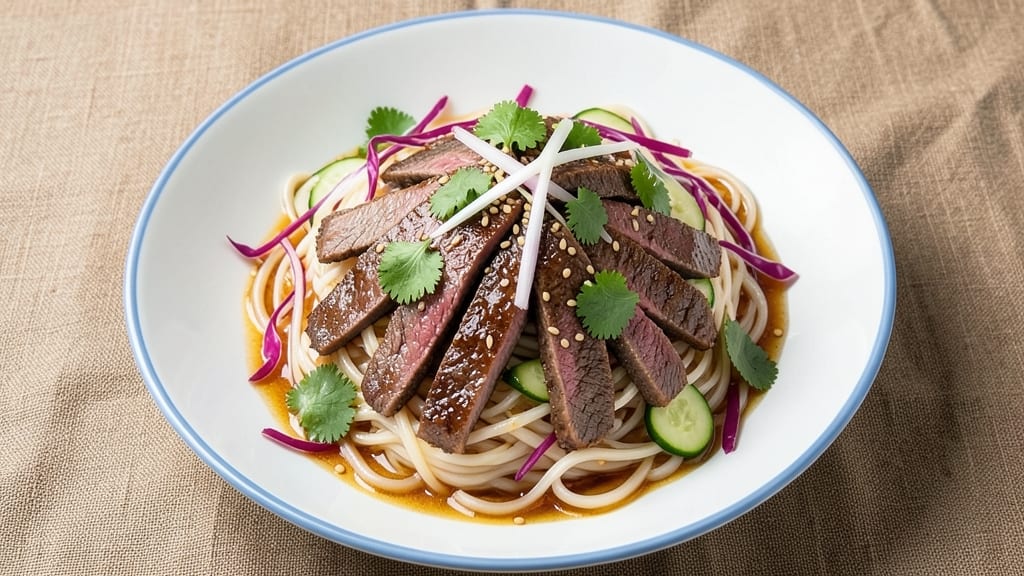
This Asian beef noodle salad recipe delivers the perfect balance of crispy wok-seared beef and silky rice noodles, all tossed in a vibrant, umami-packed dressing. The secret lies in high-heat searing for that signature wok hei flavor—smoky, aromatic, and impossible to resist.
I developed this version after years of testing, ensuring every bite delivers the right mix of textures and bold Asian flavors without requiring a wok.
The beef gets marinated in a simple soy-ginger-garlic blend before being seared to golden perfection, while the rice noodles soak up just enough dressing to stay tender yet distinct.
What makes this dish truly special is the sauce: a harmonious blend of sweet, tangy, and savory elements that coats every ingredient without overpowering. The result is a restaurant-quality salad that’s ready in under 30 minutes—ideal for weeknight dinners or meal prep.
By the time you assemble everything, you’ll have a dish that’s crispy on the outside, silky in the middle, and bursting with layered flavors. The beef stays tender despite the high heat, and the noodles maintain their chewy texture even after dressing.
This recipe is adaptable too—swap in gluten-free noodles or adjust the spice level to suit your taste. It’s the kind of meal that transforms a simple lunch into something truly memorable.
Serve it chilled for a refreshing bite or at room temperature for deeper flavors. The dressing clings beautifully to the noodles, while the beef adds a satisfying chew. Perfect for feeding a crowd or enjoying as a light yet satisfying solo meal. Let’s get cooking!
Ingredients for asian beef noodle salad
Crispy wok-seared beef meets silky rice noodles in this vibrant Asian-inspired dish.
| Ingredient | Amount | Notes |
|---|---|---|
| Flank Steak 🥩 | 1 lb | Thinly sliced against grain |
| Rice Noodles 🍜 | 8 oz | Medium width, uncooked |
| Low-Sodium Soy Sauce 🍶 | ½ cup | For marinade and sauce |
| Fresh Ginger 🌿 | 2 tbsp | Finely grated |
| Garlic Cloves 🧄 | 4 cloves | Minced |
| Sesame Oil 🫒 | 1 tbsp | Toasted for aroma |
| Vegetable Oil 🫒 | 2 tbsp | High smoke point |
| Red Bell Pepper 🍅 | 1 medium | Thinly sliced |
| Green Onions 🧅 | 4 whole | Thinly sliced |
| Sesame Seeds 🌾 | 1 tbsp | Toasted for garnish |
| Honey 🍯 | 2 tbsp | For dressing sweetness |
| Rice Vinegar 🍶 | 2 tbsp | For tangy balance |
| Lime Juice 🍋 | 1 ½ tbsp | Freshly squeezed |
| Sriracha 🌶️ | 1 tbsp | Adjust for heat |
| Salt 🧂 | 1 tsp | Kosher or sea salt |
The beef makes this dish—flank steak is lean but packs serious flavor when sliced thin against the grain. Grab the thinnest cut you can find at Costco or your local butcher, or ask the meat department to slice it for you. Fresh ginger and garlic are non-negotiable here; Trader Joe's sells pre-grated ginger if you're in a rush, but fresh is always better. For the noodles, medium-width rice noodles (like Vietnamese pho noodles) hold up best to the dressing without getting mushy. Soak them in warm water for about 5 minutes—they should be pliable but still slightly firm.
No sesame oil? Toasted peanut oil works in a pinch, though it'll have a different nutty flavor. Short on honey? Maple syrup or agave at the same amount balances the tangy dressing. The red bell pepper can be swapped for shredded cabbage or cucumber if you prefer something crunchier. For extra heat, add a dash of gochujang or more Sriracha. The dressing comes together in minutes—just whisk everything until smooth. Taste as you go; you can always add more lime or honey to hit that sweet-tangy balance.
Prep the beef and dressing first—they can sit while the noodles soak. The seared beef stays crispy for about 10 minutes after cooking, so work quickly when assembling. Store leftovers in an airtight container for 3-4 days in the fridge. The dressing separates? Just give it a quick whisk before serving. Freezes beautifully too—just reheat the beef and toss with thawed noodles. Garnish with those toasted sesame seeds right before serving; they add the perfect crunch.
Why You'll Love This Recipe
- No Fuss, Big Payoff: I swear by this one—just slice the flank steak thin, sear it in a hot pan, and toss it with pre-soaked rice noodles. The magic happens when you let the low-sodium soy sauce and ginger mingle while everything cools. Honestly, it’s the kind of meal that feels fancy but takes less effort than deciding what to eat.
- Umami Bomb: That crispy edge on the steak? The fresh ginger’s zing cutting through the richness? Between us, the garlic cloves roasted just until fragrant take this salad from good to I’ll make it again tomorrow. The soy sauce ties it all together without overpowering—just enough to make your taste buds do a happy dance.
- Lunchbox Hero: Between us, this is my go-to for packed lunches or last-minute dinner guests. The noodles hold up perfectly for days, and the steak stays tender as long as you slice it against the grain. I’ll be real: my coworkers ask for the recipe every time I bring it in, and my kids actually eat their veggies when I toss in shredded carrots or cucumber.
- Budget Win: Flank steak stretches further than you’d think when sliced thin, and rice noodles are cheaper than takeout. Here’s what sold me—the leftovers taste just as good cold the next day, so I can meal prep a whole week’s worth without breaking the bank. Plus, the low-sodium soy sauce means I can load up on flavor without the guilt.
Step-by-step instructions for Asian beef noodle salad
Here's how to create crispy wok-seared beef and silky rice noodles that balance perfectly.
Marinate and Slice the Flank Steak
Place the 1 lb flank steak on a cutting board and slice it thinly against the grain into ¼-inch thick strips. This ensures tender bites that cook quickly in the wok. In a bowl, combine 0.5 cup low-sodium soy sauce, 2 tbsp finely grated fresh ginger, 4 minced garlic cloves, and 1 tsp salt. Add the steak strips and toss to coat evenly. Let it marinate for at least 20 minutes (or up to 2 hours in the fridge) - this tenderizes the meat and infuses flavor.
I like to press the marinade into the meat with my fingers to ensure every strip gets coated. If you're short on time, even 10 minutes of marinating will help, but longer is better for deeper flavor. The steak should look glossy and fully saturated when ready to cook.
Cook the Rice Noodles Al Dente
Bring a pot of water to a rolling boil and add the 8 oz rice noodles. Cook for 2-3 minutes less than the package instructions - they'll finish cooking in the wok. The noodles should be tender but still slightly firm to the bite when you taste them. Drain immediately and rinse under cold water to stop the cooking process and prevent them from sticking.
I use a colander to drain them, then spread the noodles on a clean kitchen towel to absorb any excess water. This step is crucial for preventing a soggy salad later. The noodles should be cool enough to handle when you're ready to assemble the dish.
Wok-Sear the Beef for Crispy Texture
Heat 2 tbsp vegetable oil in a wok or large skillet over high heat until shimmering. Add the marinated steak in a single layer and let it sear undisturbed for 1-2 minutes until the edges develop a deep golden crust. This is where the magic happens - the high heat creates that perfect crispy texture we're after.
Don't overcrowd the pan or the steak will steam instead of sear. Work in batches if needed, keeping the cooked beef warm in a bowl. The beef should be 80% cooked at this stage - it'll finish cooking when tossed with the noodles. You'll know it's ready when the edges are crispy and the center is still slightly pink.
Assemble the Salad with Fresh Vegetables
In the same wok, add 1 medium thinly sliced red bell pepper and 4 whole thinly sliced green onions. Stir-fry for 1-2 minutes until the vegetables soften slightly but still retain their bright color. Remove from heat and let cool for 1 minute. Add the cooked rice noodles and toss everything together gently.
Here's where the balance comes in - the crispy beef meets the silky noodles and fresh vegetables. I like to keep everything at room temperature so the flavors meld properly. The vegetables should still have a slight crunch while the noodles maintain their silky texture.
Create the Dressing and Finish
In a small bowl, whisk together 1 tbsp toasted sesame oil, 2 tbsp honey, 2 tbsp rice vinegar, 1.5 tbsp freshly squeezed lime juice, 1 tbsp sriracha, and 1 tbsp toasted sesame seeds. Pour this dressing over the noodle mixture and toss gently to combine. Taste and adjust the seasoning - you might want to add a splash more soy sauce for saltiness or lime juice for tang.
The dressing should coat the noodles lightly without making them soggy. I like to let the salad sit for 5 minutes before serving so all the flavors can meld together. The final dish should have a perfect balance of sweet, tangy, spicy, and umami flavors with that satisfying crispy texture from the wok-seared beef.
Pro Tips For Making Asian Beef Noodle Salad
- Slice Against the Grain: Flank steak has a stubborn grain—if you slice perpendicular to it, you’ll end up with chewy, rubbery strips. Run your thumb along the muscle fibers first to spot the direction, then slice thinly with the grain. I used to ignore this and wondered why my salad had texture like shoe leather.
- Soak Noodles in Cold Water: Tossing rice noodles directly into boiling water? You’ll end up with a gluey mess. Soak them in cold water for 10-15 minutes first—just until pliable—then drain. The cold water keeps them from overcooking while you prep the rest, and they’ll hold up better when tossed with the dressing.
- Don’t Overcrowd the Pan: I learned this the hard way—dumping all the flank steak strips in at once just steams them instead of searing. Cook in batches over medium-high heat for 1-2 minutes per side until caramelized. Crowding = sad, gray beef; spacing = crisp edges and juicy centers.
- Use Ginger-Garlic Paste for Speed: Mince fresh ginger and garlic? Takes forever, and half the time you’re breathing in dust. Buy a small jar of pre-minced ginger-garlic paste—it’s cheaper than you think—and toss it straight into the sauce. Same flavor, zero chopping. (Yes, even if you’re impatient like me.)
Pro cooking tips for asian beef noodle salad
High-Heat Searing
Use a wok or cast-iron skillet for that signature wok hei flavor—smoky, aromatic, and crispy. Heat your pan until it's ripping hot (a drop of water should sizzle and evaporate instantly). I use vegetable oil with a high smoke point to prevent burning.
Add the beef in a single layer and resist the urge to stir immediately—let it develop that deep golden crust for 1-2 minutes before tossing. 🔥
Marinade Magic
The marinade isn’t just for flavor—it tenderizes the beef. Let the flank steak soak up the soy-ginger-garlic blend for at least 20 minutes (up to 2 hours for deeper flavor). Press the marinade into the meat with your fingers to ensure even saturation.
Pro tip: If you’re short on time, even 10 minutes makes a difference, but longer marinating prevents toughness. The beef should look glossy and fully coated before cooking.
Noodle Perfection
Rice noodles cook fast—boil them for 2-3 minutes less than the package suggests, then rinse in cold water to stop the cooking process. Spread them on a clean kitchen towel to dry slightly before assembling.
This keeps them silky yet distinct in the salad, preventing a mushy texture. Overcooking noodles is the #1 mistake—trust your taste test! 🍜
Dressing Balance
The dressing should be light but flavorful—whisk together honey, rice vinegar, lime juice, and Sriracha until smooth. Taste as you go: add more lime for tang, honey for sweetness, or a splash of soy sauce for umami.
The dressing should coat the noodles without drowning them. Let the salad sit for 5 minutes before serving so flavors meld—this is where the magic happens! ✨
Batch Cooking
Cook the beef in small batches to avoid overcrowding the pan. Keep finished beef warm in a bowl while you sear the next batch. This ensures even cooking and maintains that crispy texture.
Work efficiently—once the beef hits 80% doneness, it’s ready to toss with noodles and veggies. Pro move: Use a meat thermometer to check internal temp (aim for 145°F for medium-rare).
Garnish Like a Pro
Toast the sesame seeds in a dry pan for 30 seconds until fragrant, then sprinkle over the salad just before serving. This adds crunch and aroma without overpowering.
Fresh green onions and a drizzle of extra sesame oil elevate the dish instantly. Garnishes should highlight, not hide—the beef and noodles are the stars! 🌟
Nutrition facts
Frequently asked questions
Can I use a different type of beef for this recipe?
Yes! While flank steak is ideal for its lean texture and flavor, you can substitute with sirloin or ribeye (trimmed of fat). Avoid tougher cuts like chuck—they won't tenderize properly. For extra tenderness, slice the beef thinner than ¼-inch if using a tougher cut. Always slice against the grain, no matter the cut.
How do I prevent the noodles from getting soggy?
Undercooking the noodles slightly (by 2-3 minutes less than package time) is key! Rinse them in cold water after draining to stop cooking, then pat dry on a kitchen towel. Add the dressing just before serving, and toss gently—don't overmix. The beef's residual heat will finish cooking the noodles without making them mushy.
Can I make this recipe ahead of time?
Store all components separately in an airtight container for up to 3 days. Keep the beef and dressing separate until ready to serve—this prevents sogginess. Reheat the beef in a pan for 1 minute before tossing with noodles and dressing. The flavors actually improve overnight as they meld!
What if I don't have a wok?
No problem! A cast-iron skillet or large stainless steel pan works perfectly. The key is getting the pan ripping hot (water should sizzle instantly). Use high heat and cook in small batches to maintain that crispy texture. If your pan isn't hot enough, the beef will steam instead of sear.
How can I make this gluten-free?
Swap the rice noodles for gluten-free tamari-soy sauce in the marinade and dressing, and use gluten-free rice noodles (like Vermicelli or shirataki noodles). Check that all ingredients (like soy sauce and sesame oil) are certified gluten-free. The recipe remains exactly the same—just ingredient swaps!