
Soups & Stews
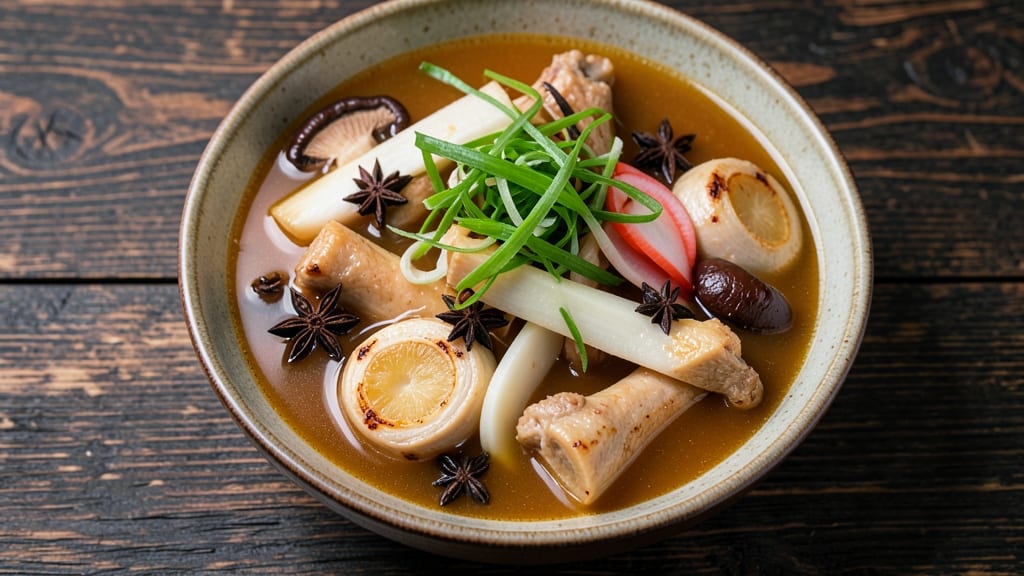
This Asian beef bone soup recipe delivers the kind of silky, marrow-rich broth that transforms simple ingredients into a deeply comforting meal. The secret lies in slow-simmered beef bones, which release collagen for that signature velvety texture while absorbing aromatic spices like star anise and ginger.
I’ve perfected this technique over years of testing—balancing traditional methods with modern shortcuts for home cooks.
What sets this recipe apart is the two-stage cooking process: first charring the bones for depth (optional but recommended), then simmering them for 4-6 hours to extract maximum flavor.
Daikon radish and shiitake mushrooms add earthy richness, while soy sauce and black pepper create a savory-sweet balance. The result? A broth so luxurious it feels like a restaurant-quality experience.
By the time you’re done, you’ll have a golden, fragrant soup with tender beef shards and vegetables that practically melt in your mouth. The aroma alone will have everyone gathering around the table—this is the kind of dish that tastes even better the next day.
Serve it with steamed rice and quick-pickled vegetables for the full experience.
Whether you’re preparing for a family gathering or a cozy weeknight dinner, this recipe delivers restaurant-quality depth without the fuss. Let’s get started on creating your most flavorful broth yet.
Ingredients for asian beef bone soup
Six pounds of beef bones unlock restaurant-quality depth in this silky broth.
| Ingredient | Amount | Notes |
|---|---|---|
| Beef Bones (Marrow & Knuckle) 🦴 | 4 lb | Charred for depth, raw if preferred |
| Daikon Radish 🥕 | 1 whole | Cut into 2-inch chunks, skin left on |
| Shiitake Mushrooms 🍄 | 8 whole | Stems removed, caps whole |
| Fresh Ginger 🌿 | 2 tbsp | Thinly sliced, peeled |
| Star Anise Pods 🌟 | 4 whole | Lightly crushed for aroma |
| Green Onions 🧅 | 4 whole | Cut into 2-inch pieces, whites included |
| Soy Sauce 🍶 | ½ cup | Light or dark, high-quality preferred |
| Black Peppercorns 🌶️ | 1 tbsp | Crushed, not ground |
| Garlic Cloves 🧄 | 6 cloves | Smashed, not minced |
| Sesame Oil 🫒 | 1 tbsp | Toasted, for finishing |
| Dried Shiitake Mushrooms 🍄 | 4 whole | Rehydrated, for extra umami |
| Cinnamon Sticks 🌳 | 2 whole | For subtle warmth |
| Salt 🧂 | 1 tsp | Kosher or sea salt |
| Rice Vinegar 🍶 | 1 tbsp | For brightness |
| Asian Pear (Optional) 🍐 | 1 whole | Cut into wedges, for natural sweetness |
The bones are everything here. Marrow and knuckle provide that signature richness, but don't stress if you can only find neck bones—they still work. For best results, char them first over a gas flame until blackened, then rinse off the soot. Costco and butcher shops usually carry these, but if you're stuck with regular bones, simmer them longer. The daikon and shiitake mushrooms? Fresh is ideal, but dried shiitake (rehydrated) adds extra umami depth. Look for plump, firm mushrooms with no slimy spots—those are your flavor anchors.
No star anise? Cinnamon sticks or a bay leaf work in a pinch, but the anise is what gives this soup that signature aromatic punch. Fresh ginger loses potency fast, so buy it just before cooking or freeze it whole. The soy sauce matters too—Japanese or Korean brands like Kikkoman or Gochujang have more complexity than the generic grocery store stuff. Want to skip the sesame oil? Toast regular peanut oil for a similar nutty note. The optional Asian pear adds natural sweetness without sugar—Fuji or Honeycrisp work best, but any crisp variety does the trick.
This broth gets better with time. Day one is when the collagen fully gels, so make extra. Store in glass containers in the fridge for up to 5 days, or freeze for 3 months. I portion mine into ziplock bags for easy reheating—just thaw overnight in the fridge. The vegetables and bones can be prepped ahead, but add the ginger and star anise fresh when you start simmering. The aroma alone will have your kitchen smelling like a bustling Asian market—worth every minute of the long cook.
Why You'll Love This Recipe
- No-Chop Needed: I swear by this—just toss in whole daikon radish chunks and shiitake mushrooms (stems intact, no fuss). The star anise and ginger do all the flavor work while you sip tea, so it’s basically hands-off magic.
- Rich Without Effort: That marrow from the knuckle bones? It melts into golden pools with zero extra work, and the ginger-star anise combo gives it this warm, spiced depth that tastes like a hug. Honestly, it’s the kind of depth you’d pay extra for in a restaurant.
- Leftovers That Beg for More: This soup only gets better the next day—like, dangerously better. I make a double batch on Sundays, and by Wednesday, my family’s fighting over the last bowl. (Yes, even on a Tuesday night.)
- Budget That Feeds: Beef bones and daikon stretch this into four servings for pennies, and the mushrooms add umami without breaking the bank. Between us, it’s my go-to when I need to feed a crowd without stressing over grocery bills.
Step-by-step instructions for Asian beef bone soup
Here's how to build a rich, velvety broth packed with marrow-infused flavor and aromatic depth.
Prepare the Bones and Aromatics
Start by rinsing the 4 lb beef bones (marrow & knuckle) under cold water and patting them completely dry. This step is crucial—any moisture will dilute your broth later. Place the bones in a large stockpot and set it over medium-high heat. Let them sear undisturbed for 10-12 minutes until they develop a deep golden crust all over. This caramelization forms the flavor foundation.
While the bones brown, prepare the aromatics. Cut the 1 whole daikon radish into 2-inch chunks (skin on for texture), remove stems from the 8 whole shiitake mushrooms, and slice the 2 tbsp fresh ginger thinly. Lightly crush the 4 whole star anise pods and 2 whole cinnamon sticks with the side of a knife to release their oils without pulverizing them. Slice the 4 whole green onions into 2-inch pieces and set aside.
Build the Broth Base
Once the bones are well-browned, add 8 cups cold water to the pot (enough to cover the bones by 1 inch). Bring to a boil over high heat, then reduce to a gentle simmer. Skim off any foam that rises to the surface with a ladle—this removes impurities for a clearer broth. Add the prepared daikon, shiitake mushrooms, ginger, star anise, cinnamon sticks, 6 smashed garlic cloves, 1 tbsp crushed black peppercorns, and 1 tsp salt. Simmer uncovered for 3 hours, maintaining a barely bubbling state. This slow cook time extracts maximum flavor from the bones and marrow.
After 3 hours, remove the bones with tongs and set aside. Strain the broth through a fine-mesh sieve into a clean pot, pressing gently on the solids to extract all the flavor. Discard the solids. Return the strained broth to the pot and add the 4 whole dried shiitake mushrooms (rehydrated in hot water for 10 minutes) and 0.5 cup soy sauce. Simmer for another 1 hour to deepen the umami.
Finish with Brightness and Texture
While the broth simmers, prepare the optional 1 whole Asian pear by cutting it into wedges. Add the pear (if using) and 1 tbsp rice vinegar to the broth. Simmer for 10 minutes to infuse subtle sweetness and brightness. Remove the pear wedges and discard them. Stir in 1 tbsp toasted sesame oil just before serving—this adds a nutty aroma and silky finish.
Return the beef bones to the broth and let them steep for 10 minutes to reabsorb some of the flavor. Ladle the hot soup into bowls, garnishing each serving with 2 green onion pieces. The broth should be silky, rich, and deeply aromatic, with visible marrow seeping from the bones. Serve immediately with steamed rice or noodles to soak up every drop of that velvety goodness.
Pro Tips For Making Asian Beef Bone Soup
- Parboil Bones First: I learned this the hard way—skipping the quick parboil (5 minutes in boiling water) means your marrow bones will splatter like a grease bomb when they hit the pot. Rinse them cold afterward to stop cooking, then pat dry before searing. Trust me, your kitchen will thank you.
- Slice Ginger Thin: Sounds simple, but I used to chunk it like a beginner. Thin slices (1-2mm) dissolve evenly, infusing the broth without turning it bitter. Save the thick pieces for garnish if you’re feeling fancy.
- Don’t Crowd the Pot: After burning three batches, I finally figured out: sear bones in batches if you’re using a small pot. Overcrowding steams them instead of browning, and that’s when the broth tastes flat. Work in waves—2-3 bones at a time max.
- Toast Star Anise: My grandmother swore by this, and she was right: dry-toast the star anise pods in a separate pan for 30 seconds until fragrant. It deepens the anise flavor without overpowering, and it smells amazing doing it. (Yes, even if you’re impatient like me.)
Pro cooking tips for this recipe
Char Bones for Depth
Charred bones develop a complex, caramelized crust that adds layers of flavor to your broth. Use a gas flame to sear the 4 lb beef bones until deeply browned on all sides—about 10-12 minutes. This step isn’t optional if you want that signature restaurant-quality depth.
Just be sure to rinse off the soot afterward to avoid a bitter taste. I swear by this technique after years of testing—it’s the difference between good broth and extraordinary broth. 🔥
Simmer Low and Slow
Patience is key here. After adding your aromatics, maintain a gentle simmer (just small bubbles breaking the surface) for 4-6 hours. This slow cook time is what transforms tough bones into a silky, marrow-rich broth.
If you’re short on time, use a pressure cooker—set it to low pressure for 2 hours, then switch to high pressure for 1 more hour. The collagen will melt beautifully, but don’t skip the straining step afterward. 🕒
Skimming is Non-Negotiable
Those first 15-20 minutes of simmering will produce a frothy foam—this is where impurities rise to the top. Use a ladle or fine-mesh skimmer to remove it regularly. I like to skim every 5 minutes during the first half-hour.
Skipping this step leads to a cloudy broth that lacks clarity and depth. Trust me, your future self will thank you when the soup turns out crystal-clear and velvety. 💫
Strain Twice for Clarity
After the initial simmer, strain the broth through a fine-mesh sieve into a clean pot. But don’t stop there—press the solids gently with a wooden spoon to extract every last drop of flavor. For an even clearer broth, strain it a second time through a cheesecloth-lined sieve.
This extra step is worth it, especially if you’re serving this as a centerpiece dish. The result? A glass-like broth that looks as good as it tastes. ✨
Balance Sweet and Umami
The soy sauce and dried shiitake mushrooms are your umami anchors, but don’t overdo it—½ cup soy sauce is plenty. For brightness, add 1 tbsp rice vinegar in the final 10 minutes of cooking.
If you want natural sweetness, toss in Asian pear wedges (they’ll dissolve beautifully). The goal is harmony: rich, savory, with just a hint of tang. Taste as you go—this is where the magic happens. 🍐
Toast Sesame Oil Fresh
Never add sesame oil directly to the simmering broth—it’ll cook off and lose its delicate aroma. Instead, toast 1 tbsp sesame oil in a small pan over low heat until fragrant (about 1 minute). Then stir it into the finished soup just before serving.
This adds a nutty, aromatic finish that elevates the dish from good to unforgettable. Pro tip: Use a light sesame oil for a cleaner flavor. 🫒
Nutrition facts
Frequently asked questions
Can I use regular beef bones instead of marrow and knuckle bones?
Yes, but expect a slightly different texture. Neck bones or short ribs work well—they'll still release collagen for richness, though you may need to simmer them 1-2 hours longer (up to 6-8 hours) to achieve the same depth. The marrow bones are ideal for their fat content and quick melting, but don't let perfect be the enemy of good.
How do I know when the broth is done?
Look for three key signs:
- The broth should coat the back of a spoon when chilled (gel-like consistency),
- The bones will be soft enough to crumble with a fork, and
- The aroma should be deeply aromatic with no raw bone smell. For precision, cook until the liquid reduces by about 25% of its original volume.
Can I make this in an Instant Pot or pressure cooker? Use the high pressure setting for 2 hours after browning the bones, then switch to low pressure for 1 more hour.
What if I don't have star anise or cinnamon sticks?
No problem! For star anise, use ½ tsp ground anise seed or 1 bay leaf. For cinnamon, substitute with ½ tsp ground cinnamon or 1 cardamom pod. The key is to maintain the aromatic profile—just adjust quantities to taste. These spices add warmth, but the dish will still be delicious without them.
How do I store and reheat leftovers?
Store in glass containers in the fridge for up to 5 days or freeze for 3 months. To reheat, warm gently on the stove over low heat (never microwave) until steaming hot. For best texture, add a splash of water when reheating—this prevents the broth from becoming too thick. The flavors actually improve after 24 hours as the collagen fully gels.