
Side Dishes
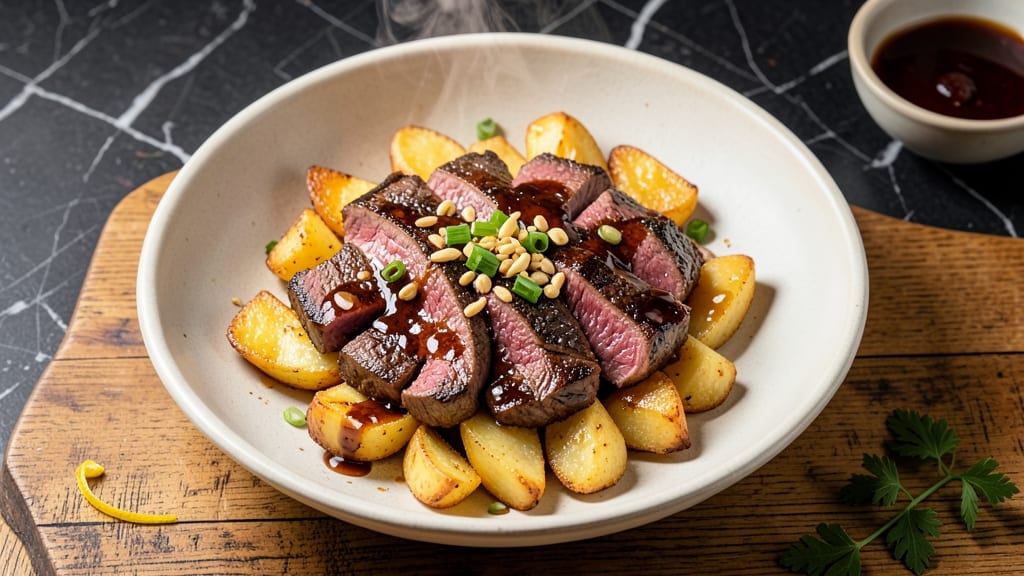
This Asian beef and potatoes recipe delivers restaurant-quality wok-crispy potatoes paired with tender, sweet soy-braised beef—all achieved with simple techniques and bold flavors. The secret lies in high-heat wok cooking for those signature crispy edges on the potatoes while the beef simmers in a sticky, umami-rich sauce.
I developed this dish after years of perfecting stir-fry textures, and it never fails to impress. What sets this recipe apart is the balance of textures and flavors: crispy potato wedges that stay crunchy, fork-tender beef with a glossy glaze, and a sauce that's both sweet and savory.
The potatoes get their signature wok hei (breath of the wok) aroma from high-heat searing, while the beef absorbs the deep flavors of soy, ginger, and garlic through slow braising. It's the kind of dish that transforms a simple weeknight dinner into something special.
By the time you serve this, you'll have perfectly caramelized potatoes with golden, crispy edges and beef that's fall-apart tender with a sticky, flavorful coating. The aroma alone will have everyone gathering at the table.
This recipe works equally well as a main dish or as part of an Asian-inspired feast. The best part? It comes together in about 45 minutes with minimal prep—ideal for busy weeknights when you still want restaurant-quality results. Let's get cooking!
Ingredients for asian beef and potatoes
Simple ingredients, bold flavors—crispy potatoes and sweet soy-braised beef in one pan.
| Ingredient | Amount | Notes |
|---|---|---|
| Russet Potatoes 🥔 | 2 lb | Cut into 1-inch wedges |
| Flank Steak 🥩 | 1 ½ lb | Thinly sliced against grain |
| Vegetable Oil 🫒 | ½ cup | High smoke point preferred |
| Soy Sauce 🍶 | ½ cup | Kikkoman preferred |
| Brown Sugar 🍯 | ¼ cup | Packed firmly |
| Garlic Cloves 🧄 | 6 cloves | Minced finely |
| Fresh Ginger 🌿 | 2 tbsp | Grated finely |
| Sesame Oil 🫒 | 1 tbsp | Toasted sesame preferred |
| Cornstarch 🌾 | 1 tbsp | For sauce thickening |
| Green Onions 🧅 | 4 whole | Sliced thinly |
| Salt 🧂 | 1 ½ tsp | Kosher preferred |
| Black Pepper 🌶️ | ½ tsp | Freshly ground |
| Sesame Seeds 🌰 | 1 tbsp | Toasted for garnish |
The potatoes are the star here, so grab russets—they're the crispy kind. Trader Joe's or any grocery store has them, but check for firm, blemish-free ones. The flank steak should be center-cut for tenderness, and Costco sells great pre-sliced packs. Fresh ginger and garlic are non-negotiable for that authentic wok hei aroma—don't use powdered. For the soy sauce, Kikkoman is the gold standard, but any good-quality brand works. If you can't find toasted sesame oil, regular sesame oil in a pinch (just skip the toasting).
No flank steak? Sirloin or ribeye sliced thin works too. Short on ginger? Double the garlic—it's a solid swap, though it won't be identical. The cornstarch is key for that glossy sauce—don't skip it, but if you're out, 1 tbsp all-purpose flour does the job. For the potatoes, Yukon golds make them slightly creamier inside, but russets are still the crispy champ. And if you burn the garlic (we've all been there), just fish it out—your sauce will still taste amazing.
Potatoes stay crispy best if you reheat in the oven—200°F for 10 minutes. The beef sauce thickens as it cools, so stir in a splash of water if it gets too thick. Leftovers keep for 3 days in the fridge, but honestly, they disappear faster. Double the recipe—it's that good. Store the sauce separately if you want to reheat just the beef later.
Why You'll Love This Recipe
- One-Pan Magic: I swear by this—just slice the potatoes, sear the steak, and let the soy and brown sugar work their sauce magic together. No extra bowls, no extra stress, and honestly? That crispy potato edge with the tender beef? It’s foolproof.
- Sweet-Savory Balance: The brown sugar caramelizes into the soy sauce, giving this dish that addictive, glossy glaze that clings to every bite. Flank steak stays juicy while the potatoes soak up that rich, sticky goodness—like a hug in a skillet.
- Lunchbox Hero: Between us, this is my go-to for meal prep. The leftovers reheat like a dream (yes, even the steak stays tender), and I pack it for work all week. My kids grab it for school lunches too—no complaints, just empty plates.
- Budget-Friendly Feast: Flank steak stretches farther than you’d think when sliced thin, and russets are the cheapest spud in the store. A little oil, a splash of soy, and some sugar turn basic ingredients into a dish that feels fancy without breaking the bank. (Yes, even on a Tuesday night.)
Step-by-step instructions for wok-crispy potatoes with sweet soy-braised beef
Here's how to balance crispy potatoes with tender, sweet-savory beef—no shortcuts, just bold flavors.
Prepare the Potatoes for Maximum Crisp
Cut the 2 lb russet potatoes into 1-inch wedges—keep the skins on for texture. Toss them immediately in a large bowl with 1.5 tsp salt and 0.5 tsp black pepper. This salting step is crucial; it draws out moisture so the potatoes crisp up properly rather than steaming. Let them sit for 15 minutes while you prep everything else.
After resting, pat the wedges completely dry with paper towels. Any moisture left on the surface will prevent crispiness. Arrange them in a single layer on a baking sheet—don't overlap them or they'll steam instead of brown. This is where the magic happens: crispy edges with tender centers.
Sear the Flank Steak for Perfect Texture
Slice the 1.5 lb flank steak thinly against the grain into ¼-inch strips. This ensures each bite is tender, not chewy. Heat 0.25 cup vegetable oil in a large wok or skillet over high heat until shimmering. Add the steak strips in a single layer and sear for 2-3 minutes until they develop a deep brown crust.
Remove the steak and set aside. Here's the thing—don't overcrowd the pan. If you add too much at once, the steak will steam instead of sear. Work in batches if needed, but keep the heat high. The goal is a perfect crust that locks in juices while keeping the interior tender.
Crisp the Potatoes in Stages
Add the remaining 0.25 cup vegetable oil to the same wok and heat over medium-high heat. Add half the potato wedges in a single layer and cook undisturbed for 8-10 minutes until the edges turn golden brown and crispy. Flip carefully and cook another 5-7 minutes until evenly browned. Remove and set aside.
Repeat with the remaining potatoes. This two-stage process ensures every piece gets that perfect crunch. If the potatoes seem too dry after cooking, don't worry—they'll absorb the sweet soy glaze later. The key is patience; rushing leads to soggy potatoes.
Build the Sweet Soy Glaze
In the same wok, reduce heat to medium and add 6 minced garlic cloves and 2 tbsp grated fresh ginger. Cook for 30 seconds until fragrant—don't let them burn. Pour in 0.5 cup soy sauce and 0.25 cup packed brown sugar, stirring to combine. Let it simmer for 2 minutes until slightly thickened.
Sprinkle 1 tbsp cornstarch over the sauce and stir vigorously for 1 minute until it becomes glossy and syrupy. This is your glaze—it should coat the back of a spoon. If it's too thick, add 1-2 tablespoons water to loosen it. The glaze should be sticky enough to cling to both the potatoes and beef.
Combine and Finish
Return the seared steak strips and crispy potatoes to the wok. Toss everything together with 1 tbsp sesame oil and let it cook for 2-3 minutes until everything is evenly coated and heated through. The potatoes should be warm but still crispy—if they soften too much, work quickly.
Garnish with 4 thinly sliced green onions and 1 tbsp toasted sesame seeds right before serving. The contrast of crispy potatoes, tender beef, and glossy glaze makes every bite exciting. Serve immediately while everything is hot and the potatoes are at their crispiest.
Pro Tips For Making Asian Beef And Potatoes
- CUT POTATOES IN EVEN STICKS: Flank steak cooks fast, so potatoes need to match its pace—aim for ½-inch-thick matchsticks (use a mandoline if you’re brave or a sharp knife if you’re not). Uneven pieces mean some will turn to mush while others stay raw, and nobody wants that sad texture contrast.
- SEAR STEAK IN BATCHES: Crowd the pan, and your steak will steam instead of sear. Work in two batches over medium-high heat—let the first layer get a deep brown crust before adding the second. I learned this the hard way after ending up with pale, flavorless slices.
- USE COLD POTATOES FOR CRISP: Toss your cut potatoes in cold water for 10 minutes before draining and drying. The starch wash keeps them from sticking and guarantees a crispy exterior when they hit the hot oil. Skip this, and you’ll end up with soggy sides every time.
- GLAZE WITH BROWN SUGAR LAST: Add the brown sugar and soy sauce to the pan only after the steak is mostly cooked—let it caramelize for 2-3 minutes with the potatoes. This builds real depth of flavor instead of turning everything into a sticky, sweet mess. Trust me, the timing matters.
Essential equipment for this recipe
Wok Essentials
A carbon steel wok is my go-to for this recipe—it heats up fast and retains heat perfectly, giving you that signature wok hei aroma. Look for a 14-inch model like the De Buyer 14-inch or Mauviel M'Cook—they're durable and conduct heat evenly.
If you don’t have a wok, a heavy-bottomed cast-iron skillet (like Lodge) works too, though it may take slightly longer to heat. 🔥
High-Heat Tools
For crispy potatoes, you need a heat diffuser or wok ring to control the flames and prevent burning. The Presto 10-inch heat diffuser is my favorite—it spreads heat evenly and keeps the potatoes cooking at a steady medium-high heat.
If you’re using a stovetop, ensure your burner is compatible with high heat (avoid electric coil burners—they’re inconsistent).
Tongs and Spatulas
Invest in a stainless steel pair of tongs (like OXO Good Grips) for flipping potatoes—they grip better than spatulas and prevent crushing. A wide, flat spatula (such as the Mercer Culinary Genesis) helps scrape up those crispy bits stuck to the wok.
I also keep a silicon spatula handy for stirring the soy glaze without scratching the pan.
Precision Tools
A microplane is a game-changer for grating fresh ginger and garlic—it yields fine, even shreds that infuse flavor without bitterness. For measuring the cornstarch and brown sugar, a small kitchen scale ensures accuracy (I use the OXO Good Grips model).
A laser thermometer (like Thermoworks One) helps monitor the wok’s temperature—aim for 450-500°F for optimal crispiness.
Garnish Kit
Toasted sesame seeds and sliced green onions elevate the dish, so keep a small skillet for toasting seeds and a sharp chef’s knife (like Shun Premier) for thinly slicing onions.
A fine-mesh strainer comes in handy if you need to drain excess oil from the potatoes before tossing them in the glaze. 💫
Nutrition facts
Frequently asked questions
Can I use a different cut of beef instead of flank steak?
Sirloin, ribeye, or even top round work well when sliced thinly against the grain. Flank steak is ideal because it's lean and tender when cooked quickly, but these alternatives add richness. Just be sure to slice ¼-inch thick and sear over high heat for 2-3 minutes max to prevent toughness.
How do I make the potatoes extra crispy?
Pat them completely dry after salting and arrange in a single layer on the baking sheet. Cook in two batches if needed to avoid overcrowding, and use medium-high heat for 8-10 minutes per side until golden brown. The secret? Don't flip too soon—wait until the edges are deeply caramelized.
Can I prepare this dish ahead of time?
Yes, but with a twist! Cook the beef and potatoes separately, then store them in the fridge for up to 2 days. Reheat the beef in the sauce over low heat (add a splash of water if it thickens too much), and crisp the potatoes in a 400°F oven for 10-12 minutes before tossing with the sauce. The potatoes will lose some crispness but stay delicious.
What if I don't have a wok?
No problem! A heavy-bottomed cast-iron skillet (like Lodge) or even a large stainless steel pan works perfectly. Just ensure your burner can handle high heat—avoid electric coil burners. For extra crispiness, use a heat diffuser to spread heat evenly. The key is maintaining that high-heat sear for both the potatoes and beef.
How can I make this dish spicier?
Add 1-2 teaspoons of chili flakes or ½ teaspoon of red pepper flakes to the sauce while simmering. For heat with depth, stir in 1 tablespoon of gochujang (Korean chili paste) or a dash of Sriracha at the end. If you love fresh heat, top with thinly sliced jalapeños or a sprinkle of chili crisp before serving.