
Main Courses
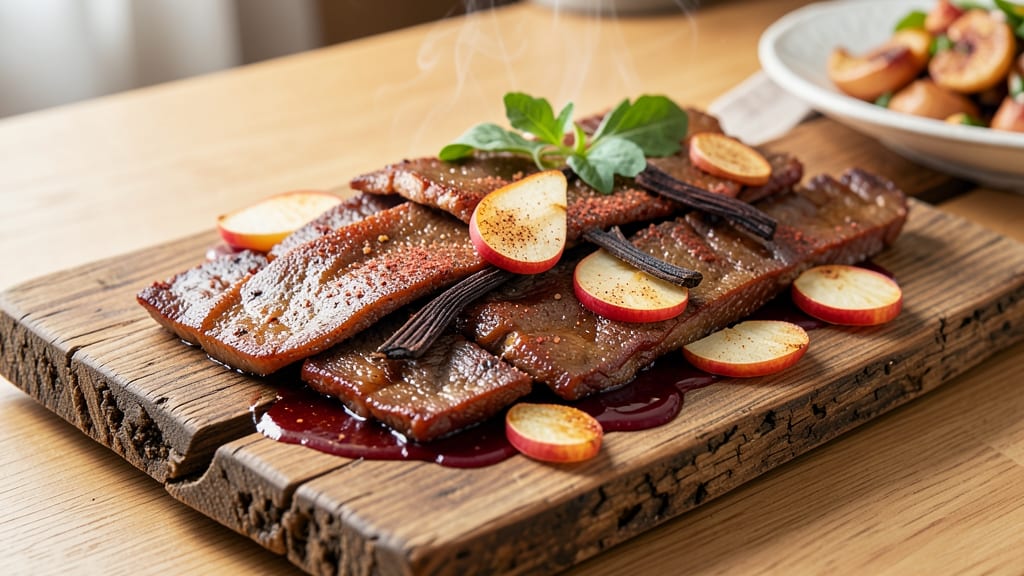
This apple beef jerky recipe transforms tough cuts into chewy, smoky-sweet strips that taste like a campfire snack—no dehydrator required. The secret lies in the marinade: apple cider vinegar tenderizes the meat while balancing the spice rub, creating a perfect harmony of sweet, tangy, and savory flavors.
I've perfected this method over years of trial and error, ensuring every bite delivers that satisfying chew and bold taste.
What sets this recipe apart is the apple element—whether through cider, puree, or chunks—that adds natural sweetness and moisture retention during the curing process. The spice rub includes smoked paprika and brown sugar for depth, while garlic and onion powder build complexity.
Safety is critical here, so we'll cover proper curing times and storage to guarantee shelf-stable, restaurant-quality jerky.
The result is jerky with a perfectly chewy texture, caramelized edges, and a flavor profile that's far more sophisticated than store-bought versions. You'll end up with strips that are ideal for hiking, tailgating, or snacking at home—packed with protein and bursting with flavor.
This method works with any lean cut of beef, making it both versatile and budget-friendly.
Once you master the technique, you can experiment with variations like adding chili flakes for heat or honey for extra sweetness. The jerky keeps well in the pantry for months, so you'll always have a delicious, protein-packed snack on hand.
Let's get started on creating your own batch of flavor-packed apple beef jerky.
Ingredients for apple beef jerky
Lean beef, apple cider, and a smoky-sweet spice blend create restaurant-quality jerky at home.
| Ingredient | Amount | Notes |
|---|---|---|
| Lean Beef Top Round Roast 🥩 | 2 lb | Tough cut, trimmed of fat |
| Apple Cider Vinegar 🍎 | 1 cup | Raw, unfiltered preferred |
| Granulated Brown Sugar 🍚 | ½ cup | Light or dark variety |
| Smoked Paprika 🌶️ | 2 tbsp | High-quality smoked variety |
| Garlic Powder 🧄 | 1 ½ tbsp | Freshly ground preferred |
| Onion Powder 🧅 | 1 ½ tbsp | No added MSG |
| Ground Black Pepper 🌶️ | 1 tbsp | Freshly cracked preferred |
| Ground Cinnamon 🌿 | 1 tsp | True cinnamon, not cassia |
| Ground Cloves 🌿 | ½ tsp | Freshly ground for potency |
| Salt 🧂 | 2 tbsp | Diamond Crystal preferred |
| Granulated Sugar 🍚 | ¼ cup | White granulated sugar |
| Granulated Apple Puree 🍎 | ¼ cup | Unsweetened, no additives |
| Water 💧 | 1 cup | Filtered or distilled |
The beef is everything here—top round roast is ideal because of its lean texture and natural toughness, which gives that perfect chewy bite. Costco or local butchers usually carry it pre-cut into strips, but if you're buying a whole roast, ask for it to be sliced against the grain into ¼-inch thick strips. Avoid fatty cuts like flank steak, as they won’t cure properly. For the apple cider vinegar, raw, unfiltered brands like Bragg’s add extra depth—skip the pasteurized stuff. The apple puree? Muir Glen unsweetened is my go-to, but any quality brand works as long as it’s free of added sugars or preservatives.
No apple cider vinegar? White vinegar or lemon juice in a pinch, though the flavor won’t be as complex. Swap brown sugar for maple syrup or honey (reduce other liquids by 2 tbsp to balance moisture), but expect a slightly different texture. Smoked paprika is non-negotiable—regular paprika won’t give that campfire smokiness. Running low on cloves? Allspice or nutmeg at half the amount works, but the warmth won’t be identical. The Diamond Crystal salt is key—it dissolves better than table salt, helping the cure penetrate evenly. Pro tip: Toast your spices lightly in a dry pan before mixing to wake up their flavors.
This jerky keeps for 3-4 months in the pantry if stored properly—vacuum-sealed or in an airtight container with oxygen absorbers. For shorter-term storage, the fridge holds it for 2 weeks in a sealed container. Freeze for up to 6 months if you’re not planning to eat it all at once. Label everything with the date—trust me, you’ll forget. Once opened, consume within 1 week to avoid spoilage. The longer it cures, the more intense the flavor becomes, so don’t rush it.
Why You'll Love This Recipe
- Fridge-to-Table Speed: I swear, this comes together faster than takeout. Slice the beef thin, toss it in a bowl with vinegar, sugar, and spices—no marinating overnight, no fuss—just 15 minutes of hands-off oven time. Honestly, my slow mornings now include jerky for breakfast.
- Sweet-Smoky Magic: That apple cider vinegar and brown sugar combo? It’s the secret weapon. The beef gets tender with a caramelized crust that’s dangerously good—crunchy outside, juicy inside, with a hint of garlic that lingers. (Yes, even on a Tuesday night.)
- Snack Attack Ready: Between us, this jerky disappears fast. I keep it in the fridge for quick protein when I’m in a rush, or pack it in lunches—it’s way better than store-bought. Kids? They’ll eat it. Teens? They’ll beg for it. (My daughter’s favorite, weirdly.)
- Budget Protein Power: A pound of top round roast stretches forever here. Stretch it into meals, snacks, or even tacos later—no waste, just flavor. I’ve made a full batch for $8 and fed four people twice. Practical? Absolutely. Delicious? Even more so.
Step-by-step instructions for apple beef jerky with smoky-sweet rub
Transform tough beef into irresistible jerky using this sweet-spiced marinade and precise drying technique.
Prepare and Trim the Beef
Begin by trimming the 2 lb lean beef top round roast of any visible fat or silver skin using a sharp boning knife. You want to work with clean, lean muscle for the best texture. Cut the beef into ¼-inch thick strips running parallel to the grain—this ensures tender, chewy jerky rather than tough, stringy pieces.
Arrange the strips on a clean cutting board and pat them completely dry with paper towels. Removing all moisture helps the marinade adhere better and prevents bacterial growth during drying. For best results, keep the strips uniform in size—this guarantees even cooking and drying throughout.
Create the Apple-Spiced Marinade
In a large mixing bowl, combine the 1 cup apple cider vinegar, 0.5 cup granulated brown sugar, 2 tbsp smoked paprika, 1.5 tbsp garlic powder, 1.5 tbsp onion powder, 1 tbsp ground black pepper, 1 tsp ground cinnamon, 0.5 tsp ground cloves, and 2 tbsp salt. Whisk vigorously until the brown sugar and spices fully dissolve into the vinegar, creating a thick, aromatic paste.
Next, add the 0.25 cup granulated sugar and 0.25 cup granulated apple puree to the mixture. Stir well to incorporate, then pour in the 1 cup water. The marinade should coat the back of a spoon with a syrupy consistency—this ensures maximum flavor penetration. If it's too thick, add 1 tablespoon water at a time until it reaches the perfect coating texture.
Marinate the Beef Overnight
Transfer the beef strips to a large resealable plastic bag or airtight container. Pour the marinade over the beef, ensuring every strip is fully coated. Seal the bag, then massage the beef gently to distribute the marinade evenly. Remove any air pockets by pressing down on the beef before sealing completely.
Refrigerate the beef for at least 12 hours, but I recommend marinating for 24 hours for maximum flavor infusion. The acidity in the apple cider vinegar will begin tenderizing the meat while the spices penetrate deeply. Give the bag a gentle shake every few hours to keep the beef submerged in the marinade—this prevents uneven coating and ensures consistent flavor.
Pre-Dry the Jerky
Preheat your dehydrator to 160°F or set your oven to its lowest setting (typically 150-160°F). Line the dehydrator trays or baking sheets with parchment paper and arrange the marinated beef strips in a single layer, ensuring they don't overlap. Overlapping pieces won't dry evenly and may develop bacterial growth.
Place the beef in the dehydrator or oven and dry for 4-6 hours, flipping the strips every 2 hours to promote even drying. The jerky should feel firm to the touch but still slightly pliable—this pre-drying step removes excess moisture before the final high-heat drying. If the jerky starts to darken too quickly, reduce the temperature by 10°F to prevent burning while maintaining safety.
Finish Drying for Perfect Texture
Increase the dehydrator or oven temperature to 175°F and continue drying the jerky for an additional 6-8 hours, again flipping the strips every 2 hours. The jerky is done when it's completely dry to the touch, flexible but not brittle, and has a deep reddish-brown color. A properly dried strip should snap when bent but not crumble—this indicates the perfect chewy texture.
Remove the jerky from the dehydrator and let it cool completely on a wire rack before storing. For best flavor, allow the jerky to rest for 1 hour before cutting into serving-sized pieces. Store in an airtight container in the refrigerator for up to 2 weeks or freeze for 3 months to preserve freshness. The smoky-sweet apple notes will develop even more depth over time, making these jerky strips a standout snack or trail mix addition.
Pro Tips For Making Apple Beef Jerky
- Trim Thin, Slice Even: Use a sharp knife and freeze the beef for 20 minutes first—it’ll slice cleaner and thinner. I learned this the hard way after struggling with uneven strips that cooked at different rates.
- Marinate Overnight, Not Hours: The apple cider vinegar needs time to tenderize, so aim for 12–24 hours. Less than 8 hours and the meat stays tough; longer than 24 and the flavor gets sour. Trust the clock.
- Skip the Crowding in Dehydrator: Overlapping strips traps moisture and turns jerky soggy. Arrange them single-layered with space—even if it looks sparse. Your future self will thank you.
- Brown Sugar First, Not Last: Mix the brown sugar into the marinade before adding vinegar—it dissolves better and caramelizes faster during drying. I used to add it last, and the jerky always tasted unevenly sweet.
Troubleshooting this recipe
Jerky Too Soft
If your jerky comes out too soft or gummy, it likely didn’t dry long enough or the temperature was too low. The ideal jerky should be flexible but not brittle—think of a good leather belt.
For oven drying, increase the temperature to 175°F for the final 6-8 hours and flip strips every 2 hours to ensure even drying. If using a dehydrator, extend drying time by 2-4 hours and check for moisture with a food thermometer—it should read 160°F internal temperature when fully dry. 🌡️
Uneven Drying
Uneven drying often happens when strips overlap or aren’t uniform in thickness. Before drying, ensure all strips are ¼-inch thick and arranged in a single layer with no touching. If some pieces dry faster, remove them early and return them to the dehydrator once fully cooled.
For stubborn spots, use a food-safe hairdryer on low heat to finish drying without overcooking. This method also helps salvage jerky that’s drying too slowly in humid conditions.
Jerky Too Dark or Burnt
Dark or burnt jerky usually means the temperature was too high or the strips were left too long. Reduce the temperature by 10-15°F and monitor closely after 4 hours. If using an oven, prop the door open slightly with a wooden spoon to allow moisture to escape without overheating.
For dehydrators, check the manual—some models overheat when overloaded. A light reddish-brown color is perfect; blackened jerky is overdone and may have a bitter taste.
Marinade Not Adhering
If the marinade isn’t sticking to the beef, the strips might not be dry enough or the marinade is too thin. Pat the beef strips completely dry with paper towels before marinating, and ensure the marinade has a syrupy consistency (it should coat the back of a spoon).
For extra adhesion, add 1 tbsp cornstarch or arrowroot powder to the marinade to thicken it slightly. Gently massage the beef in the marinade to help it cling, and refrigerate for at least 12 hours to let the flavors penetrate.
Bacterial Growth or Spoilage
Spoilage is rare but can happen if the beef isn’t properly trimmed, dried below 160°F, or stored incorrectly. Always trim off any fat or silver skin, as these harbor bacteria. Use a food thermometer to confirm the jerky reaches 160°F internal temperature during drying.
Store finished jerky in an airtight container with oxygen absorbers or vacuum-sealed bags to prevent contamination. If jerky smells sour or has mold, discard it immediately—never risk foodborne illness. ❄️
Jerky Too Tough or Stringy
Tough jerky often results from cutting against the grain or over-drying. Always slice the beef parallel to the grain into ¼-inch thick strips for optimal chewiness.
If the jerky is overly dry and tough, try rehydrating it briefly by placing strips in a bowl of warm water for 5-10 minutes before eating. For future batches, reduce drying time slightly and check flexibility—jerky should bend without snapping like a dry twig.
Nutrition facts
Frequently asked questions
Can I use apple chunks instead of puree in the marinade?
Yes! Finely diced apple (about ½ cup) works beautifully and adds texture. Just blend or mash them first to release juices, then strain out any large pieces if you prefer a smoother marinade. The natural pectin in apples helps tenderize the meat while adding subtle sweetness.
How do I know when the jerky is fully dried?
Test for doneness by bending a strip—it should bend without snapping (like leather) and feel completely dry to the touch. Use a food thermometer for precision: the internal temperature should reach 160°F. If it cracks when bent, it's overdone.
Can I make this jerky without a dehydrator?
Use your oven on its lowest setting (150-160°F) with the door slightly propped open. Line a baking sheet with parchment and dry strips for 6-8 hours, flipping every 2 hours. For extra airflow, place a wire rack over the sheet.
Why does my jerky taste bland after drying?
Bland flavor usually means insufficient marinating time or improper spice distribution. Always marinate for 24 hours and massage the beef to coat evenly. For extra depth, add 1 tsp liquid smoke to the marinade or toast spices before mixing.
How long will homemade jerky last?
Properly dried jerky keeps for 3-4 months in an airtight container at room temperature, or 6 months in the freezer. Vacuum-sealing extends shelf life by preventing oxidation. Check for spoilage by smell—if it develops any sourness, discard immediately.