
Soups & Stews
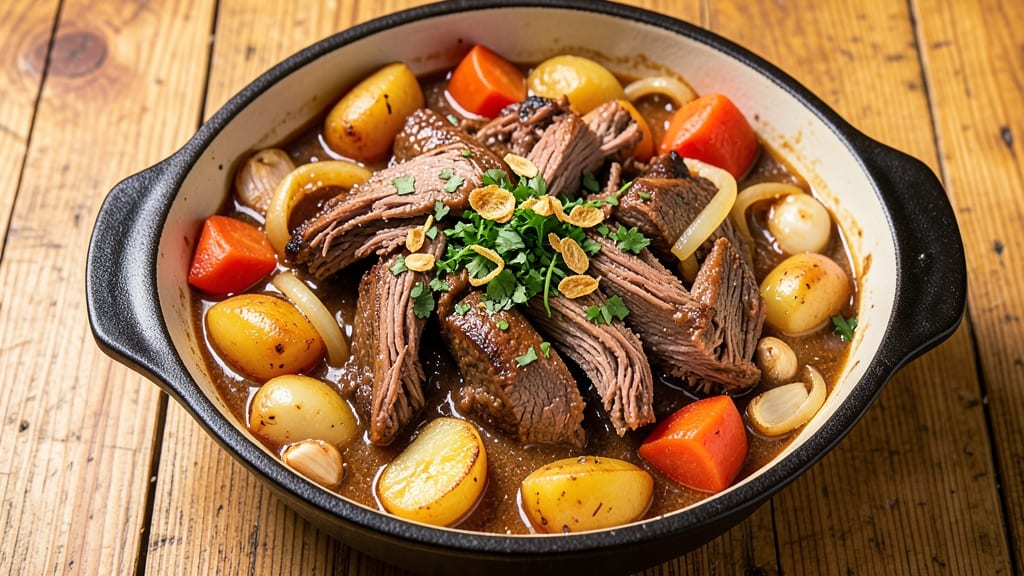
This American beef stew recipe delivers the deep, comforting flavors that make slow-cooked meals legendary—thickened with cornstarch for that signature velvety texture. 🔥 The secret lies in proper browning of the beef and layering spices to create a rich, aromatic base that simmers into perfection over hours.
This isn't just stew; it's a hearty, restaurant-quality dish that transforms tough cuts into melt-in-your-mouth tenderness.
The process begins with searing the beef to develop a deep, caramelized crust that forms the foundation of flavor. A blend of classic spices—thyme, bay leaf, and black pepper—infuses the broth as it simmers, while root vegetables like carrots and potatoes absorb the rich, savory liquid.
The cornstarch thickening ensures a smooth, clingy sauce that coats every bite, making this stew both satisfying and elegant.
By the time you serve this dish, you'll have a pot of golden-brown beef, tender vegetables, and a broth so flavorful it deserves a spoon all its own. The aroma alone will have everyone gathered around the table, and the first bite delivers on that promise of home-cooked comfort.
Perfect for chilly evenings or family dinners, this stew is a testament to how simple ingredients can create something truly extraordinary.
Pair it with crusty bread to soak up every last drop of that silky sauce, or serve alongside roasted potatoes for a complete meal. The beauty of this recipe is its adaptability—make it once, and you'll find yourself reaching for the slow cooker again and again.
Let's get started on creating this timeless classic.
Ingredients for american beef stew
Nine pantry staples and a few fresh ingredients transform into restaurant-quality beef stew.
| Ingredient | Amount | Notes |
|---|---|---|
| Chuck Roast 🥩 | 2 ½ lb | Cut into 1.5-inch cubes |
| Yellow Onion 🧅 | 1 whole | Chopped into 1/2-inch pieces |
| Carrots 🥕 | 1 ½ lb | Peeled, cut into 1-inch chunks |
| Russet Potatoes 🥔 | 2 lb | Peeled, cut into 1-inch cubes |
| Garlic Cloves 🧄 | 6 cloves | Minced for rich flavor |
| Beef Broth 💧 | 4 cups | Low-sodium preferred |
| Tomato Paste 🍅 | ½ cup | For depth of flavor |
| Cornstarch 🌾 | 2 tbsp | For silky thickening |
| Dry Red Wine 🍷 | 1 cup | Bold variety recommended |
| Fresh Thyme 🌿 | 2 tbsp | Or 2 tsp dried thyme |
| Bay Leaves 🍃 | 2 whole | Remove before serving |
| Black Peppercorns 🌶️ | 1 tsp | Freshly ground preferred |
| Salt 🧂 | 1 ½ tsp | Kosher or sea salt |
| Olive Oil 🫒 | 2 tbsp | For searing beef |
The beef is everything here. Chuck roast is your best bet—it's tough enough to stand up to hours of simmering but breaks down into tender perfection. Most grocery stores carry it pre-cut into cubes, which saves time. If you're buying a whole roast, ask the butcher to cube it for you. Costco or Walmart usually have it on sale, and you can freeze extras for future stews. Look for good marbling—those little fat streaks melt during cooking and keep the meat juicy. The potatoes and carrots should be firm and free of soft spots. Organic veggies taste better, but regular store-brand works fine too.
No red wine? Beef broth with an extra splash of balsamic vinegar works in a pinch. Fresh thyme is ideal, but dried thyme at half the amount gets you close. The tomato paste can be the squeeze tube kind from Trader Joe's—it's perfect for this recipe and lasts forever. If you're watching sodium, look for no-salt-added tomato paste. The cornstarch is non-negotiable for that silky texture—it's what makes this stew different from your average pot of beef and veggies. And don't skip the bay leaves—they add an earthy depth that's hard to replicate with other spices.
This stew tastes even better the next day once all the flavors meld together. Store leftovers in an airtight container in the fridge for up to 5 days. For longer storage, freeze portions for up to 3 months. I like to portion it into individual containers so I can grab a ready-made lunch. The cornstarch thickening means it reheats beautifully—just add a splash of water or broth if it gets too thick when warming. And trust me, you'll want leftovers.
Why You'll Love This Recipe
- Ditch the Chopping: I’ll admit, I used to dread dicing onions for hours. Here, you just slice the onion and carrots into big chunks—no fancy knife work. The chuck roast practically cooks itself, and by the end, everything softens into tender perfection.
- Rich, Deep Comfort: That first bite of tender beef with the sweetness of caramelized onions and garlic? It’s like a hug in a bowl. The potatoes soak up all the savory broth, and the carrots stay just crisp enough to bite into. Honestly, it’s the kind of dish that makes you slow down.
- Budget Beef That Feeds: A single chuck roast stretches to feed four, sometimes five, with sides. The onions, carrots, and potatoes are cheap staples, and the garlic adds that little extra punch without breaking the bank. It’s my go-to when I need to stretch a meal without sacrificing flavor.
Step-by-step instructions for American beef stew
Here's how to build a rich, hearty beef stew with that perfect silky texture we all crave.
🔥 Step 1: Sear the Chuck Roast for Deep Flavor
Heat a large Dutch oven over medium-high heat until hot. Add the 2 tbsp olive oil and let it shimmer for 30 seconds. Working in batches if needed, add the 2.5 lb chuck roast cut into 1.5-inch cubes, spreading them out in a single layer. Don't crowd the pan—this ensures maximum contact with the hot oil.
Sear the beef for 3-4 minutes per side until it develops a deep golden-brown crust. You'll see the edges turn mahogany and hear sizzling—this is where all that meaty flavor gets locked in. Transfer the seared beef to a plate and set aside. If the oil starts smoking, reduce the heat slightly, but don't walk away—burnt oil ruins everything.
👨🍳 Step 2: Build the Flavor Base with Vegetables
In the same Dutch oven, add the 1 whole yellow onion chopped into 1/2-inch pieces and the 1.5 lb carrots cut into 1-inch chunks. Cook for 5-6 minutes, stirring occasionally, until the onions soften and the carrots begin to caramelize at the edges. This process adds sweetness that balances the rich beef.
Push the vegetables to one side of the pot and add the 6 cloves minced garlic and 2 tbsp fresh thyme. Stir for 30 seconds until fragrant—you should smell that garlic releasing its pungent aroma. Then add the 0.5 cup tomato paste and stir to coat everything evenly. Cook for another 1 minute to toast the tomato paste slightly, deepening its flavor.
🍳 Step 3: Deglaze and Combine All Ingredients
Pour in the 1 cup dry red wine and scrape up all those browned bits from the bottom of the pot with a wooden spoon. This deglazing step captures all that concentrated beef flavor that would otherwise stick to the pan. Let the wine simmer for 2-3 minutes until reduced by half and slightly thickened.
Stir in the 4 cups beef broth, 1.5 tsp salt, and 1 tsp black peppercorns. Return the seared beef to the pot along with the 2 lb russet potatoes cut into 1-inch cubes and the 2 whole bay leaves. Bring everything to a gentle boil, then reduce heat to low and cover partially. Let it simmer for 1 hour, stirring occasionally.
🥘 Step 4: Thicken the Stew to Silky Perfection
After 1 hour, the potatoes should be tender when pierced with a fork. Remove the 2 bay leaves and stir in the 2 tbsp cornstarch mixed with 2 tablespoons of the stew liquid in a small bowl. Whisk vigorously until smooth, then pour back into the pot. The cornstarch will immediately begin thickening the stew.
Simmer uncovered for another 10-15 minutes until the stew reaches your desired consistency—it should coat the back of a spoon but still be spoonable. Taste and adjust seasoning if needed. The cornstarch gives that signature silky texture without making the stew gluey, and the potatoes should be fork-tender with no resistance.
Pro Tips For Making American Beef Stew
- SEAR THE ROAST FIRST: Chuck roast needs a hard crust to stay tender later—don’t skip the 5-7 minutes per side in a screaming-hot pot. I used to rush this, and the meat turned out mushy instead of rich. Let it brown deep golden, even if it looks like you’re overdoing it.
- CUT POTATOES UNIFORM: Russets break apart when overcooked, so slice them 1.5–2 inches thick—big enough to hold shape but small enough to soften fast. I learned this the hard way when my stew turned into a mushy potato purée halfway through.
- ADD POTATOES LATE: Toss them in the last 30 minutes, or they’ll turn to glue. The stew needs time to build flavor, and potatoes steal heat. If you’re impatient (like me), at least add them with the carrots to avoid soggy bottoms.
- USE COLD WATER: Start with cold liquid—hot water jumps to boiling and cooks the meat unevenly. Fill the pot halfway with cold water, then add broth, and you’ll avoid a rushed, tough exterior. Yes, it feels weird, but it actually changes the outcome.
Troubleshooting this dish
Undercooked Beef Fix
If your beef isn't tender enough after simmering, don't panic—simmer uncovered for an extra 30-45 minutes on low heat. The cornstarch thickening helps the sauce cling to the meat, carrying those rich flavors. For tough cuts like chuck roast, patience is key—this is where the magic happens. 💪
Mushy Vegetables
Overcooked vegetables? They happen when you rush the simmering process. Add your potatoes and carrots 30 minutes before the beef is fully tender. This ensures they absorb the broth without turning to mush. For extra insurance, use waxy potatoes like Yukon Gold—they hold their shape better than russets.
Sauce Too Thin
Need more thickness? Mix 1 tbsp cornstarch with 1 tbsp cold water and whisk into the simmering stew. Let it cook for 5 minutes while stirring constantly. This slurry method works better than just adding dry cornstarch, which can create lumps.
If your sauce is still too thin, repeat the process with another ½ tbsp cornstarch mixture.
Sauce Too Thick
Thickened stew that's too stiff? Add ¼ cup warm beef broth at a time while stirring gently. Heat on low until it reaches your desired consistency. The cornstarch thickening is forgiving—just a splash of liquid brings it back to that perfect spoonable texture. Taste as you go to avoid over-diluting.
Burnt Onions
Dark brown or blackened onions? This happens when you don't stir frequently enough during the initial searing. Keep stirring every 2-3 minutes until the onions soften.
For next time, add a splash of ½ cup water when you notice them browning too quickly. This steams them gently while still building flavor.
Weak Flavor
If your stew tastes bland, it likely needs more depth. Deglaze with an extra ¼ cup red wine or add 1 tsp Worcestershire sauce for umami punch. Fresh herbs like parsley at the end brighten the dish, while a pinch of smoked paprika adds warmth.
Let it simmer uncovered for 10 minutes to concentrate flavors further.
Nutrition facts
Frequently asked questions
Can I substitute wine in this beef stew recipe?
If you don't have red wine, use an extra ½ cup beef broth plus 1 tsp balsamic vinegar for depth, or ¼ cup apple cider vinegar for tang. For a non-alcoholic version, try 1 cup cranberry juice—it adds sweetness that balances the savory flavors beautifully.
Why does this recipe use cornstarch instead of flour?
Cornstarch creates a smoother, silkier texture without the slight graininess flour can introduce. It also thickens at lower temperatures, preserving the stew's delicate flavors. For a flour alternative, use 2 tbsp all-purpose flour mixed with 1 tbsp cold water to make a slurry, but expect a slightly thicker, less velvety result.
How can I make this stew in a slow cooker?
Brown the beef and vegetables in a skillet first, then transfer everything to your slow cooker. Add all remaining ingredients except cornstarch. Cook on low for 7-8 hours or high for 4-5 hours. Stir in the cornstarch slurry during the last 30 minutes of cooking. The slow cooker's gentle heat helps tenderize the beef while keeping the vegetables intact.
What's the best way to reheat leftovers?
Gently reheat on the stovetop over medium-low heat until warmed through, stirring occasionally. Add 1-2 tbsp beef broth if the stew thickens too much. Microwave reheating works too—just cover with a damp paper towel and heat in 1-minute intervals, stirring between each. The cornstarch thickening means it reheats beautifully without breaking down.
Can I use a different cut of beef?
While chuck roast is ideal for its fat content and flavor, you can substitute with stew meat or round roast. Avoid lean cuts like sirloin—they won't become tender enough. If using a tougher cut like brisket, increase simmering time by 30-45 minutes. The key is choosing meat with good marbling for maximum flavor and tenderness.