
Soups & Stews
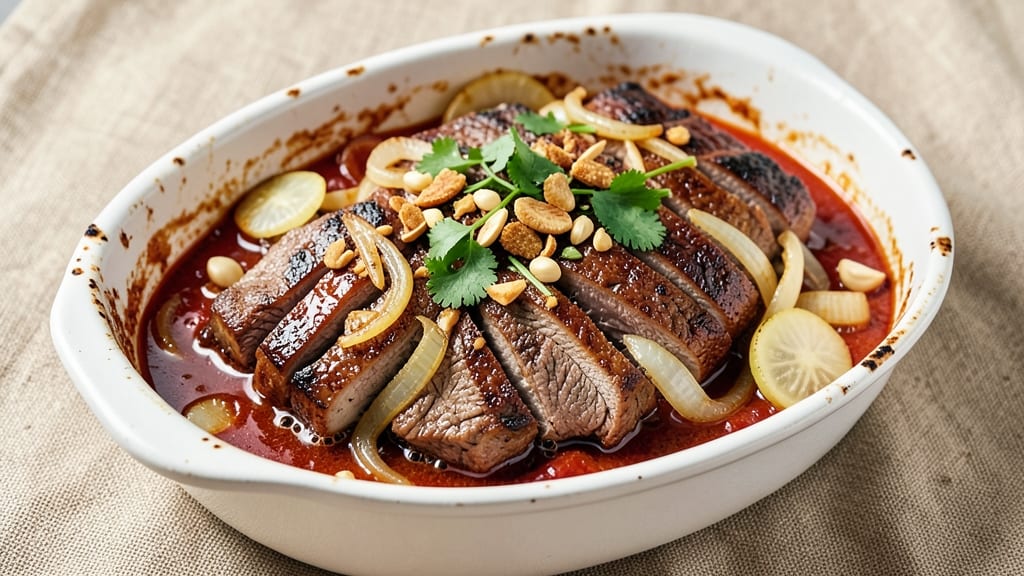
This beef binagoongan recipe delivers the bold, savory-sweet flavors of Filipino comfort food in one rich, aromatic dish. The secret lies in balancing soy sauce's umami depth with ginger's bright warmth and tomato's natural acidity, creating a glossy sauce that clings perfectly to tender beef.
I've perfected this version to stay true to tradition while adapting for modern kitchens—no special equipment required, just patience and careful layering of flavors.
The process begins with searing beef strips until golden, locking in their juices before building the sauce. Aromatics like garlic and onions form the flavor base, while soy sauce and tomato paste develop into a velvety, slightly sweet glaze.
Fresh ginger adds that signature zing, while a touch of sugar rounds out the flavors without overpowering the dish's natural richness. The result is beef that's both tender and flavorful, swimming in a sauce that's equally impressive served over rice or as a standalone stew.
What makes this recipe special is its versatility—it works equally well as a hearty weeknight dinner or a showstopper for gatherings. The sauce thickens beautifully as it simmers, creating that signature glossy sheen that's impossible to resist.
Each bite delivers the perfect harmony of sweet, salty, and tangy notes, with the beef absorbing all the complex flavors. This is the kind of dish that transforms a simple meal into an experience.
For best results, let the sauce reduce gradually to develop its depth, and don't rush the cooking time—the beef needs that slow simmer to become fork-tender.
Serve it hot with steamed rice to soak up every last drop of that rich, aromatic sauce. Here's how to make it perfectly every time.
Ingredients for beef binagoongan
These bold ingredients create the perfect harmony of soy, ginger, and tomato for Filipino comfort food.
| Ingredient | Amount | Notes |
|---|---|---|
| Beef Chuck Roast 🥩 | 1 ½ lb | Cut into 1-inch strips |
| Onions 🧅 | 2 whole | Yellow or red, thinly sliced |
| Garlic Cloves 🧄 | 6 cloves | Minced, fresh preferred |
| Fresh Ginger 🌿 | 2 tbsp | Finely grated, peeled |
| Tomato Paste 🍅 | ½ cup | Smooth, unsweetened |
| Soy Sauce 🥢 | ½ cup | Light or dark preferred |
| White Vinegar 🍶 | 2 tbsp | For tangy balance |
| White Sugar 🍚 | 2 tbsp | Granulated, adjust to taste |
| Olive Oil 🫒 | 2 tbsp | Extra-virgin for richness |
| Salt 🧂 | 1 tsp | Kosher or sea salt |
| Black Pepper 🌶️ | ½ tsp | Freshly ground preferred |
| Bay Leaves 🌿 | 2 whole | Dried, for depth of flavor |
| Water 💧 | 1 cup | For sauce consistency |
The beef selection is critical—chuck roast delivers the best texture when cut into strips. Costco or local butchers often carry pre-cut chuck at great prices, but if you're buying a whole roast, ask for it to be trimmed of fat and cut into even strips. The onions and garlic form the aromatic base, so fresh, vibrant produce makes all the difference. For ginger, look for firm, knobby roots with smooth skin—avoid any with soft spots or sprouting eyes. The tomato paste should be smooth, not chunky, and San Marzano if you want to splurge, though regular brands work fine for weeknight cooking.
No soy sauce? Coconut aminos works in a pinch, though it lacks the depth of traditional soy. Fresh ginger too spicy? Reduce to 1 tbsp and add 1 tsp ground ginger for milder flavor. Short on tomato paste? Fresh tomatoes blended can substitute, but you'll need about 1 cup to match the thickness. The white vinegar adds brightness—apple cider vinegar works too, but it has a slightly sweeter profile. For extra richness, add 1 tbsp coconut milk at the end, though traditional recipes skip this. The bay leaves infuse subtle earthiness, so don't skip them unless you're pressed for time.
This sauce develops best when made ahead—flavors meld beautifully after 24 hours. Store in an airtight container in the fridge for up to 5 days, or freeze portions for 3 months. The beef reheats perfectly, though it's even better the next day as the flavors deepen. For serving, keep the sauce slightly loose—it thickens as it cools. If it gets too thick when reheating, add 1-2 tbsp water or beef broth to restore the glossy consistency. Pair with steamed jasmine rice to soak up every last bit of that rich, aromatic sauce.
Why You'll Love This Recipe
- One-Pot Magic: I swear by this—no chopping mountains of veggies, just onions and garlic that soften into sweet, caramelized layers while the beef tenderizes itself. The ginger? Just a few slices, tossed in whole. That’s it. Minimal effort, maximum payoff.
- Umami Bomb: The tomato paste isn’t just a garnish—it’s the secret weapon. Simmered with the beef, it deepens into a rich, tangy sauce that clings to every bite like a hug. Between us, the first time I skipped it, I regretted it immediately.
- Leftovers That Beg: This dish tastes better the next day. Honestly. The flavors meld into something so rich, I’ve reheated it for lunch three times without complaint. Freeze half for when you’re too tired to cook—just thaw and reheat. No judgment here.
- Budget-Friendly Feast: A chuck roast stretches across meals, and the aromatics cost pennies. Yet it feeds a crowd (or a family that never shuts up about being hungry) without breaking the bank. I’ll be real: my grocery bill dropped when I started making this weekly.
Step-by-step instructions for soy-ginger glossed beef in tomato gravy
A rich, balanced dish where tender beef simmers in a glossy sauce of soy, ginger, and tomato. Here's how to achieve perfect texture and depth of flavor.
Sear the Beef for Maximum Flavor
Heat a large, heavy-bottomed pot over medium-high heat. Add the 2 tablespoons olive oil and let it get hot enough to shimmer. Working in batches if needed, add the 1.5 lb beef chuck roast cut into 1-inch strips and sear for 3-4 minutes per side until deeply browned. This step builds the foundation of flavor through the Maillard reaction.
Don't overcrowd the pot—give each piece room to develop that golden crust. Once all beef is browned, remove it from the pot and set it aside. You'll notice the bottom has a dark, flavorful crust—this is called the "fond" and we'll scrape it up later for the sauce. Keep the pot on the heat for now.
Sauté Aromatics Until Fragrant
In the same pot (with the fond still clinging to the bottom), add the 2 whole onions sliced thinly. Cook for 5-6 minutes until softened and starting to turn golden at the edges. The onions should release their moisture but not burn—this prevents bitterness in the final sauce.
Add the 6 cloves minced garlic and 2 tablespoons finely grated fresh ginger and cook for 1 minute until the raw garlic smell disappears. Here's the thing—ginger burns quickly, so keep the heat at medium and stir constantly. You want the aromatics to soften and release their oils without turning brown.
Build the Sauce Base
Stir in the 0.5 cup tomato paste, 0.5 cup soy sauce, 2 tablespoons white vinegar, and 2 tablespoons white sugar. Cook for 3-4 minutes while stirring frequently to prevent sticking. The mixture will darken slightly as it thickens—this is normal and indicates the flavors are melding together.
Add the 1 cup water, 1 teaspoon salt, 0.5 teaspoon black pepper, and 2 whole bay leaves. Bring to a gentle simmer, then return the seared beef to the pot. The liquid should come about halfway up the beef strips. If it's too thin, reduce slightly over medium-high heat until it coats the back of a spoon.
Simmer Until Tender and Glossy
Cover the pot and reduce heat to low. Let the beef simmer gently for 1.5 to 2 hours, stirring occasionally, until the meat is fork-tender. You'll know it's ready when a knife slides in easily and the beef pulls apart with minimal resistance. The sauce should thicken and develop a glossy sheen from the soy and tomato combination.
If the sauce reduces too much before the beef is tender, add 2-3 tablespoons water at a time to maintain the proper consistency. The key is patience—low and slow ensures the beef becomes melt-in-your-mouth tender while absorbing all those rich flavors.
Finish and Serve
Once the beef is perfectly tender, remove the 2 whole bay leaves and discard them. Taste the sauce and adjust seasoning if needed—add a touch more salt or soy sauce if it needs more depth. The final sauce should be rich, slightly glossy, and balanced between sweet, savory, and tangy notes.
Serve the beef binagoongan hot, either over steamed white rice or with crusty bread to soak up the delicious sauce. The beef should be fork-tender with a perfect glossy coating, and each bite should deliver a harmonious blend of soy, ginger, and tomato flavors. This dish tastes even better the next day as the flavors continue to meld!
Pro Tips For Making Beef Binagoongan
- SEAR THE BEEF FIRST: After burning through three batches of tough, gray beef, I finally learned: high heat, 3-4 minutes per side until deep brown. That crust locks in flavor—no one cares if you’re impatient like me, just don’t rush this part. (Yes, even if your pan smoke alarms the neighbors.)
- MINCE THE GINGER FINE: I used to throw in thick slices of ginger, thinking it’d dissolve. Wrong. For real depth, grate it like you’re making kimchi—no chunks, just fine shreds. It blends smoother and infuses the sauce faster. (Your future self will notice the difference.)
- LOW AND SLOW FOR TENDERNESS: Chuck roast needs time—braise at 300°F (150°C) for 2.5-3 hours, not simmering on high. I learned this after serving rubbery beef twice. Cover it, let it sweat, and check for fork-tender perfection. (Patience here = no regrets later.)
- TOAST THE TOMATO PASTE: Skip this, and your sauce will taste flat. Cook the tomato paste in oil for 2 minutes until it darkens slightly—it deepens the umami. I was skeptical until I tried it, and now I never skip it. (Two minutes, big payoff.)
Flavor customization for this recipe
Spicier Heat Profile
For those who love heat, add 1-2 tbsp of sriracha or 1 tbsp of chili flakes when building the sauce base. If you prefer a smoky kick, substitute ½ cup of tomato sauce with ½ cup of spicy tomato sauce (like Muir Glen Fire Roasted).
For extra depth, stir in 1 tsp of calamansi juice (or substitute with lemon juice) at the end for a tangy, citrusy heat. 🌶️
Sweeter Glaze Option
Crave more sweetness? Increase the sugar to 3 tbsp and add 1 tbsp of brown sugar for caramelized notes.
For a tropical twist, swap 1 tbsp of the soy sauce with 1 tbsp of coconut aminos and add ½ cup of pineapple juice (reduce by half first) to the simmering sauce. This creates a sticky, slightly sweet glaze that pairs beautifully with the savory beef. 🍍
Umami Boost Variations
For deeper umami, stir in 1 tbsp of fish sauce or 1 tbsp of oyster sauce when adding the soy sauce. Another pro move: Add 2 tbsp of Worcestershire sauce for a tangy, meaty depth.
For vegetarians, replace the beef with extra-firm tofu (pressed and cubed) or mushroom stems for a hearty texture. 🍄
Herb & Citrus Infusions
Brighten the dish with fresh herbs like ½ cup chopped cilantro or 2 tbsp chopped Thai basil at the end. For citrus, add zest of 1 lime and 1 tbsp lime juice while simmering.
If you love garlic, double the minced garlic to 8 cloves for an intense aromatic punch. These additions keep the sauce vibrant and refreshing. 🍋
Creamy Texture Twist
For a luxurious finish, stir in ¼ cup of coconut milk or 2 tbsp of heavy cream during the last 5 minutes of simmering. This creates a velvety texture that balances the tangy-sweet sauce.
For a lighter option, blend ½ cup of the cooked sauce with ¼ cup water and stir it back in for a silky consistency. 🥥
Nutrition facts
Frequently asked questions
Can I use a different cut of beef for this recipe?
While chuck roast is ideal for its tenderness, you can substitute with brisket or stew beef—both work well for slow cooking. Avoid lean cuts like sirloin, as they may dry out. For quicker cooking, try flank steak (cut into strips) and reduce simmering time to 45-60 minutes. Just remember, fattier cuts yield more flavorful results.
Why does my sauce turn out too thin or too thick?
Sauce consistency depends on simmering time. For a thicker sauce, simmer uncovered for 10-15 minutes longer to reduce. If it's too thick, add 1-2 tablespoons water or beef broth at a time. The key is patience—the sauce should coat the back of a spoon but remain glossy, not gluey. Pro tip: Skim any excess fat that rises to the surface during cooking.
Can I make beef binagoongan ahead of time?
This dish tastes even better the next day! Let it cool completely, then store in an airtight container in the fridge for up to 5 days. The flavors deepen as the sauce melds. For freezing, portion into meal-sized containers and freeze for up to 3 months. Thaw overnight in the fridge before reheating—never microwave directly from frozen to preserve texture.
What's the best way to serve beef binagoongan?
Traditionally, it's served over steamed jasmine rice to soak up the rich sauce. For extra presentation, garnish with sliced green onions or fresh cilantro. It also pairs well with garlic bread or crusty rolls. Leftovers make fantastic tacos or burrito bowls—just warm through and serve with tortillas and toppings.
How can I make this dish vegetarian?
Replace the beef with extra-firm tofu (pressed and cubed) or mushroom stems for texture. For umami depth, add 1 tbsp soy sauce or mushroom sauce to the marinade. Simmer for 20-25 minutes until the tofu is heated through. The sauce will still develop its signature glossy texture, though you may need to add 1 extra tablespoon of tomato paste for binding.