
Soups & Stews
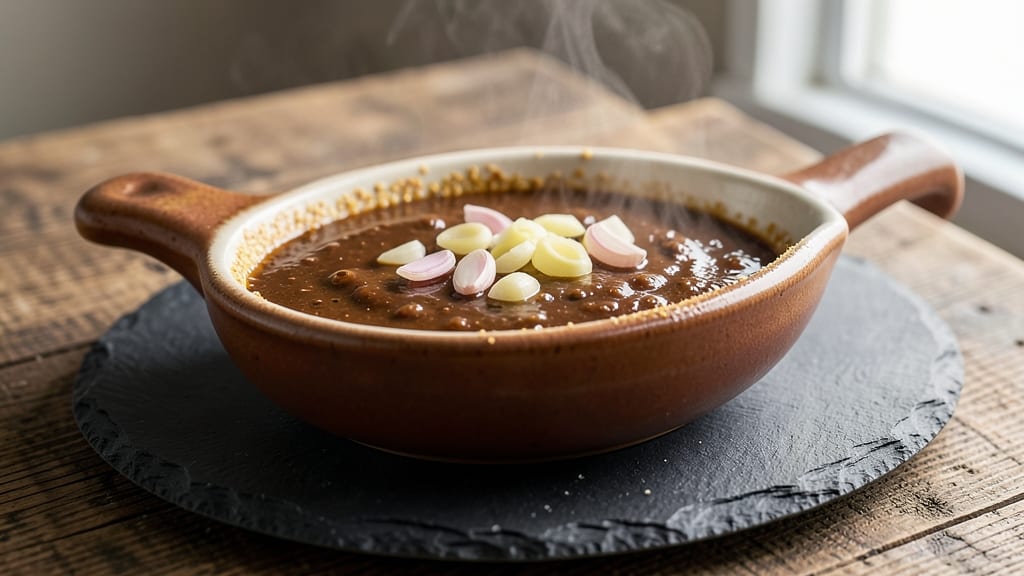
Transforming simple pan drippings into rich umami depth starts with this beef base gravy recipe—where every spoonful delivers restaurant-quality flavor. The secret lies in building layers of depth through a proper roux and carefully balanced seasonings, turning ordinary cooking juices into something extraordinary.
This isn't just gravy; it's the kind of sauce that elevates roasted meats, mashed potatoes, or even pancakes to new heights.
What sets this recipe apart is its foolproof technique for thickening without lumps while preserving that deep, savory beef flavor. We'll use a classic roux foundation but enhance it with beef base and aromatics to create a sauce that's both rich and balanced.
The result? A velvety, golden gravy with just the right consistency—thick enough to coat but still silky smooth.
Perfect for weeknight dinners or special occasions, this gravy transforms ordinary meals into something memorable. The process is straightforward, requiring just 15 minutes of active time, but the flavor development happens through careful reduction and seasoning.
Whether you're serving it over holiday roasts or drizzling it over breakfast biscuits, the possibilities are endless.
For those who want to customize, we'll explore variations like herb-infused or mushroom-enhanced versions—each adding unique depth while maintaining that foundational beef flavor. The beauty of this recipe is its versatility; once you master the base technique, you can adapt it to suit any taste or occasion.
Ingredients for beef base gravy
Rich umami depth starts here—just ten ingredients transform ordinary pan drippings into velvety restaurant-quality gravy.
| Ingredient | Amount | Notes |
|---|---|---|
| Pan Drippings 🥩 | 2 cups | From roasted beef, strained |
| Unsalted Butter 🧈 | ½ cup | Cold, cubed for roux |
| All-Purpose Flour 🌾 | ½ cup | Diamond Crystal preferred |
| Beef Base Granules 🥩 | 2 tbsp | High-quality, like Knorr |
| Shallots 🧅 | 2 whole | Finely minced, about 2 tbsp |
| Garlic Cloves 🧄 | 2 cloves | Peeled and minced |
| Dry Red Wine 🍷 | ¼ cup | Cabernet Sauvignon preferred |
| Beef Broth 💧 | 1 cup | Homemade or high-quality |
| Black Peppercorns 🌶️ | ½ tsp | Freshly cracked |
| Kosher Salt 🧂 | 1 tsp | Diamond Crystal preferred |
The foundation begins with pan drippings—strained to remove any meat bits, but keep those flavorful juices. For the roux, unsalted butter and Diamond Crystal flour are non-negotiable; this is where the magic happens. The butter should be cold and cubed to prevent immediate browning, and the flour must be measured precisely. Knorr beef base granules add that deep umami punch that separates this from basic gravy. Shallots and garlic? Freshly minced—no jarred shortcuts here. The dry red wine (Cabernet Sauvignon preferred) brings acidity and complexity, while the beef broth ensures richness without overpowering. For sourcing, Whole Foods or Trader Joe's carry reliable beef base and wine options, but don't overlook the bulk bins for spices.
No red wine? Dry sherry or extra beef broth works in a pinch, though the flavor will differ slightly. Shallots can be swapped for finely minced yellow onion if needed, but the texture will be slightly less refined. Jarred minced garlic is acceptable, but fresh is always superior. For the roux, if you burn it, start over—there's no saving a browned roux. The black peppercorns should be freshly cracked for maximum aroma, and Diamond Crystal kosher salt dissolves more cleanly than table salt. If you're making this ahead, prepare the roux first and store it in the fridge for up to 3 days—just whisk in the remaining ingredients when ready to use.
This gravy reaches peak flavor after 15 minutes of simmering, but it reheats beautifully—just add a splash of beef broth if it thickens too much. Store leftovers in an airtight container in the fridge for up to 5 days or freeze for 3 months. For herb-infused variations, stir in 1 tsp fresh thyme or rosemary at the end. The mushroom-enhanced version calls for 2 tbsp finely chopped cremini mushrooms sautéed with the shallots. Always taste as you go—adjust salt and pepper to balance the richness.
Why You'll Love This Recipe
- No-Pan-Splatter Mess: I swear by this method—just scrape those golden drippings right into the pot. No straining, no extra bowls, and the flour-to-butter roux happens while you’re still standing. That first spoonful? Chef’s kiss—it’s the kind of gravy that makes you pause mid-bite.
- Umami Bomb Ready: The beef base granules might sound basic, but they’re the secret weapon here. Paired with sautéed shallots (just 2 minutes in butter) and that rich pan drippings, it’s like a cozy hug in a bowl. Honestly, I’ve made gravy from scratch that didn’t hit this hard.
- Leftovers That Shine: This gravy doesn’t just taste amazing—it improves the next day. Thin it with a splash of broth or milk, and it’s perfect for drizzling over roasted veggies, mashed potatoes, or even a simple sandwich. My freezer’s got jars of this stuff labeled “Emergency Flavor Booster.”
- Budget Magic: You’re using what’s already in your pan—no wasted ingredients, no fancy shortcuts. A stick of butter, a handful of flour, and a tiny packet of beef base stretch to feed four (or more, if you’re like me). Between us, this is how I feed my family well without breaking the bank.
Step-by-step instructions for beef base gravy
Transform simple pan drippings into a velvety, umami-rich gravy with this precise technique.
Create the Roux Foundation
Melt the 0.5 cup unsalted butter in a medium saucepan over medium-low heat. Once fully melted and foaming subsides, immediately whisk in the 0.5 cup all-purpose flour to form a smooth paste. Cook for 3-4 minutes, stirring constantly with a wooden spoon, until the mixture turns a rich, golden brown color—this is your roux.
This step is critical: the roux forms the thickening base of your gravy. If it darkens too quickly, reduce the heat slightly. You want it to develop color without burning, as this adds depth of flavor. The roux should coat the back of a spoon and smell nutty—this ensures proper thickening power.
Deglaze with Wine and Aromatics
Remove the saucepan from heat and immediately pour in the 0.25 cup dry red wine, scraping up any browned bits from the bottom with a wooden spoon. Return to medium heat and simmer for 2-3 minutes until the wine reduces by half and its alcohol aroma dissipates.
Add the finely minced 2 whole shallots and 2 cloves minced garlic, cooking for another 1-2 minutes until fragrant. This deglazing step captures all the flavor compounds released during the roasting process, creating the gravy's rich foundation. The wine's acidity also helps break down any remaining meat particles in the pan drippings.
Incorporate Pan Drippings and Base
Gradually whisk in the 2 cups pan drippings while maintaining heat. Add the 2 tbsp beef base granules and 1 cup beef broth, stirring continuously to prevent lumps from forming. Bring the mixture to a gentle simmer over medium heat, then reduce to low heat and let it cook uncovered for 8-10 minutes, stirring occasionally.
The gravy should thicken noticeably as it simmers. If it becomes too thick too quickly, whisk in 1-2 tablespoons of hot water to achieve a smooth, velvety consistency. This step develops the gravy's complex flavor profile through the Maillard reaction between the beef base and pan drippings.
Season and Finish
Taste the gravy and adjust seasoning with 1 tsp kosher salt and 0.5 tsp freshly cracked black peppercorns. The gravy should be rich but not overly salty—remember, the beef base granules already contain some saltiness. Strain through a fine-mesh sieve into a clean saucepan if you prefer a completely smooth texture.
Return to low heat and let the gravy warm through for another 2-3 minutes. For best results, serve immediately over your roasted beef. The gravy should coat the back of a spoon and cling beautifully to each bite of meat, delivering layers of umami flavor with every forkful.
Pro Tips For Making Beef Base Gravy
- DEGLAZE HOT: That pan’s still screaming hot after you pull your roast—don’t let it cool. Toss in the shallots first, then immediately add a splash of liquid (broth, wine, or even water) while scraping every last bit of browned bits off the bottom. I used to wait, and half the flavor went down the drain.
- WHISK THE FLOUR: Skip the spoon and whisk that flour into the butter like you’re frothing eggs. You want a smooth paste, not lumps that’ll turn your gravy into a sad, gummy mess. I learned this the hard way after straining gravy with flour clumps—now I whisk until it’s uniform.
- DILUTE GRADUALLY: Pour in the beef base after your roux is cooked, then add liquid slowly while stirring. Dumping everything at once guarantees a thin, watery gravy. I now add just enough liquid to loosen the base, then adjust thickness at the end—no more guessing.
- SWEAT THE SHALLOTS: Don’t just chop and toss—sweat those shallots in butter for 3-4 minutes until soft and translucent. This builds flavor without burning, and it keeps your gravy from tasting raw. (Yes, even if you’re impatient like me.)
Make-ahead tips for leftovers
Prep Ahead Roux
Make life easier by preparing the roux one day in advance—it’s the most time-consuming step. Cook the 0.5 cup unsalted butter and 0.5 cup flour to a golden brown color, then let it cool completely.
Store it in an airtight container in the fridge for up to 3 days. When ready to make the gravy, simply whisk the roux into the pan drippings and proceed with the recipe.
This saves you 10 minutes of active prep time on the day you serve your meal. 🧈
Freeze for Future Use
For maximum convenience, freeze the completed gravy in ice cube trays or small airtight containers. Once frozen, transfer the cubes to a ziplock bag and store for up to 3 months.
To use, thaw in the fridge overnight, then reheat gently on the stovetop with a splash of beef broth to restore its silky texture. This is perfect for busy weeknights when you want that restaurant-quality sauce without the effort. ❄️
Drippings Prep
Always have pan drippings ready before you start cooking your beef. Roast your meat in a cast-iron skillet or Dutch oven—these retain drippings better than other pans. After removing the meat, strain the drippings through a fine-mesh sieve into a measuring cup to remove any debris.
Keep the strained drippings in a small saucepan until you’re ready to make the gravy. This ensures you capture every drop of flavor. 🥩
Broth Boost
If you’re making the gravy ahead of time, prepare the beef broth separately and store it in the fridge. Use homemade broth for the best flavor, but a high-quality store-bought version like Kirkland Signature works in a pinch.
When reheating the gravy later, add 1-2 tablespoons of fresh broth to thin it out if needed—this keeps the sauce from becoming too thick or grainy. 💧
Seasoning Prep
Measure out all your seasonings—1 tsp kosher salt and 0.5 tsp freshly cracked black peppercorns—before you start cooking. Store them in a small spice jar labeled "Gravy Seasoning" so they’re ready to go.
Freshly cracked pepper makes a huge difference in flavor, so invest in a pepper grinder if you don’t already have one. This small step ensures your gravy is perfectly seasoned every time. 🌶️
Herb Infusions
For a herb-infused gravy, finely chop 1 tbsp fresh thyme or rosemary and store it in a small container in the fridge. When you’re ready to make the gravy, simply stir in the herbs during the final 2 minutes of simmering.
This keeps the herbs vibrant and aromatic, adding a bright, fresh note to the rich beef flavor. Perfect for pairing with holiday meals! ✨
Nutrition facts
Frequently asked questions
Can I substitute beef base granules with something else?
Yes! For a deeper flavor, use 1 tbsp Worcestershire sauce plus 1 tsp soy sauce instead of beef base granules. Alternatively, a 1 tsp beef bouillon powder works in a pinch, but beef base provides that concentrated umami punch that's hard to replicate.
Why did my gravy turn out too thick?
This usually happens when the roux cooks too long or the liquid reduces too much. To fix it, whisk in 1-2 tablespoons of hot beef broth while stirring constantly over low heat. If it's still too thick, add more broth gradually until you reach a smooth, velvety consistency that coats the back of a spoon.
Can I make this gravy without red wine?
Replace the 0.25 cup dry red wine with an equal amount of beef broth or dry sherry. The wine adds acidity that helps balance the richness, but these substitutes work well. For extra depth, add 1 tsp balsamic vinegar with the broth to mimic the wine's acidity.
How do I make this gravy vegetarian?
Replace the beef base with 2 tbsp vegetarian mushroom base or 1 tbsp soy sauce + 1 tsp miso paste. Use vegetable broth instead of beef broth and strain any meat particles from the pan drippings. The roux and flour remain the same, but you'll need to taste and adjust seasoning since vegetarian bases have different salt profiles.
What's the best way to reheat leftover gravy?
Gently reheat on the stovetop over low heat, stirring frequently to prevent scorching. If it thickens too much, add 1-2 tablespoons of hot water or broth while stirring. For microwave reheating, cover with a damp paper towel and heat in 20-second intervals, stirring between each. Always reheat just until warm to preserve the texture.